

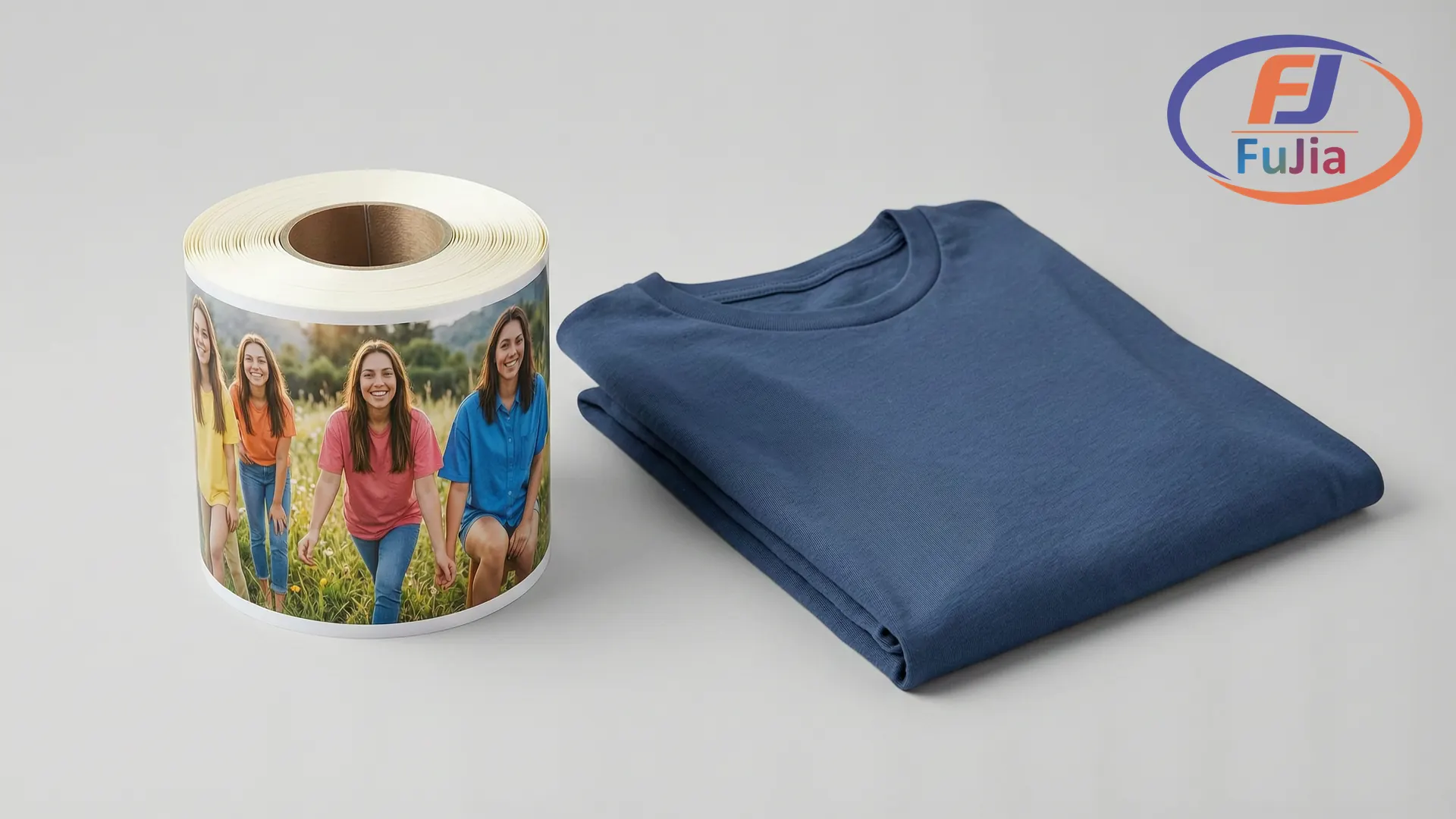
Sublimation vinyl is a heat transfer vinyl (HTV) or permanent adhesive vinyl coated to accept dye-sublimation ink, so you can press full-color sublimation designs onto cotton shirts and other fabrics that ordinary sublimation cannot reach. The method works on permanent vinyl in white or clear, and it opens cotton and dark garments to sublimation without a polyester blank. This article covers which vinyl works, the press temperatures that succeed, and how sublimation vinyl compares to standard sublimation, plus the printers and heat presses Fujia Print builds to run it.
Key Takeaways
- Sublimation vinyl is an HTV or permanent adhesive vinyl that receives sublimation ink, extending sublimation to cotton and dark fabrics that need at least 65% polyester for standard printing.
- HTVRONT Sublimation HTV (12″ x 5FT) holds a 4.6/5 star rating across 2,650 Amazon reviews and presses in two stages at 150-155°C, then 190-200°C.
- Use only permanent vinyl in white or clear. Glossy or matte both work. Removable vinyl fails the transfer.
- Standard sublimation needs 100% polyester for best results, while sublimation vinyl reaches 100% cotton shirts, hats, and pillows.
- A-SUB clear sublimation vinyl costs $15.99 for a 12″ x 10FT roll, about $1.60 per foot.
- For factory-direct sublimation printers, sublimation ink, and heat presses in one system, see the Fujia Print sublimation lineup.
How Sublimation Vinyl Differs from Standard Sublimation
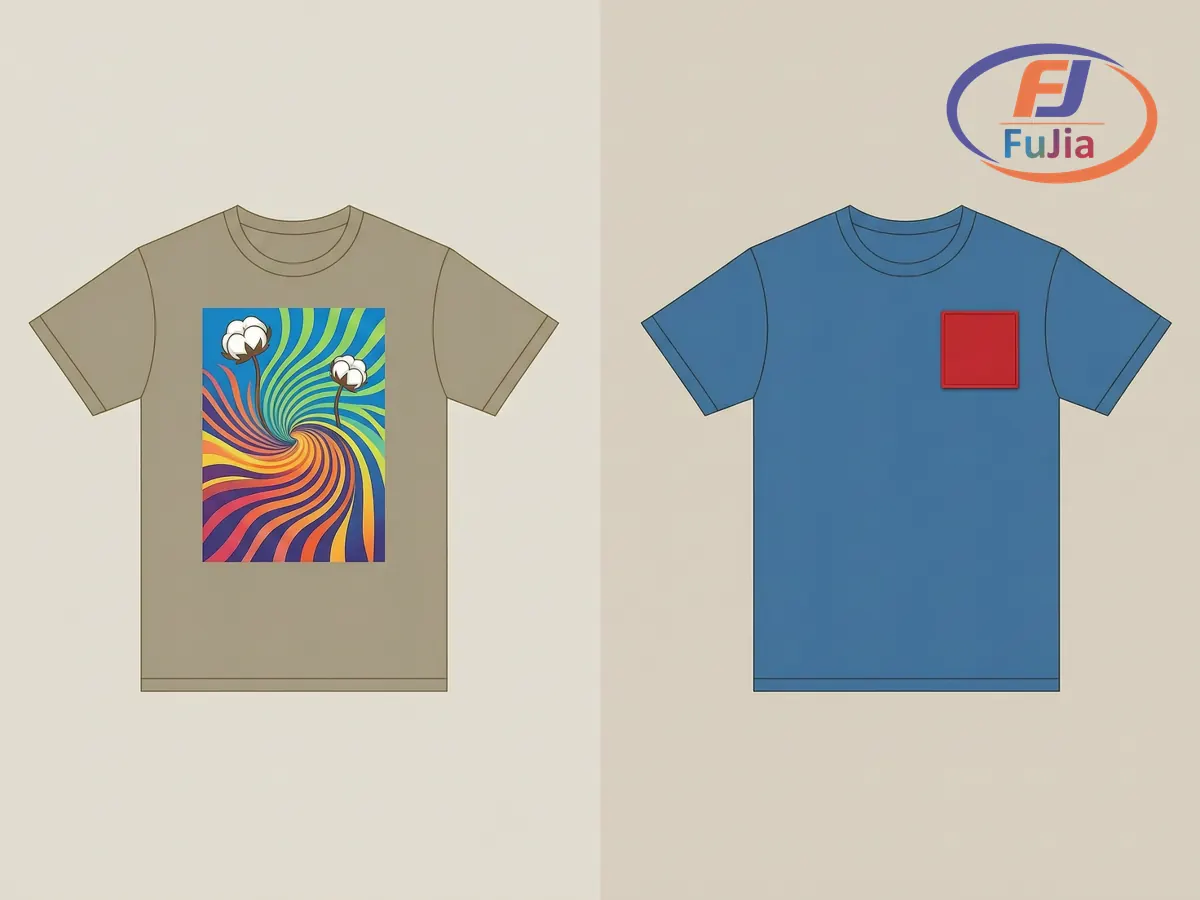
Standard dye sublimation turns solid ink into gas that bonds with polyester fibers, so it performs best on 100% polyester and only accepts a 65% polyester minimum. The process cannot dye natural cotton, which is why dark cotton shirts and most casual garments fall outside ordinary sublimation. Sublimation vinyl solves that gap by placing a sublimation-receptive HTV layer on top of the garment first, then transferring the printed image into that layer.
The distinction matters for shop planning. A cotton t-shirt that would reject standard sublimation becomes printable once a sublimation HTV sheet is heat pressed to it. The trade is an extra press step and a slightly thicker hand feel compared with dye-sublimated polyester.
| Method | Base fabric | Ink type | Press temperature | Peel | Best use |
|---|---|---|---|---|---|
| Standard sublimation | 100% polyester (min 65%) | Sublimation ink | 400°F / 204°C | Hot or cold | Poly shirts, mugs, plates |
| Sublimation vinyl (HTV) | 100% cotton, dark or light | Sublimation ink + HTV | 150-155°C apply, 190-200°C sublimate | Cold, then warm | Cotton shirts, hats, pillows |
| Adhesive sublimation vinyl | Permanent vinyl, white or clear | Sublimation ink | 350°F / 177°C for 30s | Cold | Tumblers, hard blanks |
Dye-sublimation printing, the underlying technology, gasifies the ink so the color becomes part of the material rather than a surface film 1. Sublimation vinyl borrows that ink but lands it in a polymer layer instead of polyester fibers.
Which Vinyl Accepts Sublimation Ink
The vinyl itself must meet three rules. It has to be permanent, not removable. It should be white or clear so the sublimated colors read true. Glossy or matte finishes both work, so finish is a style choice rather than a technical limit.
Two product families fit. Dedicated sublimation HTV is engineered for cotton garments. HTVRONT Sublimation HTV ships as a 12″ x 5FT roll, carries a 4.6/5 star rating across 2,650 Amazon reviews, and is built for dark and light cotton. A-SUB Clear Sublimation Vinyl for cotton shirts comes in a 12″ x 10FT roll at $15.99, which works out to about $1.60 per foot. A-SUB also sells a white version for light and dark cotton priced $16.99-$32.99.
The second family is permanent adhesive vinyl for hard blanks. Hobby testing named StarCraft HD Permanent at $2.85 for a 5ft roll, Avery HP 750 Permanent, and Cricut Frosted Permanent as reliable. For comparison, StarCraft printable vinyl runs $12.99 for a 10-pack, which is why many makers switch to sublimation vinyl for waterproof results.
Vinyl as a material is a synthetic polymer film, and its permanent adhesive grade is what holds the sublimated image through washing 2. Match the vinyl family to the blank: HTV for cotton garments, clear adhesive vinyl for tumblers and rigid surfaces.
The Two-Stage Sublimation Press Workflow
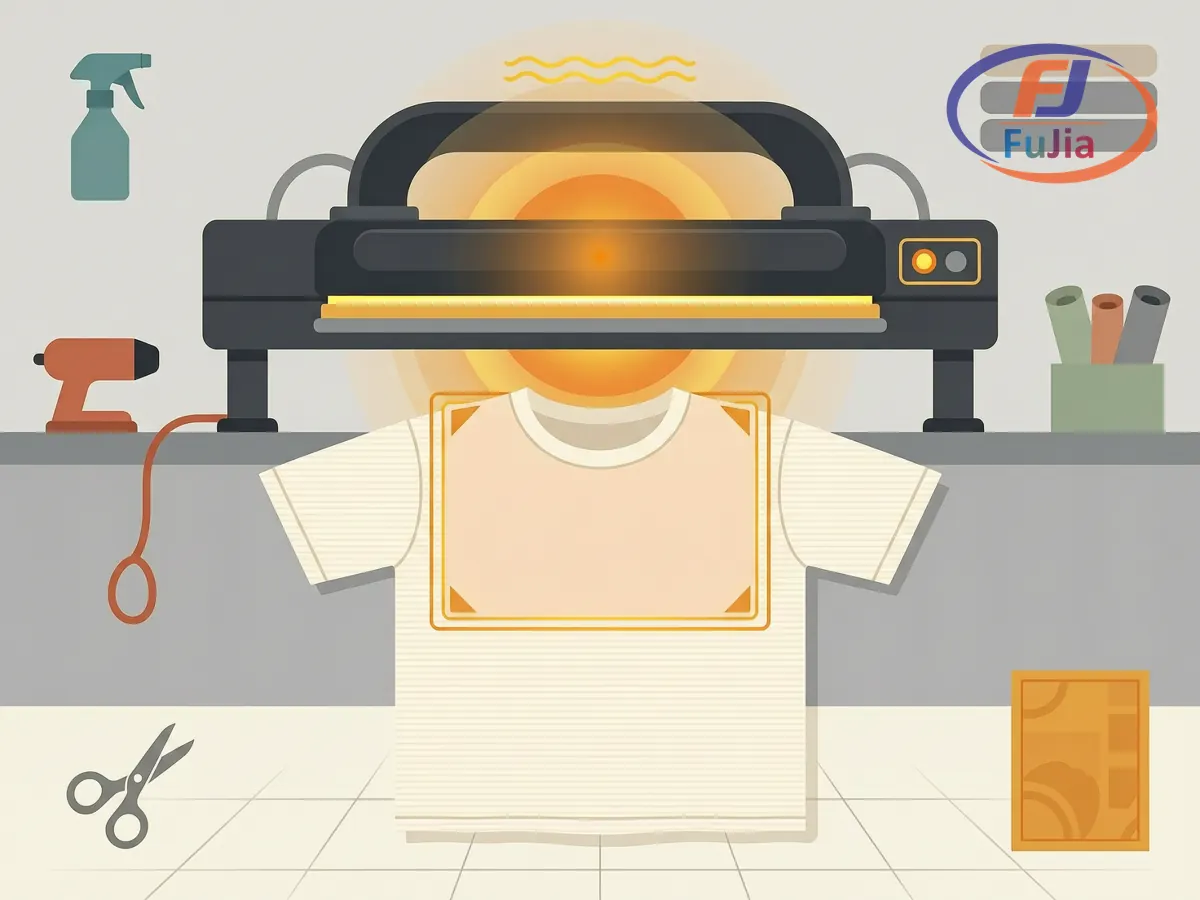
Sublimation HTV needs two separate presses. Stage one applies the HTV to the garment. Preheat the heat press to 150-155°C and preheat the clothing for 5-10 seconds. Position the HTV glossy side up and apply heavy pressure for 10-15 seconds, then cold peel the clear film. Stage two carries the print. Place the sublimation paper face down on the HTV, raise the press to 190-200°C, hold heavy pressure of 33-50 LB for 40-60 seconds, then warm peel the paper.
Adhesive vinyl on a tumbler follows a single stage. Press at 350°F (177°C) for 30 seconds with firm pressure, check the show-through, and re-press for 10-12 seconds if the image is faint. Let the vinyl cure for 72 hours before use so the permanent adhesive reaches full bond and lasts for years.
| Product type | Stage 1 temp | Stage 1 time | Stage 2 temp | Stage 2 time | Pressure | Peel |
|---|---|---|---|---|---|---|
| HTVRONT Sublimation HTV (cotton) | 150-155°C | 10-15s | 190-200°C | 40-60s | Heavy, 33-50 LB | Cold, then warm |
| Adhesive vinyl (tumbler) | 350°F / 177°C | 30s | re-press 10-12s | – | Firm | Cold |
| Standard polyester sublimation | 400°F / 204°C | 40-60s | – | – | Medium | Hot or cold |
A consistent press matters more than a specific machine. Fujia Print heat presses and sublimation printers are tested in an in-house center before shipment, and the company holds CE and ISO 9001 certification with over 10 years of manufacturing experience 3.
Sublimation Vinyl vs Regular Heat Transfer Vinyl
Regular HTV is a solid color or print-then-cut film that sits on top of the fabric. Sublimation vinyl instead embeds the ink into a receptive layer, so the print becomes part of the garment surface rather than a patch. The visual difference shows on photographic or gradient art, where sublimation renders smooth full-color fades that standard single-color HTV cannot.
Water resistance is the other split. Printable vinyl is paper based and not waterproof unless a UV top layer is added. Sublimation vinyl is inherently waterproof because the dye is locked in the polymer. Durability also favors the sublimation route: a permanent vinyl design cured for 72 hours stays bonded for years, and the sublimated image will not fade in the wash the way a surface print can.
Cost flips the other way for small runs. A-SUB Basic Color HTV rolls sell for $6.99 in a 12″ x 8ft size, and A-SUB Glitter HTV in the same 12″ x 8ft size is $9.99. Plain HTV stays cheaper than sublimation-specific vinyl when the design is a simple shape with one or two colors.
Buying Sublimation Vinyl: Sizes, Prices, and What to Check
Start from the blank. Cotton shirts, hats, and pillows call for sublimation HTV such as HTVRONT (12″ x 5FT) or A-SUB white and clear rolls. Tumblers and hard blanks call for clear permanent adhesive vinyl such as StarCraft HD or Avery HP 750. Skip vinyl entirely when the run is high-volume polyester, because a sublimation printer plus polyester blanks costs less per unit at scale.
| Product | Size | Price | Best for |
|---|---|---|---|
| HTVRONT Sublimation HTV | 12″ x 5FT | Rated 4.6/5 over 2,650 reviews | Cotton, dark and light |
| A-SUB Clear Sublimation Vinyl | 12″ x 10FT | $15.99 ($1.60/ft) | Cotton shirts |
| A-SUB White Sublimation Vinyl | 12″ wide | $16.99-$32.99 | Light and dark cotton |
| A-SUB Basic Color HTV Roll | 12″ x 8FT | $6.99 | General HTV shapes |
| A-SUB Glitter HTV | 12″ x 8FT | $9.99 | Glitter finish |
| StarCraft HD Permanent Vinyl | 12″ x 5FT | $2.85 | Adhesive, tumblers |
Set a volume threshold before committing. Shops pressing more than 200 cotton items per week usually save money by adding a sublimation printer, sublimation ink, and a heat press instead of buying vinyl by the roll. Greener material choices also matter, and the U.S. EPA publishes a greener products guide that covers lower-impact supplies for makers 4.
Sublimation Vinyl in a Full Fujia Sublimation Workflow
Sublimation vinyl is one link in a chain that starts with a printer. A dye-sublimation printer lays the design onto sublimation transfer paper using sublimation ink. A heat press then drives the ink into the vinyl or the polyester blank. Fujia Print supplies each link, from sublimation printers to sublimation ink, sublimation transfer paper, and heat presses, as a single factory-direct system.
Pairing the consumable with matched equipment avoids the blame-shift problem common in printing. When the printer, ink, paper, press, and vinyl come from one source, a failed batch has one accountable partner instead of three suppliers pointing at each other. Fujia Print runs an in-house testing center that checks every machine and consumable batch before shipment, and the company holds CE and ISO 9001 certification with more than 10 years of manufacturing experience and 2 dedicated after-sales teams. Fujia Print heat presses cover the 150-200°C window this two-stage workflow requires, which keeps press settings consistent across reorders.
For shops weighing sublimation against other decoration methods, the DTF vs sublimation printer comparison breaks down where each technology wins on fabric and volume.
What is sublimation for vinyl?
Sublimation for vinyl is the process of printing a design with sublimation ink onto transfer paper, then using heat and pressure to drive that ink into a vinyl layer instead of directly into polyester fibers. Standard sublimation only works on polyester because the gasified ink bonds with plastic fibers, but cotton shirts reject that bond. Sublimation vinyl solves the problem by first applying a sublimation receptive HTV sheet to the cotton garment, then pressing the printed paper so the dye enters the vinyl layer. The result is a full color, photographic image on a 100% cotton shirt that ordinary sublimation could not decorate. The vinyl used must be permanent and either white or clear, and the press runs in two stages at 150-155°C to apply the film and 190-200°C to set the print. This approach reaches dark cotton fabrics that standard sublimation cannot, because there is no white polyester blank required under the design.
Which vinyl can you sublimate on?
You can sublimate on two vinyl families, and both must be permanent rather than removable. The first is dedicated sublimation HTV made for cotton garments, such as HTVRONT Sublimation HTV in a 12″ x 5FT roll rated 4.6/5 stars across 2,650 reviews, or A-SUB Clear Sublimation Vinyl in a 12″ x 10FT roll priced at $15.99. The second is permanent adhesive vinyl in white or clear, including StarCraft HD Permanent at $2.85 for a 5ft roll, Avery HP 750 Permanent, and Cricut Frosted Permanent, which work best on hard blanks like tumblers. Glossy or matte finish does not change the result, so finish is a style decision. Removable vinyl fails because its adhesive releases under the 350°F (177°C) press heat used for adhesive vinyl. Match the family to the blank: HTV for cotton shirts and hats, clear adhesive vinyl for rigid surfaces that cannot take a garment press.
How do you use sublimation vinyl?
Using sublimation vinyl takes two presses for HTV or one press for adhesive vinyl. For HTV on cotton, preheat the heat press to 150-155°C and warm the garment for 5-10 seconds. Lay the HTV glossy side up, press with heavy pressure for 10-15 seconds, and cold peel the clear film. Then place the sublimation paper face down on the HTV, raise the press to 190-200°C, hold heavy pressure of 33-50 LB for 40-60 seconds, and warm peel the paper. For adhesive vinyl on a tumbler, press at 350°F (177°C) for 30 seconds, check show through, and re-press 10-12 seconds if faint. After pressing, let the vinyl cure for 72 hours before the item is used so the permanent adhesive reaches full bond and lasts for years. Always mirror the design before printing, tape the paper to the vinyl with heat resistant tape, and protect the heat plate with parchment paper during the press.
Is sublimation vinyl better than regular vinyl?
Sublimation vinyl beats regular vinyl when the design is photographic, gradient heavy, or needs to be waterproof. Regular HTV is a solid color or print then cut film that sits on the fabric surface, so it cannot render smooth full color fades and is not waterproof unless a UV layer is added on top. Sublimation vinyl embeds the dye into a receptive polymer layer, which locks the image in and makes it waterproof by nature. A permanent vinyl design cured for 72 hours stays bonded for years, and the sublimated print will not fade in washing the way a surface print can. The downside is cost for simple art. A-SUB Basic Color HTV in a 12″ x 8ft roll costs $6.99 and A-SUB Glitter HTV in the same size costs $9.99, both cheaper than sublimation specific vinyl when the artwork is one or two flat colors. Choose sublimation vinyl for full color cotton or dark garment prints, and plain HTV for basic shapes.
Conclusion
Sublimation vinyl extends dye sublimation from polyester into cotton and dark garments by adding a receptive HTV or permanent adhesive layer. Pick HTV for cotton shirts and clear adhesive vinyl for tumblers, press in the two stage temperature range of 150-155°C and 190-200°C, and let the bond cure for 72 hours. For factory-direct sublimation printers, ink, and heat presses in one tested system, contact Fujia Print at https://fujiaprinter.com/contact/.
