

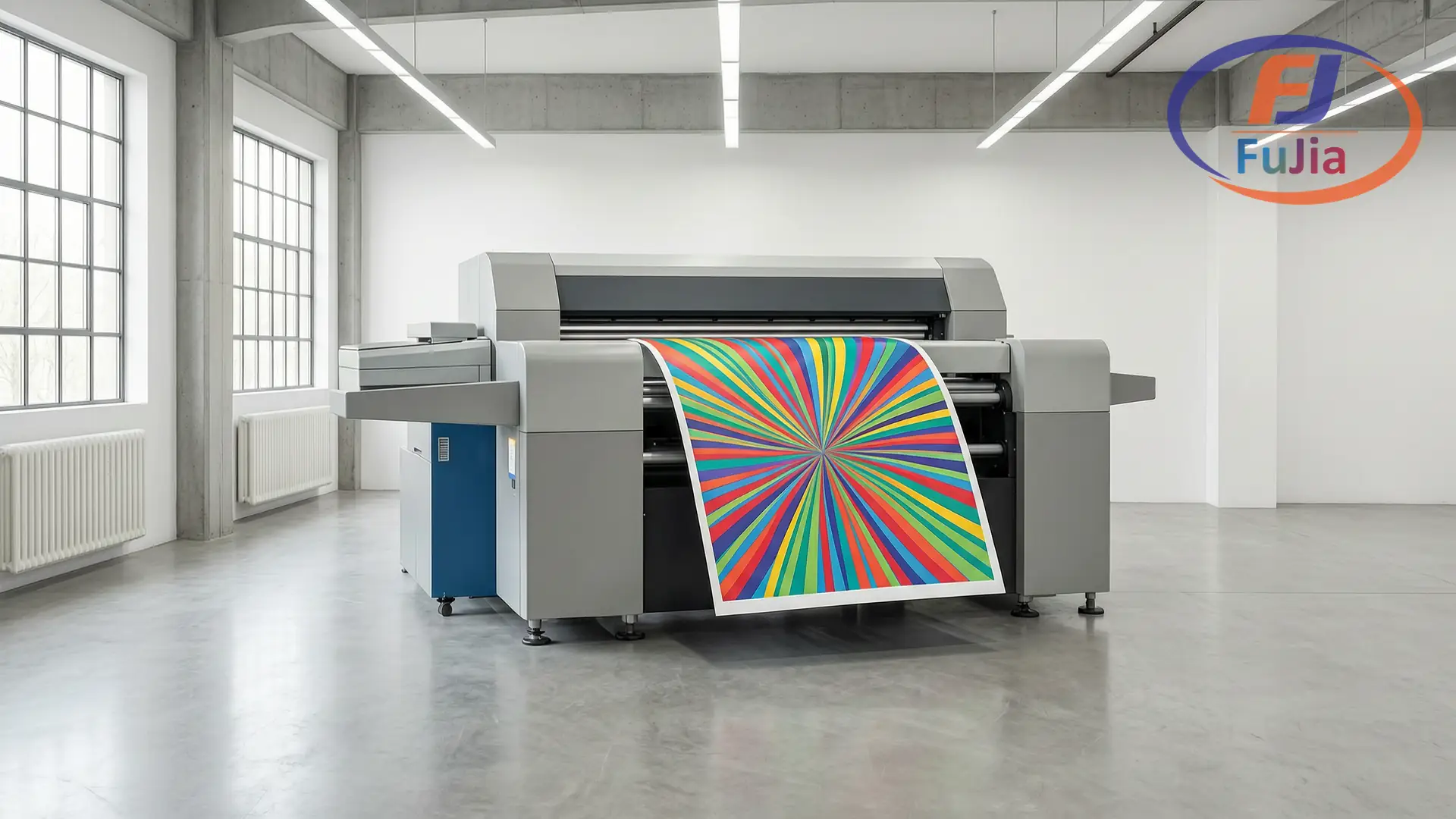
A poster printing machine is a large format printer built to output posters, signs, and banners on rolls or sheets up to 100 inches wide. The right model depends on print width, ink type, and monthly volume, with entry units near $1,045 and production units above $7,500.
Key Takeaways
- A poster printing machine is a wide format printer handling media from 18 to 100 inches wide, with anything above 100 inches classified as grand format.
- Entry large format poster printers start at about $1,045 (HP DesignJet T230 24-inch), while 36-inch production models run from $2,967 to $7,519.
- Ink technology decides where you can print: aqueous for indoor, eco-solvent and UV for durable outdoor and rigid substrates.
- The HP DesignJet T650 and Epson SureColor T3470 both hit 2400 x 1200 dpi and print an A1 poster in about 25 seconds.
- Schools and offices wanting computer-free operation can choose 8-color education poster makers such as the AGC Educator Plus 44-inch.
- Compare resolution, speed, ink cost, and warranty before buying, then match width to your largest poster size.
What Is a Poster Printing Machine?
A poster printing machine is a wide format inkjet printer that feeds roll or sheet media wider than a standard office printer. Most units accept rolls from 18 to 100 inches (460 to 2540 mm), and any printer wider than 100 inches belongs to the grand-format class. The core job is the same across brands: push pigmented or dye ink through a printhead onto paper, vinyl, fabric, or rigid board to make a large, high-resolution image.
Resolution on modern poster printers reaches 2400 x 1200 dpi, which is sharp enough for text and photos viewed at arm’s length. Wide-format inkjet is more economical than screen printing for short-run jobs, so a poster printing machine suits schools, shops, and events that print low quantities on demand. The wide-format printer category covers aqueous, solvent, eco-solvent, dye-sublimation, and UV-curable builds, and the rest of this article explains which one fits posters.
Poster Printing Machine Types by Ink Technology
The ink system is the single biggest factor in where and how long a poster lasts. Five technologies dominate the market, and each serves a different Surface and lifespan.
| Ink technology | Best surface | Outdoor durability | Typical use |
|---|---|---|---|
| Aqueous (dye or pigment) | Paper, photo stock | Low. Needs lamination outdoors | Indoor posters, school displays |
| Eco-solvent | Vinyl, adhesive film | Waterproof, low odor | Outdoor signage, window decals |
| UV-curable | Foam board, acrylic, metal | Waterproof, scratch resistant | Rigid posters, point of sale |
| Dye-sublimation | Polyester fabric | Photographic, wash durable on textile | Fabric banners, soft signage |
| Solvent (full) | Uncoated vinyl | Highest durability | Long-term outdoor, vehicle wrap |
Aqueous pigment ink gives the best archival indoor color but fades in sunlight, so laminate aqueous posters before hanging them outside. Eco-solvent and UV inks skip that step because the print is already waterproof. Dye-sublimation transfers color into fabric, a method covered in our large format sublimation printer guide for shops that sell cloth banners. UV-curable units also power our UV flatbed printer line, which prints posters directly on rigid boards up to several centimeters thick.
Poster Printing Machine Price: What Does It Cost in 2026?

Real street prices for large format poster printers span a wide range, and the table below uses current USD listings from a US reseller. A 24-inch entry printer costs about $1,045, while a 36-inch production multifunction unit reaches $7,519. Education bundles add software and templates, and their 8-color pigment systems raise the price of consumables.
| Model | Max width | Price (USD) | Ink system | Notable spec |
|---|---|---|---|---|
| HP DesignJet T230 24-inch | 24 in (610 mm) | $1,045 | 4-color aqueous | Entry desktop plotter |
| HP DesignJet T650 36-inch | 36 in (914 mm) | $2,967 | 4-color | 25 sec per A1 |
| HP DesignJet T830 24-inch MFP | 24 in (610 mm) | $3,469 | 4-color | Scan and copy built in |
| Epson Education Pro ELITE 36-inch | 36 in (914 mm) | $5,595 | Aqueous | School bundle, was $6,395 |
| HP DesignJet T850 36-inch MFP | 36 in (914 mm) | $7,519 | 4-color | Production MFP, was $7,888 |
| AGC Educator Plus 44-inch | 44 in (1118 mm) | Quote | 8-color | Computer-free operation |
Consumables add to the running cost. Education Pro original ink cartridges that fit the Epson T3270, T5270, and T7270 models sell for $82 to $327 each, and poster board runs $110 to $129 per pack. Budget the first year of ink and media before you compare two printers that look close in sticker price.
Best Poster Printing Machine by Use Case
The comparison below lines up three proven models on the numbers that matter for posters: width, resolution, speed, and ink. The HP DesignJet T650 36-inch leads on throughput at 82 A1 prints per hour, while the Epson SureColor T3470 24-inch matches its 2400 x 1200 dpi sharpness in a smaller footprint. The AGC Educator Plus 44-inch wins on color count with its 8-color system for smooth gradients.
| Model | Width | Resolution | Speed | Ink colors | Weight |
|---|---|---|---|---|---|
| HP DesignJet T650 36-inch | 36 in (914 mm) | 2400 x 1200 dpi | 82 A1/hr (25 sec/A1) | 4 | 35.4 kg |
| Epson SureColor T3470 24-inch | 24 in (609.6 mm) | 2400 x 1200 dpi | 25 sec per A1 | 4 pigment | Not published |
| AGC Educator Plus 44-inch | 44 in (1118 mm) | 8-color system | Not published | 8 | Not published |
Pick the HP DesignJet T650 for a busy office that prints posters and technical drawings every day. The Epson SureColor T3470 fits a classroom or studio where A1 is the largest size you need. The AGC Educator Plus 44-inch suits a school that wants vivid 44-inch output and ready-made templates without a design workstation.
How to Choose the Right Poster Printing Machine
Start with width because you cannot print a poster larger than the roll. A 24-inch (610 mm) printer covers A2 and A1 posters, a 36-inch (914 mm) printer handles the common 24 x 36 inch size, and a 44-inch (1118 mm) printer reaches trade-show and banner formats. Order the width you actually use most, not the widest you can afford.
Volume decides the ink system. Shops that print fewer than 50 posters a week do fine with aqueous pigment and lamination. Shops above 200 posters a week should move to eco-solvent or UV to cut per-square-foot cost and skip lamination. Check the warranty before you buy: education bundles such as the AGC Educator Plus carry a 3-year warranty, while most office plotters ship with one year.
Fujia Print also serves shops that decorate apparel, and our DTF vs sublimation printer comparison shows where heat-transfer fits next to large format work. Match the poster printer to your substrate first, then confirm speed and ink cost against your weekly order count.
Key Specs That Decide Print Quality
Resolution sets sharpness. Most poster printers top out at 2400 x 1200 dpi, which is plenty for text and photos at viewing distance. Speed sets throughput: the HP DesignJet T650 prints an A1 in 25 seconds and sustains 82 A1 prints per hour, so 100 posters finish in well under an hour of print time.
Ink cost sets margin. Cartridges range from $82 to $327 depending on color and capacity, and 8-color systems use more inks than 4-color ones. Warranty length protects uptime, with education models offering 3 years and office plotters typically 1 year. Weigh these four specs together instead of chasing the lowest sticker price, because a cheaper printer with costly ink rarely wins on total cost of print. The inkjet printing process explains how drop size and nozzle count affect the final dot quality.

What printer is good for printing posters?
A wide format inkjet printer is the right tool for poster printing, and the best model depends on your maximum poster size. The HP DesignJet T650 36-inch prints at 2400 x 1200 dpi and produces an A1 poster in about 25 seconds, with a street price near $2,967. The Epson SureColor T3470 24-inch reaches the same 2400 x 1200 dpi resolution and also prints an A1 in roughly 25 seconds, making it a strong choice for A2 and A1 posters. Schools and offices that want computer-free operation should look at the AGC Educator Plus 44-inch, an 8-color poster maker that handles 44-inch-wide output by any length. Match the printer width to your largest poster: 24 inches covers most A1 work, 36 inches handles 24 x 36 inch posters, and 44 inches covers trade-show and banner sizes. Resolution, ink cost, and warranty matter more than the brand name when you compare models side by side.
What machines print posters?
Posters are printed on wide format inkjet printers made by HP, Epson, Canon, Roland, and Mimaki, with roll widths from 18 to 100 inches (460 to 2540 mm). A machine wider than 100 inches falls into the grand-format class. Most poster work uses aqueous ink for indoor display, eco-solvent ink for weather-resistant outdoor signage, UV-curable ink for rigid boards such as foam and acrylic, or dye-sublimation for fabric posters. The HP DesignJet T650 36-inch and the Epson SureColor T3470 24-inch are the most common desktop and workgroup models, while education bundles like the AGC Educator Plus 44-inch target schools. Production shops that print hundreds of posters per week often choose 44-inch or 60-inch eco-solvent or UV units for higher speed and lower cost per square foot. Pick the machine by substrate first, then by width and monthly volume.
Is poster printing profitable?
The large format printer market shows steady demand, which supports a profitable poster printing business when volume is high enough. The global market was valued at US$8.5 billion in 2022 and is projected to reach US$12.3 billion by 2030, growing at a 4.6 percent compound annual growth rate, according to a GlobeNewswire market report. Citius Research puts the 2023 base at US$8.2 billion and the 2030 forecast at US$13.5 billion. Profit comes from margin per square foot, not the machine alone. A 36-inch aqueous printer such as the HP DesignJet T650 costs about $2,967, and eco-solvent or UV ink runs from $82 to $327 per cartridge depending on color and capacity. Shops that sell short runs to schools, events, and retailers typically break even faster than those waiting for large contracts. Treat poster printing as profitable only after you price media, ink, labor, and machine depreciation into every order.
How much is it to print out 100 posters?
Printing 100 posters costs far less than buying a printer, and the per-poster price depends on size, ink, and media. For 100 A1 posters on aqueous photo paper with a 36-inch unit such as the HP DesignJet T650 (about $2,967, 25 seconds per A1), media and ink usually land between $0.50 and $3.00 per poster, so 100 posters cost roughly $50 to $300 before labor. Eco-solvent and UV prints cost more per square foot but last outdoors for years, which justifies the higher price for signage. Schools using the AGC Educator Plus 44-inch pay for 8-color pigment ink and poster board priced at $110 to $129 per pack. Always quote the customer on total area, not per piece, because a 24 x 36 inch poster uses four times the ink of an A2. The printer speed of 25 seconds per A1 means 100 posters finish in well under an hour of print time.
Conclusion
A poster printing machine pays off when its width, ink, and speed match the posters you print most, so start from your largest size and work backward to price. For related DTF and UV printing equipment, contact Fujia Print for factory-direct pricing.
