

Digital textile printing is any inkjet-based method of applying colorants directly onto fabric, replacing screens and plates with digital files. The process covers two routes, direct-to-fabric and transfer through dye-sublimation, and serves everything from custom t-shirts to roll-to-roll soft signage. Fujia Print manufactures industrial DTF and UV printers that operate inside this same digital garment and textile workflow.

Key Takeaways
- Digital textile printing is an inkjet method that prints colorants straight onto fabric, with no screens or plates required.
- Two main routes exist: direct-to-fabric roll-to-roll and transfer through dye-sublimation, plus direct-to-garment (DTG) for apparel.
- The global market reached USD 3.89 billion in 2025 and is growing at a 13.77% CAGR through 2035.
- Sublimation ink led with over 63% of share in 2024, while direct-to-fabric held 68% of process share.
- Digital printing fits short-run, on-demand, and custom work, while screen printing still wins at very high volumes.
- Match the method to the fabric: DTG for cotton tees, dye-sublimation for polyester, DTF for mixed blends.
What Is Digital Textile Printing?
Digital textile printing is described as any ink jet based method of printing colorants onto fabric (Wikipedia). The phrase covers two distinct application families. Direct-to-garment (DTG) handles small-format prints on finished clothing, while wide-format roll textile printing produces flags, banners, and retail graphics. Both families share one engine: an inkjet head deposits tiny droplets of ink onto a textile substrate.
The technology traces back to the late 1980s, when digital textile printing emerged as a possible replacement for analog screen printing. The arrival of a dye-sublimation printer in the early 1990s allowed direct printing onto textile media. Four ink chemistries now dominate the field: disperse (polyester), acid (nylon and silk), reactive (cotton and silk), and pigment (near-universal, sits on the fiber surface).
The industry grew rapidly through the late 2010s as digital adoption replaced analog screen printing across apparel and soft signage production.
How the Digital Textile Printing Process Works
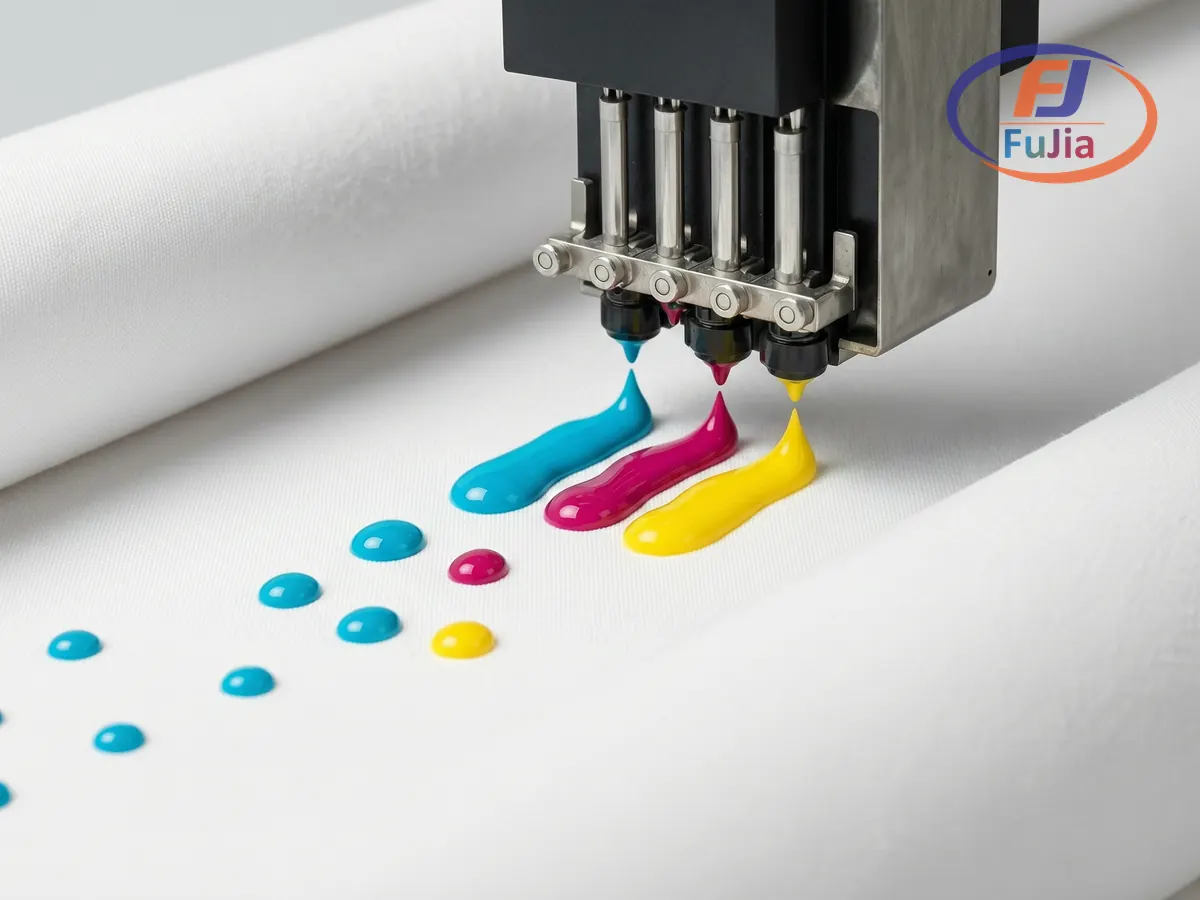
Digital textile printing follows two routes. The direct-to-media route prints disperse ink straight onto uncoated polyester, giving maximum print-through with no transfer paper. The transfer route prints dye-sublimation ink onto transfer paper, then a heat press moves the design onto the fabric. Wikipedia notes that direct-to-media “drastically reduced waste” because the direct-to-media method removes the separate transfer-paper step.
Industrial speed is real, not theoretical. A Reggiani Renoir printer reaches 110 linear yards per hour on nylon and polyester, a benchmark cited in Wikipedia’s references. Custom on-demand services move fast too: Bags of Love advertises digital printing on 140 textiles with a 1 to 2 day turnaround. The dye-sublimation transfer step itself depends on heat and pressure, a process detailed in our guide to how sublimation printing works.
Digital Textile Printing: Method Comparison
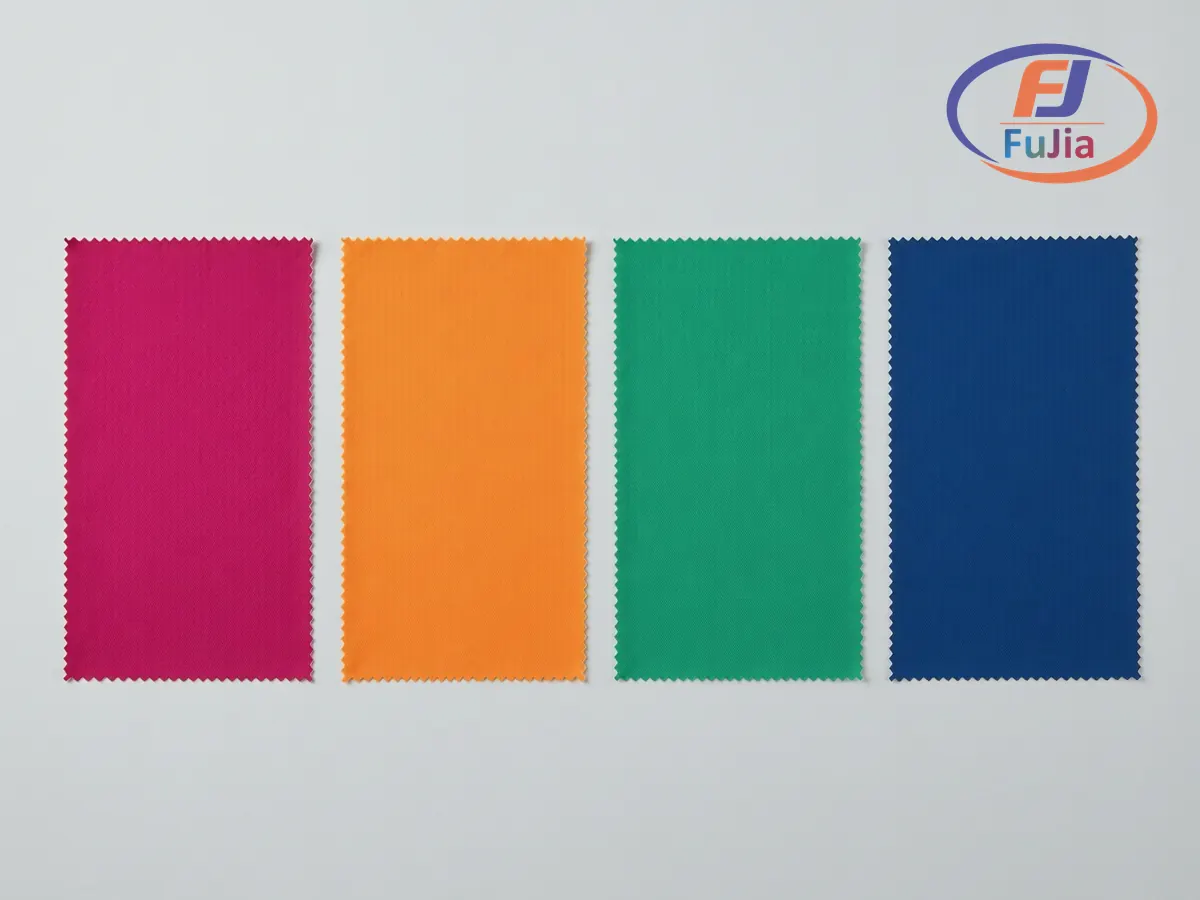
Four methods sit under the digital textile printing umbrella. Each pairs with a specific fabric and ink, so the best method is really a fabric decision.
| Method | Best fabric | Ink type | Typical use |
|---|---|---|---|
| Direct-to-fabric (roll-to-roll) | Polyester, cotton blends | Disperse, reactive | Soft signage, banners, yardage |
| Direct-to-garment (DTG) | Cotton tees | Water-based pigment | Custom apparel, one-offs |
| Dye-sublimation transfer | Polyester | Disperse (dye-sub) | All-over garment prints |
| Direct-to-film (DTF) | Cotton, poly blends | Pigment | Small-batch apparel |
Precedence Research reports that direct-to-fabric held 68% of process share in 2024, while sublimation ink contributed over 63% of ink share the same year. DTG is the fastest-growing apparel segment as on-demand cotton printing scales. For cotton-specific workflows, see our breakdown of DTG printing.
Ink Types for Digital Textile Printing
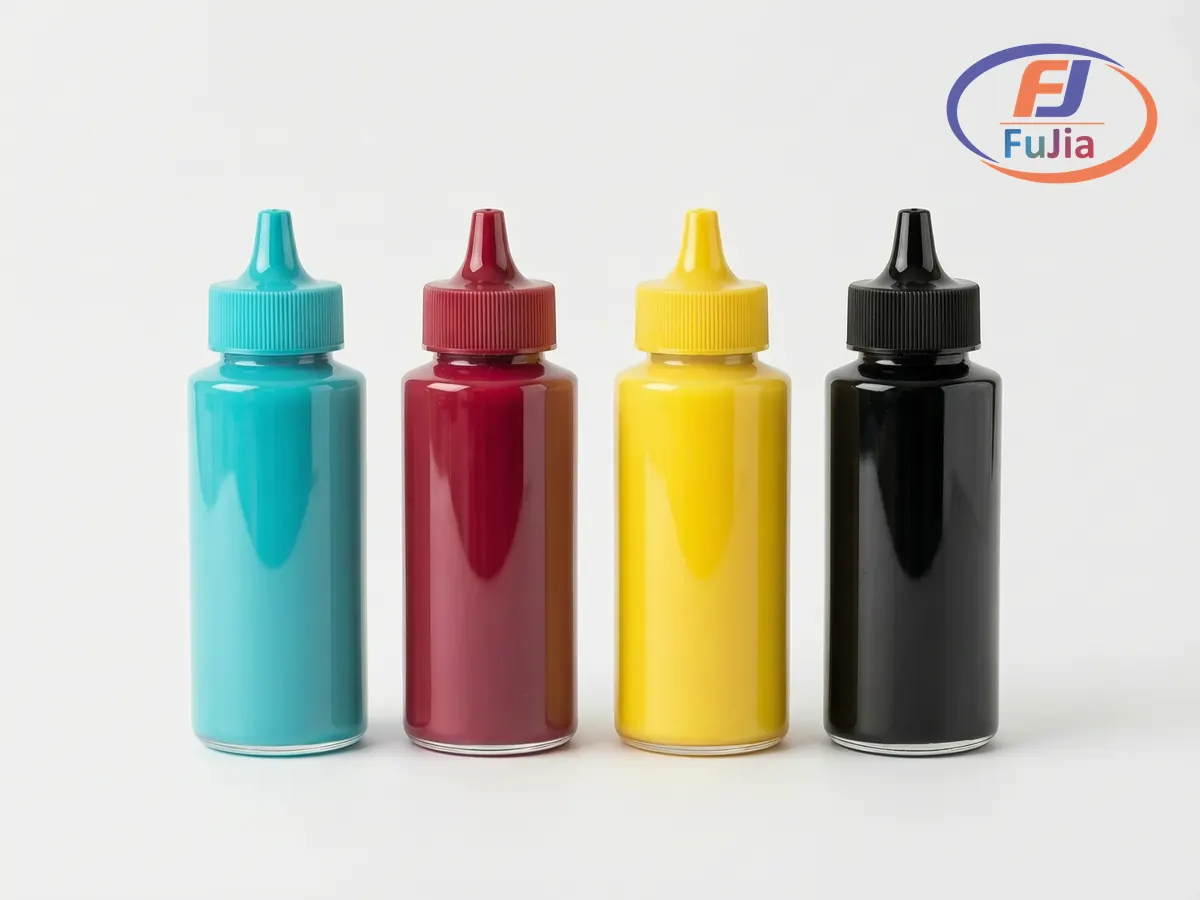
Ink chemistry decides which fabric a digital textile printer can handle. Disperse ink, built on the disperse dyes standard for polyester (Wikipedia), ships in two forms: low-energy sublimation and high-energy disperse direct. Acid ink serves nylon and silk. Reactive ink bonds with cotton, silk, and linen but needs steaming to fix the color. Pigment ink is the near-universal option that sits on the fiber surface and cures with heat.
The numbers show where demand concentrates. Sublimation ink took over 63% of market share in 2024, and polyester is the fastest-growing material at a 15.21% CAGR. Cotton still contributed more than 53% of share in 2024. Our sublimation ink guide explains how disperse chemistry behaves on polyester, and dye-sublimation basics cover the heat-transfer bond.
Digital Textile Printing Market Size and Adoption
The market is large and still expanding. Precedence Research values the digital textile printing market at USD 3.89 billion in 2025 (Precedence Research), rising to USD 4.45 billion in 2026 and a projected USD 14.13 billion by 2035, a 13.77% CAGR across the period.
| Metric | Value | Year |
|---|---|---|
| Global market size | USD 3.89 billion | 2025 |
| Projected market size | USD 14.13 billion | 2035 |
| Compound annual growth | 13.77% | 2026 to 2035 |
| Sublimation ink share | Over 63% | 2024 |
| Direct-to-fabric process share | 68% | 2024 |
| Clothing and apparel share | Over 54% | 2024 |
| Europe regional share | 37% | 2024 |
| Europe market value | USD 1.26 billion | 2025 |
Cotton and polyester together anchor demand, with cotton above 53% material share and polyester growing fastest. Europe led with 37% of regional share in 2024 and a USD 1.26 billion market in 2025.
Cost of Digital Textile Printing
Real Shopping data shows the price range across services and machines. Custom print services charge per item, while machines are a capital purchase.
| Service or product | Price | Rating |
|---|---|---|
| Art Shades fabric-only custom print | $12.00 | n/a |
| Bags of Love custom fabric print | $13.20 | 5.0 stars |
| EQ Printables inkjet fabric sheets | $21.30 | 4.7 stars |
| Contrado digital textile printing | $24.98 | 4.9 stars |
| C&T Publishing at-home kit | $49.99 | n/a |
| Brother Print Moda Studio fabric printer | $849.99 | 4.4 stars |
Entry desktop fabric printers start near $850, based on the Brother Print Moda Studio listing. Custom on-demand printing begins at about $12.00 per item and reaches $24.98 at Contrado, with turnarounds as fast as 1 to 2 days at Bags of Love. Industrial roll-to-roll systems cost far more and target volume producers rather than hobbyists.
Digital Textile Printing vs Screen Printing
The classic question is digital versus analog screen printing. The two methods split cleanly by order size and setup.
| Factor | Digital textile printing | Screen printing |
|---|---|---|
| Setup | No screens or plates | Physical screens per color |
| Minimum order | 1 piece | Hundreds of pieces |
| Color range | Millions of colors | Limited by screens |
| Waste | Drastically reduced (direct-to-media) | More material and water |
| Speed | 110 linear yards per hour (industrial) | Very high at long runs |
| Best for | Short-run, custom, on-demand | Long-run identical batches |
Digital printing wins for short-run and personalized work, where a single custom print costs about $13.20 and ships in 1 to 2 days. Screen printing still leads when thousands of identical garments are needed. Within digital, direct-to-fabric held 68% of process share in 2024, showing where production capacity is concentrating.
What is digital textile printing?
Digital textile printing is any inkjet-based method of applying colorants directly onto fabric, replacing the screens and plates used in traditional analog printing. The term covers two application families. Direct-to-garment (DTG) prints finished clothing in small format, while wide-format roll textile printing produces flags, banners, and retail graphics. Both rely on an inkjet head that deposits microscopic ink droplets onto the textile.
The field uses four ink chemistries. Disperse ink serves polyester, acid ink serves nylon and silk, reactive ink bonds with cotton and silk, and pigment ink sits on nearly any fiber surface. Digital textile printing started in the late 1980s and gained a dye-sublimation printer in the early 1990s. The industry has grown steadily since the late 2010s as digital methods replaced analog screen printing. Today the market is valued at USD 3.89 billion in 2025 and is projected to reach USD 14.13 billion by 2035, a 13.77% CAGR.
What’s better, DTG or screen printing?
The better choice depends on order size, not on which technology is newer. DTG is a digital method that prints water-based pigment ink straight onto cotton garments, so it needs no screens and can produce a single custom shirt. Screen printing builds each color with a physical screen, which makes setup slow but extremely cheap per unit once hundreds of identical shirts are running.
For short runs and personalization, DTG wins because there is no minimum order and color count is unlimited. A custom digital fabric print costs about $13.20 and ships in 1 to 2 days at services like Bags of Love. For long runs of identical designs, screen printing is cheaper per shirt at scale. Digital textile printing overall reached USD 3.89 billion in 2025 and grows at 13.77% CAGR, with direct-to-fabric holding 68% of process share in 2024, so digital capacity is expanding even as screen printing keeps the high-volume crown.
What are the disadvantages of digital textile printing?
Digital textile printing has real limits that buyers should weigh. The first is per-unit cost at scale. Because digital ink is deposited drop by drop, a single custom print runs about $13.20 to $24.98, while screen printing drops the unit cost sharply once a long identical run is underway. The second limit is fabric and ink compatibility. Pigment ink can rub off some surfaces, reactive ink needs steaming to fix, and disperse ink is mostly for polyester unless a transfer step is used.
A third limit is equipment cost for serious volume. Entry desktop fabric printers start near $850, but industrial roll-to-roll systems that compete with screen printing cost substantially more and need trained operators. Speed is a fourth limit: industrial units reach about 110 linear yards per hour, fast for sampling but slower than screen lines on million-unit orders. Digital still “drastically reduced waste” versus analog, yet digital textile printing is not the cheapest path for every job.
How to digitally print on clothing?
Printing on clothing digitally starts with picking the method that matches the fabric. Cotton t-shirts work best with direct-to-garment (DTG) using water-based pigment ink. Polyester garments use dye-sublimation, where disperse ink is printed on transfer paper and a heat press moves the design onto the fabric. Cotton and polyester blends often use direct-to-film (DTF), which prints pigment ink on film and transfers it with adhesive powder.
The practical steps are straightforward. Create or upload a design file, choose the fabric-matched method, run the print, then cure or heat-press to fix the ink. Custom services make the process turnkey: Bags of Love prints on 140 textiles with a 1 to 2 day turnaround at about $13.20 per item. For polyester workflows, our guide to how sublimation printing works covers the heat-press transfer in detail, and our DTG printer overview explains cotton garment printing.
Conclusion
Digital textile printing turns a digital file into fabric color through inkjet heads, with methods spanning direct-to-fabric, DTG, dye-sublimation, and DTF. The market reached USD 3.89 billion in 2025 and keeps growing at a 13.77% CAGR, so the workflow is here to stay. For factory-direct DTF and UV printer pricing and free sample inquiries, contact Fujia Print.
