

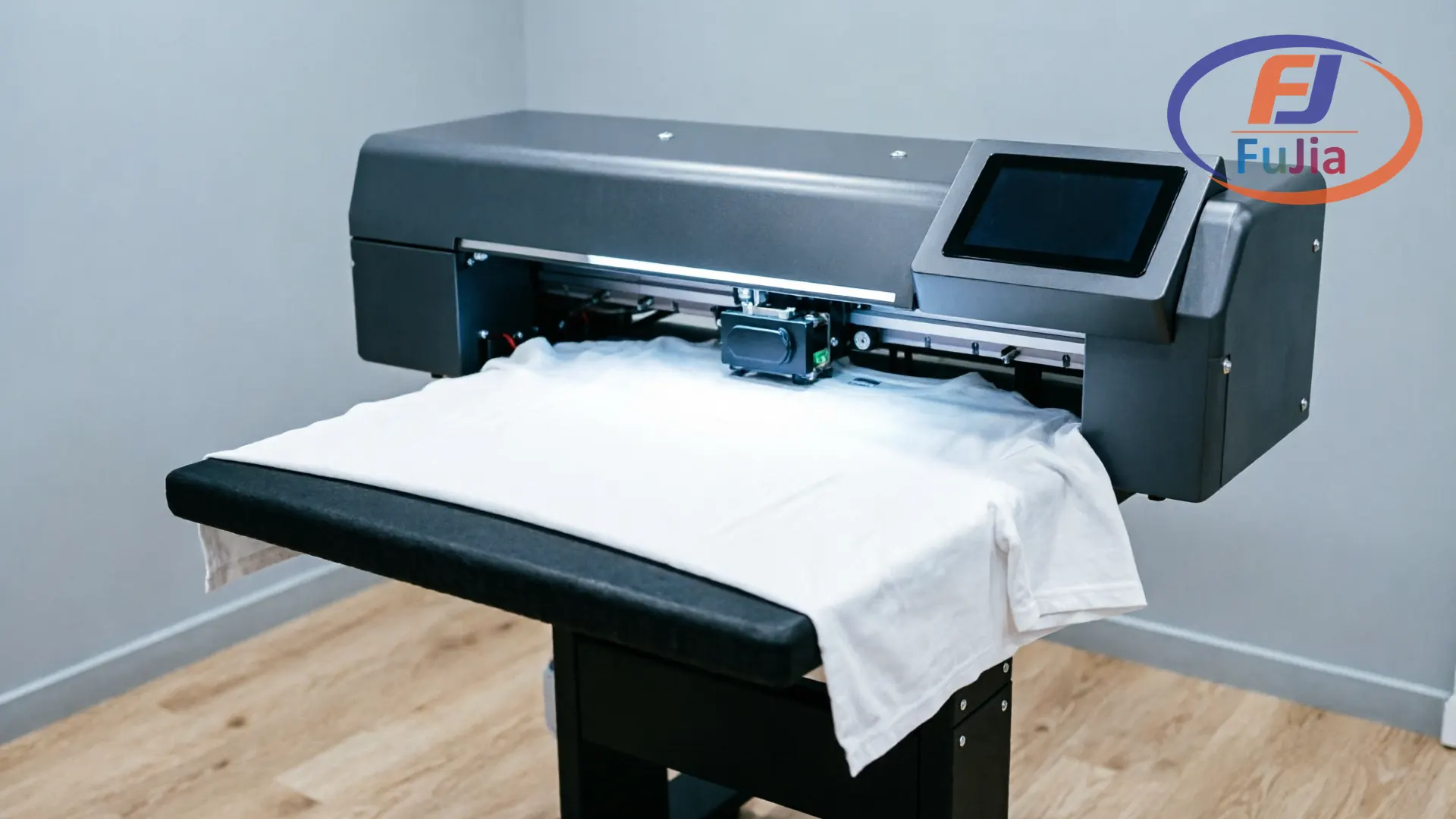
A DTG (Direct-to-Garment) printer is a digital inkjet machine that prints full-color designs directly onto fabric, most commonly 100% cotton T-shirts, using water-based pigment inks that bond with the fabric fibers. Unlike screen printing which requires separate screens per color, DTG prints any design in a single pass — photorealistic images, gradients, and fine details included — with no setup fees and no minimum order quantity.
Key Takeaways
- DTG printing applies water-based pigment inks directly onto fabric, producing soft-to-the-touch prints with no raised texture. It requires pre-treatment for optimal adhesion and wash fastness.
- The global DTG printing market was valued at approximately $1.8 billion in 2025 and is projected to reach $3.5 billion by 2032, growing at a CAGR of 10-12%.
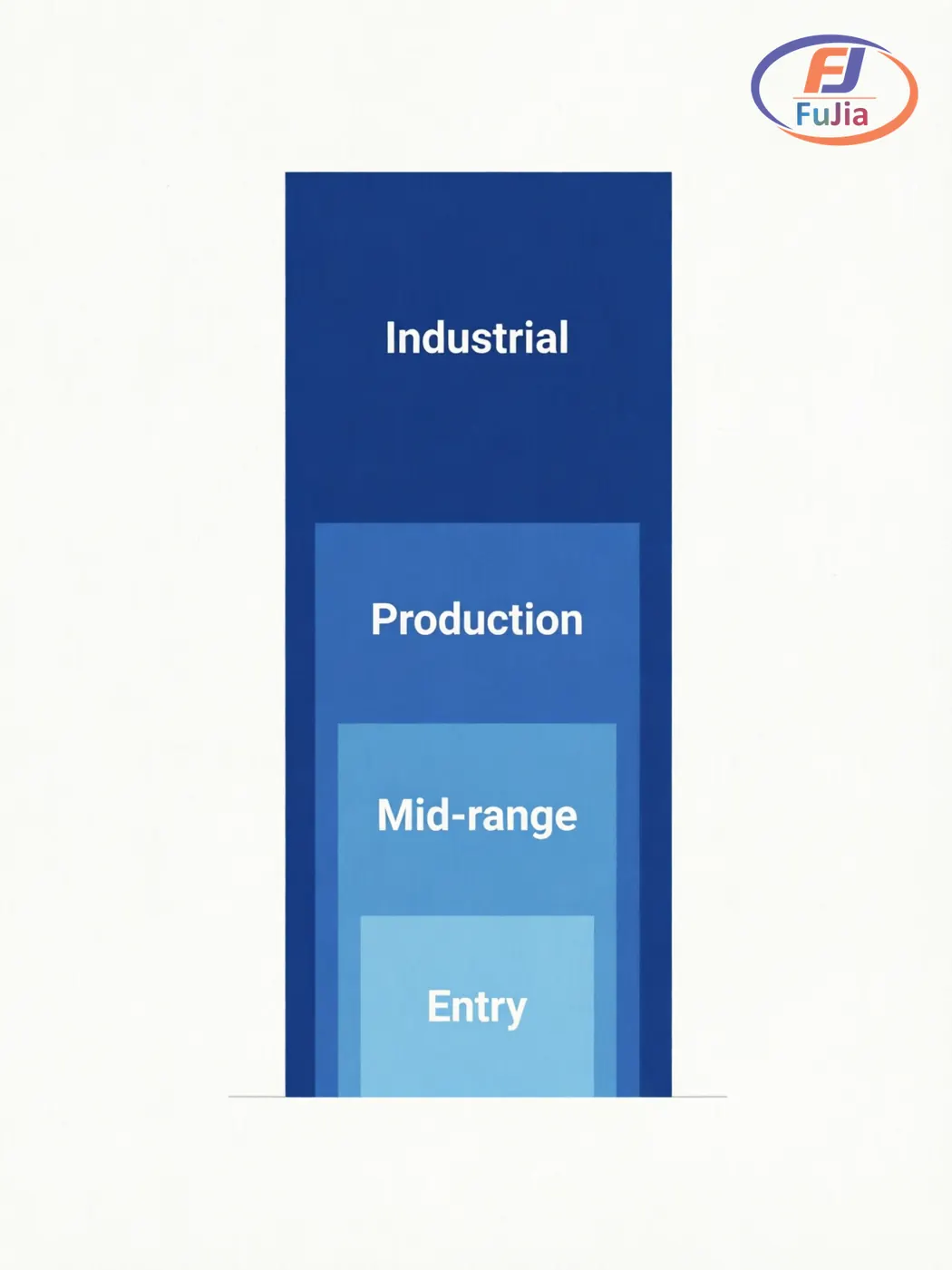
- Entry-level DTG printers start at $15,000–$30,000, with mid-range production machines priced $30,000–$80,000, and industrial models exceeding $150,000.
- DTG excels at low-volume, high-variety orders — one-off custom T-shirts, small batch samples, and on-demand e-commerce fulfillment — where screen printing is uneconomical.
- The main cost difference versus DTF: DTG has lower per-print ink cost (approximately $0.30–$0.80 per full-front print) but requires higher equipment investment and pre-treatment.
What Is a DTG Printer?
A Direct-to-Garment printer is essentially a specialized inkjet printer — similar to a large-format document printer — modified to print water-based pigment inks onto fabric. The garment is loaded onto a platen that moves under the print carriage, while RIP software handles color management and white underbase generation.
The printing process involves four steps:
- Pre-treat the garment — A liquid pre-treatment solution is sprayed or padded onto the fabric area to be printed. This prevents ink from bleeding into the fibers and provides a smooth surface for the white underbase.
- Heat dry the pre-treatment — The treated area is dried using a conveyor dryer or heat press (typically 2–5 minutes at 160°C). This step is critical — insufficient drying causes ink spread and reduced wash fastness.
- Print the design — The printer applies a white underbase layer first, then CMYK color layers on top, directly onto the garment. Modern DTG printers achieve resolutions of 1200×1200 dpi or higher.
- Cure the print — The printed garment passes through a conveyor dryer at 160°C–180°C for 2–4 minutes to fix the ink permanently into the fabric fibers.
Wikipedia’s DTG printing overview notes that “direct-to-garment printing is a process of printing on textiles using specialized aqueous ink jet technology.” The technology has evolved significantly since its commercial introduction in the mid-2000s, with printhead reliability and ink formulations improving dramatically.
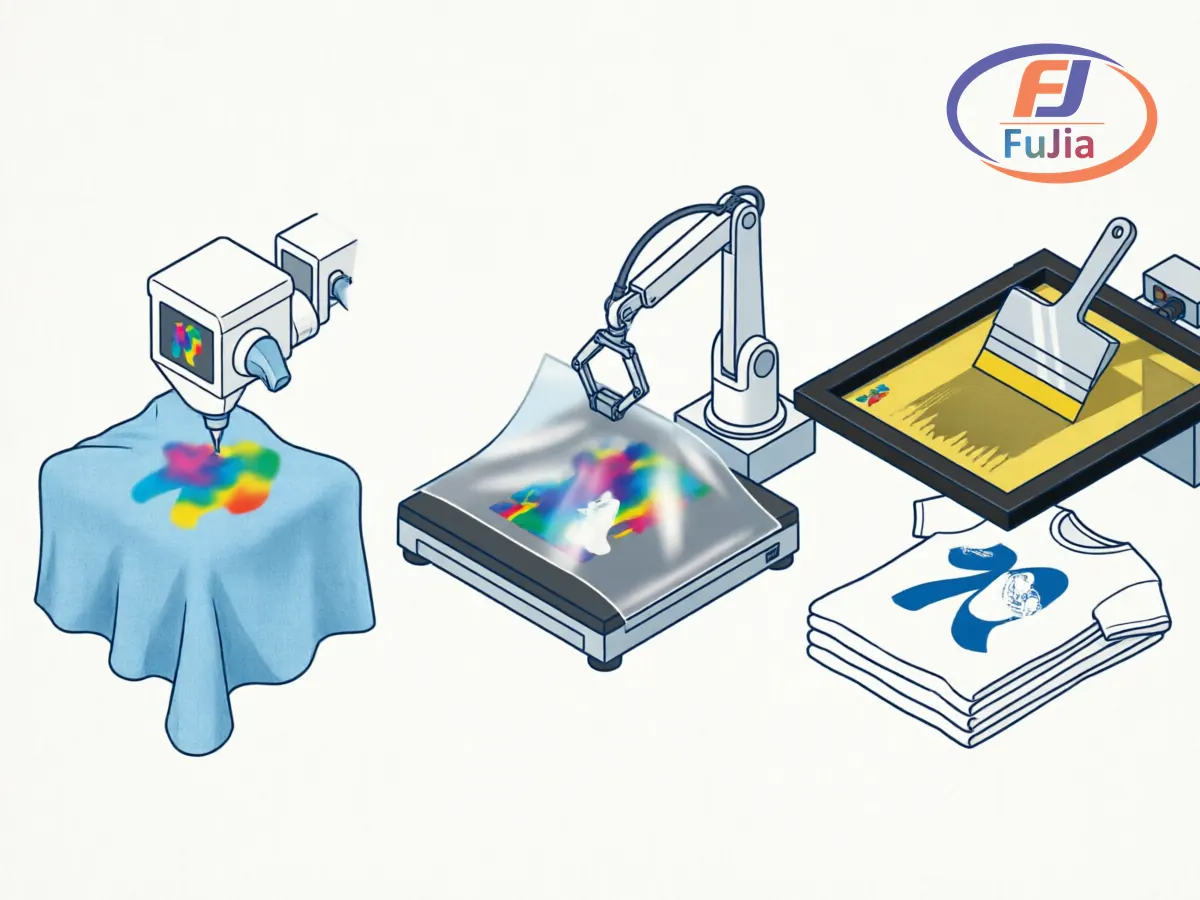
DTG vs DTF vs Screen Printing: Which Should You Choose?
The three main garment decoration methods serve different production needs. Choosing the wrong one costs you time and money.
| Factor | DTG | DTF | Screen Printing |
|---|---|---|---|
| Fabric Types | 100% cotton, cotton blends | Any fabric (cotton, poly, blends) | Any fabric |
| Pre-treatment | Required (spray + dry) | None required | None (emulsion on screen) |
| Minimum Order | 1 piece | 1 piece | 24–50+ pieces |
| Per-Print Cost (low vol) | $0.30–$0.80 | $1.00–$2.50 | $3.00–$8.00 (setup amortized) |
| Per-Print Cost (bulk 500+) | Not economical | $0.80–$1.50 | $0.50–$1.50 |
| Print Feel | Soft (no texture) | Slight texture | Can be thick (depends on ink) |
| Best For | Custom tees, samples, POD | Mixed fabrics, dark colors | High-volume, simple designs |
| Equipment Cost | $15,000–$150,000 | $2,500–$15,000 | $5,000–$50,000 |
For a complete side-by-side, read our types of T-shirt printing machines guide.
DTG Printer Price: How Much Should You Budget?
DTG printer pricing tiers depend on print area, speed, automation, and pre-treatment integration.
| Tier | Print Area | Speed | Price | Best For |
|---|---|---|---|---|
| Entry (1-head) | 11″x14″ (front print) | 15–25 pcs/hr | $15,000–$30,000 | Startup custom shops, part-time POD |
| Mid-range (2-head) | 11″x14″ (front + back) | 30–50 pcs/hr | $30,000–$60,000 | Full-time print shops, small production |
| Production (2–4 head) | 14″x18″ (front + back + sleeve) | 50–100 pcs/hr | $60,000–$100,000 | High-volume decorators, contract printers |
| Industrial | 16″x20″ + dual platen | 100–200 pcs/hr | $100,000–$200,000 | Industrial production lines, uniform manufacturers |
Additional costs: Pre-treatment machine ($3,000–$10,000), conveyor dryer ($2,000–$8,000), heat press for post-cure ($500–$2,000), RIP software license ($1,000–$3,000), and initial ink and pre-treatment chemicals ($500–$1,500).
DTG vs DTF: Detailed Cost Comparison
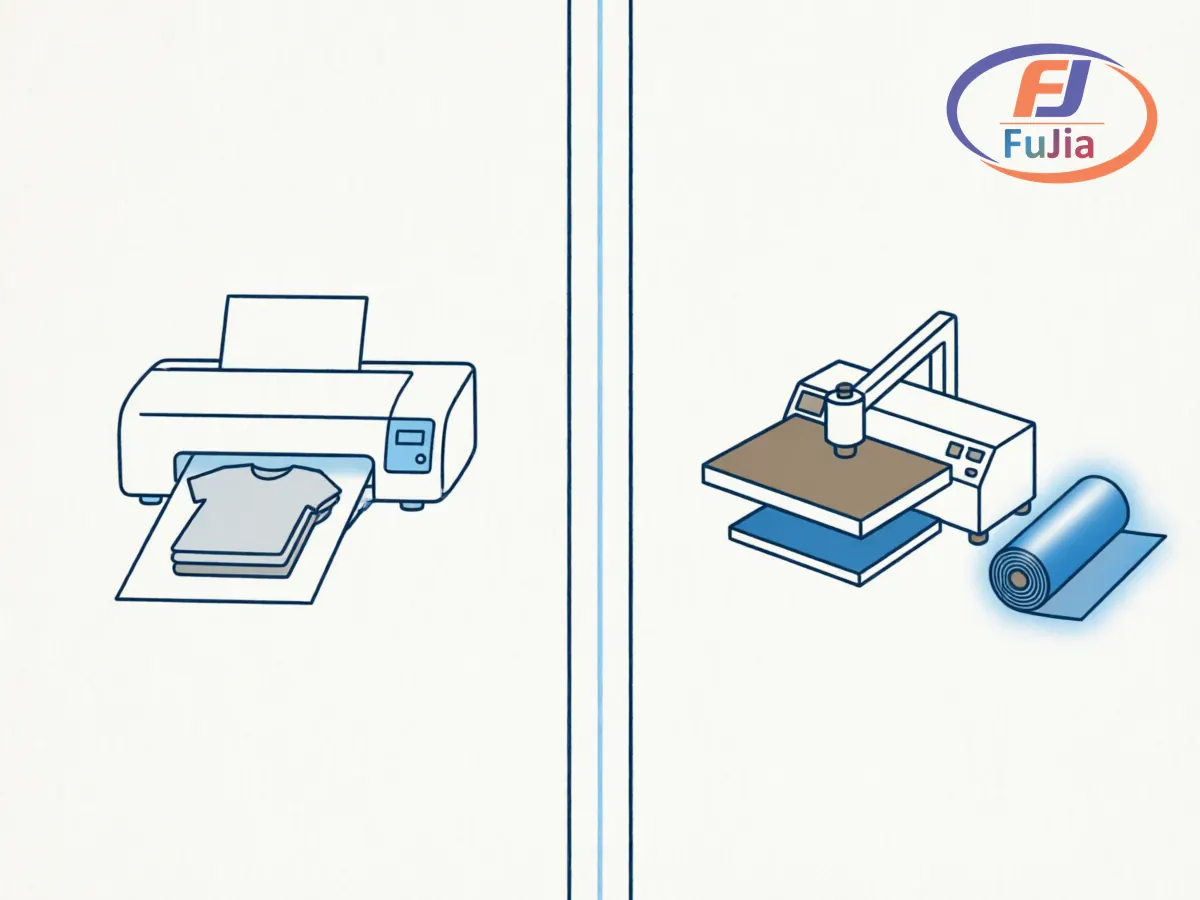
For small business owners deciding between these two technologies, the total cost of ownership over 12 months tells the story.
DTP (DTF) has a lower equipment entry point — a full beginner setup costs $3,000–$5,000 versus $15,000+ for DTG. However, DTF consumables cost more per print ($1.00–$2.50 for DTF versus $0.30–$0.80 for DTG on cotton), and DTF transfers leave a slight texture on the garment that some customers find less premium.
If you print primarily on 100% cotton and your customers value a soft-hand feel, DTG delivers a superior product. If you need to print on polyester, performance wear, or dark garments without pre-treatment complexity, DTF is the better choice. Many established shops operate both — DTG for premium cotton tees and DTF for polyester blends and quick-turn transfers.
Read our detailed DTG vs DTF printer comparison for production costs at different volumes.
How to Choose the Right DTG Printer
Six factors to evaluate when selecting your DTG printer:
Printhead technology determines reliability. Entry-level DTG printers use Epson DX5 or DX7 printheads, which are reliable but slower. Mid-range and production models use Epson I3200 or Ricoh Gen5 printheads with variable droplet sizes (3.5–21 picoliters) for smoother gradients and faster production. The I3200 is currently the industry benchmark for mid-range DTG.
Pre-treatment integration. Some DTG printers include an integrated pre-treatment spray station and flash dryer, which reduces handling time and ensures consistent coverage. Standalone pre-treatment requires manual application and adds 2–5 minutes per garment. Brother’s DTG printer lineup demonstrates integrated pre-treatment systems in their GTX Pro series.
White ink circulation. White pigment ink is the most maintenance-intensive component of a DTG printer. Look for automatic white ink circulation systems with regular agitation to prevent settling. Machines without circulation require manual shaking every 48 hours and more frequent printhead cleaning.
Garment platen system. Quick-change platens for different garment sizes (adult, youth, toddler, sleeve) reduce changeover time between orders. Some production machines feature dual platens that allow loading one garment while the other prints.
RIP software. Most DTG printers require dedicated RIP software for color management, white underbase generation, and spot color mapping. Brother’s DTG printers include integrated software; other brands typically recommend or resell third-party RIPs.
Brand support and warranty. DTG printers require more maintenance than DTF or screen printing equipment. Evaluate the manufacturer’s service network, spare parts availability, and training programs. Factory-direct manufacturers like Fujia Print provide remote troubleshooting and parts within 48 hours.
DTG Printing Applications and Market Trends
Custom apparel and on-demand fulfillment. The rise of print-on-demand platforms (Printful, Printify, CustomCat) has driven massive DTG adoption. DTG is the standard production method for most POD orders because it allows single-piece production with no setup. Grand View Research projects the DTG market reaching $3.5 billion by 2032, driven by e-commerce and on-demand manufacturing.
Local custom T-shirt shops. Independent print shops serving schools, events, and local businesses use DTG for orders of 1–50 pieces where screen printing setup costs would be prohibitive. The ability to turn around a single custom T-shirt in 15–20 minutes from design to finished product is a strong differentiator.
Fashion and small-batch production. Emerging fashion brands use DTG for sample runs, limited editions, and test markets before committing to screen printing bulk orders. The zero-minimum capability allows designers to test designs with minimal financial risk.
For OEM and factory pricing, see our DTG printer OEM factory price guide.
Frequently Asked Questions
Q: How much does a DTG printer cost for a small business?
A: A complete DTG printing setup for a small business costs $18,000 to $40,000, including the printer, pre-treatment system, conveyor dryer, and initial consumables. The printer itself accounts for $15,000 to $30,000 for an entry-level single-head model with a print area of 11 by 14 inches suitable for standard front-of-shirt designs. The remaining investment covers a pre-treatment spray booth or pad applicator ($3,000–$7,000), a conveyor drying oven for both pre-treatment drying and final ink curing ($2,000–$6,000), and a heat press for post-cure touch-ups and repairs ($500–$800). Recurring monthly consumable costs for a shop producing 200 to 300 prints per month are approximately $500 to $800, including CMYK and white ink, pre-treatment solution, and printhead cleaning cartridges. Compared to DTF which starts at $3,000 to $5,000, DTG requires more upfront capital but delivers lower per-print costs and a superior fabric feel on cotton garments.
Q: Can a DTG printer print on dark shirts?
A: Yes, DTG printers print on dark shirts by applying a white ink underbase layer before the CMYK color layers. This white underbase prevents the dark fabric from showing through the design and maintains color vibrancy. Printing on dark garments requires pre-treatment (a liquid solution applied to the print area before printing), which prevents the white ink from absorbing too deeply into the fabric fibers. Without proper pre-treatment, white ink appears gray or translucent on dark fabric. The process adds roughly 3 to 5 minutes per garment for pre-treatment application and drying. Most entry-level DTG printers support white ink, but the quality of the underbase depends heavily on the printhead configuration — printers with dedicated white ink channels (separate from CMYK) produce more consistent results than those sharing printheads between white and color inks. For highest quality on dark garments, look for printers with at least one printhead dedicated exclusively to white ink.
Q: What is the difference between DTG printing and DTF printing?
A: DTG (Direct-to-Garment) prints water-based pigment inks directly onto fabric, while DTF (Direct-to-Film) prints onto a transfer film that is then heat-pressed onto the garment. The resulting prints feel different: DTG feels soft and integrated into the fabric because the ink bonds with the fibers, while DTF has a slight raised texture from the adhesive powder layer. DTG requires pre-treatment on cotton and does not work well on polyester (ink bonds poorly with synthetic fibers). DTF works on any fabric — cotton, polyester, nylon, blends — without pre-treatment. Equipment costs differ significantly: a complete DTG setup costs $18,000 to $40,000, while a DTF setup starts at $3,000 to $5,000. Per-print costs favor DTG for cotton at $0.30 to $0.80 versus DTF’s $1.00 to $2.50, but DTF’s lower equipment barrier makes it more accessible for beginners and businesses printing on mixed materials.
Q: How many prints can a DTG printer produce per hour?
A: Production speed for DTG printers varies by machine tier and print complexity. An entry-level single-head DTG printer produces approximately 15 to 25 prints per hour for a standard front-of-shirt design at production quality settings. Mid-range dual-head printers achieve 30 to 50 prints per hour by printing white underbase and CMYK layers simultaneously through separate printheads. Production-grade printers with three to four printheads reach 60 to 100 prints per hour. Industrial multi-platen systems with automated loading achieve 120 to 200 prints per hour by overlapping the pre-treatment, printing, and curing stages. These speeds assume full-color front prints with white underbase. Simpler designs without white ink or smaller print areas increase throughput by 20 to 40 percent. Note that pre-treatment and curing time are typically the bottleneck, not the print cycle itself — a conveyor dryer that matches the printer’s output speed is essential for maintaining production flow.
Conclusion
DTG printing delivers the highest-quality fabric feel for custom cotton apparel, with zero setup costs and no minimum orders. While the equipment investment is higher than DTF, the lower per-print costs and superior hand feel make it the right choice for businesses focused on premium custom T-shirts, print-on-demand fulfillment, and small-batch fashion production. The market is growing at over 10% annually, driven by e-commerce and on-demand manufacturing trends.
For factory-direct DTG printer pricing and to discuss your production volume requirements, contact Fujia Print.
