

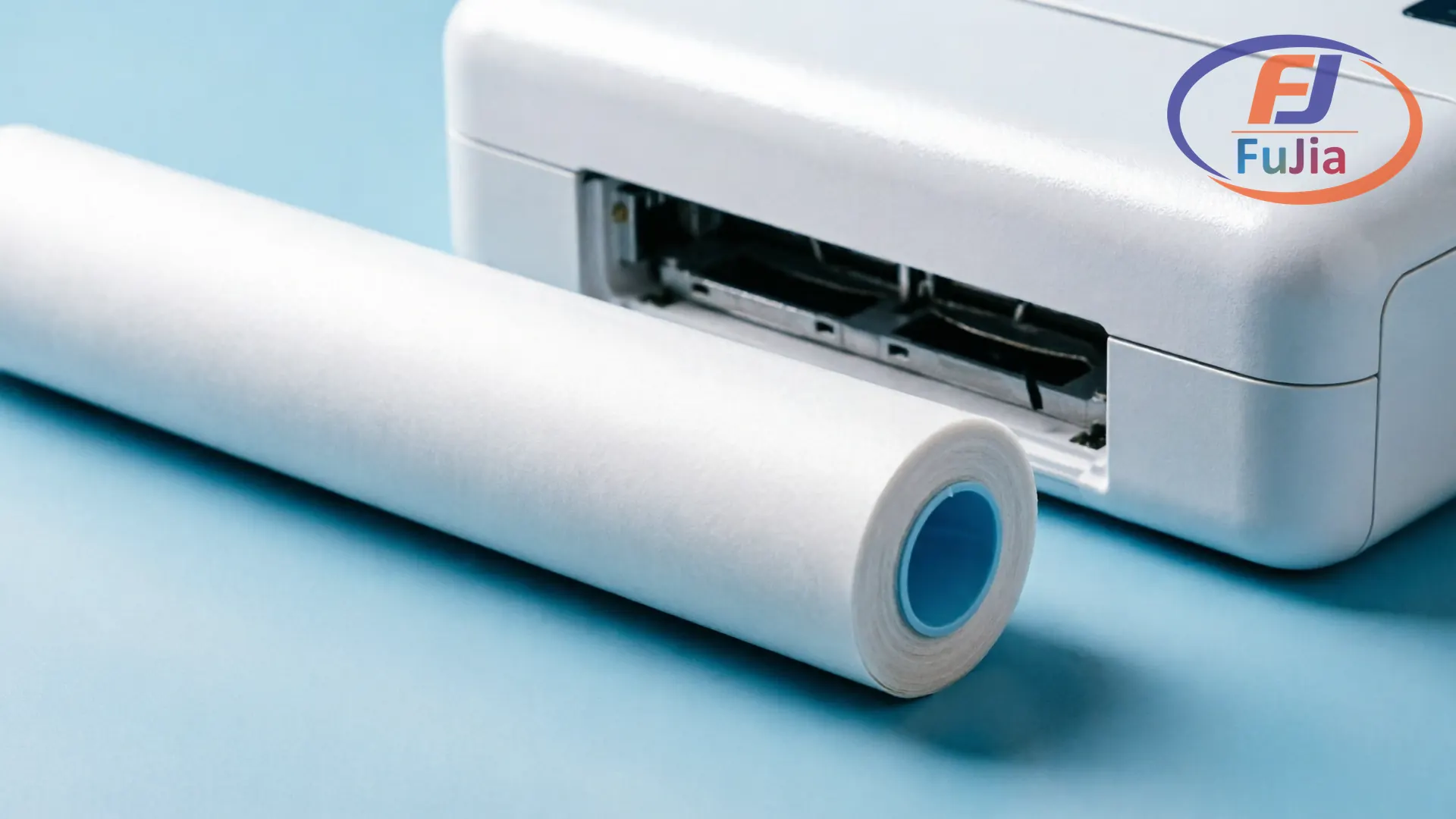
DTF transfer film is a specialized PET (polyethylene terephthalate) film used in Direct-to-Film printing — you print your design onto the matte side of the film, apply adhesive powder, cure it, and heat-press the design onto fabric. The quality of your transfer film directly determines print adhesion, wash fastness, and how the final print feels on the garment.
Key Takeaways
- DTF transfer film is a PET film with a matte coating that accepts ink on one side and a smooth back that releases the print during heat pressing.
- Two main types: hot peel (peel immediately after pressing) and cold peel (wait for cooling). Hot peel is faster for production; cold peel gives sharper detail.
- Standard film thickness ranges from 50 to 100 microns — thinner films cost less but are harder to handle, thicker films are more durable and easier to align.
- DTF film is sold in rolls (standard widths: 30cm, 60cm, A3, A2, A1) or pre-cut sheets. Rolls are 20-40% cheaper per square meter.
- Store film in a cool, dry place (15-25°C, below 60% humidity) and use within 12 months of purchase for best results.
What Is DTF Transfer Film?
DTF transfer film is the physical medium that carries your printed design from the printer to the garment. It consists of three layers:
- PET base layer — The structural backing that gives the film its shape and tension during printing. PET (polyethylene terephthalate) is the same material used in beverage bottles and food packaging, valued for its dimensional stability and consistent thickness across production runs — typically within 2-micron tolerances for quality film suppliers.
- Matte ink-receptive coating — A micro-porous coating on one side that absorbs ink droplets and prevents them from spreading. This is the printable side, always loaded face-up in the printer.
- Release layer — A thin coating between the PET base and the matte layer that allows the cured print to release cleanly from the film during heat pressing without leaving residue.
When you heat-press the film onto fabric at 160-180°C, the adhesive powder melts and bonds the ink layer to the fabric. The PET base releases, leaving only the ink and adhesive on the garment. This process is well documented in the Printful guide to DTF printing and the Wikipedia article on DTF printing.
Hot Peel vs Cold Peel DTF Film
The most important choice when buying DTF transfer film is whether to use hot peel or cold peel.
| Factor | Hot Peel Film | Cold Peel Film |
|---|---|---|
| Peel Timing | Immediately after pressing (while hot) | Wait 15–30 seconds for cooling |
| Production Speed | Faster — no waiting between prints | Slower — cooling time adds to cycle |
| Detail Sharpness | Good, slight risk of distortion | Sharper, cleaner edges |
| Best For | High-volume production, simple designs | Fine details, small text, complex art |
| Film Thickness | 70–100 microns | 50–75 microns |
| Powder Type | Works with most standard powders | Works with most standard powders |
| Price | Similar | Similar |
Rule of thumb: If you are doing production runs of 50+ pieces per day, hot peel film saves significant time. If you create photo-realistic prints with fine gradients and small text (under 12pt), cold peel delivers better results. Many shops stock both and choose based on the job.
DTF Transfer Film Sizes and Compatibility
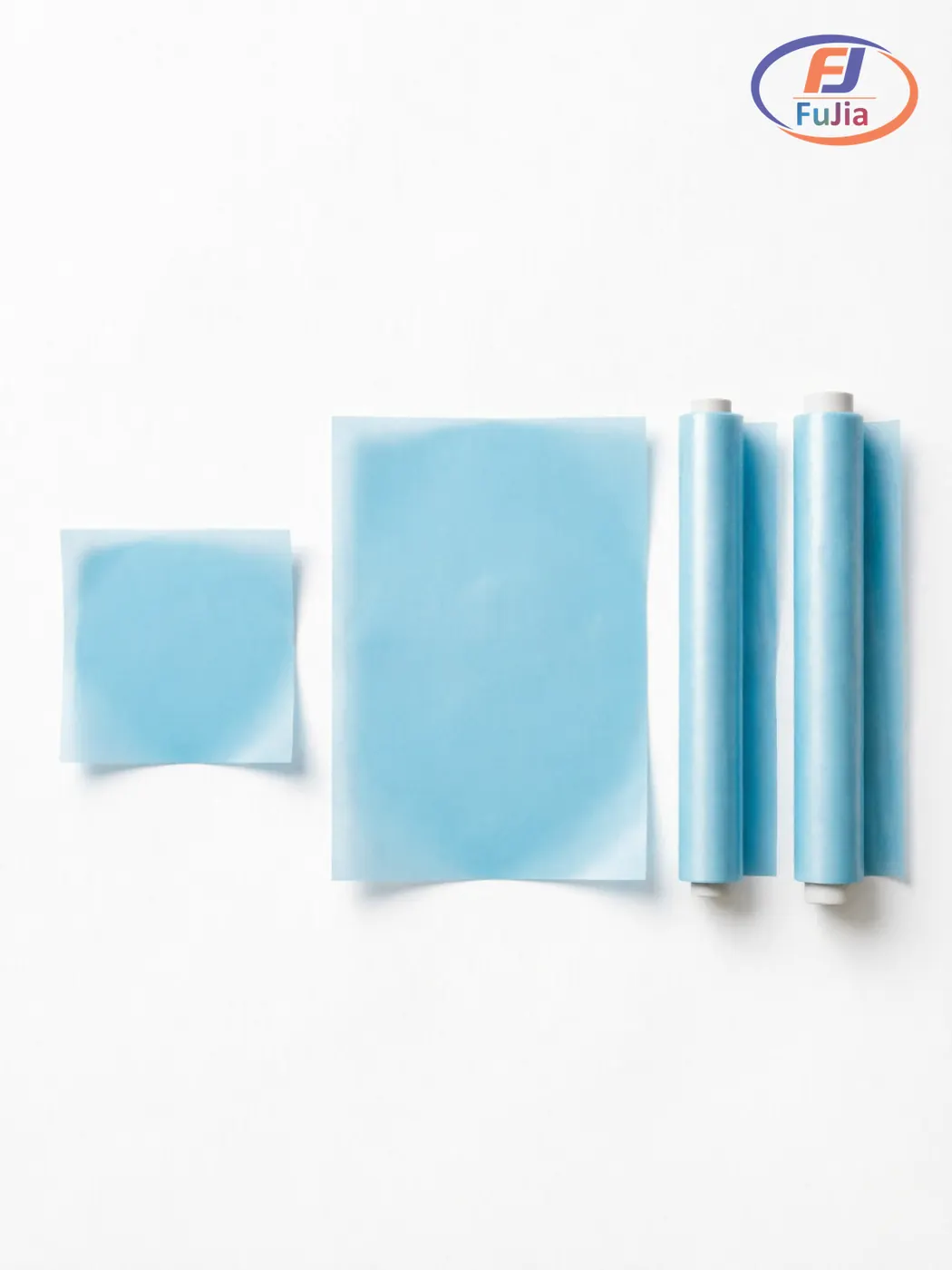
DTF film must match your printer’s paper path width. The most common sizes are:
| Size | Dimensions | Compatible Printers | Monthly Volume |
|---|---|---|---|
| A4 | 21×29.7 cm | Desktop DTF (L1800), small A4 printers | Under 500 prints |
| A3 | 29.7×42 cm | A3 DTF printers (XP600, single head) | 500–2,000 prints |
| A3+ | 33×48 cm | A3+ prosumer DTF printers | 1,000–3,000 prints |
| 30 cm roll | 30 cm × 100 m | Any A3/A4 printer (cut to size) | Flexible volume |
| 60 cm roll | 60 cm × 100 m | A2 DTF printers (dual head) | 2,000–5,000 prints |
| A1 roll | 61 cm × 100 m | A1 DTF printers (industrial) | 5,000+ prints |
For beginners, starting with A3 or 30 cm rolls is most cost-effective. Pre-cut A4 or A3 sheets are convenient but cost 20-40% more per print than buying rolls.
Read our DTF ink buying guide for compatible ink recommendations, and our DTF powder buying guide for matching adhesive powder.
Transfer Film Thickness: Which Micron to Choose?
DTF film thickness is measured in microns (μm). The optimal thickness depends on your application:
50–60 microns — Thin and flexible. Best for cold peel applications on lightweight fabrics like T-shirts. Lower cost per print but more prone to wrinkling during printing and requires careful handling. Not recommended for beginners.
70–80 microns — The sweet spot for most users. Stiff enough to feed reliably through the printer without jamming, thin enough to conform to curved heat press platens. Works with both hot peel and cold peel methods. Recommended for most small to mid-size print shops.
90–100 microns — Heavy-duty film for high-volume production. Resists curling and jamming even in high-humidity environments. Best for industrial printers with roll-to-roll systems. Slightly higher cost per print but fewer print failures.
For factories and bulk sourcing options, see our DTF consumables wholesale guide.
How to Choose the Right DTF Transfer Film for Your Setup
For beginners with an A3 printer: Start with 75-micron cold peel film in A3 pre-cut sheets or 30 cm rolls. Cold peel is more forgiving of temperature and pressure variations, which is important while you learn. Once you have consistent results, switch to hot peel for faster production.
For small production shops (A3/A3+): Use 80-micron hot peel film in 30 cm or 60 cm rolls for your main production, and keep 75-micron cold peel film for orders requiring fine detail. A roll cutter or guillotine for cutting sheets from rolls saves money versus pre-cut sheets.
For industrial production (A1/A2): Use 90–100 micron hot peel film in 60 cm or A1 rolls with a roll-to-roll printer setup. At this scale, film cost per square meter is the critical metric — negotiate bulk pricing with your supplier.
Common DTF Film Mistakes to Avoid
Using the wrong side. Print on the matte side only. Printing on the smooth side causes ink to pool, resulting in blurred images and poor powder adhesion. Most film rolls have the printable side facing outward.
Inconsistent film tension. When loading rolls, ensure the film unrolls with consistent tension. Loose film causes misregistration and banding. Too much tension causes the film to skew.
Poor storage. Film absorbs moisture over time, causing ink spreading and poor release. Store in original packaging with silica gel packs in an air-conditioned room. If film feels limp or curls more than usual, it has absorbed too much moisture.
Mixing hot and cold peel in production. The heat press settings differ: hot peel requires peel-back immediately at 160-180°C with medium pressure; cold peel needs 15-30 seconds cooling before peeling. Mixing them up ruins prints.
Frequently Asked Questions
Q: Can I use any DTF transfer film with any DTF printer?
A: Most DTF transfer films are compatible with all standard DTF printers that use CMYK and white ink, as long as the film width fits the printer’s paper path. The key variable is the ink-receptive coating — higher-quality films have a more uniform micro-porous coating that absorbs ink consistently across the entire sheet, reducing banding and color variation. Some budget films have uneven coating that causes “hot spots” where ink absorbs faster, leading to visible density variations in solid color areas. The printer model does not usually affect film compatibility, but the ink formulation does — water-based DTF inks from different manufacturers may have slightly different drying times and absorption rates. For best results, buy film and ink from the same supplier or one that specifically tests compatibility with your ink type. Printful’s DTF supplies overview notes that film quality is one of the most common variables affecting final print quality.
Q: How do I store DTF transfer film properly?
A: DTF transfer film should be stored in a cool, dry environment at 15 to 25 degrees Celsius with relative humidity below 60 percent. The film’s PET base and micro-porous coating are sensitive to moisture — high humidity causes the coating to absorb water, leading to ink spread, reduced detail sharpness, and inconsistent powder adhesion during the transfer process. Store unopened rolls in their original packaging with the included silica gel desiccant packs to maintain low moisture levels. Once opened, reseal the roll in a plastic bag with the desiccant after each use and avoid storing near windows, air conditioning vents, or heat sources. Temperature fluctuations cause the PET base to expand and contract, potentially leading to registration issues when printing multi-layer designs that require precise alignment between the white underbase and CMYK overprint layers. A consistent climate-controlled environment extends film shelf life significantly.
Q: What is the difference between hot peel and cold peel DTF film?
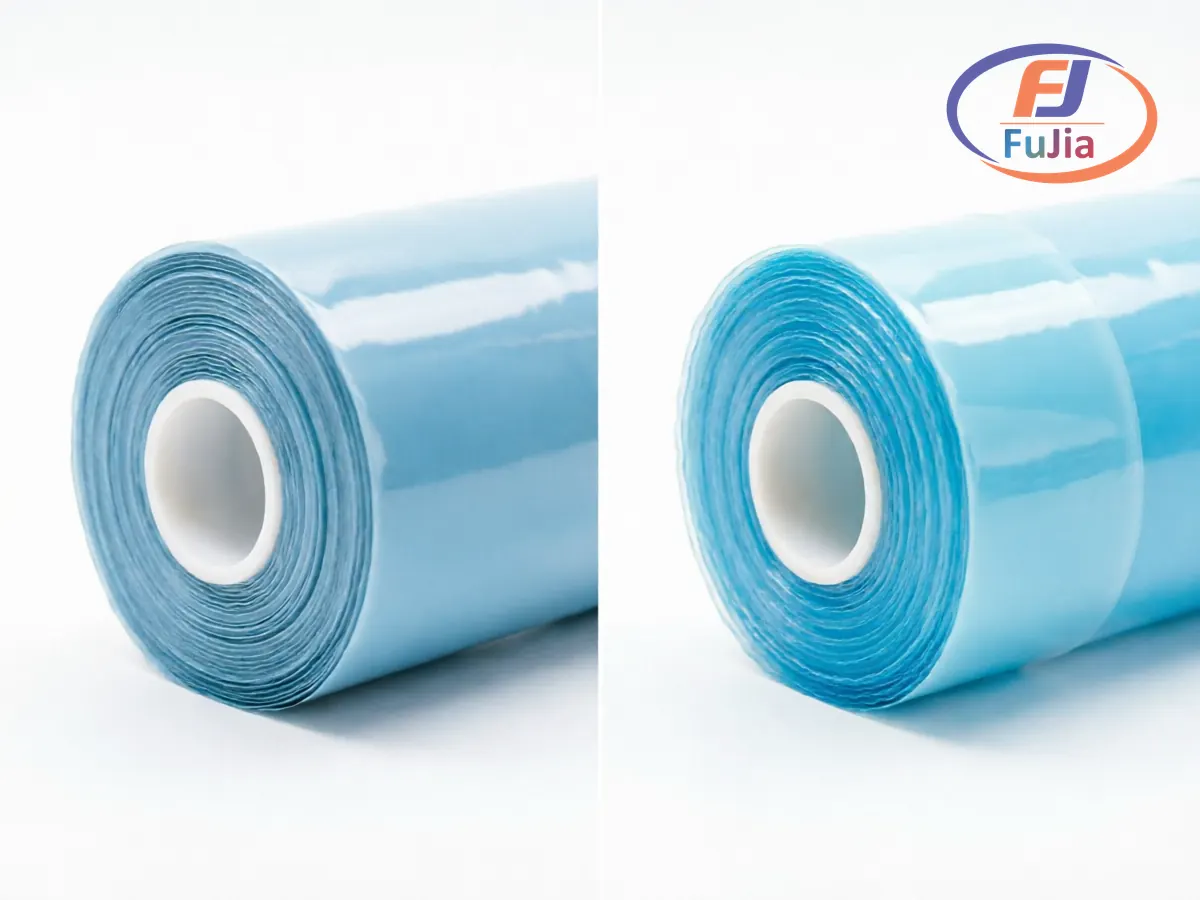
A: The main difference is the timing of the peel step after heat pressing. Hot peel film allows you to peel the transfer off the garment immediately after pressing while the film and adhesive are still hot. This speeds up production significantly — you can move directly to the next print without any waiting time. Cold peel film requires you to wait 15 to 30 seconds for the transfer to cool to room temperature before peeling. The cooling period allows the ink and adhesive to fully set, resulting in slightly sharper detail and better edge definition, especially for fine text under 12 points and intricate gradient patterns. Both film types use the same PET base material — the difference is in the release layer formulation. The choice between them is largely a production workflow decision rather than a quality decision, as either type can produce excellent results when used with the correct temperature, pressure, and timing settings.
Q: How much does DTF transfer film cost per sheet or roll?
A: DTF transfer film prices vary by size, thickness, and purchase quantity. Pre-cut A4 sheets cost approximately $0.15 to $0.35 each for standard 75-micron film. A3 sheets cost $0.30 to $0.65 each. Rolls provide the best value — a 30 centimeter by 100 meter roll costs $30 to $60, yielding roughly 250 to 330 A3 sheets depending on how precisely you cut them. A 60 centimeter by 100 meter roll costs $55 to $110. Bulk purchasing reduces cost by 15 to 25 percent for quantities of 10 rolls or more. Film thickness also affects price: 50-micron film is approximately 15 percent cheaper than standard 75-micron, while 100-micron heavy-duty film costs 20 to 30 percent more. When comparing prices, calculate cost per square meter rather than per sheet or roll — this gives you an apples-to-apples comparison across different sizes and suppliers.
Conclusion
DTF transfer film is the most cost-sensitive consumable in your DTF printing workflow — using the wrong film wastes ink, powder, and labor. Choose cold peel for detail work and hot peel for production volume. Match film width to your printer, thickness to your skill level, and buy in rolls to save 20-40% over pre-cut sheets.
For factory-direct pricing on DTF transfer film in all standard sizes and custom widths, contact Fujia Print.
