

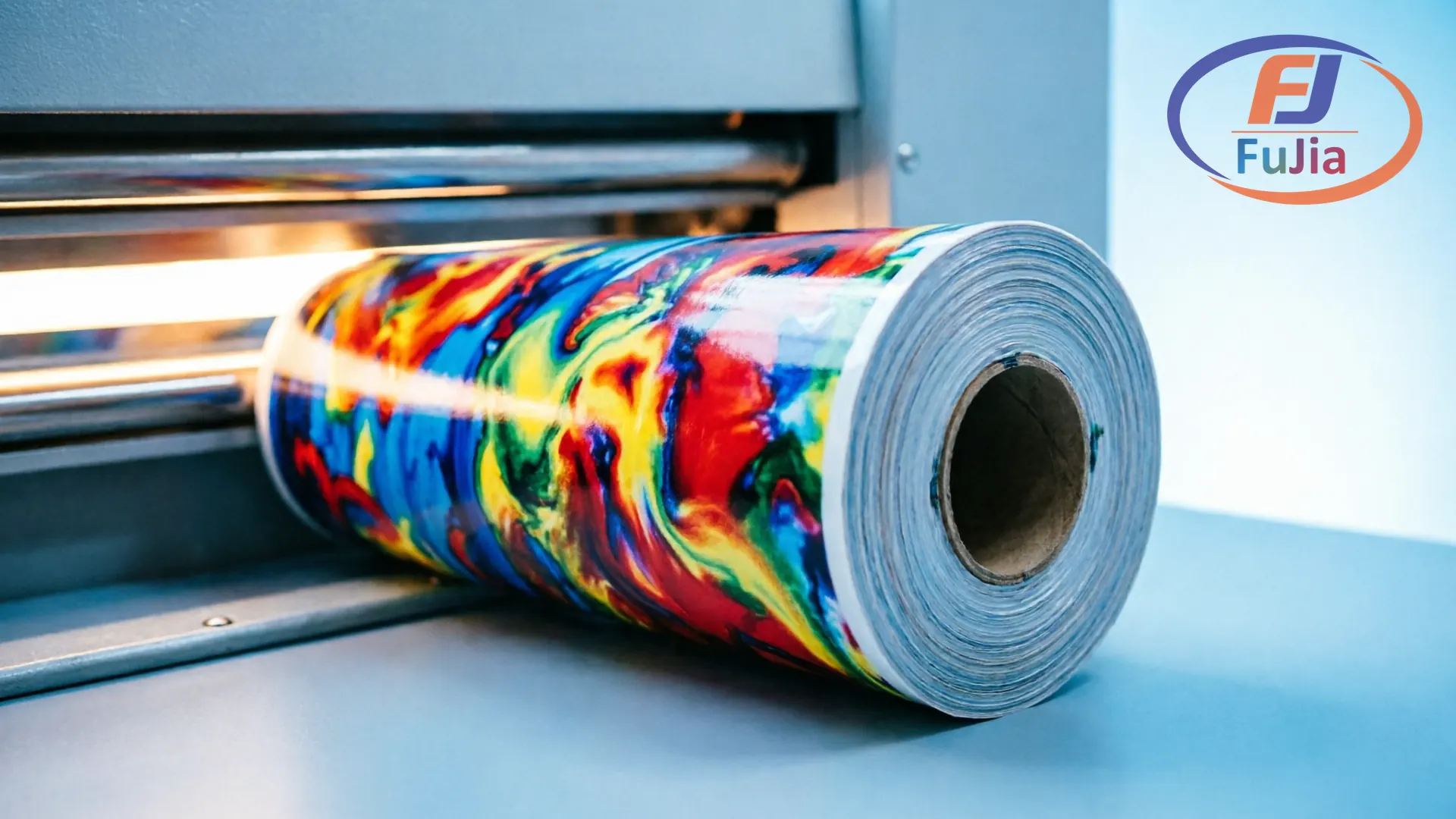
Sublimation transfer paper is a specialty paper that carries disperse dye inks from your printer to the final substrate during dye-sublimation printing. The paper is printed in reverse, then heat-pressed against polyester fabric or coated materials at 190-210°C — the heat turns the solid dye into gas, which bonds with the material permanently, leaving the paper blank.
Key Takeaways
- Sublimation transfer paper has a specialized coating that holds liquid disperse dye inks and releases them as gas under heat. The paper itself remains unprinted after transfer.
- Paper grammage (weight) ranges from 80 to 135 gsm. Heavier paper (100-120 gsm) holds more ink — essential for dark or saturated designs — while lighter paper (80-90 gsm) is sufficient for standard prints.
- Transfer papers are divided into fast-dry (for high-speed production) and standard (for general use). Fast-dry paper reduces print-to-press cycle time by 30-50%.
- Moisture content is critical — paper stored above 50% humidity causes ink spread and color shifting. Store in original packaging below 25°C.
- Paper cost represents 40-50% of total consumable cost in sublimation printing — choosing the right paper directly affects your profit margin.
What Is Sublimation Transfer Paper?
Sublimation transfer paper consists of a cellulose paper base coated with a proprietary ink-receptive layer. This coating does two things: it absorbs liquid disperse dye ink from the printhead without letting it spread, and it releases the dye as gas under heat with minimal residue.
During the transfer process, the printed paper is placed against the substrate in a heat press at 190-210°C. The heat converts the solid dye particles directly into gas (sublimation), which penetrates the polyester fibers or polymer coating. When removed from heat, the gas re-solidifies inside the material, creating a permanent bond.
The Wikipedia article on dye-sublimation printing explains that “the process uses heat to transfer dye onto materials such as fabric, plastic, or paper.” The Printful guide to sublimation notes that paper quality is one of the most overlooked variables in achieving consistent color accuracy.
Sublimation Paper vs DTF Film: Key Differences
Both materials carry ink to a final substrate, but the mechanism is fundamentally different.
| Factor | Sublimation Paper | DTF Transfer Film |
|---|---|---|
| Transfer Mechanism | Ink sublimes to gas, bonds with polyester | Ink + adhesive powder, bonds with any fabric |
| Media Compatibility | Polyester, poly-coated materials only | Any fabric (cotton, poly, blends) |
| Print Feel | No texture — dye is inside the fabric | Slight texture from adhesive layer |
| Pre-treatment | No (polyester), yes (coated materials) | No (works on everything) |
| Wash Fastness | Excellent on polyester (50+ washes) | Excellent (50+ industrial washes) |
| Cost Per Print | $0.20-0.60 per A3 sheet | $0.40-1.50 per A3 transfer |
| Paper/ Film Storage | Humidity-sensitive (40-50% RH) | Temperature-sensitive (15-25°C) |
Read our dye sublimation printer guide for compatible printer models, and browse our large format sublimation printer guide for wide-format paper recommendations. For DTF alternatives, check our DTF ink buying guide.
Paper Grammage: Which Weight to Choose?
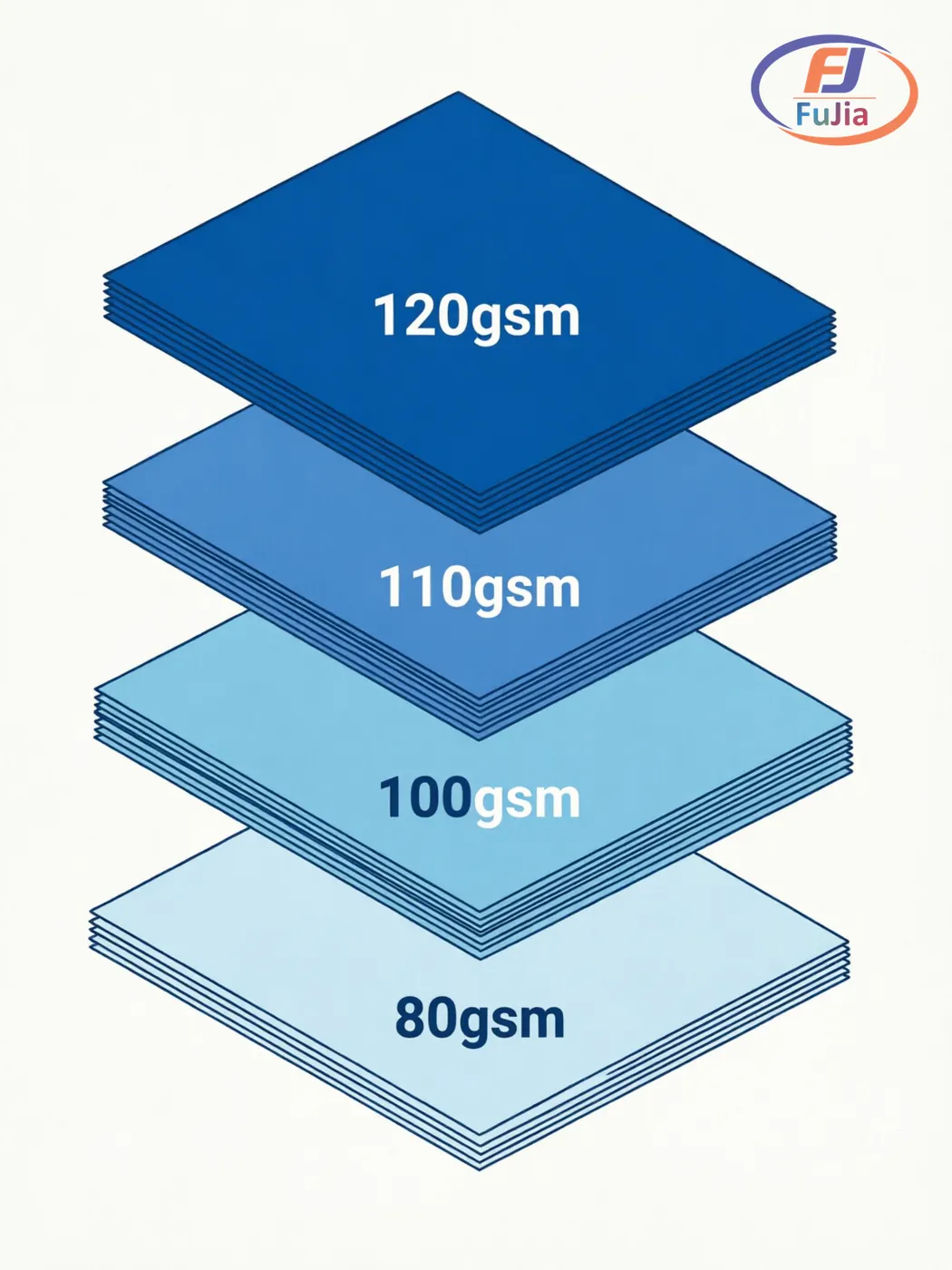
The most important specification for sublimation paper is grammage — grams per square meter (gsm).
| Grammage | Best For | Ink Hold | Cost | Paper Type |
|---|---|---|---|---|
| 80-90 gsm | Light designs, flags, banners | Low | $ | Standard |
| 95-105 gsm | Standard apparel, home decor | Medium | $$ | Standard or Fast-Dry |
| 110-120 gsm | Dark/saturated prints, outdoor | High | $$$ | Standard or Fast-Dry |
| 125-135 gsm | Industrial, high-density | Very High | $$$$ | Fast-Dry |
For most apparel sublimation (jerseys, leggings, T-shirts), 100-110 gsm paper with fast-dry coating offers the best balance. For soft signage and flags where the paper will be rolled immediately, fast-dry paper prevents ink smearing during rolling.
Sublimation Paper Sizes and Roll Options
Sublimation transfer paper is available in standard sheet sizes and rolls.
| Size | Type | Price Range | Best For |
|---|---|---|---|
| A4 (21×29.7 cm) | Sheets | $0.10-0.25/sheet | Desktop sublimation, testing |
| A3 (29.7×42 cm) | Sheets | $0.20-0.50/sheet | Small shop, apparel |
| 44″ × 100 m | Roll | $40-80/roll | Large format signage |
| 64″ × 100 m | Roll | $60-120/roll | Wide format, fabric production |
Buying paper in rolls is 25-40% cheaper per square meter than pre-cut sheets. A 44-inch roll cutter pays for itself within 3-6 months for shops printing over 200 square meters per month.
Frequently Asked Questions
Q: What is the difference between sublimation paper and regular printer paper?
A: Sublimation paper has a specialized micro-porous coating that regular printer paper lacks. This coating serves two critical functions: it absorbs liquid disperse dye ink instantly without letting it spread across the surface, and it releases the dye completely as gas under heat during the transfer process. Regular printer paper absorbs ink into its cellulose fibers through capillary action, which causes two problems for sublimation printing: the ink spreads and blurs the image detail, and the absorbed ink cannot fully sublimate during heat pressing because it is trapped within the paper fibers rather than sitting on the surface coating. The result is faded, blurry transfers with poor color saturation. Sublimation paper’s coating also prevents paper fibers from sticking to the heat press platen — uncoated paper can scorch or leave residue on the heating element. For any dye-sublimation application, using paper specifically designed for the process is essential.
Q: Can I reuse sublimation transfer paper?
A: No, sublimation transfer paper cannot be reused. During the heat pressing process, all the disperse dye ink that was printed onto the paper is transferred as gas into the polyester fibers or polymer coating of the target material. After the transfer is complete, the paper is left blank — the coating has released all the dye it held. Attempting to reuse the paper by printing on the same sheet would produce no visible result because the coating that absorbs and releases ink has been thermally depleted during the first transfer cycle. Additionally, the heat and pressure of the first press physically compress the paper’s micro-porous coating, reducing its ability to hold new ink. Some users repurpose used sublimation paper as protective sheets between the heat press and the substrate during subsequent transfers, but this is a mechanical use — the paper does not participate in the sublimation process a second time.
Q: How should I store sublimation transfer paper?
A: Sublimation transfer paper should be stored in a climate-controlled environment at 18 to 25 degrees Celsius with relative humidity between 40 and 55 percent. The paper’s moisture content directly affects ink absorption — paper that is too dry (below 30 percent humidity) causes ink to dry on the surface before it fully absorbs, leading to bronzing (a metallic sheen in dark areas). Paper that is too humid (above 60 percent) causes ink to spread on the coating, producing blurry prints with reduced color saturation and ghosting in fine text. Store unopened reams and rolls in their original moisture-barrier packaging. Once opened, reseal the package immediately after use and include the included moisture indicator card or silica gel packs. Avoid storing paper near concrete floors (which release moisture), exterior walls, or HVAC vents that cause temperature fluctuations. Paper stored properly has a shelf life of 12 to 18 months.
Q: What grammage sublimation paper should I use for apparel?
A: For standard apparel sublimation on polyester T-shirts, jerseys, and leggings, 100 to 110 gsm paper with a fast-dry coating is the recommended choice. This grammage provides sufficient ink-carrying capacity for full-color designs with good saturation, while the fast-dry coating allows the printed paper to be transferred immediately without waiting for the ink to dry between prints. For lightweight fabrics like polyester sports jerseys and running vests, 90 to 100 gsm paper works well because these garments typically use lighter ink coverage. For dark apparel requiring heavy ink coverage, full-back prints, or outdoor flags that need maximum color density, 110 to 120 gsm paper provides the additional ink-carrying capacity needed to achieve rich, saturated results without ink pooling or bleeding during the transfer process. Roland DG’s sublimation media guide provides additional recommendations for paper selection by application type.
Conclusion
Sublimation transfer paper is the most cost-sensitive consumable in your dye-sublimation workflow — choosing the right grammage and coating type directly affects both print quality and profit margin. Match paper weight to your application (100-110 gsm for most apparel), choose fast-dry for production speed, buy in rolls to save 25-40%, and store properly to avoid moisture-related defects.
For factory-direct pricing on sublimation transfer paper in standard sizes, custom widths, and OEM packaging, contact Fujia Print.
