

Dye sublimation ink is a specialized water-based disperse dye ink used in dye-sublimation printing. Unlike standard pigment or dye inks, sublimation ink does not dry on the surface of the material — instead, it turns into gas under heat and permanently bonds with polyester fibers or polymer-coated surfaces. This unique property enables full-color, wash-fast prints on fabrics, signage, and hard surfaces.
Key Takeaways
- Dye sublimation ink contains solid disperse dye particles suspended in a water-based carrier. Under heat (190-210°C), the particles convert directly to gas and bond permanently with polyester.
- Sublimation ink is only compatible with polyester fabrics (50%+ polyester content) or polymer-coated hard surfaces. It will not bond with 100% cotton.
- Most desktop and large format sublimation printers use Epson-compatible ink formulations — check your printer’s printhead type before buying.
- Bulk ink (1-5 liter bottles) costs $40-$100 per liter, 60-80% cheaper than cartridges. Convert your printer to a Continuous Ink Supply System (CISS) for bulk use.
- Store sublimation ink at 15-25°C, away from direct sunlight. Use within 6-12 months of opening. Shake bottles before refilling to re-suspend settled dye particles.
What Is Dye Sublimation Ink?
Dye sublimation ink consists of disperse dye particles suspended in a water-based liquid carrier. Unlike standard inkjet inks that dry by evaporation, sublimation ink remains on the paper surface until activated by heat.
The sublimation process works in three stages:
- Printing phase — The ink is jetted onto sublimation transfer paper (not directly onto fabric). The paper’s coating holds the liquid ink on the surface without absorbing it into the paper fibers.
- Heating phase — The printed paper is pressed against the target material at 190-210°C. The heat converts the solid dye particles directly into gas — they skip the liquid phase entirely, which is the definition of sublimation.
- Bonding phase — The gaseous dye penetrates the polyester fibers or polymer coating. When the material cools, the dye turns back into solid form, now trapped permanently inside the material.
The Wikipedia article on dye-sublimation printing describes how “the process uses heat to transfer dye onto materials such as fabric, plastic, or paper.” According to Printful’s sublimation printing guide, using quality sublimation ink is the single most important factor for achieving consistent color output. Market data from Grand View Research confirms the sublimation industry is growing at over 8% annually, driven in large part by the increasing availability of high-quality consumables.
Dye Sublimation Ink vs Standard Inkjet Ink
Sublimation ink is fundamentally different from the ink in your office printer. Using the wrong type will damage your printheads.
| Factor | Dye Sublimation Ink | Standard Pigment Ink | Standard Dye Ink |
|---|---|---|---|
| Colorant | Disperse dye particles | Solid pigment chunks | Liquid dye molecules |
| Drying Method | Sublimation (heat) | Evaporation | Evaporation |
| Printhead Risk | Safe in compatible heads | Clogs sublimation heads | Damages printheads |
| WasH Fastness | Excellent (50+ washes) | Good (20-30 washes) | Poor (5-10 washes) |
| Fabric Feel | No texture (inside fibers) | Surface coat | Surface stain |
| Lightfastness | Excellent | Good | Poor |
| Shelf Life | 12-24 months (unopened) | 24-36 months | 12-18 months |
Warning: Never use standard pigment or dye ink in a printer designated for sublimation. The particle sizes and carrier fluid chemistry are different — standard inks will clog sublimation printheads within days.
Sublimation Ink for Epson Printers
Most sublimation printers on the market use Epson printhead technology (DX5, DX7, XP600, I3200, or L1800). Epson does not manufacture sublimation ink themselves — the ink is produced by third-party manufacturers who formulate for Epson printhead specifications.
When buying sublimation ink for an Epson printer, check these compatibility factors:
| Printhead | Ink Type | Particle Size | Best For |
|---|---|---|---|
| Epson L1800 | Water-based disperse dye | ≤1 micron | Desktop, small sublimation |
| Epson XP600 | Water-based disperse dye | ≤1 micron | A3 DTF/sublimation printers |
| Epson I3200 | Water-based disperse dye | ≤0.5 micron | Production, large format |
| Epson DX5/DX7 | Water-based disperse dye | ≤1 micron | Older DTG/sublimation models |
Bulk Ink vs Cartridges: Cost Comparison
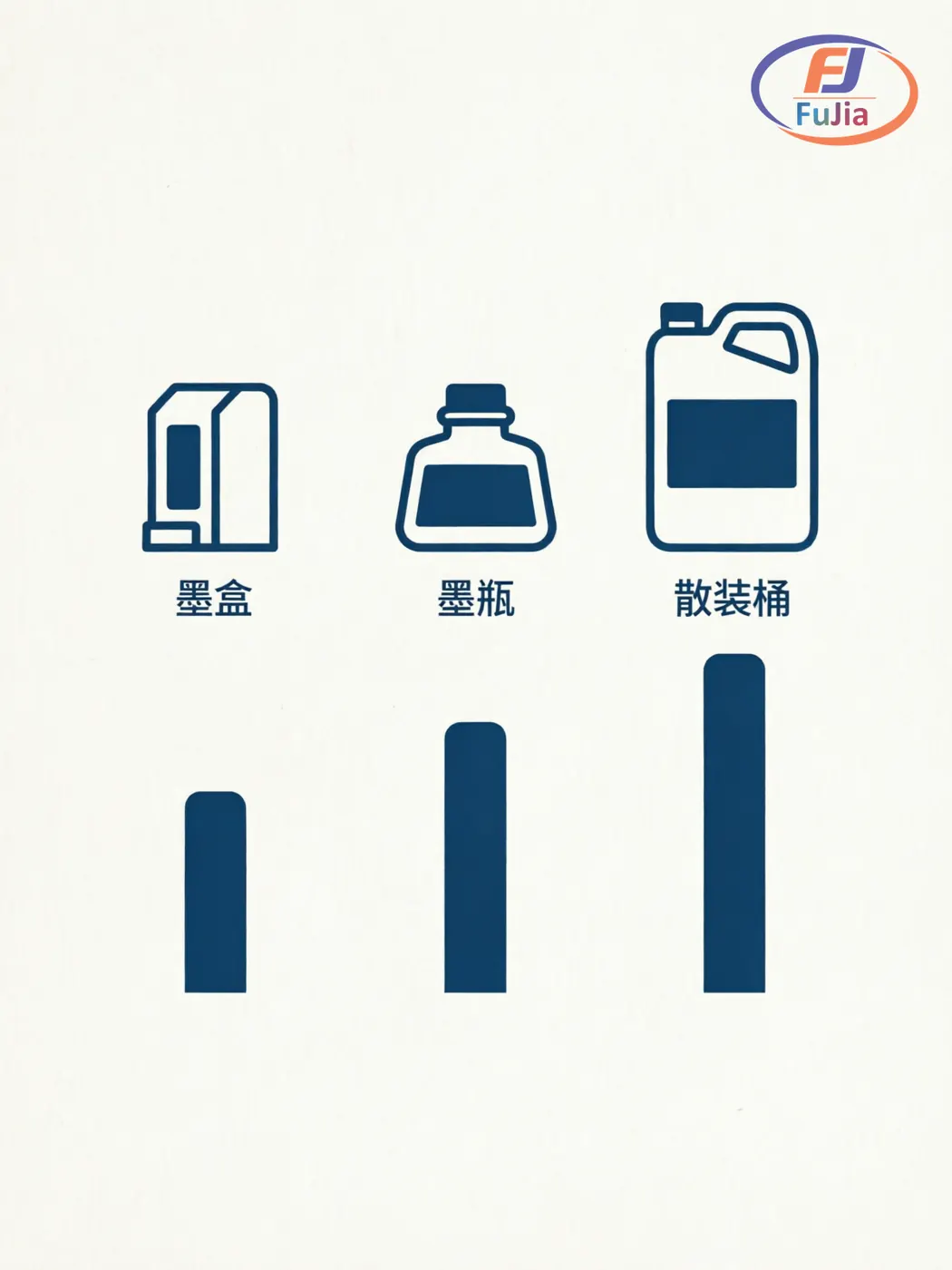
The most cost-effective way to buy sublimation ink is in bulk bottles with a CISS (Continuous Ink Supply System).
| Format | Volume | Price | Cost per Liter | Best For |
|---|---|---|---|---|
| Cartridge | 50-100 ml | $10-25 | $150-250 | Testing, low volume |
| Bottle (bulk) | 500 ml | $20-40 | $40-80 | Small shop, CISS |
| Bottle (bulk) | 1 liter | $40-100 | $40-100 | Medium production |
| Bottle (bulk) | 5 liter | $150-350 | $30-70 | High volume, wholesale |
For factory-direct bulk pricing, check our DTF consumables wholesale guide. While that guide focuses on DTF consumables, the bulk sourcing principles — including factory-direct pricing for ink — apply equally to sublimation supplies. For compatible printers, refer to our dye sublimation printer guide.
Frequently Asked Questions
Q: Can I use any dye sublimation ink in my Epson printer?
A: Not all sublimation inks are compatible with all Epson printers. The key specification is particle size — the disperse dye particles in sublimation ink must be small enough to pass through your printhead’s nozzles without clogging. Epson I3200 and DX7 printheads require ink with particles under 1 micron. Older Epson printheads (like the 4880/7890 series) may tolerate slightly larger particles but still benefit from fine-particle ink for consistent jetting. Additionally, the ink’s viscosity and surface tension must match the printhead specifications — ink that is too thick causes nozzle firing failures, while ink that is too thin produces overspray and poor color density. Always buy sublimation ink from a supplier who specifies compatibility with your exact printhead model. Most reputable brands list the compatible Epson printhead series on the product label. If you are unsure, start with a 100ml sample bottle and test print 50-100 images before committing to bulk quantities.
Q: How much sublimation ink do I need per square meter of printing?
A: Sublimation ink consumption averages 12 to 18 milliliters per square meter for standard coverage prints, and 18 to 25 milliliters per square meter for high-coverage full-color designs with heavy saturation. A 1-liter bottle of sublimation ink yields approximately 55 to 80 square meters of printed transfer paper, depending on your design density and RIP software settings. Ink costs per square meter range from $0.40 to $1.50, with bulk-buying at factory-direct prices achieving the lower end of this range. The white underbase layer (used when printing on light-colored transfer paper for dark substrates) adds 30 to 50 percent more ink consumption. To reduce ink waste, use your RIP software’s ink limiting feature — most designs can be printed at 200 to 260 percent total ink coverage (CMYK combined) without visible quality loss, compared to default settings that often apply 300 to 350 percent.
Q: What is the difference between sublimation ink and DTF ink?
A: Sublimation ink and DTF (Direct-to-Film) ink are both water-based inks, but they use different colorant chemistries and serve different applications. Sublimation ink uses disperse dye particles that convert to gas under heat (190-210°C) and bond permanently with polyester fibers — it only works on polyester or polymer-coated materials. DTF ink uses pigment particles mixed with a resin binder that cures at lower temperatures (140-160°C) and bonds with any fabric type through an adhesive powder layer. The print feel differs significantly: sublimation prints have no texture because the dye is inside the fabric fibers, while DTF prints have a slight surface texture from the adhesive layer. Sublimation ink is typically used for sportswear, soft signage, and polyester fabric decoration. DTF ink is used for custom apparel on any fabric, especially cotton T-shirts and mixed-fiber garments. The two ink types are not interchangeable — using DTF ink in a sublimation printer causes poor color transfer and clogging, and vice versa.
Q: How should I store dye sublimation ink?
A: Dye sublimation ink should be stored in a cool, dark environment at 15 to 25 degrees Celsius, away from direct sunlight and temperature fluctuations. The disperse dye particles in sublimation ink naturally settle over time — this is normal and does not indicate spoilage. Shake the bottle thoroughly before each refill to re-suspend the particles. Unopened bottles have a shelf life of 12 to 24 months from the manufacture date, depending on the specific ink formulation. Once opened, use the ink within 6 to 12 months for best results. Do not store sublimation ink below 5 degrees Celsius, as the dye particles can crystallize and lose their dispersion properties — crystallized ink will clog printheads even after warming. Always seal bottles immediately after refilling to prevent evaporation of the water-based carrier, which increases ink viscosity and leads to nozzle firing issues.
Conclusion
Dye sublimation ink is the critical consumable that determines color quality, wash fastness, and printhead lifespan in your sublimation printing workflow. Match the ink formulation to your printhead type, buy in bulk to reduce per-print costs by 60-80%, and store properly to avoid waste.
For factory-direct pricing on dye sublimation ink in bulk bottles and custom CMYK configurations, contact Fujia Print.
