

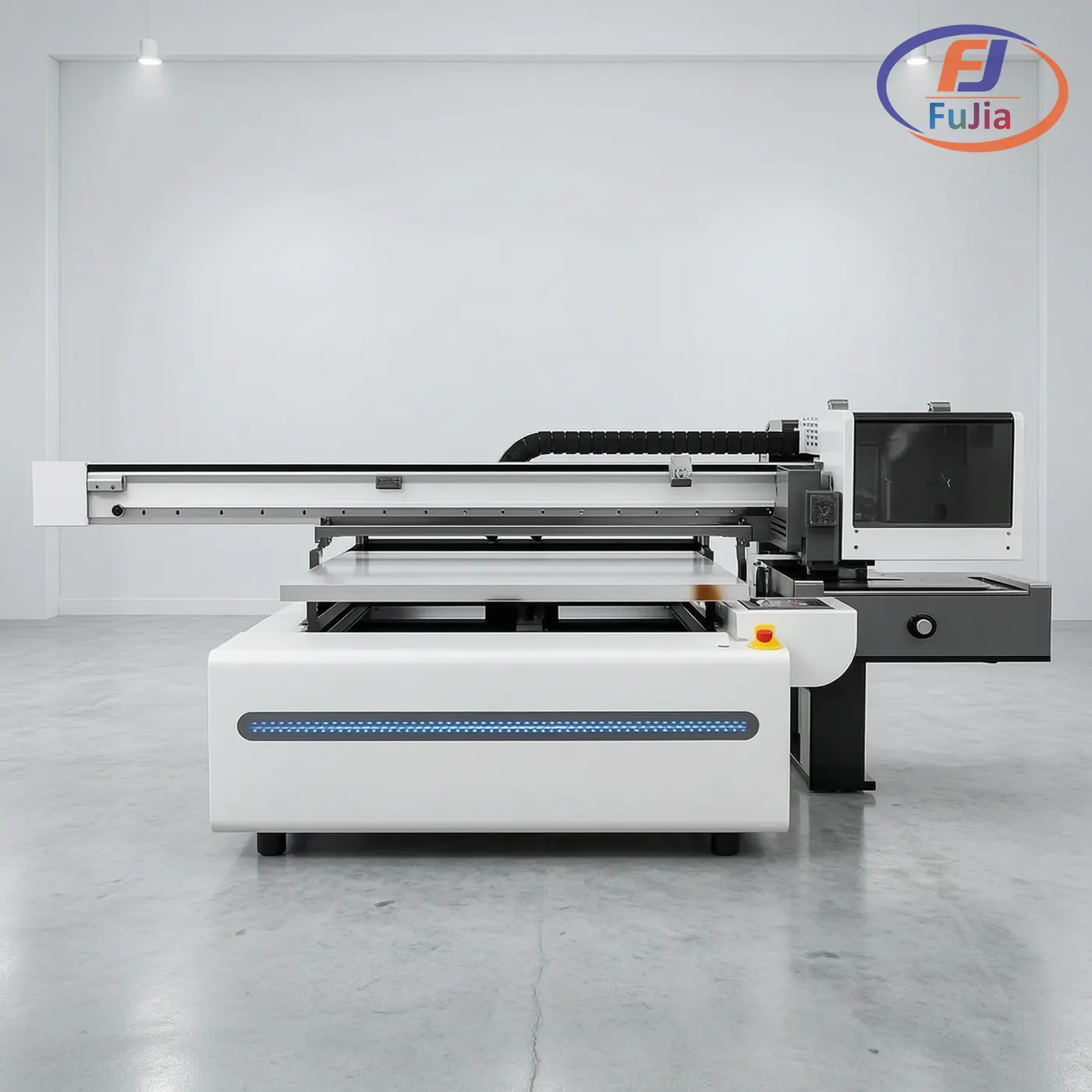
A UV flatbed printer is a digital printing machine that uses ultraviolet light to instantly cure specially formulated inks onto rigid materials like wood, acrylic, metal, and glass. Unlike traditional screen printing or roll-based printers, flatbed UV printers hold materials stationary on a vacuum table while a moving printhead applies the image — giving you precise registration and the ability to print on objects up to several inches thick.
Key Takeaways
- A UV flatbed printer uses UV-curable ink that dries instantly under ultraviolet light, enabling printing on rigid materials that conventional printers cannot handle.
- The global flatbed UV printer market reached $910 million in 2024 and is projected to grow to $1.25 billion by 2031 (CAGR 4.5%) according to QYResearch.
- Entry-level desktop UV flatbed printers start around $3,000, while industrial machines can cost upwards of $500,000.
- North America holds approximately 38% of the global market share, making it the largest regional market.
- For small to mid-size businesses, a mid-range UV flatbed printer in the $15,000–$50,000 range offers the best balance of versatility and return on investment.
(Table of Contents automatically generated)
What Is a UV Flatbed Printer? (Layer 2: Definition)
A UV flatbed printer is a type of digital inkjet printer designed for rigid substrates. The defining feature is the flat vacuum table — a stationary bed that holds the material in place while the print carriage moves across it. This design allows printing on materials that cannot pass through a roller-fed printer, including solid sheets, panels, and pre-fabricated objects.
Flatbed UV printers use UV-curable inks that contain photo-initiators. When the ink passes under UV lamps (typically LED-based on modern machines), those initiators trigger a polymerization reaction that turns the liquid ink into a solid film in milliseconds. The result is a cured print that resists scratching, chemicals, and weather exposure — no drying time, no smudging, no additional coating needed.
According to Wikipedia’s flatbed digital printer entry, these machines “usually use UV curable inks made of acrylic monomers that are then exposed to strong UV-light to cure, or polymerize them,” enabling printing on surfaces “such as wood or canvas, carpet, tile, and even glass.”
What Materials Can a UV Flatbed Printer Print On?
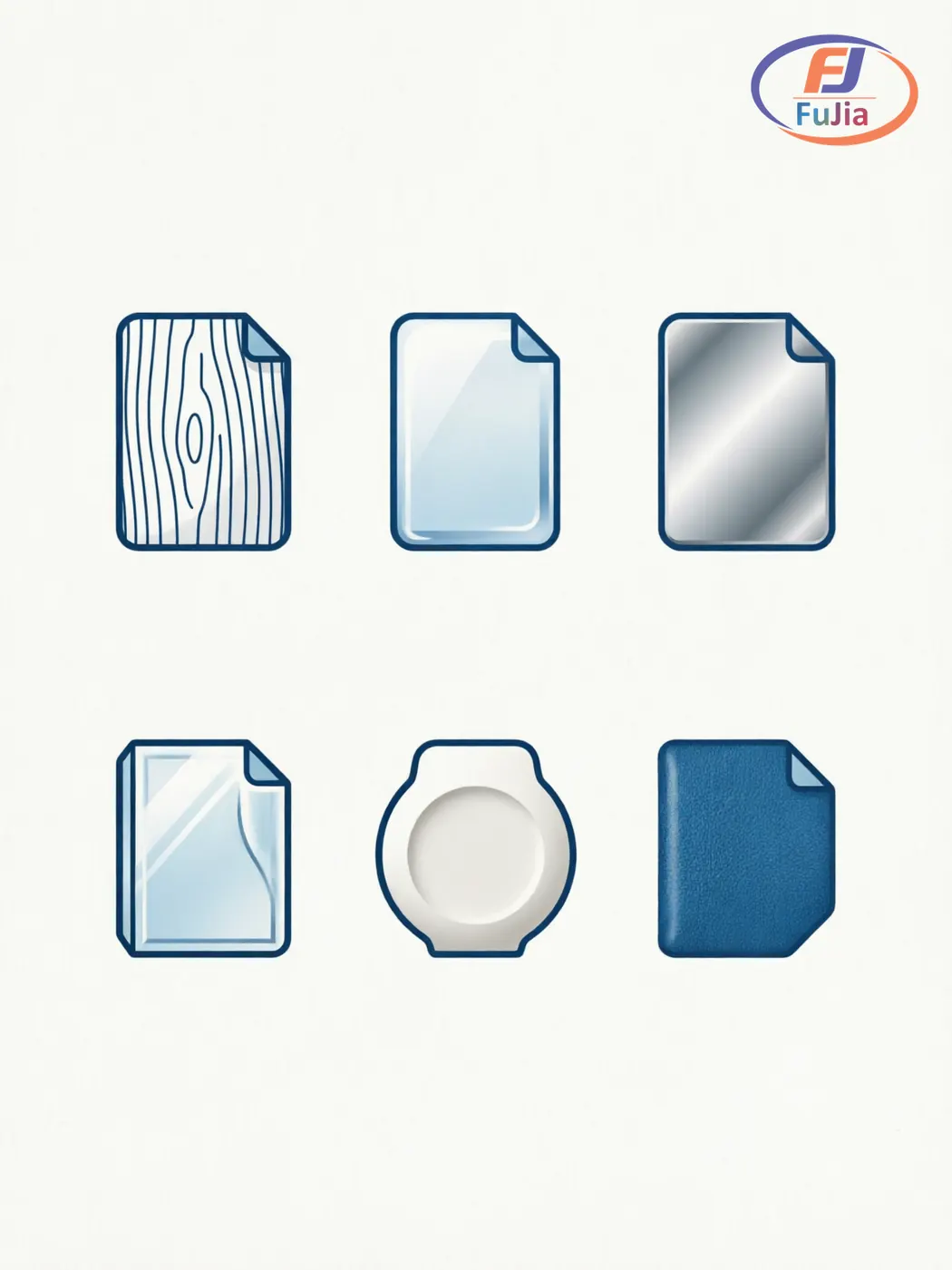
The primary advantage of UV flatbed printing is substrate versatility. A single machine can print on materials across multiple industries:
| Material Category | Examples | Typical Application |
|---|---|---|
| Wood & MDF | Plywood, hardwood panels, engineered wood | Signage, furniture decoration, awards |
| Acrylic & Plastics | Cast acrylic, polycarbonate, PVC, ABS | Retail displays, point-of-purchase signage, light boxes |
| Metal | Aluminum composite, stainless steel, brass | Nameplates, industrial labels, architectural signage |
| Glass | Float glass, tempered glass, mirrors | Decorative panels, shower screens, storefronts |
| Ceramics & Tile | Porcelain, ceramic, stone | Kitchen backsplashes, wall art, flooring |
| Leather & Fabric | Natural leather, synthetic leather, canvas | Custom footwear, bags, upholstery |
| Foam & Composite | Foam board, corrugated plastic, Gatorboard | Trade show displays, exhibits, real estate signs |
This material range is why UV flatbed printers are found in sign shops, product decorators, promotional goods manufacturers, and industrial label converters.
How Does a UV Flatbed Printer Work?
The printing process follows four straightforward steps:
- Load the material — Place the substrate on the vacuum table. The vacuum holds it flat and prevents shifting during printing.
- Set the print parameters — The operator selects material thickness (the printhead adjusts height automatically in newer models), print resolution, and number of passes.
- Print and cure simultaneously — The printhead deposits ink droplet by droplet, while integrated LED-UV lamps cure each pass of ink instantly. Because curing happens during printing, there is no waiting between layers or colors.
- Unload and finish — The cured print is ready for immediate handling. No drying rack, no post-curing oven, no off-gassing.
Modern UV flatbed printers achieve resolutions of 1200 x 1200 dpi or higher, with some industrial models like Epson’s SureColor V7000 producing continuous production speeds on 4-foot by 8-foot sheets. For Fujia Print’s mid-range UV flatbed lineup, the typical print speed ranges from 80 to 150 square feet per hour at production quality.
UV Flatbed Printer vs UV DTF Printer: Key Differences
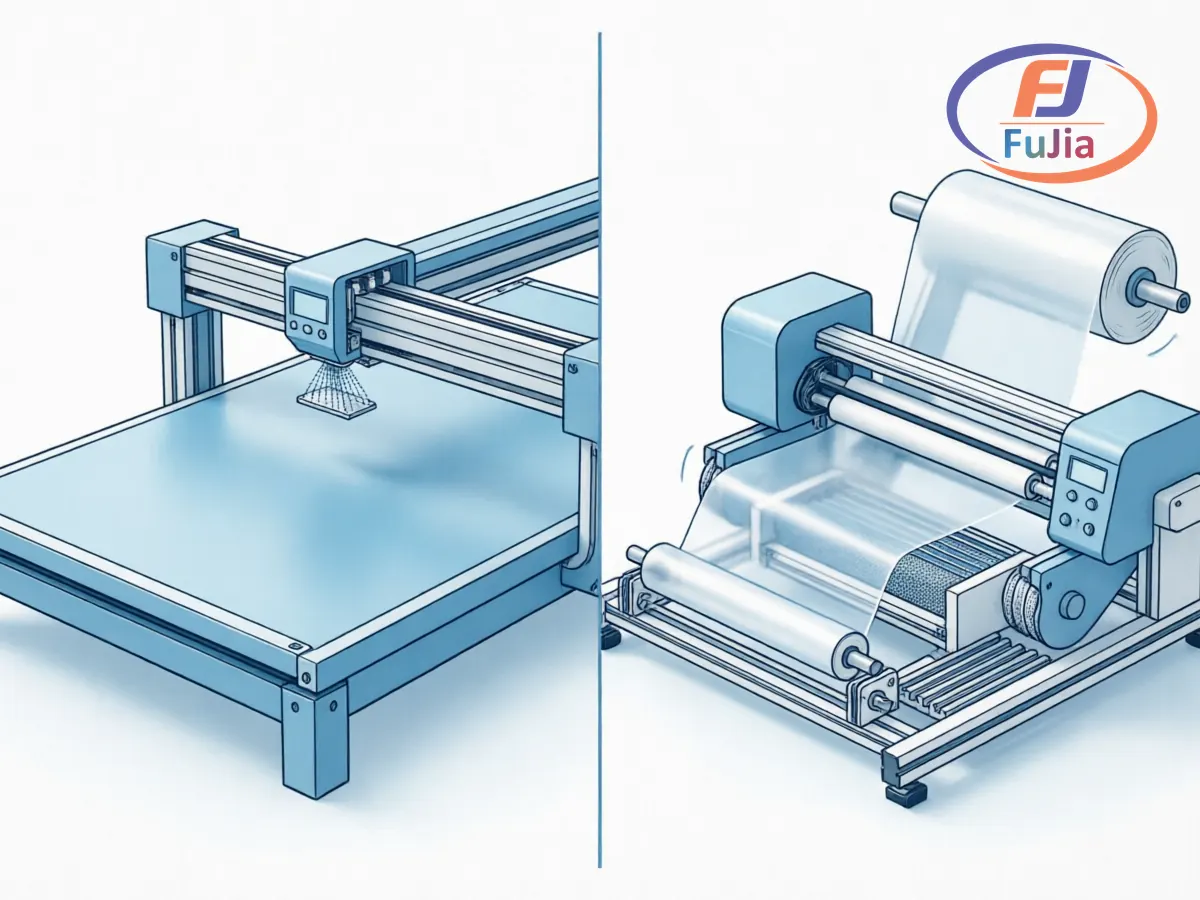
Buyers often confuse UV flatbed printers with UV DTF printers. The distinction matters because they serve different production workflows.
| Factor | UV Flatbed Printer | UV DTF Printer |
|---|---|---|
| Printing method | Direct-to-substrate (prints on the object itself) | Transfer-based (prints on AB film, then transfers to object) |
| Material types | Rigid only (up to table size) | Any shape (cylinder, rounded, irregular) via transfer |
| Production speed | Higher — single-pass, no transfer step | Lower — requires film, powder, heat press transfer |
| Print quality | Excellent — direct, no transfer artifacts | Good — slight texture from transfer film |
| Best for | Flat/rigid: signage, panels, tiles | Shaped objects: phone cases, bottles, promotional items |
| Price range (entry) | $3,000–$50,000 | $8,000–$30,000 |
For a detailed breakdown of both technologies, read our UV DTF printer vs UV flatbed printer comparison.
How Much Does a UV Flatbed Printer Cost?
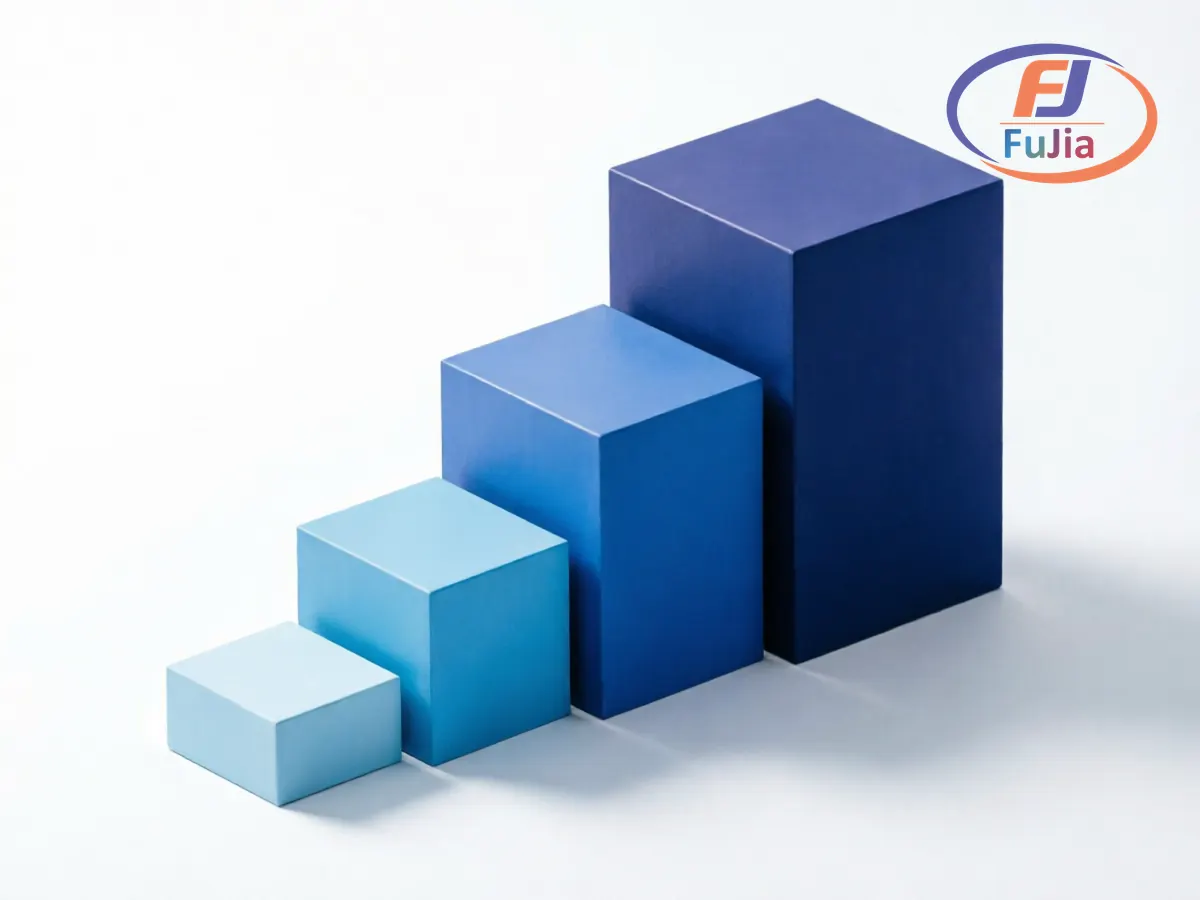
UV flatbed printer pricing spans a wide range based on print size, speed, and automation level.
| Tier | Size (max) | Price Range | Best For |
|---|---|---|---|
| Desktop / Entry | A3 to A2 (13″x19″ to 17″x24″) | $3,000–$15,000 | Hobbyists, startups, small product decoration |
| Mid-range | A2 to 24″x36″ | $15,000–$50,000 | Small sign shops, print-on-demand businesses |
| Commercial | 4’x4′ to 4’x8′ | $50,000–$150,000 | Signage companies, industrial decorators |
| Industrial | 5’x10′ and larger | $150,000–$500,000+ | High-volume manufacturing, trade shops |
The total cost of ownership extends beyond the printer price. Factor in UV ink ($80–$150 per liter), printhead replacements every 12–24 months, periodic maintenance, and electricity. Industry data from multiple sources indicates that small format UV flatbed printers have reduced entry prices significantly over the past three years, with reliable desktop models now available under $10,000. For a detailed look at operational expenses, our UV printing cost guide breaks down ink consumption, maintenance intervals, and per-job costing.
For factory-direct pricing on Fujia UV flatbed printers and OEM customization options, see our UV printer OEM wholesale guide.
Who Needs a UV Flatbed Printer?
Three types of businesses benefit most from UV flatbed printing:
Sign and display shops use UV flatbed printers for indoor and outdoor signage, retail displays, trade show graphics, and architectural signage. The ability to print directly on rigid materials eliminates laminating and mounting steps, saving labor and material costs.
Product decorators and promotional goods manufacturers leverage UV flatbed printers for short-run customization of phone cases, awards, promotional merchandise, and corporate gifts. The instant-cure feature enables same-day turnaround on personalized orders.
Industrial label and nameplate producers rely on UV flatbed printers for durable, chemical-resistant labels and nameplates for equipment, control panels, and identification tags. Direct printing onto aluminum and stainless steel eliminates the need for adhesive labels that can peel or fade.
How to Choose the Right UV Flatbed Printer
When evaluating UV flatbed printers for your business, focus on these selection criteria:
- Print area — Match the machine’s maximum print size to your largest recurring job. A 24″x36″ printer handles most signage work, while product decorators may only need A3+ (13″x19″).
- Resolution and printhead technology — Epson i3200 printheads (used by Fujia and many mid-range manufacturers) offer 1200 dpi resolution with variable droplet sizes for smooth gradients. Industrial machines may use Ricoh Gen5 or Kyocera printheads for higher speed.
- Material thickness capacity — Entry-level models typically accept up to 100mm (4 inches) thick materials. If you print on boxes, frames, or assembled products, verify the printhead clearance.
- Vacuum table design — Zone-controlled vacuum tables let you mask off unused areas, ensuring flat materials stay secure without wasted suction.
- White ink circulation — White ink tends to settle and clog printheads. Machines with automatic white ink circulation systems require less maintenance.
- After-sales support — This is where buying direct from a manufacturer matters. Fujia Print provides in-house after-sales teams for installation support, remote troubleshooting, and spare parts availability — not just a ticketing system.
Frequently Asked Questions
Q: What is the difference between a UV flatbed printer and a regular UV printer?
A: The term “UV flatbed printer” specifically describes a machine with a stationary flat table that holds rigid materials in place during printing. A “regular UV printer” is a broader category that includes both flatbed models and roll-to-roll UV printers (which print on flexible materials fed from a roll). Both use UV-curable ink and instant curing, but flatbed printers are designed exclusively for rigid or semi-rigid substrates. Hybrid UV printers exist that combine both flatbed and roll-to-roll capabilities, but they typically cost more and may compromise performance in one mode or the other. For businesses that primarily print on rigid materials like acrylic, metal, or wood panels, a dedicated UV flatbed printer delivers better registration accuracy and faster throughput than a hybrid or roll-fed alternative. The key distinction comes down to the substrate your work demands: rigid surfaces need a flatbed, flexible media needs a roll-fed system.
Q: How long does a UV flatbed printer last?
A: A well-maintained UV flatbed printer typically has a reliable service life of 5 to 10 years, depending on usage and build quality. The chassis and mechanical systems of industrial-grade machines can last over a decade with proper maintenance. The components that wear fastest are the printheads (Epson i3200 heads generally need replacement every 12 to 24 months under normal production use) and the UV LED lamps (rated for 20,000 to 30,000 hours, roughly 3 to 5 years of daily operation). Factors that extend service life include using manufacturer-recommended inks, maintaining a climate-controlled environment (65°F–80°F with 40-60% humidity), and following a weekly cleaning schedule for the printhead capping stations. Buying from a manufacturer that stocks replacement parts and provides technical support — rather than a reseller — significantly impacts the practical lifespan of the investment.
Q: Can a UV flatbed printer print white ink?
A: Yes, most UV flatbed printers support white ink printing. White ink is essential for applications on dark or transparent substrates. White UV ink acts as an underbase layer that prevents the substrate color from showing through the CMYK image. When printing on clear acrylic or glass, white ink is also printed as a backing layer to make the image opaque when viewed from the front side of the material. Modern UV flatbed printers with white ink capability typically include a circulation system to prevent pigment settling, since white ink contains titanium dioxide particles heavier than standard CMYK pigments. The printer lays down the white layer in separate head passes — either before the color layer (for dark substrates) or after (for transparent media with backlighting). Some applications also use a “white highlight” pass to create frosted effects on glass. For the best white ink performance, look for printers with dedicated white ink channels and automatic circulation rather than manual shaking.
Q: Is UV flatbed printing eco-friendly?
A: UV flatbed printing is more environmentally friendly than solvent-based alternatives for several reasons. UV-curable inks contain zero volatile organic compounds (VOCs) because they cure through polymerization rather than evaporation, eliminating the need for ventilation systems and reducing air pollution in the workplace. The instant-cure process also consumes less energy than heat-drying systems used in solvent or latex printing. UV flatbed printers generate less waste because they enable on-demand printing with no minimum runs, and the durable cured ink removes the need for lamination or overcoating. Many UV inks carry GREENGUARD Gold certification, meaning the printed products meet strict chemical emission limits for indoor use. Modern UV LED lamps contain no mercury, unlike older mercury-vapor lamps. For businesses seeking to reduce environmental impact while maintaining production quality, UV flatbed printing currently offers the cleanest profile among digital printing technologies.
Conclusion
A UV flatbed printer transforms rigid materials into finished products with instant-cure digital printing, eliminating drying time and expanding what your shop can produce. The market is growing at 4.5% annually, driven by demand from signage, product decoration, and industrial applications. Entry-level machines now start under $10,000, making the technology accessible to small and mid-size businesses for the first time.
For factory-direct UV flatbed printer pricing and to schedule a production test on your materials, contact Fujia Print.
