

A sublimation heat press is the machine that transfers dye-sublimation ink from printed paper onto polyester fabric or coated hard substrates using controlled heat (375 to 400 degrees Fahrenheit) and pressure. Without a proper heat press, sublimation ink cannot fully gas and bond, resulting in faded or incomplete transfers.

Key Takeaways
- Sublimation requires a dedicated heat press, not a household iron, because consistent temperature (plus or minus 5 degrees Fahrenheit) and even pressure are non-negotiable for full ink transfer.
- The four main press types are clamshell, swing-away, mug/tumbler, and multi-function, each suited to different product lines and production volumes.
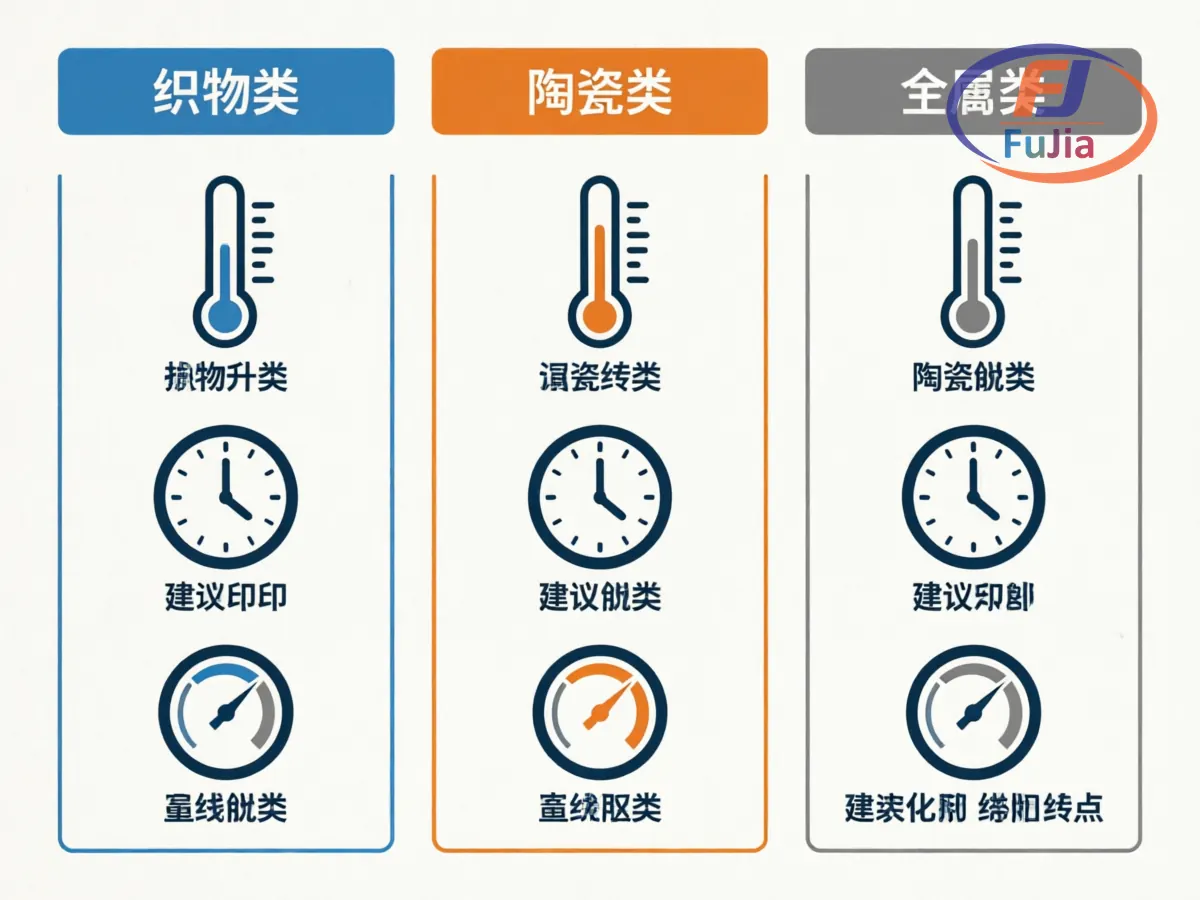
- Polyester fabrics press at 385 to 400 degrees Fahrenheit for 45 to 60 seconds; ceramic mugs need 400 degrees Fahrenheit for 180 to 240 seconds with firm pressure.
- Entry-level clamshell presses start around $150 to $400; commercial swing-away and multi-function units range from $500 to $2,500.
- If you plan to sublimate apparel, drinkware, and hard goods, a multi-function press with interchangeable platens offers the best long-term value.
What Is a Sublimation Heat Press?
A sublimation heat press applies heat and pressure to sublimation transfer paper, causing the solid dye to turn into gas and permanently bond with polyester polymers or polymer-coated surfaces. The process is called sublimation because the ink skips the liquid phase entirely, going from solid to gas. This molecular bonding produces prints that are highly resistant to fading, cracking, and washing out, unlike heat transfer vinyl (HTV) which sits on the fabric surface. The scientific principle of dye sublimation is well documented by the Society of Dyers and Colourists.
The critical difference between a sublimation heat press and a standard iron or cheap craft press is temperature consistency. A household iron can swing 30 to 50 degrees Fahrenheit across its surface. Sublimation ink activates at 375 to 400 degrees Fahrenheit; any cold spot below that range produces patchy, faded transfers. A quality heat press maintains temperature within plus or minus 5 degrees Fahrenheit across the entire platen, ensuring edge-to-edge color uniformity. Epson, a leading manufacturer of sublimation inkjet printers, specifies 380 to 400 degrees Fahrenheit as the optimal activation range for its genuine sublimation inks.
Sublimation heat presses are used for polyester apparel, ceramic mugs, tumblers, phone cases, metal panels, ceramic tiles, and sublimation-coated hard substrates. The substrate material dictates which press type and settings are appropriate. For a deeper look at how sublimation ink bonds with these substrates at the molecular level, see our guide on how sublimation printing works.
Types of Sublimation Heat Presses
Choosing the right press type depends on your primary product line, workspace, and budget. Each design has distinct advantages and limitations.
Clamshell Heat Press
The clamshell press opens and closes vertically on a rear hinge, like a clam shell. The upper heated platen lifts straight up, saving horizontal workspace. Clamshell presses are the most common and affordable entry point for sublimation businesses.
| Feature | Clamshell Press |
|---|---|
| Best for | T-shirts, tote bags, mouse pads, flat polyester items |
| Platen sizes | 9×12 inches, 15×15 inches, 16×20 inches |
| Price range | $150 to $600 |
| Workspace needed | Minimal (footprint of the press) |
| Limitations | Limited access for thick items, burn risk from upper platen |
Clamshell presses work best for high-volume apparel production because the single-motion open-and-close cycle is fast. The downside is that the heated upper platen stays directly above the work area, making it harder to position thick items and increasing burn risk for operators.
Swing-Away Heat Press
A swing-away press has an upper platen that swings to the side, giving full unobstructed access to the lower platen. This design provides more even pressure distribution and a heat-free work area during setup.
| Feature | Swing-Away Press |
|---|---|
| Best for | Ceramic tiles, plaques, thick hoodies, rigid substrates |
| Platen sizes | 15×15 inches, 16×20 inches |
| Price range | $400 to $1,200 |
| Workspace needed | Double the clamshell footprint (swing clearance) |
| Limitations | Slower cycle (open, swing, load, swing back, close) |
Swing-away presses deliver more consistent pressure across thick or uneven substrates because pressure is applied straight down rather than at an angle. Fuji Print recommends swing-away presses for businesses producing sublimation photo panels, slate, and ceramic tiles where even pressure is critical to avoiding corner fading.
Mug and Tumbler Heat Press
Mug presses use a curved heating element that wraps around cylindrical objects. Tumbler presses accommodate larger drinkware, typically 20 to 40 ounces. Some combo units handle both mugs and tumblers with interchangeable heating wraps.
| Feature | Mug Press | Tumbler Press |
|---|---|---|
| Best for | 11 oz and 15 oz ceramic mugs | 20 to 40 oz skinny tumblers, water bottles |
| Temperature | 360 to 400 degrees Fahrenheit | 360 to 385 degrees Fahrenheit |
| Dwell time | 180 to 240 seconds | 40 to 90 seconds per zone |
| Price range | $150 to $500 | $200 to $600 |
| Key consideration | Pre-heat mug to avoid banding | Rotate or use multi-zone press |
Dedicated mug and tumbler presses outperform convection ovens for color consistency because they apply direct contact heat rather than ambient air heat. For production shops pressing dozens of drinkware items daily, a dedicated mug or tumbler press is more efficient than a 3D vacuum oven.
Multi-Function Heat Press
A multi-function press combines a flat platen with interchangeable attachments for mugs, caps, and plates. These machines let one base unit handle apparel, drinkware, and headwear by swapping platens.
| Feature | Multi-Function Press |
|---|---|
| Best for | Businesses producing diverse product lines |
| Attachments | Flat platen, mug wrap (11 oz and 15 oz), cap press, 5-in-1 or 8-in-1 |
| Price range | $300 to $1,500 |
| Advantage | One machine, multiple product categories |
| Limitation | Swapping attachments takes 2 to 5 minutes; not ideal for single-product high-volume |
Multi-function presses suit startups and small businesses that want to test multiple product categories before committing to dedicated machines. The trade-off is that attachment swaps slow down production compared to running dedicated machines side by side.
Sublimation Heat Press Temperature and Time Settings
Temperature, time, and pressure settings vary by substrate material. Using incorrect settings is the most common cause of transfer failures. The following table provides verified starting settings used across the sublimation industry.
Fabric and Apparel Settings
| Substrate | Temperature | Time | Pressure | Notes |
|---|---|---|---|---|
| 100% Polyester (lightweight) | 385 degrees F | 45 to 55 sec | Medium | Pre-press 5 sec to remove moisture |
| 100% Polyester (heavyweight) | 390 degrees F | 55 to 65 sec | Medium-heavy | Heavier weaves need longer dwell time |
| Poly-Cotton Blend (65/35) | 375 degrees F | 40 to 50 sec | Medium | Cotton content reduces color vibrancy noticeably |
| Polyester tote bags | 385 degrees F | 45 to 50 sec | Medium | Insert cardboard to prevent ink bleed-through |
| Polyester socks | 385 degrees F | 30 to 40 sec | Light-medium | Use a sock form or cardboard insert |
Polyester fabrics are the most forgiving sublimation substrate. If colors appear pale, increase dwell time by 5 seconds before raising temperature. If fabric shows scorching, reduce temperature by 5 degrees Fahrenheit and shorten time by 5 seconds.
Hard Substrate Settings
| Substrate | Temperature | Time | Pressure | Notes |
|---|---|---|---|---|
| Ceramic Mug (11 oz) | 400 degrees F | 180 to 240 sec | Firm | Pre-heat mug; use silicone wrap |
| Ceramic Coaster (hardboard) | 385 to 400 degrees F | 60 sec | Medium | Standard medium pressure |
| Aluminum Panel (gloss) | 395 to 400 degrees F | 60 to 70 sec | Medium | Hot peel immediately on press opening |
| Hardboard / MDF (coated) | 400 degrees F | 75 to 90 sec | Medium-heavy | Extra time compensates for low thermal conductivity |
| Polyester phone case | 375 degrees F | 60 to 75 sec | Firm | Convection oven preferred for edge-to-edge coverage |
| Stainless Steel Tumbler | 360 to 385 degrees F | 40 to 90 sec per zone | Firm | Use tumbler press; rotate for full wrap |
Hard substrates require sustained heat rather than quick bursts. The polymer coating on ceramics and metals needs time to open at the molecular level. Rushing dwell time produces transfers that look acceptable initially but fade after the first wash cycle. For a comprehensive 30+ substrate reference, see our sublimation temperature chart.
How to Choose a Sublimation Heat Press
Selecting the right press involves matching machine capabilities to your product line, volume, and growth plans.
Step 1: Identify Your Primary Product
The most common mistake buyers make is purchasing a press before deciding what they will produce. Apparel-only businesses need a clamshell or swing-away flat press. Drinkware businesses need a mug and/or tumbler press. Diversified businesses benefit from a multi-function unit.
Step 2: Match Platen Size to Your Largest Product
Platen size determines your maximum transfer area. A 15×15 inch platen handles standard adult t-shirts up to XL. A 16×20 inch platen accommodates oversized apparel, large metal panels, and full-width fabric yardage. Buying a press with a platen smaller than your largest product wastes materials and forces multi-step pressing.
Step 3: Verify Temperature Consistency
Temperature consistency is the single most important quality metric for a sublimation heat press. Before purchasing, confirm the manufacturer specifies temperature uniformity within plus or minus 5 degrees Fahrenheit across the platen. Cheap presses often have heating coils spaced too far apart, creating cold spots 10 to 15 degrees lower than the set temperature. These cold spots cause patchy transfers that are impossible to diagnose without a thermal test.
Step 4: Consider Pressure Adjustment Mechanism
Sublimation requires different pressure for different substrates: light pressure for thin polyester fabric, medium pressure for standard apparel, and firm pressure for ceramic mugs. A press with a calibrated pressure knob or digital pressure readout saves hours of trial-and-error tuning.
Step 5: Factor in Durability and Warranty
Commercial-grade heat presses typically operate 8 to 12 hours per day in production environments. Look for presses with cast-aluminum platens (better heat distribution than stamped steel), replaceable heating elements, and at least a 1-year warranty. Fuji Print tests every heat press before shipment and provides after-sales support for temperature calibration and element replacement.
Common Sublimation Heat Press Problems and Solutions
| Problem | Likely Cause | Solution |
|---|---|---|
| Faded or pale transfers | Temperature too low or dwell time too short | Increase dwell time by 5 sec; verify platen temp with thermal strip |
| Ghosting (shadow image) | Transfer shifted during press | Tape edges tightly with heat-resistant tape; avoid movement |
| Uneven color across design | Cold spot on platen or uneven pressure | Run thermal test; adjust pressure knob for even contact |
| Scorching or yellowing | Temperature too high or dwell time too long | Reduce temperature by 5 degrees F; shorten time by 10 sec |
| Ink bleed-through on fabric | Excessive pressure or thin fabric | Reduce pressure; insert cardboard inside garment |
| Mug banding (horizontal lines) | Uneven mug wrap pressure | Pre-heat mug for 10 sec; tighten silicone wrap evenly |
Most sublimation problems trace back to three variables: temperature, time, and pressure. When a transfer fails, adjust one variable at a time rather than changing all three simultaneously.
Sublimation Heat Press vs Other Heat Transfer Methods
| Feature | Sublimation Heat Press | Heat Transfer Vinyl (HTV) | Convection Oven |
|---|---|---|---|
| Ink type | Dye-sublimation ink | Vinyl film | Dye-sublimation ink |
| Best substrate | Polyester fabric, coated hard goods | Cotton, poly-blends | Mugs, tumblers (curved items) |
| Durability | Excellent (molecular bond) | Good (surface adhesion) | Excellent (same as press) |
| Color vibrancy | High (full-color photo quality) | Limited (solid colors, layers) | High (same as press) |
| Setup cost | $150 to $2,500 | $50 to $400 (cutter + press) | $100 to $500 |
| Learning curve | Low (settings-driven) | Medium (weeding, layering) | Medium (shrink wrap, timing) |
Sublimation produces the most durable and vibrant full-color prints on polyester and coated substrates. HTV remains the go-to for cotton garments and simple single-color designs. Convection ovens complement presses for complex curved items but are slower and less consistent for flat goods. Industry data from Grand View Research projects the global dye-sublimation market to exceed $14 billion by 2030, driven primarily by apparel and personalized drinkware demand.
What temperature should I set my sublimation heat press to?
Set your sublimation heat press to 385 to 400 degrees Fahrenheit (196 to 204 degrees Celsius) for most polyester fabrics and coated hard substrates. For 100% polyester apparel, 385 degrees Fahrenheit for 45 to 60 seconds with medium pressure is the industry standard starting point. Ceramic mugs require 400 degrees Fahrenheit for 180 to 240 seconds with firm pressure. Poly-cotton blends need slightly lower temperatures around 375 degrees Fahrenheit. Always pre-press fabric for 5 to 10 seconds to remove moisture before applying the transfer. Temperature consistency across the platen is critical: even a 5-degree drop in one area causes faded patches. Use a thermal test strip to verify actual surface temperature matches the digital readout, as cheaper presses often display inaccurate readings.
Can I use a regular iron instead of a sublimation heat press?
A regular household iron cannot produce consistent sublimation results because iron temperature fluctuates 30 to 50 degrees Fahrenheit across the soleplate, while sublimation ink requires sustained, even heat within plus or minus 5 degrees Fahrenheit. Irons also lack the ability to apply uniform pressure across the transfer area, leading to incomplete ink gasification and patchy transfers. Cricut EasyPress and similar craft presses can handle small, simple sublimation projects because they offer better temperature control than standard irons, but they still fall short of a dedicated heat press for production work. For any commercial sublimation business, a proper heat press with a cast-aluminum platen, digital temperature control, and adjustable pressure is essential. The investment pays for itself within the first batch of successful transfers.
What is the difference between a clamshell and a swing-away heat press?
A clamshell heat press opens vertically on a rear hinge, saving workspace and enabling fast operation for flat apparel items like t-shirts and tote bags. A swing-away heat press moves the heated upper platen horizontally to the side, giving full unobstructed access to the lower platen for positioning thick or rigid items. Clamshell presses are more affordable ($150 to $600) and compact, making them ideal for entry-level apparel businesses. Swing-away presses ($400 to $1,200) provide more even downward pressure, which produces better results on ceramic tiles, photo panels, and thick hoodies where angled pressure causes corner fading. Clamshell presses are faster for high-volume single-product runs; swing-away presses are more versatile for diverse product lines. Many production shops own both types to handle different substrates efficiently.
How much does a sublimation heat press cost?
Sublimation heat press prices range from $150 for entry-level clamshell models to over $2,500 for commercial multi-function units. A 15×15 inch clamshell press suitable for t-shirt sublimation costs $200 to $500. A swing-away press of the same size costs $400 to $1,200. Dedicated mug presses cost $150 to $500, while tumbler presses run $200 to $600. Multi-function 5-in-1 or 8-in-1 presses cost $300 to $1,500 and include flat, mug, and cap attachments. Industrial-grade air-operated presses for high-volume production cost $1,500 to $3,000 and reduce operator fatigue with pneumatic closing. For most small businesses starting sublimation, a $300 to $500 clamshell or swing-away press is the sweet spot between quality and budget.
Do I need a separate heat press for mugs and tumblers?
If you produce more than 10 mugs or tumblers per week, a dedicated mug or tumbler press is worth the investment because it applies direct, consistent contact heat to curved surfaces, producing more uniform color than a convection oven. Multi-function presses include mug attachments but require swapping platens, which adds 2 to 5 minutes per changeover and is impractical for mixed high-volume production. A dedicated mug press maintains temperature stability between consecutive presses, while a multi-function press needs reheating after attachment swaps. For businesses sublimating both flat goods and drinkware, the most efficient setup is a flat clamshell or swing-away press for apparel plus a dedicated mug or tumbler press running in parallel, eliminating changeover downtime.
Conclusion
A sublimation heat press is the backbone of any dye-sublimation business. The right press delivers consistent temperature, even pressure, and the repeatability needed for production-quality transfers. Match your press type to your product line, invest in temperature consistency, and you will eliminate the majority of transfer failures before they happen. For factory-direct sublimation printer and equipment pricing, contact Fujia Print.
