

The best sublimation printer depends on production volume: Sawgrass SG500 for hobbyists (8.5″ width), Epson SureColor F570 Pro for small businesses (24″ roll), and dual-Epson-I3200 roll-to-roll systems for industrial production (60cm+ width at 150+ m2/hr). Desktop models cost $500 to $2,500; industrial roll-to-roll systems range from $5,000 to $25,000. The right choice hinges on monthly output volume, fabric width requirements, and whether the business needs single-sheet or continuous-roll production.
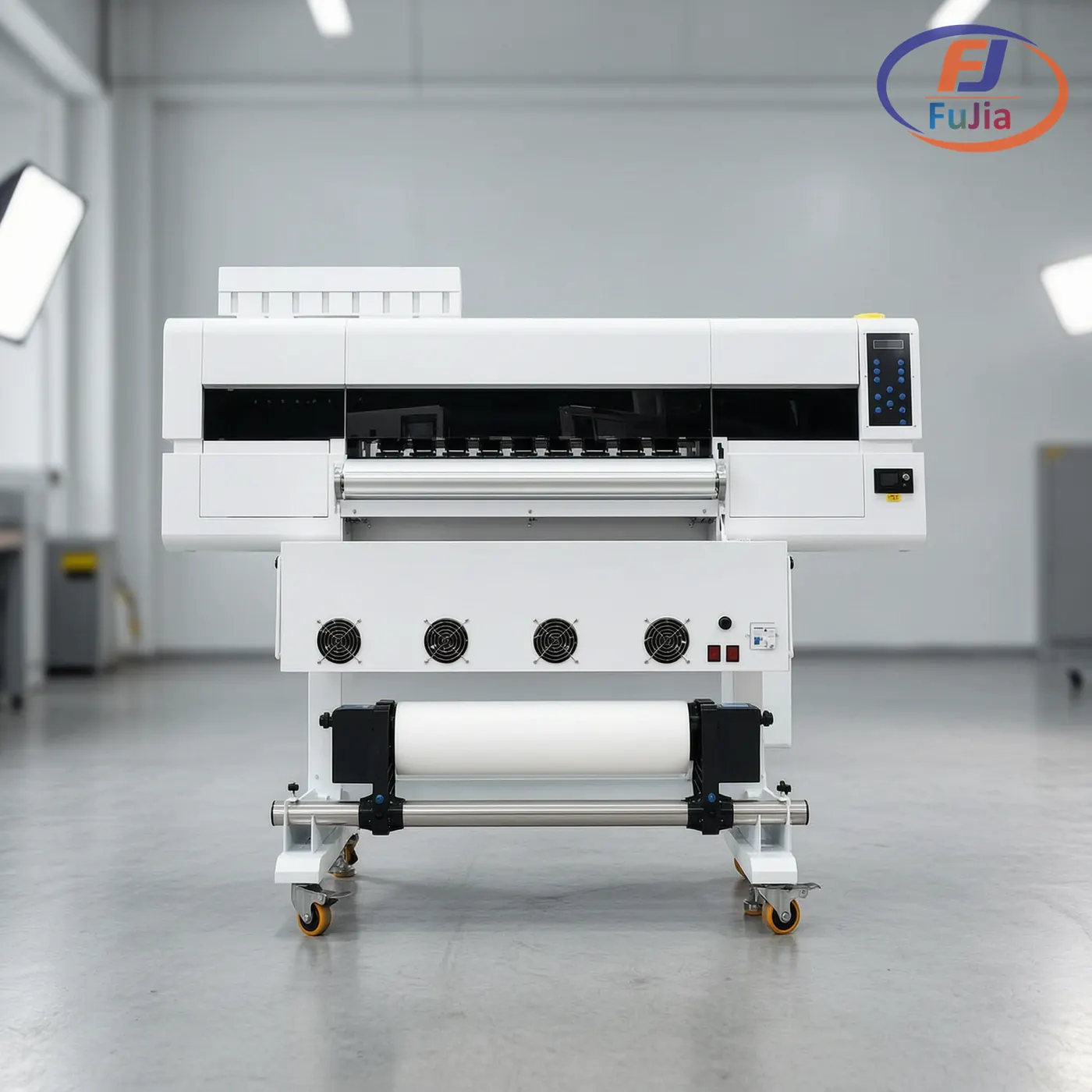
Key Takeaways
- Desktop sublimation printers (Sawgrass, Epson F170) handle mugs and small apparel — under 100 transfers per month
- Wide-format sheet printers (Sawgrass SG1000, Epson F570) handle full-size apparel and large blanks — up to 500 transfers per month
- Industrial roll-to-roll systems (dual I3200 printhead) handle sportswear production and soft signage — 1,000+ m2 per month
- Genuine Epson I3200 printheads deliver 1,200 to 1,800 nozzles per head with 600 DPI native resolution
- Factory-direct sourcing from manufacturers like Fujia Print reduces equipment cost by 30 to 50% compared to Western distributor pricing
What Makes a Sublimation Printer “The Best”?
A sublimation printer earns its recommendation based on four criteria: print width (determines what products you can decorate), printhead technology (determines speed and resolution), ink system (determines color accuracy and cost per print), and after-sales support (determines uptime over the machine’s 5 to 10 year lifespan). The global dye-sublimation printing market was valued at $16 billion in 2023 and is projected to grow at 10.45% CAGR through 2032, driven by sportswear customization and soft signage demand.
Most “best sublimation printer” reviews focus exclusively on desktop models priced under $2,000. This guide covers the full spectrum — from $500 hobbyist machines to $25,000 industrial production systems — because the “best” printer for a 200-shirt-per-month Etsy shop is useless for a factory producing 5,000 sportswear kits per day.
Best Desktop Sublimation Printers (Hobby and Small Shop)
Desktop sublimation printers use sheet-fed paper and handle individual transfers for mugs, phone cases, and small apparel. Maximum print width ranges from 8.5″ to 13″ (21 to 33 cm).
| Printer | Max Width | Resolution | Ink System | Best For |
|---|---|---|---|---|
| Sawgrass SG500 | 8.5″ (21 cm) | 4800 x 1200 DPI | SubliJet-UHD cartridge | Beginners, mug decoration |
| Epson SureColor F170 | 8.5″ (21 cm) | 1200 x 600 DPI | EcoTank bottle | Budget-conscious beginners |
| Sawgrass SG1000 | 13″ (33 cm) | 4800 x 1200 DPI | SubliJet-UHD cartridge | Full-size adult apparel |
| Brother SP1 | 4″ x 6″ (10 x 15 cm) | 1200 x 600 DPI | Cartridge | Mobile, event printing |
Sawgrass SG500 ($699 MSRP from Sawgrass) dominates the desktop category because of its included CreativeStudio software and lifetime telephone support. The proprietary SubliJet-UHD ink system produces consistent ICC-managed color without manual profiling. Downsides: cartridge ink costs run $0.25 to $0.40 per letter-size transfer, significantly higher than bottle-ink systems.
Epson SureColor F170 ($399 from Epson) offers the lowest entry price with a bottle-based EcoTank system that reduces per-print ink cost by 60% compared to cartridges. The trade-off is more manual color management and no dedicated sublimation software.
Best Wide-Format Sublimation Printers (Apparel Production)
Wide-format sublimation printers handle 13″ to 24″ media, enabling full-size adult apparel, large canvas prints, and batch mug production. These machines serve businesses producing 200 to 500 transfers per month.
| Printer | Max Width | Printhead | Speed | Ink Cost |
|---|---|---|---|---|
| Sawgrass SG1000 | 13″ (33 cm) | Piezo 6-color | Moderate | $0.30 to $0.50/sheet |
| Epson SureColor F570 Pro | 24″ (61 cm) | PrecisionEdge | 600 ft2/hr | $0.08 to $0.15/ft2 |
| Epson SureColor F6370 | 24″ (61 cm) | TFP PrecisionCore | 720 ft2/hr | $0.06 to $0.12/ft2 |
The Epson SureColor F570 Pro ($1,995 MSRP) is the most recommended wide-format model for growing apparel businesses. Its 24-inch roll capacity supports continuous production printing without manual sheet feeding. Epson’s UltraChrome DS ink delivers accurate Pantone-matching for brand-color sportswear orders. The machine weighs 70 lb (32 kg) and requires dedicated workspace with a heat press nearby.
Best Industrial Roll-to-Roll Sublimation Printers (Factory Production)
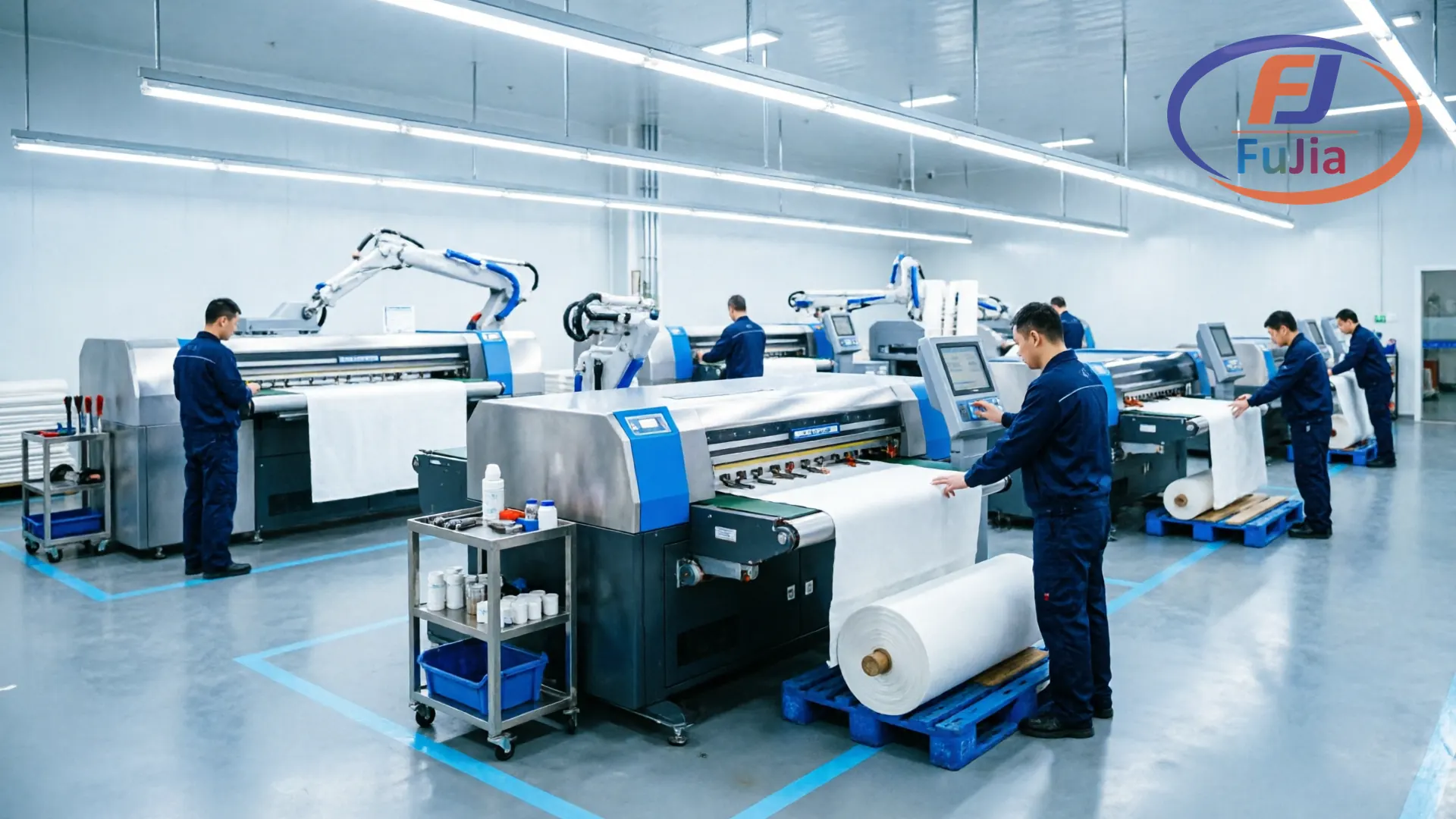
Industrial sublimation printers use roll-to-roll media handling, dual or quad printhead configurations, and high-capacity bulk ink systems. These machines serve sportswear factories, soft signage producers, and home textile mills producing 1,000+ square meters per month. Unlike desktop reviews, the industrial category gets almost no coverage in mainstream sublimation guides.
| Printer | Print Width | Printheads | Speed (m2/hr) | Daily Capacity |
|---|---|---|---|---|
| Fujia 60cm Dual I3200 | 60 cm (24″) | 2x Epson I3200 | 120 to 180 | 800+ m2 |
| Fujia 65cm Dual I3200 | 65 cm (26″) | 2x Epson I3200 | 150 to 220 | 1,200+ m2 |
| Mimaki TS330-1800 | 180 cm (71″) | 1x Epson I3200 | 60 to 120 | 600+ m2 |
| Roland Texart RT-640 | 160 cm (63″) | 1x Epson DX7 | 36 to 72 | 400+ m2 |
The Epson I3200 printhead represents the current industry standard for industrial sublimation. Each I3200 head delivers 3,200 nozzles across 8 color channels with variable droplet sizes (3.8 to 84 picoliters). Dual-head configurations double the throughput while maintaining 600 DPI native resolution. Fujia Print’s 60cm dual-I3200 sublimation printer produces 120 to 180 m2 per hour — enough capacity for a sportswear factory running two shifts.
Industrial machines use bulk ink bottles (1 liter per color) rather than cartridges, reducing ink cost to $0.02 to $0.05 per square meter. A dual-I3200 system consuming 2 liters of ink per day costs approximately $40 in consumables versus $200+ for an equivalent desktop cartridge setup.
How to Choose: Decision Framework
Selecting the best sublimation printer requires matching machine capabilities to business requirements. Use the framework below to identify the right category.
| If your monthly volume is… | And your products are… | Choose… | Budget Range |
|---|---|---|---|
| Under 50 transfers | Mugs, phone cases, baby onesies | Desktop (Sawgrass SG500) | $700 to $850 |
| 50 to 200 transfers | Full-size apparel, bags, towels | Wide-format (Epson F570) | $1,500 to $2,500 |
| 200 to 1,000 transfers | Sportswear, team uniforms | Wide-format production (Epson F6370) | $3,000 to $8,000 |
| 1,000+ m2 per month | Soft signage, home textiles, bulk apparel | Industrial roll-to-roll (Fujia dual I3200) | $5,000 to $25,000 |
| Variable | Mixed materials (some cotton) | DTF printer instead | $2,000 to $15,000 |
Businesses decorating cotton or cotton-blend garments should consider DTF printing instead of sublimation. Sublimation only bonds with polyester; DTF works on all fabric types. See our DTF vs sublimation comparison for a detailed breakdown.
Total Cost of Ownership: 3-Year Projection
Purchase price represents only 40 to 60% of total ownership cost. Ink, paper, printhead replacement, and maintenance add significantly over a machine’s lifespan.
| Cost Category | Desktop (SG500) | Wide-Format (F570) | Industrial (Dual I3200) |
|---|---|---|---|
| Machine cost | $699 | $1,995 | $8,000 to $15,000 |
| Ink (3 years) | $2,160 | $1,800 | $4,320 |
| Paper (3 years) | $432 | $720 | $2,160 |
| Printhead replacement | $0 (disposable) | $400 (1x) | $800 (1x) |
| Maintenance/support | $0 (included) | $300 | $600 |
| 3-year total | $3,291 | $5,215 | $15,880 to $22,880 |
| Cost per m2 (at capacity) | $4.38 | $0.87 | $0.22 to $0.32 |
Industrial systems have higher upfront cost but dramatically lower cost per square meter at production volume. A factory running 1,000 m2 per month on a dual-I3200 system pays $0.22/m2 compared to $4.25/m2 for a desktop machine — a 19x cost advantage that compounds monthly.
Frequently Asked Questions
Q: What is the best sublimation printer for beginners in 2026?
The Sawgrass SG500 is the best sublimation printer for beginners because it includes everything needed to start printing immediately: proprietary SubliJet-UHD ink, CreativeStudio design software, and lifetime telephone technical support from Sawgrass. The SG500 prints at 4800 x 1200 DPI resolution on media up to 8.5 x 14 inches, which covers standard mug wraps, phone cases, and children’s apparel. The total beginner kit costs approximately $699 from authorized Sawgrass distributors. The main limitation is print width — 8.5 inches cannot accommodate full-size adult T-shirts. Beginners planning to print adult apparel should upgrade to the Sawgrass SG1000 (13-inch width, approximately $1,495). For budget-constrained beginners willing to handle their own color management, the Epson SureColor F170 at $399 offers similar print quality at two-thirds the price.
Q: Can I use a regular inkjet printer for sublimation?
Any Epson EcoTank printer can theoretically be converted to sublimation by flushing the original ink and refilling with sublimation ink, but this voids the warranty permanently and requires manual ICC color profiling. The Epson SureColor F170 and F570 are factory-built sublimation printers with warranty coverage and factory ICC profiles. Converted EcoTank models (ET-2800, ET-15000) produce acceptable results for hobbyists, but the lack of factory support means troubleshooting falls entirely on the user. Common conversion issues include clogged printheads from incompatible ink formulations, color shifts between ink brands, and irreversible contamination of the ink delivery system. Once sublimation ink enters an EcoTank, the printer cannot be reverted to standard ink. For businesses, the warranty and support advantages of a factory sublimation printer outweigh the $200 to $400 savings from converting a standard EcoTank.
Q: What size sublimation printer do I need for T-shirts?
Printing a full-size adult T-shirt design requires a minimum print width of 13 inches (33 cm), which covers a standard 11 x 17 inch transfer area. The Sawgrass SG1000 (13-inch width) and Epson SureColor F570 Pro (24-inch width) both handle full-size adult apparel. For youth-sized shirts and baby onesies, an 8.5-inch printer (Sawgrass SG500, Epson F170) provides sufficient width. For all-over-print shirts — where the design covers the entire front and back of the garment — industrial roll-to-roll printers with 60cm or wider capacity are required. Roll-to-roll systems like the Fujia 60cm Dual I3200 print continuously on fabric rolls, enabling cut-and-sew production where the entire fabric piece is sublimated before the garment is assembled. This method produces edge-to-edge coverage impossible with sheet-fed desktop printers.
Q: How much does an industrial sublimation printer cost?
Industrial roll-to-roll sublimation printers with dual Epson I3200 printheads cost between $5,000 and $25,000 depending on print width, number of printheads, and included automation features. The Fujia Print 60cm Dual I3200 sublimation printer occupies the entry-to-mid range of this bracket, offering factory-direct pricing without distributor markups. Comparable machines from Mimaki (TS330 series) and Roland (Texart RT-640) typically cost 40 to 80% more due to Western distributor margins. Additional costs include bulk ink ($15 to $25 per liter), sublimation paper rolls ($0.08 to $0.15 per square meter), and a calendar heat press ($3,000 to $12,000 for production-grade units). Total setup cost for a turnkey sportswear production line ranges from $12,000 to $40,000. Fujia Print provides free material testing — send your fabric and receive a sample print within 7 days.
Q: Is sublimation better than DTF printing?
Neither sublimation nor DTF is universally better — each technology serves different substrate types and business models. Sublimation produces superior results on polyester fabrics: the dye becomes part of the fabric fiber, producing a zero-hand-feel transfer that does not crack, peel, or fade over 50+ washes. Sublimation works only on polyester or polymer-coated surfaces. DTF printing works on all fabric types including 100% cotton, polyester blends, nylon, and denim. DTF transfers have a slight rubbery texture and may show minor cracking after 30 to 50 washes. For businesses decorating exclusively polyester sportswear, sublimation delivers better quality at lower consumable cost. For businesses working with mixed fabrics, DTF provides versatility that sublimation cannot match. Many production shops maintain both technologies. See our detailed DTF vs sublimation comparison for the full analysis.
Conclusion
Choose a sublimation printer based on monthly volume and product mix, not brand loyalty. For factory-direct industrial sublimation printer pricing and free sample prints on your material, contact Fujia Print.
