

Key Takeaways
- A DTF (Direct-to-Film) printer prints designs onto a special PET transfer film, which is then heat-pressed onto fabric — no fabric pretreatment needed.
- DTF printers range from $1,200 (converted desktop units) to $20,000+ (industrial roll-to-roll systems), with per-print costs between $0.70 and $2.00.
- DTF now accounts for roughly two-thirds of global print shop adoption, and the global DTF printer market reached $699 million in 2025.
- Compared to DTG, DTF handles polyester, blends, and dark fabrics better — at roughly half the per-unit cost for small batches.
- Compared to screen printing, DTF eliminates minimum order requirements and setup fees, making it the smarter choice for orders under 150 pieces.
If you run a print shop, sell custom apparel online, or buy branded merchandise for your business, you have probably heard someone say “just get a DTF printer.” But what does that actually mean? How does it work? How much does it cost? And most importantly — is it the right choice for your specific situation?
This guide answers every one of those questions with real numbers, not marketing fluff. We manufacture DTF printers and consumables at our Guangzhou factory — from industrial DTF printers to factory-formulated inks and films — so we live this technology every day. We wrote this to be useful whether you ever buy from us or not.
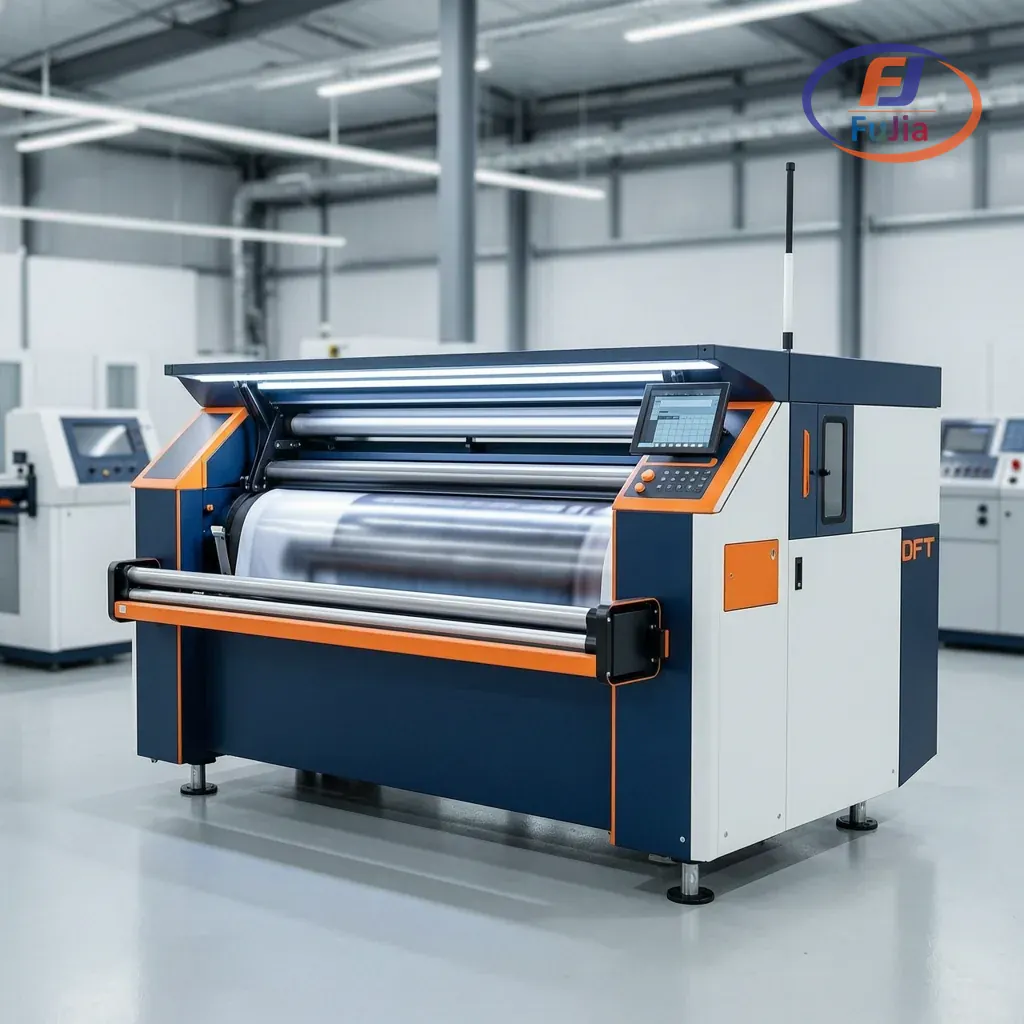
What Is DTF Printing?
DTF stands for Direct-to-Film. It is a digital printing method where your design gets printed onto a thin PET transfer film — not directly onto the garment. After printing, you apply a hot-melt adhesive powder, cure it with heat, then use a heat press to transfer the finished design onto fabric.
The result: a full-color, durable print that works on cotton, polyester, blends, nylon, denim, and even leather — something no other single printing method can match.
Unlike DTG (Direct-to-Garment), DTF does not require you to pretreat fabric before printing. Unlike screen printing, there are no screens to burn, no minimum order quantities, and no cleanup chemicals. You print exactly what you need, when you need it.
How Does a DTF Printer Work?
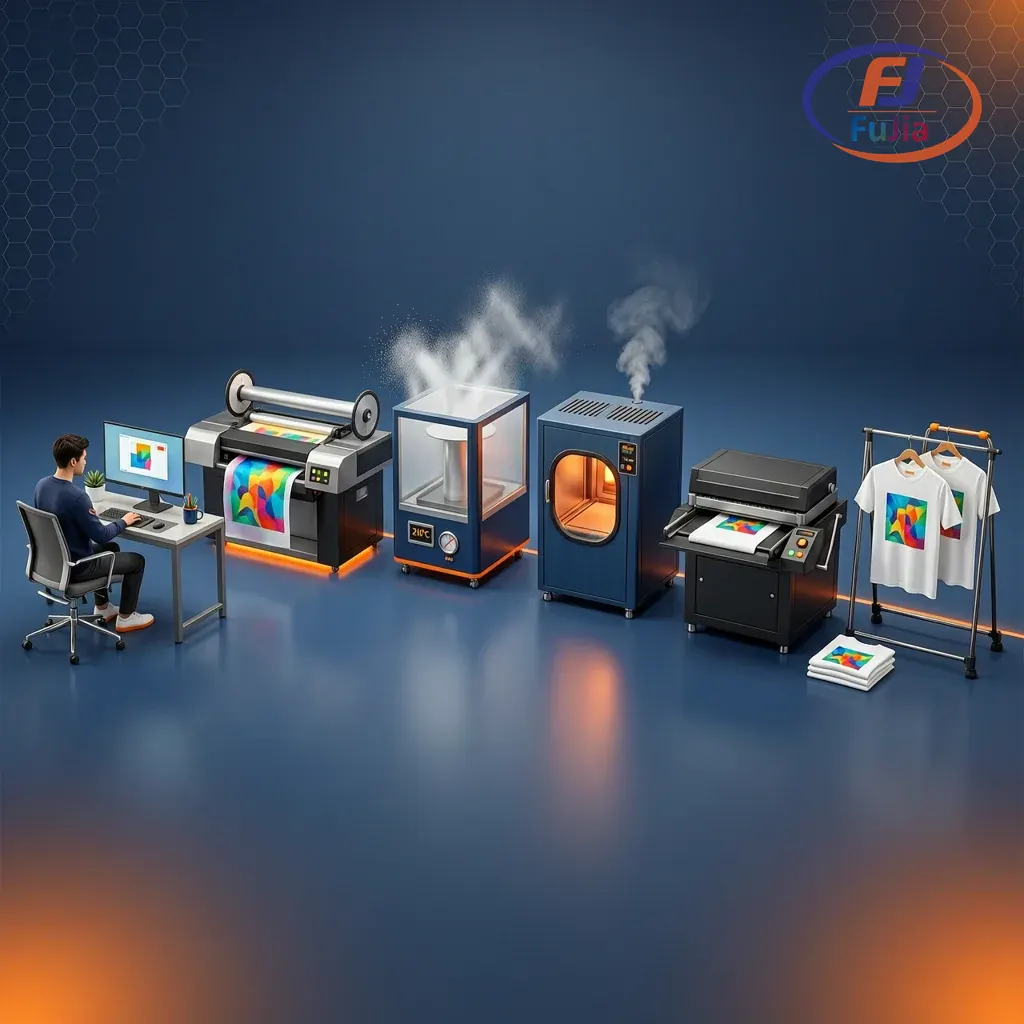
The DTF process has six distinct steps. Once you understand them, you will see why this method has become the default choice for small and mid-size print businesses.
Step 1: Design Preparation
Create your artwork in any graphics program at 300 DPI minimum in RGB color mode. Mirror the image horizontally — the design prints in reverse on the film so it appears correctly after transfer. For dark garments, add a white underbase layer in your RIP software.
Step 2: Print onto PET Film
Load the DTF transfer film coated side up into the printer. The printer lays down the CMYK color layer first, then the white layer on top. This white layer acts as an opaque backing that makes colors pop — especially on dark or colored fabrics. Most industrial DTF printers use Epson i3200 PrecisionCore printheads, which deliver 1,200 DPI native resolution and are engineered for extended industrial duty cycles (Epson).
Step 3: Apply Hot-Melt Powder
While the ink is still wet, sprinkle hot-melt adhesive powder evenly across the printed area. Shake off the excess — it can be collected and reused, reducing waste by up to 20% (Jinlong Prints). The powder only sticks where there is wet ink.
Step 4: Cure the Powder
Run the powdered film through a curing oven or powder shaker at 160–170°C (320–340°F) for 2–3 minutes. The powder melts into a glossy, gel-like layer bonded to the ink.
Step 5: Heat Press Transfer
Position the cured transfer sheet onto your garment and press at 160°C (320°F) for 15–20 seconds with medium-to-firm pressure. Pre-press the garment for 3–5 seconds first to remove moisture and wrinkles. Temperature adjustments apply: polyester drops to 140°C, nylon to 130°C (DTF Database).
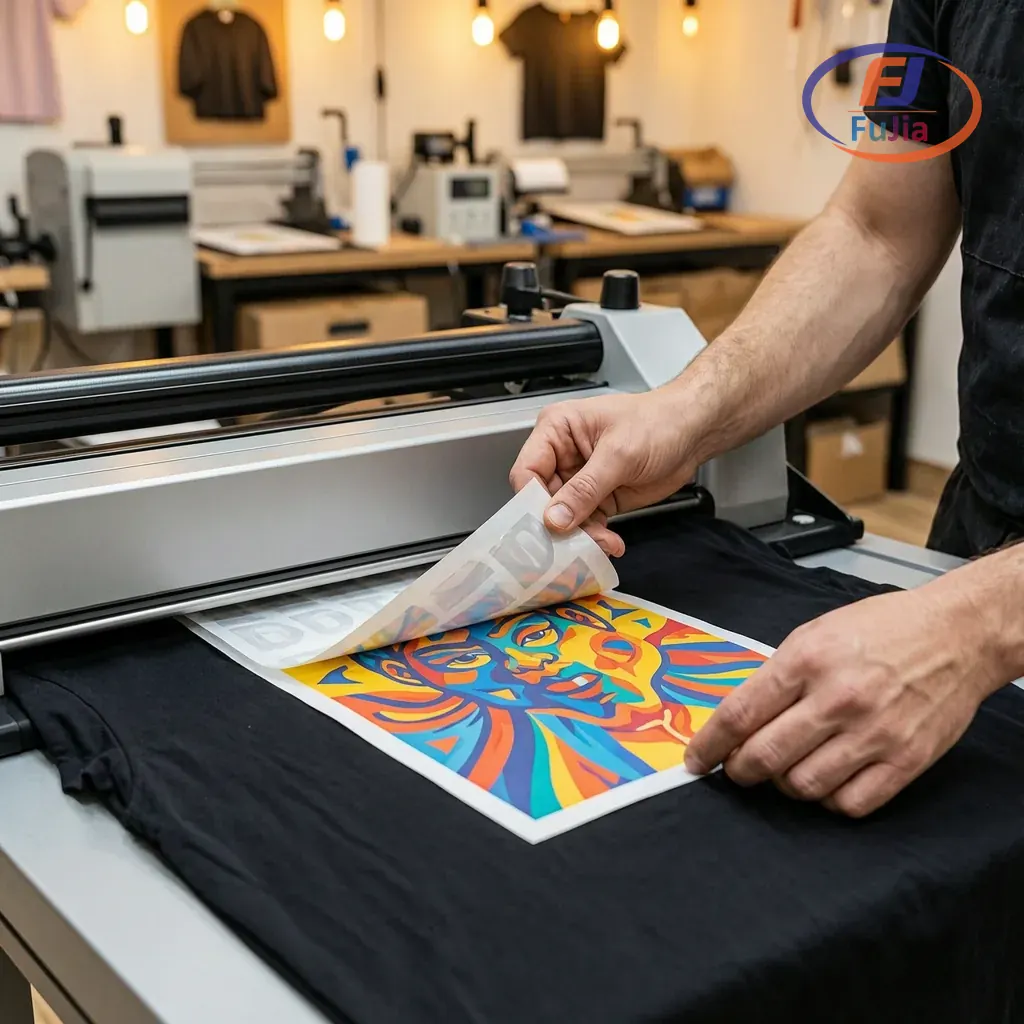
Step 6: Cold Peel
Let the transfer cool for 5–10 seconds, then peel the film away at a 45-degree angle. The design stays on the garment. Cold peeling produces the sharpest edges and smoothest finish.
DTF vs DTG vs Screen Printing: Which Method Wins?
Most print businesses end up comparing these three methods. Here is how they stack up — with real numbers, not opinions (Graphic Design Eye).
| Factor | DTF | DTG | Screen Printing |
|---|---|---|---|
| Equipment cost | $1,200–$20,000+ | $3,000–$15,000 | $1,000–$20,000+ |
| Cost per print (1–24 pcs) | $1.10–$2.00 | $2.50–$5.00 | $8.00–$15.00 |
| Cost per print (100+ pcs) | $0.70–$1.20 | $1.80+ | $0.60–$1.00 |
| Minimum order | 1 piece | 1 piece | 24–50 pieces |
| Fabric compatibility | Cotton, polyester, blends, nylon, leather | Cotton only (best) | Cotton, blends (limited) |
| Dark fabric quality | Excellent | Mediocre | Excellent |
| Wash durability | 50–60+ washes | 40–50 washes | 100+ washes |
| Print resolution | 300+ DPI | 300+ DPI | Halftone only |
| Setup time | 10–15 min | 5–10 min | 30–90+ min per color |
| Environmental impact | Low (water-based inks) | Lowest | High (PVC inks, wastewater) |
How Much Does a DTF Printer Cost in 2026?
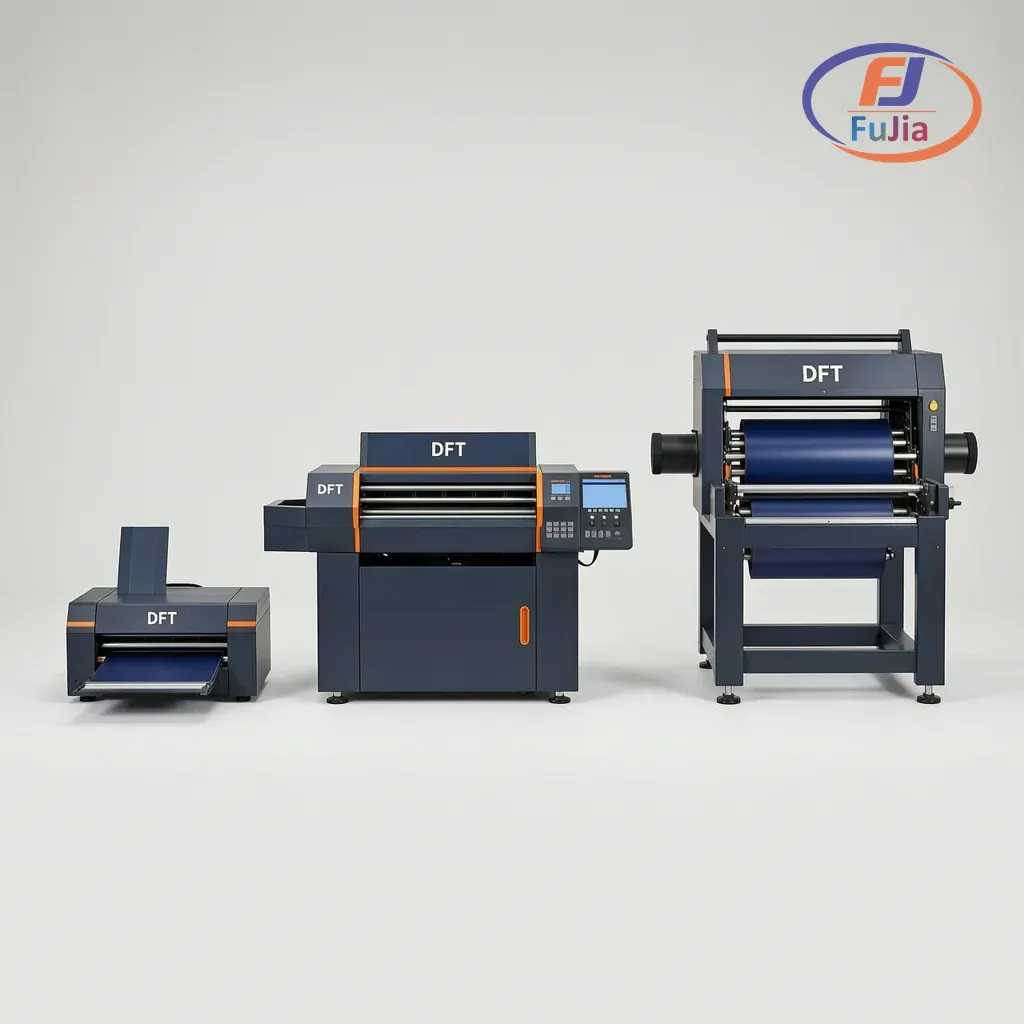
DTF printer pricing splits into three clear tiers. The right one depends on your production volume — not your ambition.
Entry-Level: $1,200–$3,000
Converted desktop printers like the Epson L1800-based kits. Best for testing the market and producing samples. Speed: 1–3 sqm/hour.
Mid-Range: $6,000–$10,000
Purpose-built DTF machines with 24-inch (60cm) print width, dual Epson i3200 printheads, integrated white ink circulation. Best for small-to-medium print shops. Speed: 6–12 sqm/hour.
Industrial: $12,000–$20,000+
High-volume 60cm roll-to-roll systems with quad printhead configurations, automatic powder shakers, and automatic take-up. Speed: 15–22 sqm/hour.
What Can You Print With DTF?
One of DTF’s biggest advantages is material flexibility. The same printer and process work across an unusually wide range of surfaces. If it can withstand 160°C for 15 seconds without melting, DTF can print on it.
- T-shirts, hoodies, sweatshirts — cotton, polyester, and blends
- Workwear and uniforms — including hi-vis polyester
- Sports jerseys and team kits
- Denim jackets and jeans
- Canvas bags and totes
- Leather goods, nylon, neoprene
- Mouse pads and desk mats
FAQ
Q: What is the difference between DTF and DTG printing?
A: DTF prints onto transfer film first, then heat-presses onto fabric. DTG prints directly onto the garment. DTF works on virtually any fabric without pretreatment; DTG requires pretreatment on dark garments and works best on 100% cotton. DTF costs about 40–50% less per print for small batches.
Q: How long do DTF prints last?
A: Properly cured and pressed DTF transfers last 50–60+ wash cycles before showing noticeable fading or cracking. This assumes cold-peel application, correct temperature and pressure, and standard home laundering.
Q: Can I use any ink with a DTF printer?
A: No. DTF requires specifically formulated textile pigment inks with the right viscosity and adhesion properties for PET film. CMYK + white is standard. Using generic sublimation or DTG inks will produce poor results and may damage printheads.
Q: What fabrics can DTF print on?
A: Cotton, polyester, cotton-poly blends, tri-blends, nylon, denim, canvas, leather, neoprene, and most synthetic fabrics that can withstand 160°C for 15 seconds. DTF has the widest fabric compatibility of any digital printing method.
Q: How much does it cost to start a DTF printing business?
A: Budget $2,500–$3,000 for a minimal entry-level setup. For a production-ready professional setup with a mid-range 60cm printer, powder shaker, curing oven, and professional heat press, budget $12,000–$18,000 (Jinlong Prints).
Q: Is DTF printing eco-friendly?
A: Compared to screen printing, DTF uses water-based inks (no PVC or phthalates) and consumes significantly less water — screen printing uses approximately 50 liters per square meter versus around 10 liters for DTF (WorldMetrics).
So, Should You Get a DTF Printer?
If you print custom apparel and find yourself turning down small orders, losing money on setups, or frustrated with fabric limitations — DTF is almost certainly the right move. For the work most print shops actually do — mixed fabrics, varied order sizes, tight deadlines — DTF is the most versatile and cost-effective option available in 2026.
The global DTF printer market reached $699 million in 2025 and is projected to hit $991 million by 2032, growing at a 5.2% CAGR (Valuates Reports).
Related Reading
Factory-Direct Printing Equipment – Talk to the Source
Fujia Print manufactures DTF and UV printers in Guangzhou. Not a trading company, not a middleman. One supplier for your printer, consumables, and after-sales. Factory-direct pricing, in-house R&D, real support that answers the phone.
