

The custom apparel market is projected to reach $10.8 billion by 2027, growing at 9.7% annually (Grand View Research, 2026). Starting a t-shirt printing business has never been more accessible — you can launch from home with as little as $3,000, or scale to a full production shop with $20,000–$30,000 in equipment.
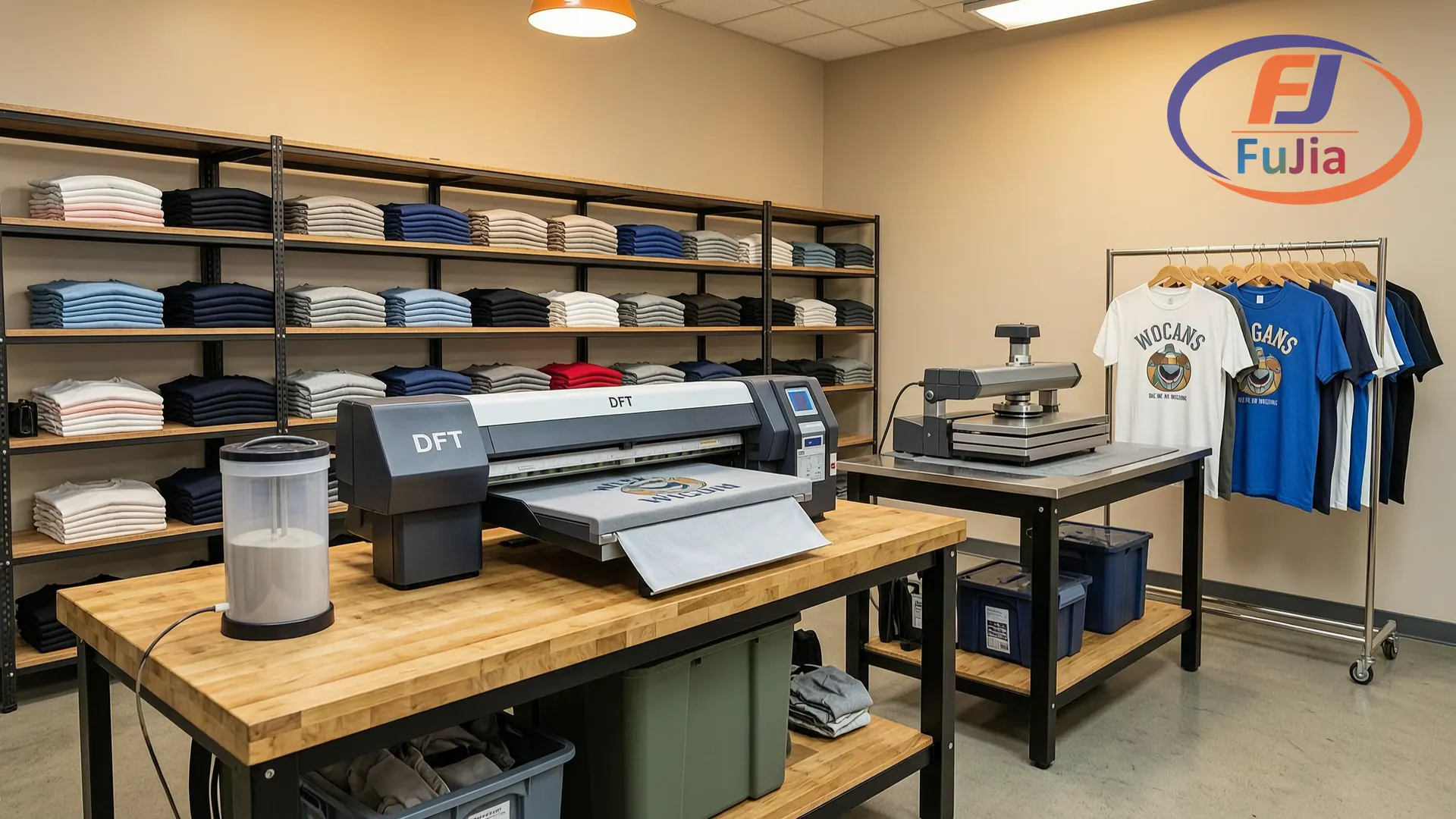
This guide walks you through every step: choosing your printing technology, sourcing blank garments, setting up your workspace, pricing your products, and finding your first customers. Whether you’re starting a side hustle or building a full-time operation, you’ll have everything you need to launch profitably.
This article is for: Aspiring entrepreneurs, side-hustlers, and existing print shop owners looking to add custom apparel to their services.
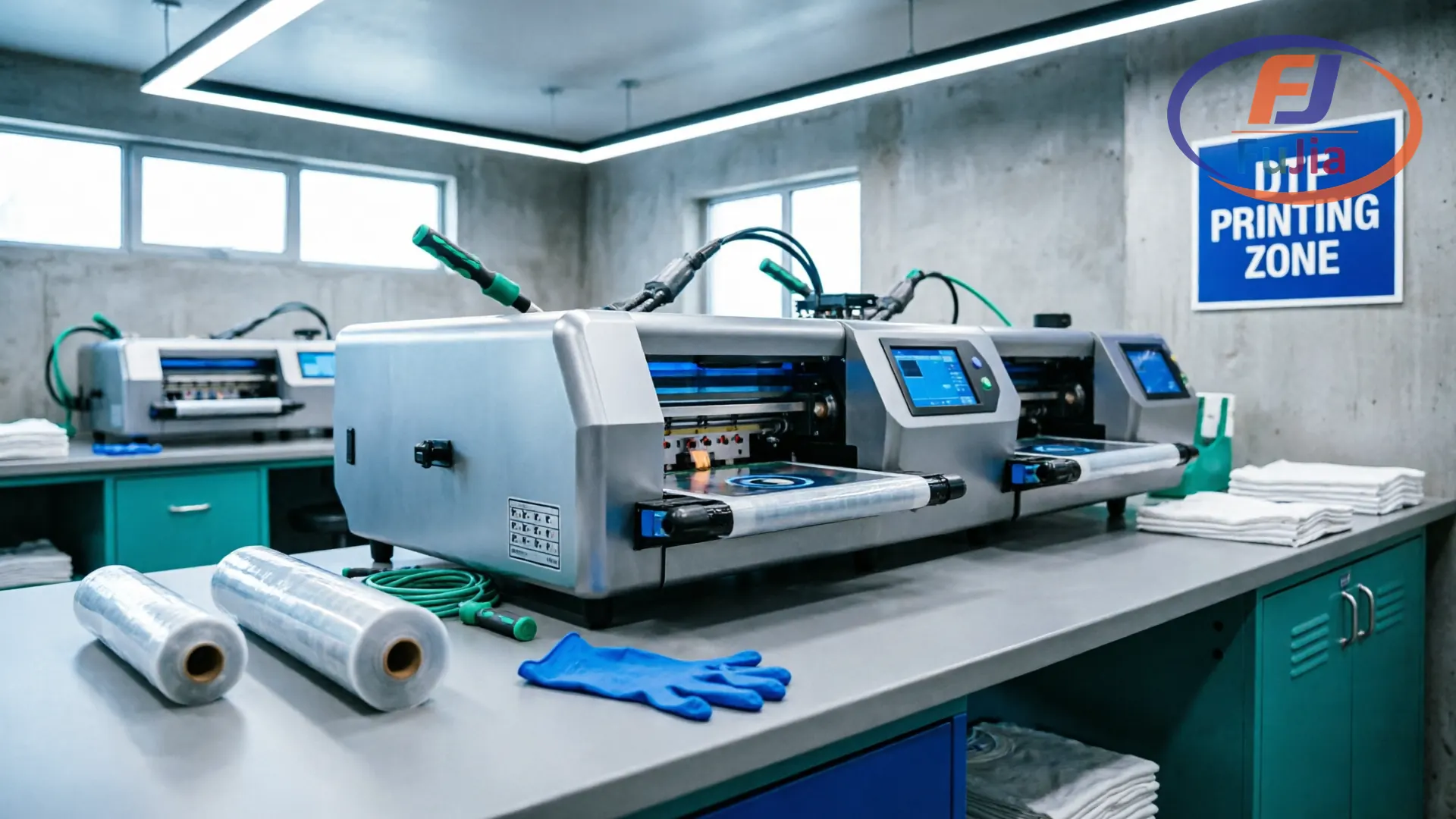
Step 1: Choose Your Printing Technology
Your printing method determines your startup costs, product quality, and target market. Here are the four main options:
| Method | Startup Cost | Best For | Pros | Cons |
|---|---|---|---|---|
| DTF (Direct-to-Film) | $3,000–$8,000 | All fabric types, small to medium batches | No pretreatment, works on polyester, durable prints | Requires powder shaker + curing oven, learning curve |
| DTG (Direct-to-Garment) | $12,000–$30,000 | Cotton garments, photographic quality | Soft hand feel, no transfer film, excellent detail | Requires pretreatment, slower, higher ink costs |
| Sublimation | $1,500–$5,000 | Polyester items, mugs, phone cases | No minimum order, vibrant colors, low cost | Only works on polyester or coated substrates |
| Screen Printing | $2,000–$10,000 | High-volume orders (50+ same design) | Lowest per-unit cost at scale, durable prints | High setup time, not economical for small batches |
Our recommendation for 2026: Start with DTF if you’re new to printing. It offers the best balance of low startup costs, fabric versatility, and print durability. For a detailed comparison, see our DTF vs Sublimation guide and DTG printers for small business guide.
Step 2: Define Your Niche and Target Market
Generic t-shirt businesses struggle. Niche-focused businesses thrive. Here’s how to find yours:
Profitable Niche Examples (2026)
| Niche | Average Shirt Price | Profit Margin | Competition Level |
|---|---|---|---|
| Pet memorials & custom pet portraits | $28–$45 | 55–65% | Medium |
| Local sports teams & school clubs | $18–$25 | 40–50% | Low–Medium |
| Corporate event merchandise | $15–$22 | 35–45% | Medium |
| Influencer/creator merch | $25–$40 | 50–60% | High |
| Wedding party & bachelorette shirts | $20–$35 | 45–55% | Medium |
| Niche hobbies (fishing, gaming, gardening) | $22–$35 | 50–60% | Low |
How to Validate Your Niche
- Search volume check: Use Google Trends or Semrush to confirm people are searching for your niche
- Competitor analysis: Search Etsy, Amazon, and local shops — if 3+ competitors exist, there’s demand
- Price testing: List 5–10 designs at your target price before buying equipment. If you get 3+ orders, you’ve validated demand
Step 3: Calculate Your Startup Costs
Here’s what you’ll actually spend to launch. We’ve broken this down into two scenarios: home-based startup and dedicated shop.
Home-Based Startup (DTF Setup)
| Item | Cost | Notes |
|---|---|---|
| DTF printer (Epson L1800 converted) | $1,500–$2,500 | Includes RIP software |
| Powder shaker machine | $800–$1,500 | Manual or semi-auto |
| Curing oven / heat press | $400–$800 | 16″×20″ minimum |
| Starter consumables kit | $300–$500 | Ink, film, powder |
| Laptop + design software | $0–$500 | Use free tools like GIMP or Inkscape |
| Business registration + permits | $100–$300 | Varies by location |
| Total | $3,100–$6,100 |
Dedicated Shop (Professional DTF Setup)
| Item | Cost | Notes |
|---|---|---|
| Commercial DTF printer (i3200 printhead) | $4,000–$8,000 | Auto circulation, wider print area |
| Automatic powder shaker | $2,000–$4,000 | Faster, more consistent |
| Industrial curing oven | $1,500–$3,000 | Conveyor-style for volume |
| Heat press (16″×20″) | $600–$1,200 | For final pressing |
| Initial consumables stock | $800–$1,500 | 2–3 month supply |
| Computer + design software | $1,000–$2,000 | Adobe Creative Cloud or CorelDRAW |
| Ventilation + HEPA filter | $200–$500 | TPU powder dust control |
| Business registration + insurance | $300–$800 | General liability recommended |
| Total | $10,400–$21,000 |
For a complete breakdown of operating costs, maintenance, and profit margins, see our DTF business startup cost guide.
Step 4: Source Your Blank Garments
Your blank t-shirt quality determines customer satisfaction and repeat business. Here are the top suppliers:
Recommended Blank T-Shirt Brands
| Brand | Price/Shirt | Best For | Fabric Quality |
|---|---|---|---|
| Gildan 5000 | $2.50–$3.50 | Budget orders, bulk | Good (100% cotton, 5.3 oz) |
| Bella+Canvas 3001 | $4.00–$6.00 | Premium retail, soft feel | Excellent (ring-spun cotton, 4.2 oz) |
| Next Level 3600 | $3.50–$5.00 | Mid-range, fashion-forward | Very good (ring-spun, 4.3 oz) |
| Comfort Colors 1717 | $5.00–$7.00 | Vintage/retro styles, garment-dyed | Excellent (heavy cotton, 6.1 oz) |
| Hanes Beefy-T | $3.00–$4.50 | Workwear, durable prints | Good (100% cotton, 6.1 oz) |
Where to Buy Blanks
- JiffyShirts (jiffyshirts.com) — No minimum, fast shipping, 200+ brands
- S&S Activewear (ssactivewear.com) — Bulk discounts, requires business account
- SanMar (sanmar.com) — Premium brands, requires resale certificate
- Alibaba/1688 — Direct from China factories, MOQ 100–500 pcs, 3–4 week delivery
Pro tip: Order samples from 3–5 suppliers before committing. Print on each to see which fabric gives you the best ink adhesion and wash durability.
Step 5: Set Up Your Workspace
Home Setup Requirements
- Space: Minimum 8’×10′ (printer, shaker, heat press, storage)
- Power: Standard 110V outlet (20A circuit recommended)
- Ventilation: Open window + HEPA air purifier (TPU powder dust is a respiratory irritant)
- Temperature: 68–78°F (20–26°C) — cold rooms cause ink viscosity issues
- Humidity: 40–60% RH — too dry = nozzle clogs, too humid = powder clumping
Essential Workspace Layout
┌─────────────────────────────────────┐
│         WORKSPACE (8'×10')          │
│                                     │
│  [DTF Printer]    [Powder Shaker]   │
│                                     │
│  [Heat Press]     [Curing Oven]     │
│                                     │
│  [Design Station] [Blank Storage]   │
│                                     │
│  [Finished Goods] [Supplies Shelf]  │
└─────────────────────────────────────┘
Step 6: Learn Design and File Preparation
Your design quality determines whether customers buy. Here’s what you need to know:
File Requirements for T-Shirt Printing
| Parameter | DTF | DTG | Sublimation |
|---|---|---|---|
| File format | PNG, TIFF, PDF | PNG, TIFF | PNG, TIFF, PDF |
| Resolution | 300 DPI minimum | 300 DPI minimum | 300 DPI minimum |
| Color mode | RGB (RIP converts to CMYK) | RGB | CMYK |
| Background | Transparent (PNG) | Transparent (PNG) | White or transparent |
| Max print size | 12″×16″ (standard) | 16″×21″ (Epson F2100) | 12″×16″ (standard) |
Free Design Tools
- GIMP (gimp.org) — Free Photoshop alternative
- Inkscape (inkscape.org) — Free vector design tool (SVG)
- Canva (canva.com) — Templates for non-designers ($12.99/month for Pro)
- Kittl (kittl.com) — T-shirt design specific, $15/month
Design Tips That Sell
- Use bold outlines — thin lines disappear on fabric
- Avoid gradients under 1 inch — they print muddy on fabric
- Test print on actual fabric — screen colors ≠ print colors
- Keep text readable — minimum 14pt font for body text, 24pt+ for headlines
- Use mockup tools — Placeit ($14.95/month) generates realistic t-shirt mockups for your store
Step 7: Set Your Pricing
Pricing too low leaves money on the table. Pricing too high kills sales. Here’s the formula:
Pricing Formula
Selling Price = (Blank Cost + Ink/Film Cost + Labor + Overhead) × 2–3
Example: Custom DTF T-Shirt
| Cost Component | Amount |
|---|---|
| Blank t-shirt (Gildan 5000) | $3.00 |
| DTF transfer (ink + film + powder) | $0.80–$1.20 |
| Heat press labor (2 min) | $0.50 |
| Packaging + label | $0.30 |
| Total cost | $4.60–$5.00 |
| Selling price (2.5× markup) | $11.50–$12.50 |
| Profit per shirt | $6.50–$7.50 |
Market Price Benchmarks (2026)
| Product Type | Average Selling Price | Your Profit (at $5 cost) |
|---|---|---|
| Standard custom tee | $18–$25 | $13–$20 |
| Premium tee (Bella+Canvas) | $25–$35 | $20–$30 |
| Multi-color full front+back | $30–$45 | $25–$40 |
| Bulk orders (50+ units) | $12–$18/unit | $7–$13/unit |
| Rush orders (24hr turnaround) | +$5–$10 premium | +$5–$10 profit |
Step 8: Build Your Sales Channels
Don’t rely on one channel. Diversify from day one.
Online Sales Channels
| Channel | Setup Cost | Monthly Fee | Commission | Best For |
|---|---|---|---|---|
| Shopify | $29/month | $29 | 2.9% + 30¢ | Full control, brand building |
| Etsy | $0.20/listing | $0 | 6.5% | Handmade/custom market, built-in traffic |
| eBay | $0 | $0 | 12.9% | Auction sales, bargain hunters |
| Amazon Merch | Application required | $0 | 15–20% | Passive income, print-on-demand |
| Your own website | $100–$500 setup | $10–$30 hosting | 2.9% + 30¢ | Long-term brand building |
Offline Sales Channels
- Local markets & craft fairs — $50–$200 booth fee, 200–500 foot traffic per event
- Corporate partnerships — Approach local businesses for uniform/event shirts
- Schools & sports teams — Contact athletic directors and band directors
- Wedding planners — Partner with 2–3 planners for bachelorette/wedding party orders
Step 9: Handle Legal and Tax Requirements
Business Registration Checklist
- Choose a business structure: LLC (recommended) or sole proprietorship
- Register your business name: Check your state’s Secretary of State website
- Get an EIN (Employer Identification Number): Free from IRS.gov
- Obtain a resale certificate: Lets you buy blanks tax-free (required by S&S Activewear, SanMar)
- Register for state sales tax: Required in 45 states with sales tax
- Get business insurance: General liability ($400–$800/year) covers product defects and workplace accidents
Intellectual Property: Avoid These Mistakes
- Never print copyrighted characters — Disney, Marvel, sports team logos require licensing
- Don’t use trademarked phrases — “Just Do It,” “Keep Calm,” etc. are protected
- Create original designs — or license from artists on Creative Market ($5–$30 per design)
- Use public domain resources — The Met’s Open Access offers 470,000+ free images
Step 10: Launch and Scale
Month 1: Validation Phase
- Print 20–30 sample shirts across 5–10 designs
- List on Etsy + take photos at 2 local markets
- Goal: 10–20 sales to validate your niche and pricing
Month 2–3: Optimization Phase
- Double down on your top 3 selling designs
- Build an email list (offer 10% off for signups)
- Start Instagram/TikTok content showing your printing process
- Goal: 30–50 sales/month, $500–$1,000 revenue
Month 4–6: Growth Phase
- Add a second sales channel (Shopify or your own website)
- Reach out to 10 local businesses for corporate orders
- Invest in better photography and mockups
- Goal: 80–150 sales/month, $2,000–$4,000 revenue
Month 6+: Scaling Phase
- Consider upgrading equipment (faster printer, automatic shaker)
- Hire part-time help for production or design
- Explore wholesale partnerships with local retailers
- Goal: 200+ sales/month, $5,000–$10,000+ revenue
Common Mistakes That Kill T-Shirt Businesses
Mistake 1: Underpricing Your Products
New sellers often charge $12–$15 for custom shirts that cost $5 to produce. That’s a $7–$10 profit — barely enough to cover your time after marketing costs.
Fix: Price at $18–$25 minimum for custom work. Customers associate higher prices with higher quality.
Mistake 2: Buying Equipment Before Validating Demand
Spending $8,000 on a DTF printer before selling a single shirt is risky. Many shops buy equipment, then discover their niche has no demand.
Fix: Start with print-on-demand (Printful, Printify) to validate your designs. When you’re doing 50+ orders/month consistently, invest in your own equipment. See our DTF vs sublimation comparison for technology guidance.
Mistake 3: Ignoring Customer Service
One negative review about a faded print or late delivery can cost you 5–10 future sales.
Fix:
– Respond to all messages within 4 hours during business days
– Offer free replacements for printing defects (costs $5, saves a $25 customer)
– Include a handwritten thank-you note in every package
Mistake 4: Not Tracking Your Numbers
If you don’t know your cost per shirt, profit margin, and customer acquisition cost, you’re running blind.
Fix: Use a simple spreadsheet or Wave Accounting (free) to track:
– Cost per shirt (blank + ink + labor)
– Average selling price
– Profit per shirt
– Marketing spend per new customer
Equipment Maintenance: Keep Your Investment Running
Your printer is your revenue engine. Neglect it, and you’ll face costly downtime.
Daily Maintenance (5–10 minutes)
- Shake white ink (if using DTF/DTG) — 30 seconds
- Print nozzle check pattern — 2 minutes
- Wipe print bed and exterior — 1 minute
- Clean capping station — 2 minutes
Weekly Maintenance (30–45 minutes)
- Clean encoder strip with distilled water — 5 minutes
- Empty waste ink tank — 5 minutes
- Inspect ink tubes for air bubbles — 5 minutes
- Clean powder shaker mesh and collection tray — 10 minutes
Monthly Maintenance (1–2 hours)
- Replace dampers if discolored — 15 minutes ($15–$40 per set)
- Flush ink lines with cleaning solution — 20 minutes
- Calibrate print alignment — 20 minutes
- Clean curing oven heating elements — 15 minutes
For a complete maintenance schedule with step-by-step instructions, see our DTF printer maintenance guide.
Frequently Asked Questions
Q: How much does it cost to start a t-shirt printing business?
You can start a home-based t-shirt printing business for $3,000–$6,000 using DTF technology. A professional shop setup costs $10,000–$21,000. Print-on-demand requires zero equipment investment but gives you lower profit margins (20–30% vs. 50–60% with your own equipment).
Q: Which printing method is best for beginners?
DTF (Direct-to-Film) is the best choice for beginners in 2026. It works on all fabric types (cotton, polyester, blends), requires no pretreatment, and has lower startup costs than DTG. For a complete comparison, see our DTF vs Sublimation guide.
Q: How much profit can you make printing t-shirts?
Average profit per custom t-shirt is $7–$20 depending on your pricing and costs. At 50 shirts/month, that’s $350–$1,000 profit. At 200 shirts/month, that’s $1,400–$4,000 profit. Businesses that sell to corporate clients or schools typically see higher volume at lower margins ($5–$10 profit per shirt but 500+ units per order).
Q: Do I need a business license to sell t-shirts?
Yes, in most states you need a business license and a resale certificate to buy blank garments wholesale. You’ll also need to collect and remit sales tax in states where you have nexus. Check your state’s requirements at SBA.gov.
Q: Can I start a t-shirt business from home?
Absolutely. Many successful t-shirt businesses start in a spare bedroom or garage. You’ll need about 80–100 square feet for a DTF setup (printer, shaker, heat press, and storage). Check your local zoning laws — some municipalities restrict home-based manufacturing.
Q: How long does it take to break even?
With a $5,000 DTF setup and $7–$12 profit per shirt, you’ll need to sell 417–714 shirts to break even. At 50 shirts/month, that’s 8–14 months. At 100 shirts/month, that’s 4–7 months. See our DTF startup cost guide for detailed financial projections.
Q: What’s the best way to market a t-shirt business?
Start with Instagram and TikTok — post behind-the-scenes printing videos, customer unboxing, and design process videos. These get 3–5× more engagement than static product photos. For local sales, attend 2–3 craft fairs or markets per month to build word-of-mouth. For corporate sales, cold email 20–30 local businesses per week offering free design mockups.
The Bottom Line: Start Small, Validate, Then Invest
The biggest mistake new t-shirt entrepreneurs make is buying expensive equipment before validating their niche. Here’s the smarter path:
- Month 1: Design 10–20 shirts. List them on Etsy. Use print-on-demand to fulfill orders.
- Month 2–3: Identify your top 3–5 selling designs. Build an audience on social media.
- Month 4: If you’re doing 50+ orders/month consistently, invest in your own DTF setup ($3,000–$6,000).
- Month 5–6: Scale your equipment, hire help, and pursue corporate accounts.
The custom apparel market is growing, but success comes to those who validate demand before investing heavily. Start small, prove your concept, then scale with confidence.
Ready to choose your printing technology? Compare your options in our DTF vs Sublimation guide, or explore equipment sourcing in our DTF printer OEM guide.
Related Reading
Factory-Direct Printing Equipment – Talk to the Source
Fujia Print manufactures DTF and UV printers in Guangzhou. Not a trading company, not a middleman. One supplier for your printer, consumables, and after-sales. Factory-direct pricing, in-house R&D, real support that answers the phone.
