

If you’re starting a custom t-shirt business or adding garment printing to your existing operation, Direct-to-Garment (DTG) printing offers professional quality without the setup costs of screen printing. But with machines ranging from $3,000 to $600,000, choosing the right DTG printer can make or break your business.
This guide cuts through the marketing noise. We’ll show you exactly what to look for—white ink circulation systems, printhead lifespan, RIP software costs—and reveal the hidden expenses most “best DTG printer” lists conveniently ignore. Whether you’re running a home studio or scaling a production shop, you’ll find the right machine for your budget and business model.
What Is DTG Printing and Who Is It For?
The custom t-shirt printing market is projected to reach $10.8 billion by 2027, growing at 9.7% annually (Grand View Research), with DTG representing a significant share of on-demand production.
Direct-to-Garment printing works like an office inkjet printer—but instead of paper, it prints directly onto fabric. Water-based inks soak into the fibers, creating soft, durable prints that feel like part of the shirt.
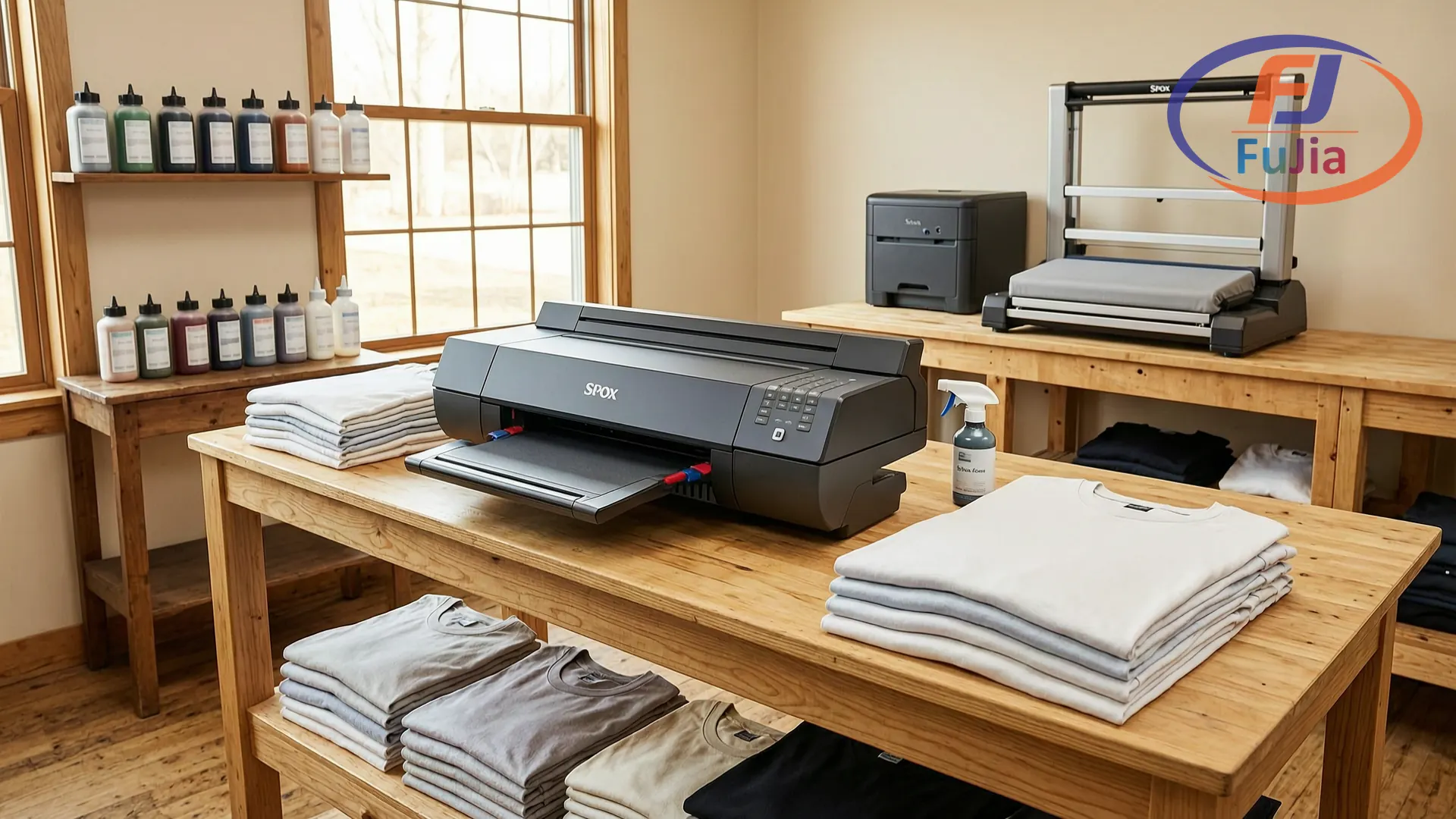
DTG is ideal for: – Custom one-off orders (no minimum quantity) – Full-color designs with gradients and photographs – Cotton and cotton-blend garments (80%+ cotton recommended) – Businesses needing quick turnaround without setup time
DTG is NOT ideal for: – Polyester-heavy fabrics (DTF or sublimation works better) – Extremely high-volume production (10,000+ units/month) – Businesses without space for pretreatment and curing equipment
The 7 Hidden Costs Most DTG Guides Ignore
Before you look at specific models, understand what you’re really buying. The machine price is just the beginning.
1. White Ink Circulation System
DTG uses white ink as an underbase for dark garments. White ink contains titanium dioxide particles that settle like sediment in orange juice. Without circulation, the particles clog print heads within hours.
What to look for: – Automatic circulation pump: Keeps white ink mixed 24/7. Essential for daily operation. – Manual agitation requirement: Some budget models require you to shake ink cartridges every morning. Fine for hobby use, problematic for production.
Machines without automatic circulation save you $500–$1,000 upfront but cost you 15–30 minutes of daily maintenance and frequent clogged nozzles.

2. Printhead Lifespan and Replacement Cost
DTG print heads are consumables. They wear out from ink abrasion and cleaning cycles.
Real-world lifespan: – Epson EcoTank heads: 6–12 months with daily use – Brother/ Ricoh heads: 12–18 months with proper maintenance – Industrial heads (Kornit): 18–24 months
Replacement costs: – Epson replacement heads: $800–$1,500 – Brother/Ricoh: $1,200–$2,500 – Kornit industrial heads: $5,000–$15,000
Most guides never mention this. Budget $100–$200/month for printhead depreciation, regardless of which machine you buy.
3. Pretreatment Equipment and Labor
Dark garments require pretreatment—a liquid primer that helps white ink bond to fibers. This adds equipment and labor costs:
Manual pretreatment setup: – Pretreatment spray gun: $200–$500 – Pretreatment dryer/curing unit: $800–$2,000 – Labor time: 30–60 seconds per garment
Automatic pretreatment (industrial machines): – Kornit Atlas/Max include integrated pretreatment – Adds $50,000–$200,000 to machine cost but eliminates manual labor
For small businesses printing 50–200 garments/day, manual pretreatment is standard. Factor in 10–15% additional labor time.
4. RIP Software Costs
DTG printing requires Raster Image Processing (RIP) software to separate colors, calculate white underbase, and manage color profiles.
Software options: – Included free: Epson Edge Print, Brother GT-3 Software – Mid-range: Flexi SIGN ($50–$100/month) – Professional: Onyx Thrive, Wasatch SoftRIP ($200–$500/month)
Most small businesses start with included software. Upgrade when you need advanced color management or production automation features.
5. Pretreatment and Ink Costs
Consumable costs per garment: – White ink (dark garments): $0.80–$1.50 – CMYK ink (full color): $0.30–$0.60 – Pretreatment liquid: $0.20–$0.40 – Total ink cost per dark garment: $1.30–$2.50
Light garments skip the white underbase, reducing ink cost to $0.30–$0.60.
6. Space and Power Requirements
DTG printers need more space than you think:
Minimum space requirements: – Printer footprint: 2’×3′ to 4’×6′ – Pretreatment station: 2’×3′ – Curing dryer: 3’×4′ – Ink storage and cleaning area: 2’×2′ – Total: 10’×10′ minimum
Power requirements: – Most small DTG printers: Standard 110V/15A outlet – Industrial machines (Kornit, Brother GTX): 220V/30A dedicated circuit
Check your electrical panel before buying. Adding a 220V circuit costs $500–$1,500.
7. Wastewater Disposal
DTG printing generates chemical wastewater from: – Printhead cleaning cycles – Pretreatment overspray cleanup – Ink system flushing
Disposal requirements: – Residential areas: Most municipalities allow small quantities down the drain with water dilution – Commercial/Industrial: May require wastewater treatment or hazardous waste disposal – Cost: $50–$200/month for commercial disposal services
Check local environmental regulations before setting up a DTG operation.
Top DTG Printers for Small Business in 2026
After testing machines and analyzing real-world costs, here are our top picks by business size and budget.
Best Entry-Level: Epson SureColor F2100
Price: $16,000–$18,000
Best for: Home businesses and startups printing 50–150 garments/day
Pros: – Reliable Epson print quality – Automatic white ink circulation (major upgrade from older models) – Compact footprint fits most home studios – Excellent community support and tutorials
Cons: – Slower than competitors (45–60 seconds per dark garment) – Printhead replacement every 6–12 months – Limited to 16″×20″ print area
Real cost analysis: – Monthly ink cost (100 dark garments): $180–$250 – Monthly printhead depreciation: $100–$200 – Total monthly operating cost: $280–$450
The F2100 is the Honda Civic of DTG—reliable, efficient, and proven. Perfect for businesses prioritizing quality over speed.
Best Mid-Range: Brother GTX Pro
Price: $25,000–$30,000
Best for: Growing businesses printing 150–400 garments/day
Pros: – Fast production speed (20–30 seconds per dark garment) – Large 16″×24″ print area – Advanced white ink circulation system – Durable industrial build quality
Cons: – Requires 220V power – Higher ink consumption than Epson – Larger footprint (needs dedicated space)
Real cost analysis: – Monthly ink cost (300 dark garments): $450–$600 – Monthly printhead depreciation: $80–$150 – Total monthly operating cost: $530–$750
The GTX Pro pays for itself if you’re printing 200+ garments/day. The speed difference vs. Epson saves 2–3 hours of daily labor.
Best Budget Option: Ricoh Ri 1000
Price: $12,000–$15,000
Best for: Side hustles and businesses testing DTG before major investment
Pros: – Lower entry price than Epson/Brother – Good print quality for the price – Automatic white ink circulation – Standard 110V power
Cons: – Slower than competitors (60–90 seconds per dark garment) – Smaller print area (14″×16″) – Less community support than Epson
Real cost analysis: – Monthly ink cost (80 dark garments): $120–$180 – Monthly printhead depreciation: $80–$150 – Total monthly operating cost: $200–$330
The Ri 1000 makes sense if you’re printing under 100 garments/day and want to minimize upfront risk.
Best Industrial: Kornit Atlas MAX
Price: $250,000–$350,000
Best for: High-volume production shops printing 500+ garments/day
Pros: – Fully automated pretreatment and curing – Industrial speed (180+ garments/hour) – Minimal manual labor required – Excellent for 24/7 production environments
Cons: – Extremely high entry cost – Requires dedicated industrial space – Specialized maintenance contracts ($2,000–$5,000/month) – Overkill for most small businesses
Real cost analysis: – Monthly ink cost (1,000 dark garments): $1,200–$1,800 – Monthly maintenance contract: $2,000–$5,000 – Total monthly operating cost: $3,200–$6,800
Only consider Kornit if you’re printing 500+ garments/day with labor costs exceeding $8,000/month. The automation justifies the cost at that scale.
DTG vs DTF: Which Technology Fits Your Business?
Many small businesses confuse DTG (Direct-to-Garment) with DTF (Direct-to-Film). They’re different technologies with different strengths.
DTG advantages: – Softer hand feel (ink soaks into fibers) – Better for detailed photographic prints – No transfer film waste – Faster for single-piece orders
DTF advantages: – Works on polyester and synthetic fabrics – No pretreatment required – More durable on stretchy fabrics – Lower ink costs ($0.50–$0.80 per garment vs. $1.30–$2.50)
When to choose DTG: – You primarily print on cotton garments – You need photographic quality – You want a professional, soft-hand finish
When to choose DTF: – You print on polyester, nylon, or blends – You need maximum durability on athletic wear – You want lower consumable costs
Hybrid approach: Some businesses run both. Use DTG for premium cotton products and DTF for performance wear. See our DTF vs DTG comparison guide for detailed analysis.
The Complete Cost Breakdown: What You’ll Really Spend
Let’s calculate the true first-year cost of owning a DTG printer.
Example: Epson F2100 setup for home business
| Item | Cost |
|---|---|
| Equipment | |
| Epson F2100 printer | $17,000 |
| Pretreatment spray gun | $350 |
| Pretreatment dryer | $1,200 |
| Heat press (for curing) | $800 |
| Startup ink kit | $600 |
| RIP software (included) | $0 |
| Subtotal equipment | $19,950 |
| First-year operating costs | |
| Ink (100 garments/month × 12) | $2,400 |
| Pretreatment liquid | $480 |
| Printhead replacements (1.5 per year) | $1,800 |
| Wastewater disposal | $600 |
| Electricity | $360 |
| Maintenance supplies | $300 |
| Subtotal operating | $5,940 |
| Total first-year cost | $25,890 |
Break-even analysis: – Average profit per custom t-shirt: $15–$25 – Garments needed to break even: 1,035–1,726 shirts – At 100 garments/month: 10–17 months to break even
Common DTG Mistakes That Cost Thousands
After working with dozens of small DTG businesses, here are the expensive mistakes we see repeatedly.
Mistake 1: Skipping White Ink Circulation
Budget machines without circulation pumps seem like a good deal until you’re replacing clogged print heads every 3 months. The $800 you save on the machine costs you $3,000 in premature head replacements.
Always buy a machine with automatic white ink circulation.
Mistake 2: Underestimating Pretreatment Time
New DTG operators focus on print speed but forget pretreatment adds 30–60 seconds per garment. Printing 100 dark garments takes: – Print time: 75–100 minutes – Pretreatment time: 50–100 minutes – Total production time: 2–3.5 hours
If pretreatment bottlenecks your workflow, consider outsourcing pretreatment or upgrading to a machine with integrated pretreatment.
Mistake 3: Ignoring RIP Software Learning Curve
DTG printing requires color management skills. You’ll need to learn: – Color profiling for different garments – White underbase calculation – Halftone screening for gradients – Ink limitation to prevent bleeding
Budget 2–4 weeks of learning time before achieving consistent quality. Consider online training courses ($200–$500) to accelerate the process.
Mistake 4: Buying Used Without Inspection
The used DTG market is flooded with machines from failed businesses. Common problems: – Clogged print heads from improper storage ($1,000–$2,500 replacement) – Worn circulation pumps ($300–$800 replacement) – Corroded ink systems from using wrong cleaning solutions – Outdated firmware incompatible with current RIP software
If buying used: – Demand a live print demonstration – Check print head nozzle coverage (should be 95%+) – Verify circulation pump operation – Review maintenance logs – Budget $1,000–$2,000 for immediate repairs
Mistake 5: Not Calculating Labor Costs
DTG printing is more labor-intensive than people realize. Per garment, you’re spending: – File preparation: 2–5 minutes – Pretreatment: 30–60 seconds – Loading/unloading: 30 seconds – Print monitoring: 1–2 minutes – Post-print inspection: 30 seconds – Total labor: 4–8 minutes per garment
At $15/hour labor cost, that’s $1.00–$2.00 per garment in labor alone. Factor this into your pricing.
How to Choose the Right DTG Printer for Your Business
Use this decision framework to match the right machine to your situation.
Step 1: Calculate your monthly volume – Under 100 garments/month: Entry-level (Epson F2100, Ricoh Ri 1000) – 100–300 garments/month: Mid-range (Brother GTX Pro) – 300+ garments/month: Industrial (Kornit, consider DTF instead)
Step 2: Check your fabric mix – 80%+ cotton: DTG works perfectly – 50%+ polyester: Consider DTF or sublimation – Mixed fabrics: DTG with polyester-compatible ink (limited options)
Step 3: Assess your space – Home studio (<200 sq ft): Epson F2100 or Ricoh Ri 1000 – Dedicated shop (200–500 sq ft): Brother GTX Pro – Industrial space (500+ sq ft): Kornit or multiple machines
Step 4: Calculate your budget – Under $20,000: Epson F2100 or Ricoh Ri 1000 – $20,000–$35,000: Brother GTX Pro – $35,000+: Consider DTF or multiple DTG machines
Step 5: Test before you buy Request sample prints from the manufacturer. Bring your own designs and fabrics. Check: – Color accuracy – White underbase coverage – Print durability (wash test) – Hand feel
Frequently Asked Questions
How much does it cost to start a DTG printing business?
Expect to spend $20,000–$30,000 for a complete setup including printer, pretreatment equipment, heat press, and first-year operating costs. See our complete DTF business startup cost guide for comparison with DTF technology.
Is DTG printing profitable?
Yes, with proper pricing. Average profit margins are 40–60% on custom garments. At $25 retail price and $10–$15 production cost, you profit $10–$15 per shirt. Printing 100 garments/month generates $1,000–$1,500 monthly profit after expenses.
How long do DTG prints last?
Properly cured DTG prints last 50+ washes without significant fading. Key factors: – Use high-quality inks (Epson, Brother, or third-party brands like Inkbank) – Follow proper curing temperature and time – Advise customers to wash inside-out in cold water
Can I print on polyester with DTG?
Standard DTG ink works poorly on polyester (inks don’t bond well). Options: – Use polyester-compatible DTG ink (limited color gamut) – Switch to DTF for polyester garments – Use sublimation for all-polyester items
See our DTF vs sublimation guide for detailed comparison.
Do I need a heat press for DTG?
Yes. After printing, DTG garments require heat pressing to cure the ink and set the pretreatment. A 16″×20″ heat press costs $600–$1,200. Some industrial DTG machines include built-in curing, eliminating the need for a separate press.
What’s the best DTG printer for beginners?
The Epson SureColor F2100 is the best beginner DTG printer because: – Extensive online tutorials and community support – Automatic white ink circulation reduces maintenance – Reliable print quality out of the box – Reasonable operating costs
If your budget is under $15,000, the Ricoh Ri 1000 is a solid alternative.
Final Thoughts: Is DTG Right for Your Business?
DTG printing offers unmatched quality and flexibility for custom cotton garments. But it’s not the right choice for every business.
Choose DTG if: – You print primarily on cotton – You need photographic quality – You want soft, professional hand feel – You’re printing 50–400 garments/day
Consider DTF instead if: – You print heavily on polyester – You need maximum durability – You want lower consumable costs – You’re printing 500+ garments/day
Consider screen printing if: – You print high volumes of simple designs – You need the lowest per-unit cost – You’re printing 1,000+ pieces of the same design
The right technology depends on your specific business model, fabric mix, and volume. Test samples, calculate real costs, and choose the machine that fits your situation—not the one with the best marketing.
Ready to start your DTG journey? Request quotes from multiple suppliers and ask for live demonstrations. See our DTF printer supplier evaluation guide for tips on vetting equipment vendors.
Related Reading
Factory-Direct Printing Equipment – Talk to the Source
Fujia Print manufactures DTF and UV printers in Guangzhou. Not a trading company, not a middleman. One supplier for your printer, consumables, and after-sales. Factory-direct pricing, in-house R&D, real support that answers the phone.
