

2026 is a hardware year for direct-to-film printing. Manufacturers are shipping wider 64-inch roll-to-roll machines, stacking more Epson i3200 printheads for higher speed, and bundling powder shakers with ovens into single automated lines. This roundup of DTF printer news tracks the newest machine releases and the hardware shifts that matter when you buy.
Key Takeaways
- 64-inch roll-to-roll models like the Epson SureColor G9070 now reach 350 ft²/hr, about 33 m²/hr.
- Multi-head builds are scaling up. New industrial machines ship with 5 to 7 Epson i3200 printheads instead of one or two.
- All-in-one lines that combine printer, shaker, and oven cut labor and reduce film handling between steps.
- Fujia Print has built DTF printers since 2011 across a 3,500 m² Guangzhou factory serving 500+ clients in 50+ countries.
- Next step: compare print width, printhead count, and integrated curing before you buy a 2026 model.
The 2026 DTF Hardware Shift in Brief
The biggest 2026 change in DTF hardware is scale. Machines are getting wider, faster, and more self-contained than the single-head desktops that defined the early market. The 64-inch Epson SureColor G9070, announced in January 2026, prints transfer film at up to 350 ft²/hr with twin-roll loading for two film rolls at once. That width was rare in DTF just two years ago, when most shops ran 13-inch or 24-inch beds.
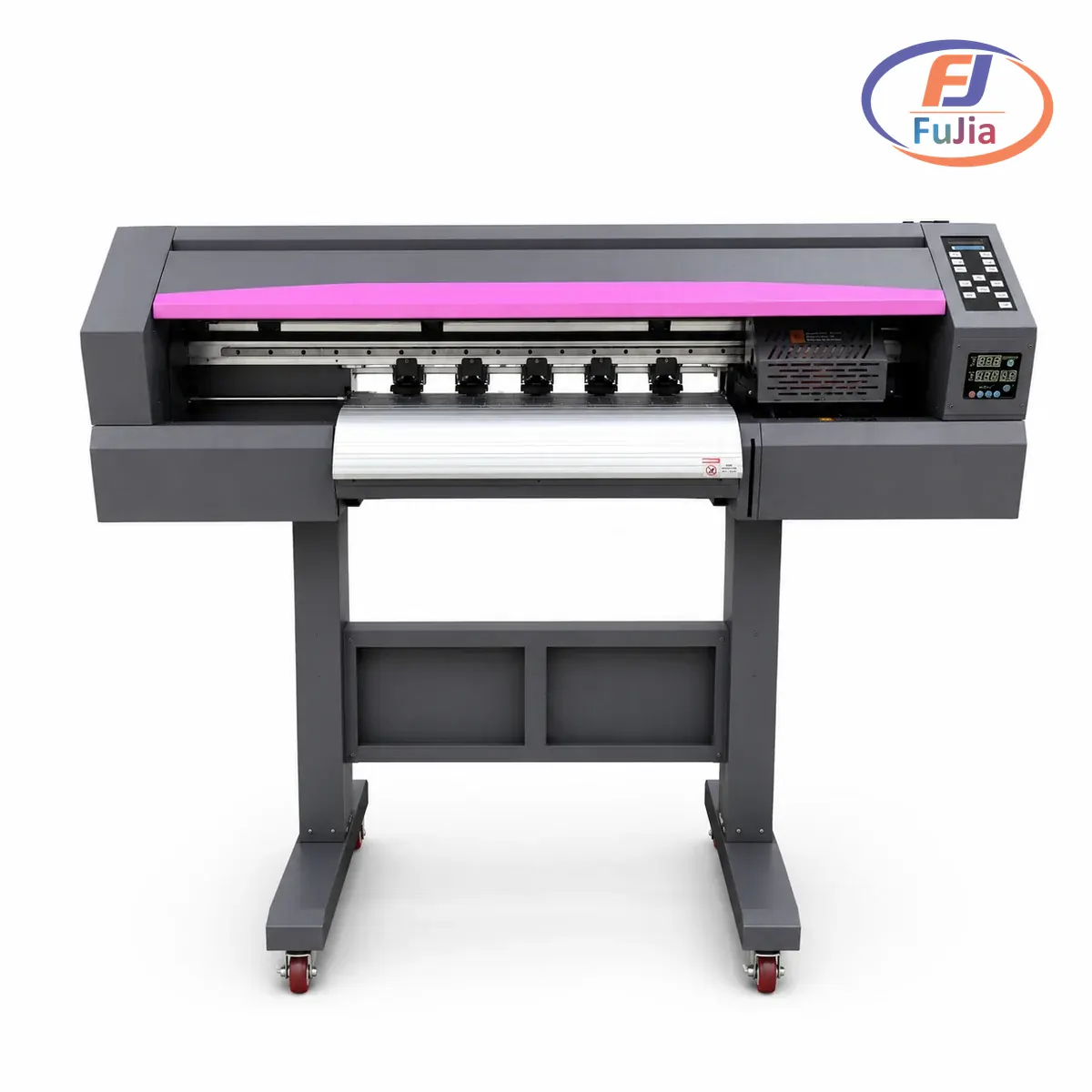
Printhead counts tell the same story. Where entry machines used one XP600 head, 2026 industrial releases carry 5, 6, or even 7 Epson i3200 heads on a single carriage. Fujia Print, which has manufactured DTF printers since 2011 from a 3,500 m² Guangzhou factory, ships 2,000 machines a year to 500+ print businesses across 50+ countries. The company’s own A1 line pairs four or five Epson I3200 heads on a 650 mm bed.
Automation is the third shift. Powder shaker and curing oven are no longer separate benches. They now ship as one continuous roll-to-roll system, which removes the manual film-handling step that caused most shop bottlenecks.
New Machines Worth Watching in 2026
The 2026 release wave spreads across width classes, from A3 desktop bundles to 64-inch production monsters. The table below lists verified hardware from publicly reported launches.
| Model | Print width | Printheads | Top speed | Standout hardware |
|---|---|---|---|---|
| Epson SureColor G9070 | 64 in | PrecisionCore Micro TFP (user-replaceable) | 350 ft²/hr (~33 m²/hr) | Twin-roll, auto maintenance, Cloud PORT |
| ColDesi 24H5E | 24 in | 5× Epson i3200 | 500+ transfers/hr | Integrated 24POWE shaker, OEKO-TEX inks |
| Roland TY-300 + RDTFS800 | 30 in | Dual-head | 117.3 ft²/hr | Inline shaker, 4-channel white ink |
| DTF-6007 Turbo | 24 in | 7× Epson i3200 | 52 m²/hr | Dual oven, 24-month warranty |
| Prestige R2 Pro MAX | 13 in (A3) | Dual Epson | 6 m²/hr | A3 bundle with MAX shaker, £10,500 |
Epson’s own newsroom details the 64-inch G9060 predecessor’s 32 m²/hr throughput and 1.6 L sealed UltraChrome DF ink packs, showing where the G9070 built from. Epson SureColor G9060 64-inch DTFilm announcement confirms the sealed high-capacity ink direction. PRINTVERGENCE’s coverage of the G9070 confirms 350 ft²/hr output and twin-roll printing on a PrecisionCore Micro TFP head. PRINTVERGENCE: Epson G9070 twin-roll DTF documents the auto-nesting and gang-sheet workflow. World Imaging News reports the same G9070 specs and quotes Epson on DTFilm being one of the fastest-growing apparel decoration methods. World Imaging News: Epson G9070 launch also covers the ColDesi 24H5E at 500+ transfers per hour.
The pattern is clear. Width climbed from 13 to 64 inches, head count climbed from 1 to 7, and every vendor now sells the curing step inside the box.
Printheads and Width: Where the Speed Comes From
Print speed in DTF comes from two hardware choices. The first is how many printheads sit on the carriage. The second is how wide the film path is. More heads lay down more ink per pass, and a wider bed fits more designs on one gang sheet.
The Epson i3200 head dominates mid and high-volume machines because it balances cost, droplet control, and duty cycle. Entry machines still use the XP600 for lower upfront price, but the XP600 wears faster under daily production. Epson’s own PrecisionCore Micro TFP, used in the G9070, is user-replaceable, which means a shop can swap a head without a service call. Fujia’s A1 DTF 4-Head runs four or five Epson I3200 heads on a 650 mm (25.5 in) bed at 27 m²/hr in 4-pass mode and 720×2400 dpi in 8-pass mode.
Fujia’s transmission stack is where its hardware differs from generic builds. The A1 line uses a Honson mainboard, a Leadshine servo motor, and a THK silent guide rail. That combination supports 12-hour continuous runs without quality drift, a claim most generic competitors cannot document with named component brands. Noise stays under 32 dB at idle and under 65 dB at maximum, which matters in shared workshop spaces.
All-in-One Lines: Shaker and Oven Built In
The second 2026 trend is integration. Printer, powder shaker, and curing oven now ship as one continuous roll-to-roll line instead of three separate stations. The Fujia A1 combo pairs a 35 W printer with a 2,300 W shaker weighing 230 kg, so the curing stage is part of the same footprint as the print stage.
Integrated curing matters because the DTF transfer step is fixed by physics, not software. DTF film is pressed at 160°C for 15 seconds with a cold peel, and the adhesive powder must melt evenly or the print cracks. An inline shaker with digital temperature control removes the manual powder-spreading step that caused most inconsistent batches. Shops that ran a separate shaker bench cut handling time and film waste once they moved to an integrated line. A DTF printer with shaker and oven keeps the whole workflow on one roll path.
Fujia backs its lines with a 12-month warranty and ships common parts within 48 hours, so a failed shaker component does not stall a production week. That service buffer is part of the hardware buying decision, not an afterthought.
How Fujia Print Builds for Continuous Production
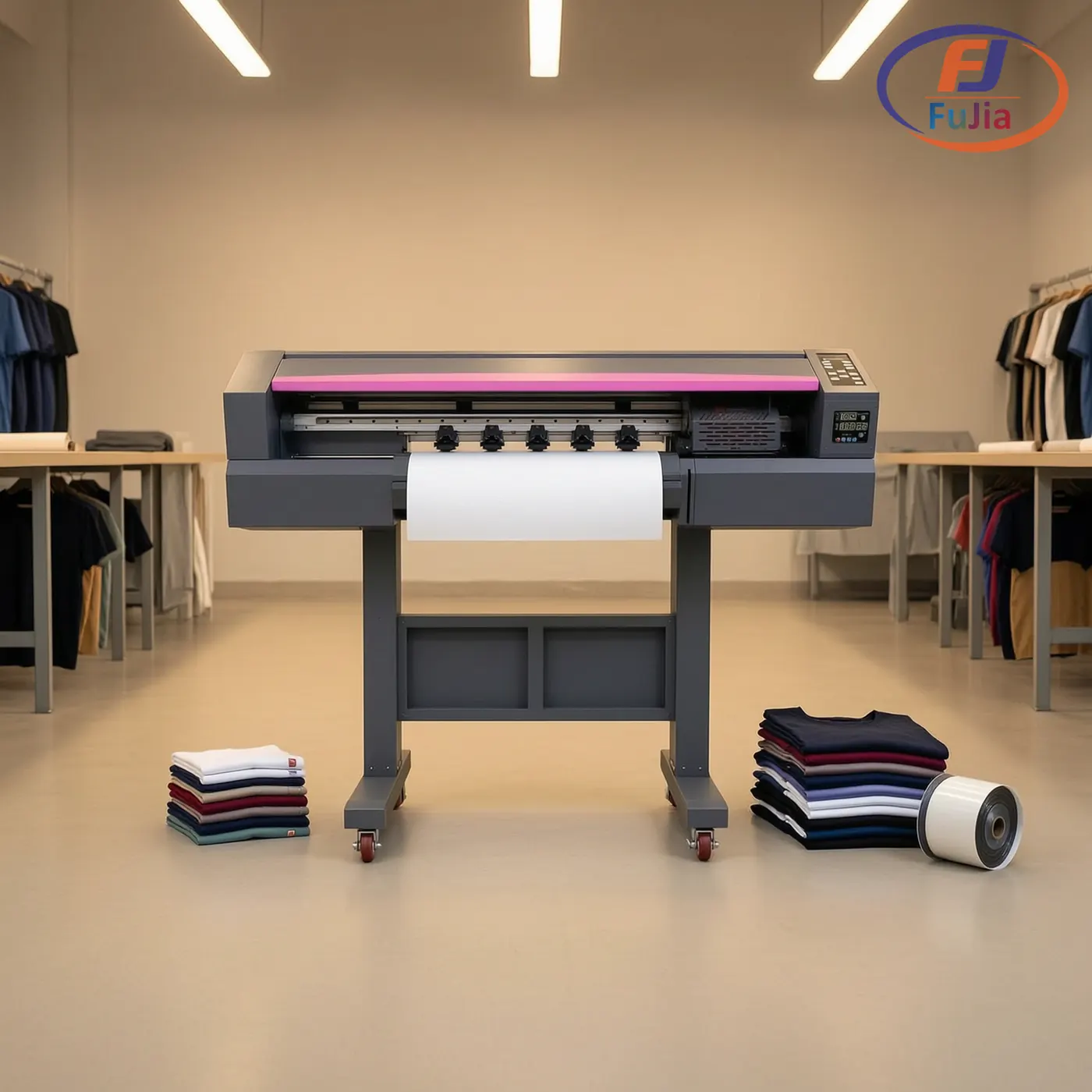
Fujia Print has manufactured DTF printers since 2011 from a 3,500 m² Guangzhou factory, shipping 2,000 machines a year to 500+ print businesses in 50+ countries. The build philosophy targets uninterrupted production, not just headline speed. The A1 DTF 4-Head uses an auto white-ink circulation system that keeps running during power outages, preventing the titanium dioxide settling that clogs heads in cheaper machines.
The spec table below shows the Fujia A1 family against the width and head choices buyers actually compare.
| Fujia model | Print width | Printheads | Speed | Resolution |
|---|---|---|---|---|
| A1 DTF 4-Head (DTF-A1-4H) | 650 mm (25.5 in) | 4-5× Epson I3200 | 27 m²/hr @4Pass | 720×2400 dpi |
| A1 DTF 2-Head (DTF-A1-2H) | 650 mm | 2× Epson XP600/I1600/I3200 | 8-13 m²/hr @4Pass | 720×1440 dpi |
| A2 DTF 2-Head | ~420 mm | 2× Epson | Medium volume | Not rated |
| A3 DTF 1-Head (FJ-A30) | 300 mm | 1× XP600 | 2-3 m²/hr | 1440×1440 dpi |
Fujia’s 13-color DTF ink system (CMYK plus light cyan, light magenta, orange, red, green, and blue) extends the gamut beyond the 6-color ceiling most reviews mention. A commercial DTF printer from Fujia ships with this ink path and the Honson, Leadshine, and THK transmission stack as standard.
The Turkish garment factory case shows the hardware payoff. After installing an A1 dual-head DTF line, the shop reported +40% throughput, -30% cost per unit, and delivery times dropping from 7 days to 2.5 days, with file-to-finished-print under 30 minutes. The 12-hour continuous run capability let the shop take small-batch orders that screen printing refused at 200+ piece minimums. For upkeep detail, Fujia’s DTF printer maintenance guide covers the 3 to 5 minute daily routine that keeps heads clean.
Hardware Buying Checklist: 5 Specs to Compare
Compare five hardware specs before you sign. Width, printhead count, speed, integrated curing, and warranty decide total cost of ownership more than the sticker price does. A 13-inch A3 bundle fits a home studio, while a 64-inch line fits a contract shop running gang sheets all day. Head count ranges from 1 to 7, and speed spans 6 m²/hr on a desktop to 52 m²/hr on a 7-head industrial build.
Warranty separates serious manufacturers from box-movers. Fujia’s 2-year coverage with 48-hour parts dispatch means a downed machine is a two-day problem, not a two-week one. Based on data from our customers across 50+ countries, a mid-volume shop moving from outsourced transfers to an in-house A1 DTF line typically reaches payback in 3 to 8 months, faster in markets with higher labor costs. The A1 DTF printer buying guide breaks the width and head trade-offs down by monthly volume.
What is the future of DTF printing?
The future of DTF printing is wider, faster, and more automated hardware rather than new chemistry. The 2026 release wave proves it. Epson’s 64-inch SureColor G9070 reaches 350 ft²/hr with twin-roll loading, and ColDesi’s 24H5E stacks five Epson i3200 heads to hit 500+ transfers per hour. Width is climbing from the old 13-inch desktop standard toward 24, 30, and now 64 inches, which lets shops gang more designs on one film sheet and cut waste. Integration is the other direction. Printer, shaker, and oven are merging into one roll-to-roll line, so the manual powder step disappears. Ink certification is tightening too, with OEKO-TEX ECO PASSPORT inks appearing on more 2026 machines for child-apparel and regulated markets. For buyers, the practical takeaway is that the next upgrade is hardware, not ink. A shop should watch printhead count, bed width, and whether curing is built in before chasing marginal ink-cost savings.
What are the common problems with DTF printers?
The most common DTF printer problems cluster around white ink and maintenance, not the color layer. White ink is heavy and settles, which clogs printheads if the circulation stops. Cheaper machines without active circulation need manual shaking and frequent head cleanings, and that downtime is where most shops lose money. Head strikes from film wrinkles or static are the second issue, solved by a vacuum suction bed and stable frame. Fujia’s A1 line addresses both with an auto white-ink circulation system that keeps running during power outages and a Honson mainboard plus Leadshine servo motor plus THK guide rail for stable 12-hour runs. Daily care is short. A 3 to 5 minute wipe of the capping station and a nozzle check prevents most failures. Fujia ships common parts within 48 hours and documents the full routine in its DTF printer maintenance guide, so a clog rarely becomes a week-long stoppage. Buyers should treat maintenance automation and parts speed as core specs, not optional extras.
Is a DTF printer a good investment?
A DTF printer is a good investment for shops with steady transfer volume, because in-house printing removes the per-sheet markup of outsourced film. The math depends on monthly volume. Based on data from our customers across 50+ countries, a mid-volume shop moving from outsourced transfers to an in-house A1 DTF line typically reaches payback in 3 to 8 months, with faster payback in higher-labor markets. The A1 DTF 4-Head prints 27 m²/hr at 4-pass and uses a 13-color ink system that lowers per-print cost versus 6-color builds. A Turkish garment factory using an A1 dual-head line reported +40% throughput and -30% cost per unit after installation, with delivery dropping from 7 days to 2.5 days. The risk is buying too small. A 13-inch A3 bundle at 6 m²/hr suits a home studio, but a contract shop needs 24 to 64-inch width and 4 to 7 heads to clear the break-even point. Match the machine width to monthly transfer count before committing capital.
Is there money in DTF printing?
There is money in DTF printing for shops that control their own production and sell finished garments or transfers. The margin comes from removing the outsourced-film markup and from taking small-batch orders that screen printing rejects at 200+ piece minimums. Apparel applications on Fujia lines report 60% margins with 3,000+ pieces per month after scaling, and home-textile cases show 65% margins at 2,000+ pieces per month. The 2026 hardware trend helps margins further, because wider 64-inch beds and 5 to 7 head builds cut labor per transfer. A shop running an integrated printer plus shaker plus oven line also saves the manual powder step that ate 15 to 30 minutes per batch on separate stations. The catch is volume discipline. Profit follows consistent weekly orders, not the machine alone. Shops that pair a correctly sized A1 or wider line with a 12-month warranty and 48-hour parts support protect uptime, and uptime is what converts a DTF printer into actual income.
Conclusion
For a configured A1 DTF line with shaker, oven, and 48-hour parts support, see Fujia Print’s commercial DTF printer options.
