

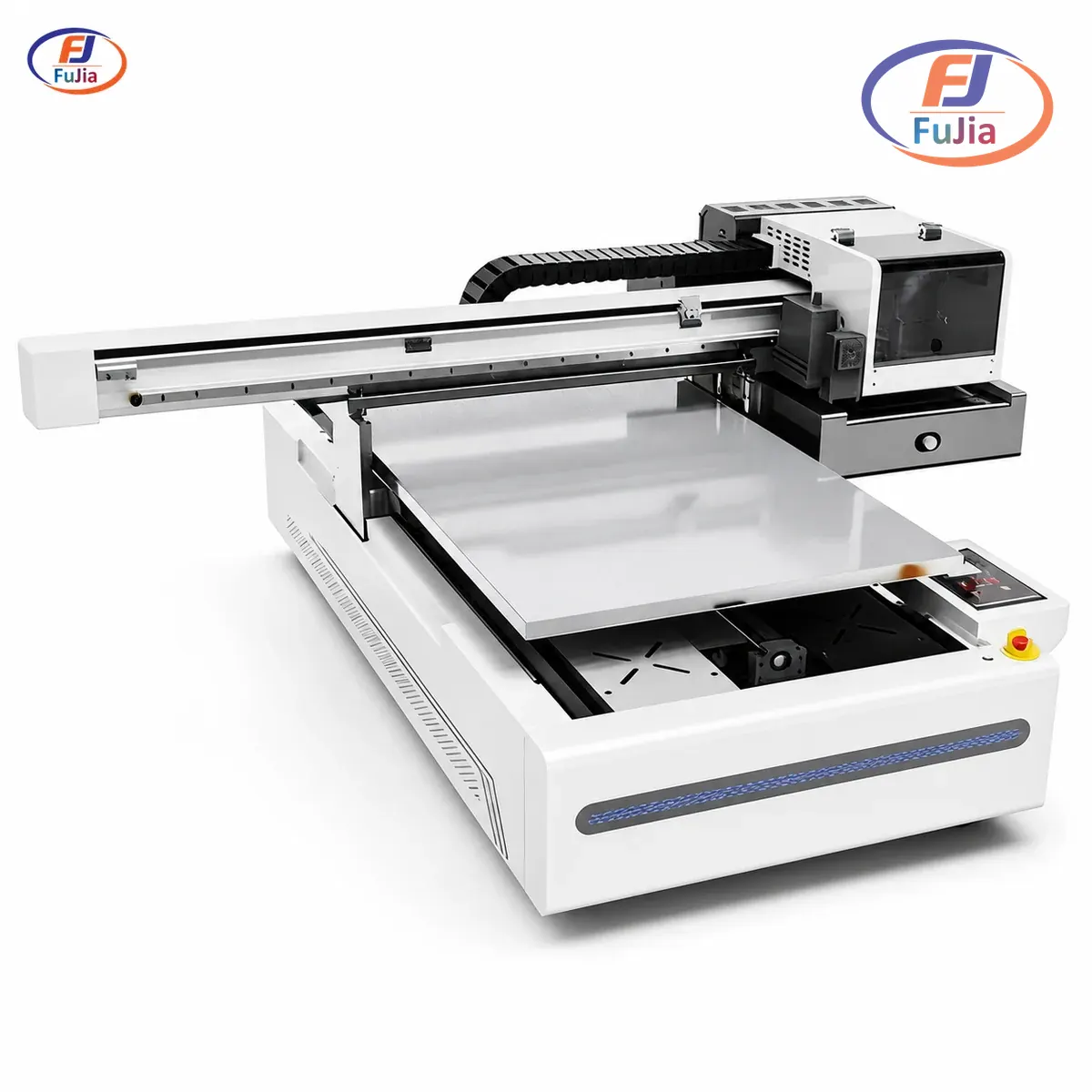
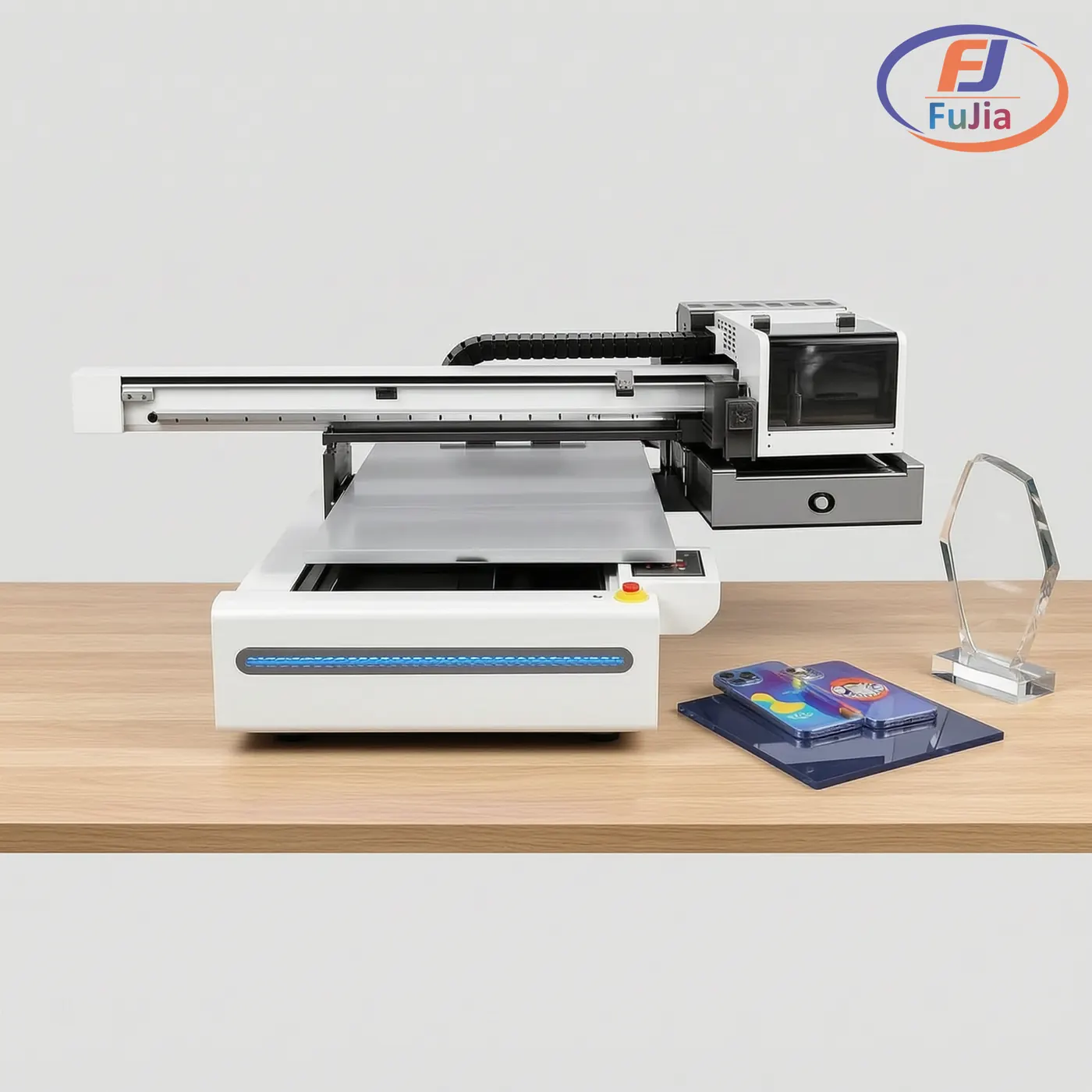
A UV printer 9060 is a flatbed UV printer with a 600×900 mm (23.6×35.4 in) print bed. It cures CMYK, white, and varnish inks with UV-LED light the instant they touch the surface, so it prints on glass, wood, metal, and phone cases with no pre-coating.
Key Takeaways
- A 9060 UV printer uses a 600×900 mm bed, the same physical size sold as “6090” or “A1” in flatbed marketing.
- Industrial 9060 models run 4-8 m²/hr with Ricoh GEN5 or Epson I3200 heads at up to 720×1800 dpi.
- New 9060 prices span $3,300 to $29,995 in 2026, with most factory-direct units at $5,000-$12,000.
- A rotary attachment adds cylinder printing for mugs, bottles, and pens on the same bed.
- Fujia Print ships the FJ-6090 with a 12-month warranty and 48-hour parts dispatch from a 3,500 m² Guangzhou factory.
What the “9060” Bed Size Actually Means
The digits in “9060” name a 60×90 cm print bed. “6090” and “9060” describe the identical 600×900 mm surface, just with the numbers reversed, and in UV flatbed catalogs this size is commonly called A1. The bed holds a 600 mm by 900 mm panel, which is large enough for a full A1 sheet, two A3 boards placed side by side, or a 12-up phone-case jig.
The 9060 bed fits 6-8 wine glasses or 12 phone cases per cycle when loaded with a multi-cavity fixture. Fujia’s FJ-6090 is verified on 300+ substrate types on this exact bed, from clear acrylic to brushed aluminum, which is why the 60×90 cm size became the default entry format for custom-product shops.
Core Specs of a 9060 UV Flatbed
The Ricoh GEN5 and Epson I3200 heads dominate this class. Epson builds the I3200 as a 4.7-inch precision industrial head, and Ricoh positions the GEN5 for high-duty flatbed work. Resolution reaches 720×1800 dpi, which is enough for fine text and photo gradients on phone cases and nameplates.
| Spec | Typical 9060 industrial | Fujia FJ-6090 |
|---|---|---|
| Print bed | 600×900 mm | 600×900 mm |
| Printheads | 3-4 Ricoh GEN5 / Epson I3200 | 3-4 Ricoh GEN5 / Epson I3200 |
| Print speed | 4-8 m²/hr | 4-8 m²/hr |
| Resolution | up to 720×1800 dpi | up to 720×1800 dpi |
| Ink set | CMYK + White + Varnish | CMYK + White + Varnish |
| Max media height | 100-180 mm | 180 mm |
| Curing | UV-LED, instant dry | Water-cooled UV-LED, instant dry |
The water-cooled UV-LED lamp cures ink in under one second, so there are no drying racks and no waiting between jobs. A 6-color ink set (CMYK + White + Varnish) lets the machine print opaque white underlays on dark glass and a spot-gloss varnish layer on top for a premium finish.
Rotary and Cylinder Printing on a 9060
The rotary jig swaps into the same 9060 bed and spins mugs, bottles, pens, and cosmetic tubes under the heads. MTuTech markets its 9060 as printing both flat and cylinder objects, and a 2026 eBay listing for a 9060 with 3 Epson I3200 heads plus a rotary unit sells around $8,891. The cylinder fixture typically handles diameters from 20 mm to 100 mm and lengths up to 200 mm.
Fujia’s FJ-6090 supports the rotary add-on, which turns one bed into both flat and drinkware production. A shop can run phone cases in the morning and branded tumblers in the afternoon on the same machine, which is the main reason the 9060 replaced separate pad-printing and screen-printing setups for small gift workshops.
What a 9060 UV Printer Costs in 2026
Prices split into two tiers. Factory-direct Chinese brands list 9060 beds from $3,300 to $6,200 on Alibaba and maker sites. US-branded or reseller-configured units run $12,000 to $29,995 with local support and shorter lead times.
| Model | Printheads | Price (2026) | Source |
|---|---|---|---|
| Alibaba wholesale 9060 | factory | $3,300 | Alibaba |
| OMAJIC uv9060/6090 | factory | $6,200 | omajicprinter.com |
| eBay 9060 + rotary | 3× Epson I3200 | $8,891 | eBay |
| Qomolangma 6090 | unspecified | $12,215 | Sign in Global |
| Audley 9060 Vision | 3× Epson I3200-U1 | $21,999 | DTFonestop |
| Jucolor Pro 9060 | Ricoh Gen6 | $24,995 | eBay |
| Fedar UV 6090 | 3-head | $29,995 | Kingdom DTF |
A realistic production-ready 9060 with 3 heads lands near $6,000-$12,000 before shipping and duties. Based on data from our customers across 50+ countries, a 9060 bed printing 30+ phone cases per day typically offsets its cost in 4-9 months through in-house customization instead of outsourced screen printing. Budget another $200-$600 per month for CMYK+W+V ink at steady volume.
9060 vs 6090 vs A1: Picking the Right Bed
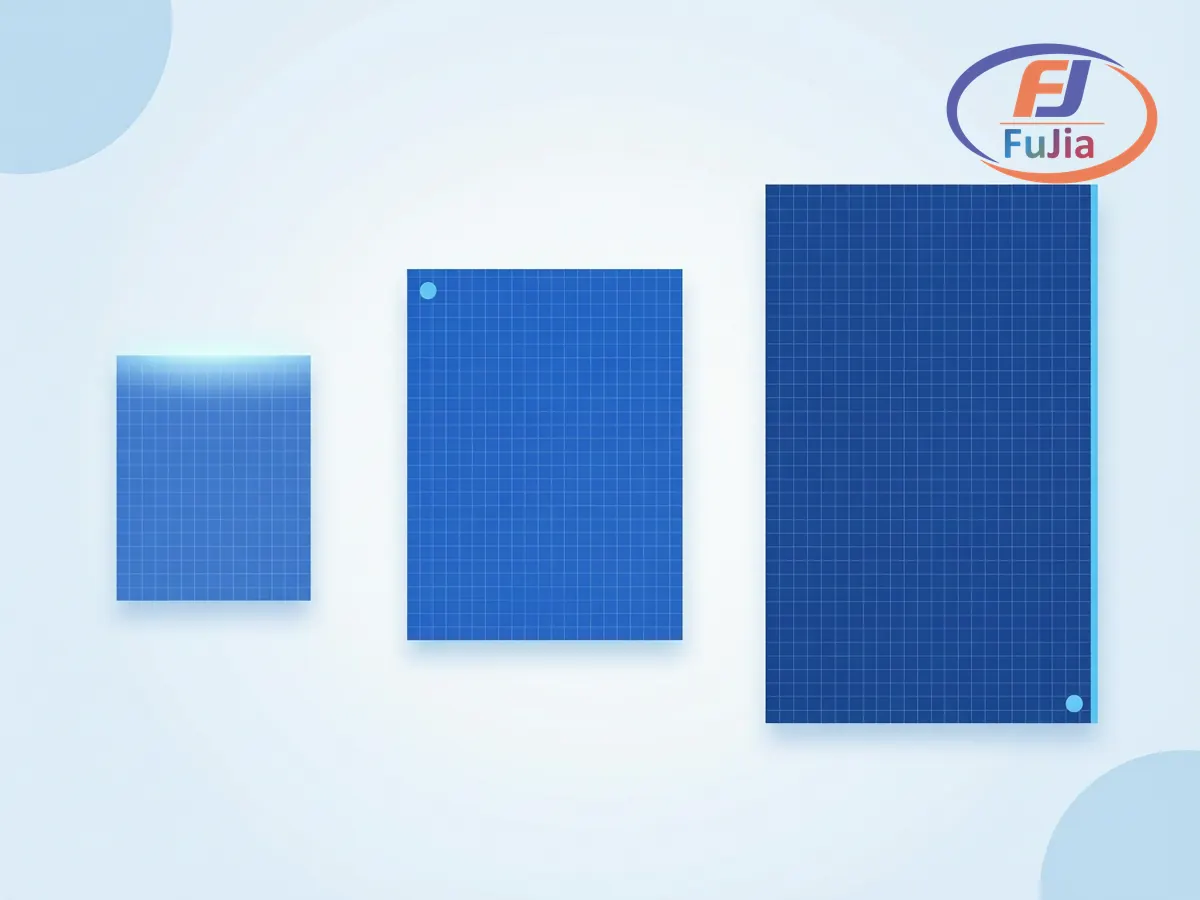
The “9060” and “6090” names describe the identical 600×900 mm bed, so the real choice is between bed tiers rather than between those two labels. The A1 9060 is the sweet spot for custom-product shops: it fits a 12-phone-case jig yet stays under 500 kg for a standard workshop. Shops needing doors or full panels step up to a 1610 at roughly 3× the footprint and cost. Fujia’s UV printers line spans the 6090 up to larger flatbed formats.
| Bed label | Dimensions | Area | Best for |
|---|---|---|---|
| 6090 / 9060 (A1) | 600×900 mm | 0.54 m² | phone cases, signs, gifts, panels |
| 4060 / 4050 (A2) | 400×600 mm | 0.24 m² | smaller promo, nameplates |
| 1610 (A0+) | 1000×1600 mm | 1.6 m² | full boards, doors, panels |
Best Materials to Print on a 9060 Bed
Fujia’s FJ-6090 is verified on 300+ substrates: glass, acrylic, metal, wood, ceramic, leather, plastic, and phone cases. The water-cooled UV-LED cures ink in under a second, so even heat-sensitive plastics print without warping. Varnish ink raises per-unit pricing by 30-50% on gift and signage work, which is the margin that makes a 9060 profitable for small batches. The auto height sensor reads media up to 180 mm thick, covering blocks of wood and thick cast acrylic.
For a deeper look at flatbed applications, see our UV flatbed printer overview. The 9060 handles the same material list as larger flats, just at a smaller per-cycle volume, which is exactly what a startup or kiosk needs.
Common Drawbacks Buyers Should Weigh
UV flatbeds cost more upfront than entry DTF or sublimation setups. The 6-color ink system (CMYK + White + Varnish) means six channels to manage and six cartridges to stock. White ink needs daily circulation to avoid pigment settling, a small but real chore. Cured UV ink is rigid, so it can crack on thin flexible films when bent repeatedly. ISO publishes equipment and safety standards that compliant shops follow for UV-LED operation, and the 9060 still wins for rigid, multi-material, low-MOQ jobs that screen printing cannot match.
Are UV printers worth it?
For shops selling custom hard-surface products, a UV printer 9060 pays off through per-unit margin and zero minimum order. The 600×900 mm bed prints 12 phone cases or 6-8 wine glasses per cycle, and varnish ink lifts per-unit pricing 30-50% on gift and signage work. A production-ready 9060 runs $6,000-$12,000 in 2026, far below the $12,000-$30,000 reseller tier. Based on data from our customers across 50+ countries, shops running 30+ pieces per day typically recover the machine in 4-9 months. The trade-off is rigid ink on flexible goods and six ink channels to maintain. For glass, wood, metal, and acrylic customization, the 9060 is worth it.
How much does a UV printer cost?
A 9060 UV flatbed spans $3,300 to $29,995 in 2026 depending on heads and support. Factory-direct Chinese brands list 9060 beds at $3,300-$6,200 on Alibaba and maker sites, while US-branded or reseller units like the Audley 9060 (3× Epson I3200-U1, $21,999) and Fedar UV 6090 (3-head, $29,995) sit at the top. A realistic production 9060 with 3 Ricoh GEN5 or Epson I3200 heads lands near $6,000-$12,000 before freight and import duty. Add roughly $200-$600 per month for CMYK+W+V ink at steady volume. ISO-certified factories such as Fujia Print bundle a 12-month warranty and 48-hour parts dispatch into the quote. Budget $7,000-$14,000 all-in for a working shop unit.
What are the disadvantages of UV printers?
UV flatbeds carry higher upfront cost than DTF or sublimation starters, often $6,000-$12,000 for a 9060 versus under $3,000 for entry DTF. The 6-color system (CMYK + White + Varnish) means six channels, six cartridges, and daily white-ink circulation to stop pigment settling. Cured UV ink is hard and can crack on thin flexible films when bent repeatedly. Print speed sits at 4-8 m²/hr, slower than roll-to-roll eco-solvent on long runs. Ventilation matters: UV-LED emits low ozone, yet shops should follow ISO equipment-safety guidance for enclosed workspaces. The 9060 still wins for rigid, multi-material, low-MOQ jobs that screen printing cannot match.
How do I print my own UV DTF transfers?
UV DTF, also called UV sticker or crystal label, uses a UV DTF printer to lay CMYK + White + varnish onto an AB film, then a quick 10-15 second hand press transfers the design onto glass, metal, or leather. The 9060 flatbed itself prints directly onto rigid items, while a dedicated UV DTF printer handles the film workflow for curved and small parts. Our UV DTF vs UV flatbed comparison explains when each fits. A single UV DTF label costs about $0.02-$0.05 to produce and applies in 15 seconds by hand. For most 9060 owners, direct flatbed printing covers phone cases and panels, and UV DTF covers the rest of the catalog.
Conclusion
The 9060 UV flatbed is the practical entry into rigid, multi-material customization: a 600×900 mm bed, 4-8 m²/hr throughput, and a rotary option for cylinders, all at a 2026 price most shops can fund in under a year. For factory-direct UV printer 9060 pricing and a free sample print on your own material, contact Fujia Print.
