

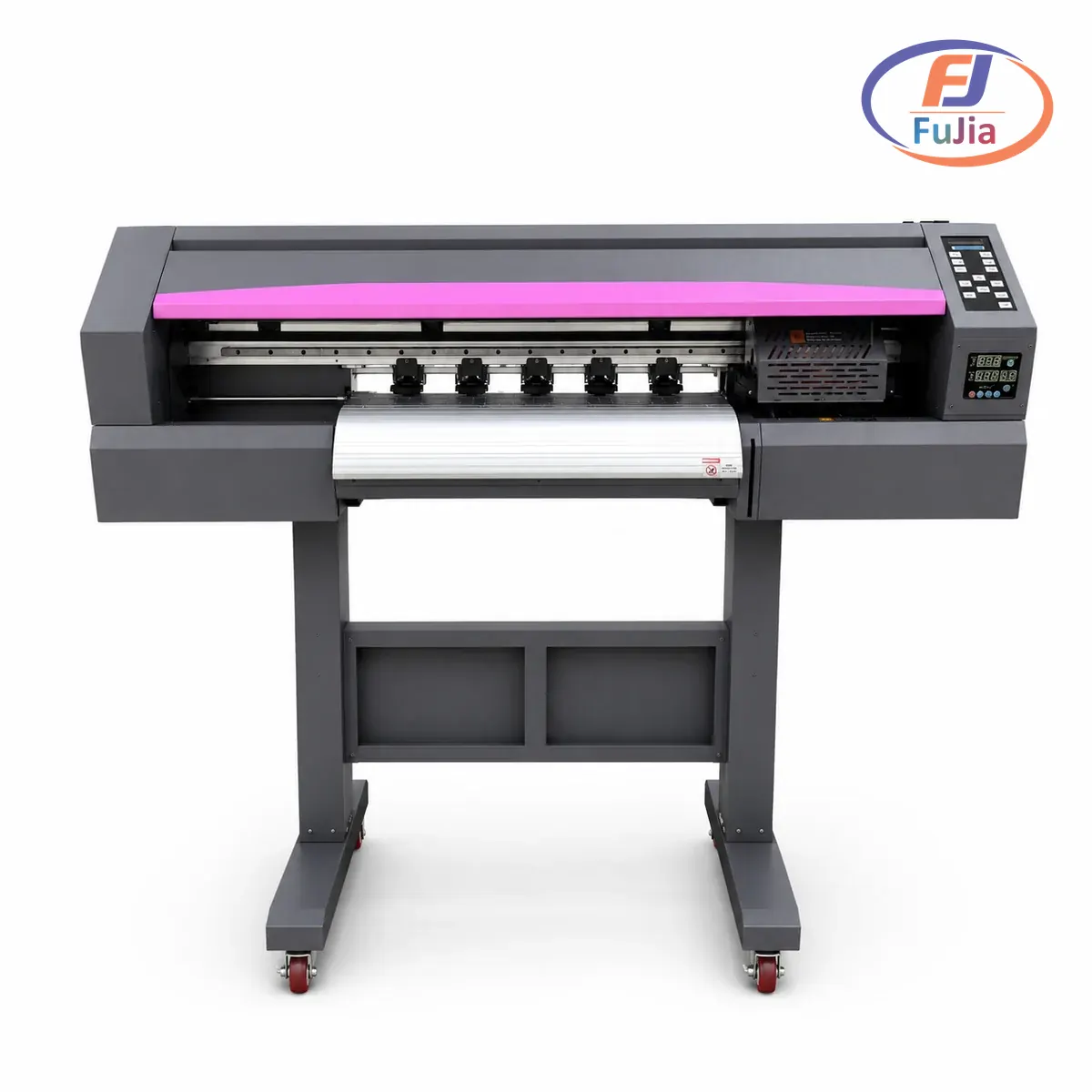
A DTF printer with shaker and oven is a bundled direct-to-film line where one purchase gives you the printer, an automatic powder shaker, and a curing oven. Instead of printing a transfer and then powdering and melting the adhesive by hand, the shaker spreads hot-melt powder evenly and the oven cures it while the sheet moves through. This guide explains what the bundle does, whether you actually need the oven, what it costs, and how to pick the right size for your shop.
Key Takeaways
- A shaker plus oven turns DTF from a hands-on process into a continuous line: print, powder, cure, peel.
- You do not strictly need a separate oven for DTF, but skipping it means curing powder with a heat press by hand, which slows high volume.
- Entry desktop bundles with an oven start near $1,400, production 14 inch systems land around $4,000 to $4,500, and industrial 4 in 1 units reach $19,000 to $25,000.
- Fujia’s A1 DTF printers use a Honson mainboard, Leadshine servo, and THK guide rail, with auto white ink circulation that runs even during power loss.
- Best for: shops moving past a few hundred transfers a week that want consistent powder coverage without manual shaking.
What the Bundle Actually Includes
A direct-to-film workflow has three jobs after the design is printed on PET film: lay hot-melt adhesive powder on the wet ink, shake off the excess, and melt (cure) the powder so it bonds to the ink. A DTF printer with shaker and oven combines all three into connected hardware.
| Component | Job | Without it |
|---|---|---|
| Printer | Prints CMYK plus white onto PET film | Not optional |
| Powder shaker | Spreads adhesive powder, vibrates off excess | Manual sieve by hand |
| Curing oven | Melts powder into a glued layer, dries sheet | Heat press or flash cure by hand |
The printer is the same piezo inkjet printing engine used in other DTF machines. The shaker and oven are what remove the labor. Fujia builds the printer and the shaker as one matched line so the film width and belt speed line up. Under the hood, Fujia’s print engine uses a Honson mainboard, Leadshine servo, and THK guide rail that hold registration through 12 hour runs, with ink fed by a siphon plus positive pressure supply at 1000 to 1500 ml per color and anti collision bumpers on the carriage. The DTF film is Fujia’s own product, five years of research and development on a virgin PET base with a proprietary cold or hot peel coating.
How the Powder Shaker Works

The printed sheet feeds into the shaker, which drops hot-melt adhesive powder across the wet ink. A vibrating screen levels the powder and shakes the loose excess back into the hopper for reuse. Good shakers keep powder only where ink landed, which is what gives a clean edge on the finished transfer.
Fujia’s DTF line pairs the shaker with a suction belt and adjustable pressure wheels so the film stays flat through the pass. That matters because uneven film causes streaky powder, and streaky powder shows up as patchy adhesion after you press the transfer. The shaker also cuts waste: reclaimed powder goes back into the hopper instead of onto the floor.
Do You Need the Oven?
You do not strictly need a separate curing oven to do DTF. The powder can be melted with a standard heat press or a flash cure unit, and many starter shops do exactly that. The trade-off is throughput and consistency.
A dedicated oven cures the sheet on a moving belt at a steady temperature, so every transfer gets the same dwell time. Pressing powder by hand means loading, timing, and unloading each sheet, which is fine at low volume and slow at high volume. If you print more than a few hundred transfers a week, the oven pays for itself in labor and in fewer ruined sheets from uneven curing.
One more point: the oven releases fumes as the powder melts, so indoor setups need filtered exhaust or an air purifier. Ventilation guidance from the EPA on indoor air quality is a useful reference when you plan the room.
Do You Have to Shake by Hand?
With a bundle that includes an automatic shaker, no, you do not shake by hand. The machine spreads and reclaims the powder for you. Without a shaker, you would sprinkle powder from a container, roll it across the sheet, and tap off the excess manually, which is repeatable only if the operator is careful every single time.
An automatic shaker is the difference between a hobby process and a production process. It removes the most variable step in DTF, which is why bundles that pair printer, shaker, and oven are now the default for apparel shops that sell transfers rather than just decorate in house.
Cost Breakdown
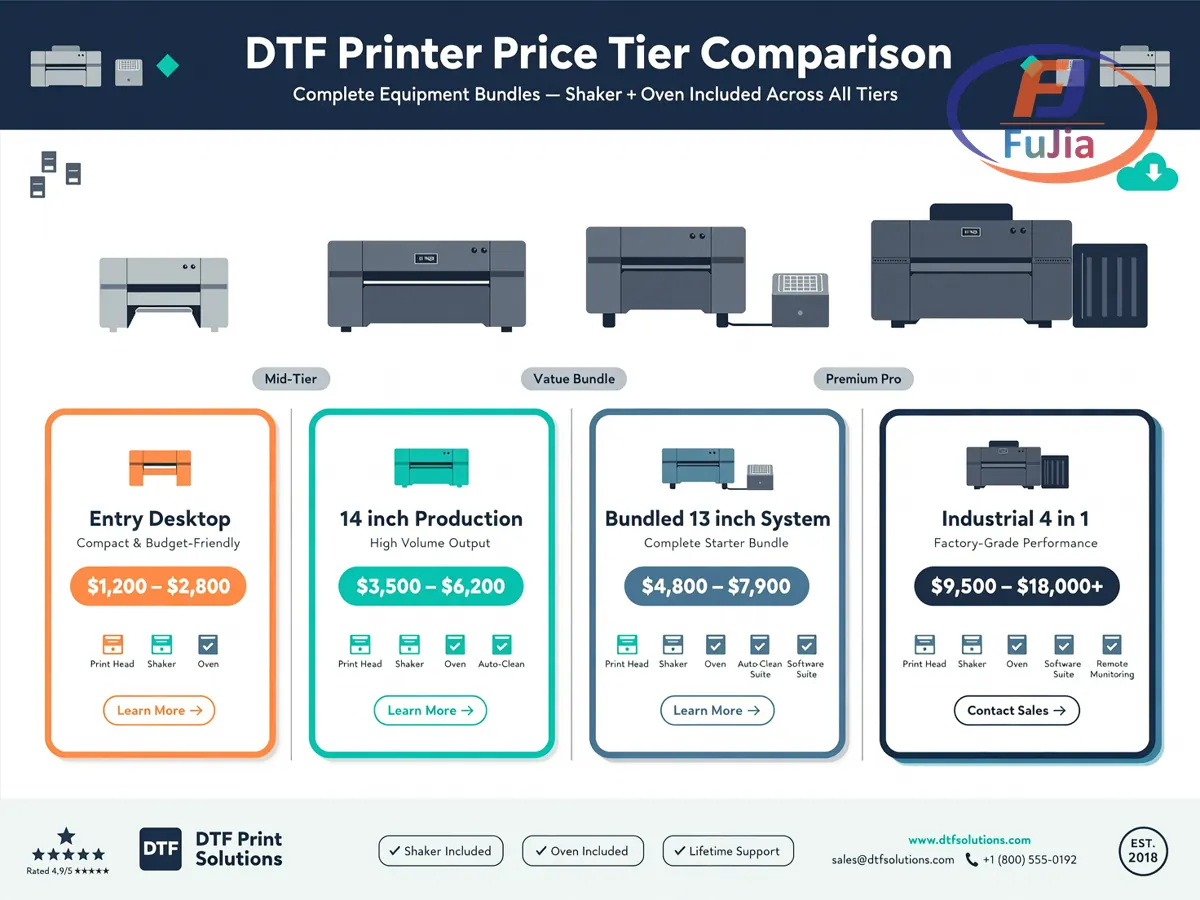
Prices vary by print width and how integrated the units are. The ranges below reflect current market bundles from several brands.
| Tier | What is included | Typical price |
|---|---|---|
| Entry desktop (A3 or A4 plus oven) | Printer plus small shaker plus curing oven | $1,400 to $2,800 |
| 14 inch production plus shaker dryer | Printer plus automatic powder shaker plus dryer | $4,000 to $4,500 |
| Bundled 13 inch system | Prestige class printer plus Miro style shaker plus oven | $5,500 to $7,500 |
| Industrial 4 in 1 | Printer, shaker, oven, and fume extractor in one unit | $19,000 to $25,000 |
The printer itself is only part of the running cost. Consumables are PET film, DTF ink, and hot-melt powder per sheet, plus electricity for the oven. Based on data from our customers across 50 plus countries, most small shops recover a bundle in the 3 to 8 month range once weekly transfer volume passes a few hundred sheets, because outsourced transfers cost more per piece than in house production. A garment factory in Istanbul running a 65 cm dual head A1 DTF shows the upside: it lifted throughput by 40 percent and cut cost by 30 percent, dropping delivery from 7 days to 2.5 days, with small batch work rising to 60 percent of revenue.
How to Choose
| If you print… | Pick |
|---|---|
| Under a few hundred transfers a week | Entry desktop bundle with oven |
| Steady apparel volume, 13 to 14 inch | Production printer plus automatic shaker and dryer |
| Mixed client jobs, want one purchase | Bundled system with shaker, oven, and ink |
| Factory scale, one operator | Industrial 4 in 1 with fume extractor |
Choose an entry bundle if volume is low and you are learning the process. Step up to a production shaker and oven once weekly volume passes a few hundred sheets, because that is where manual powdering becomes the bottleneck. For factory output, the 4 in 1 keeps one operator in control of the whole line. For matched printer and shaker specs from a Guangzhou manufacturer operating a 3,500 m² factory since 2011 and serving 500 plus print businesses across 50 plus countries, see Fujia Print DTF printers or compare the budget path in the DTF printer under 2000 guide. Fujia backs every printer with a 12-month warranty, 48 hour parts dispatch, and a 3 day remote onboarding plan inside a lifetime WhatsApp engineering group.
Do DTF printers need an oven?
No, a DTF printer does not strictly need a separate oven. After the design is printed on PET film and powdered, the adhesive can be melted with a heat press or a flash cure unit, and many beginners start that way. The downside is speed and consistency: a heat press cures one sheet at a time and depends on the operator timing each press, while a belt oven cures every sheet at the same temperature and dwell. Fujia’s transfer step is 160°C for 15 seconds with a cold peel, and an oven holds that condition automatically. If your volume is only a few transfers a week, a press is enough. Past a few hundred sheets a week, the oven saves labor and reduces ruined sheets, so most production shops treat it as required even though the printer alone is not.
What is the price of a DTF printer with powder shaker?
The price depends on width and integration. Entry desktop bundles that include a small printer, powder shaker, and curing oven start around $1,400 and run to about $2,800. A 14 inch production printer with an automatic powder shaker and dryer sits near $4,000 to $4,500. Branded bundled systems that pair a Prestige class printer with a Miro style shaker and oven cost roughly $5,500 to $7,500. Industrial 4 in 1 units that combine printer, shaker, oven, and fume extractor reach $19,000 to $25,000. Beyond the machine, budget for PET film, DTF ink, and hot melt powder per sheet plus oven electricity. Across the 500 plus print businesses Fujia serves, most shops amortize a bundle within 3 to 8 months once weekly volume clears a few hundred transfers, because per piece cost drops versus buying transfers.
Do you have to shake a DTF printer?
You do not shake the printer itself, but the transfer does need adhesive powder applied and the excess removed. With a bundle that includes an automatic powder shaker, the machine does this: it drops hot melt powder on the printed film, vibrates it level, and shakes the surplus back into the hopper. Without a shaker, you would sprinkle powder by hand, roll it across the sheet, and tap off the extra manually, which is repeatable only with a careful operator. An automatic shaker removes that variability, which is why printer plus shaker plus oven bundles are the default for shops that sell transfers rather than decorate only for themselves. Fujia pairs the shaker with a suction belt and adjustable pressure wheels so the film stays flat and powder lands only where ink was printed.
What is a DTF printer shaker?
A DTF printer shaker is the unit in a DTF line that applies hot melt adhesive powder to the printed PET film and removes the excess. After the printer lays CMYK and white ink, the sheet enters the shaker, which drops powder across the wet ink and vibrates a screen so powder settles only on printed areas. The loose powder falls back into a hopper and is reused, which cuts waste. The shaker sits between the printer and the curing oven in a full bundle, so the workflow is print, shake, cure, then press the finished transfer onto fabric at 160°C for 15 seconds with a cold peel. A good shaker keeps edges clean and adhesion even, which is why it is the component that turns DTF from a hand process into a steady production line rather than a craft step.
