

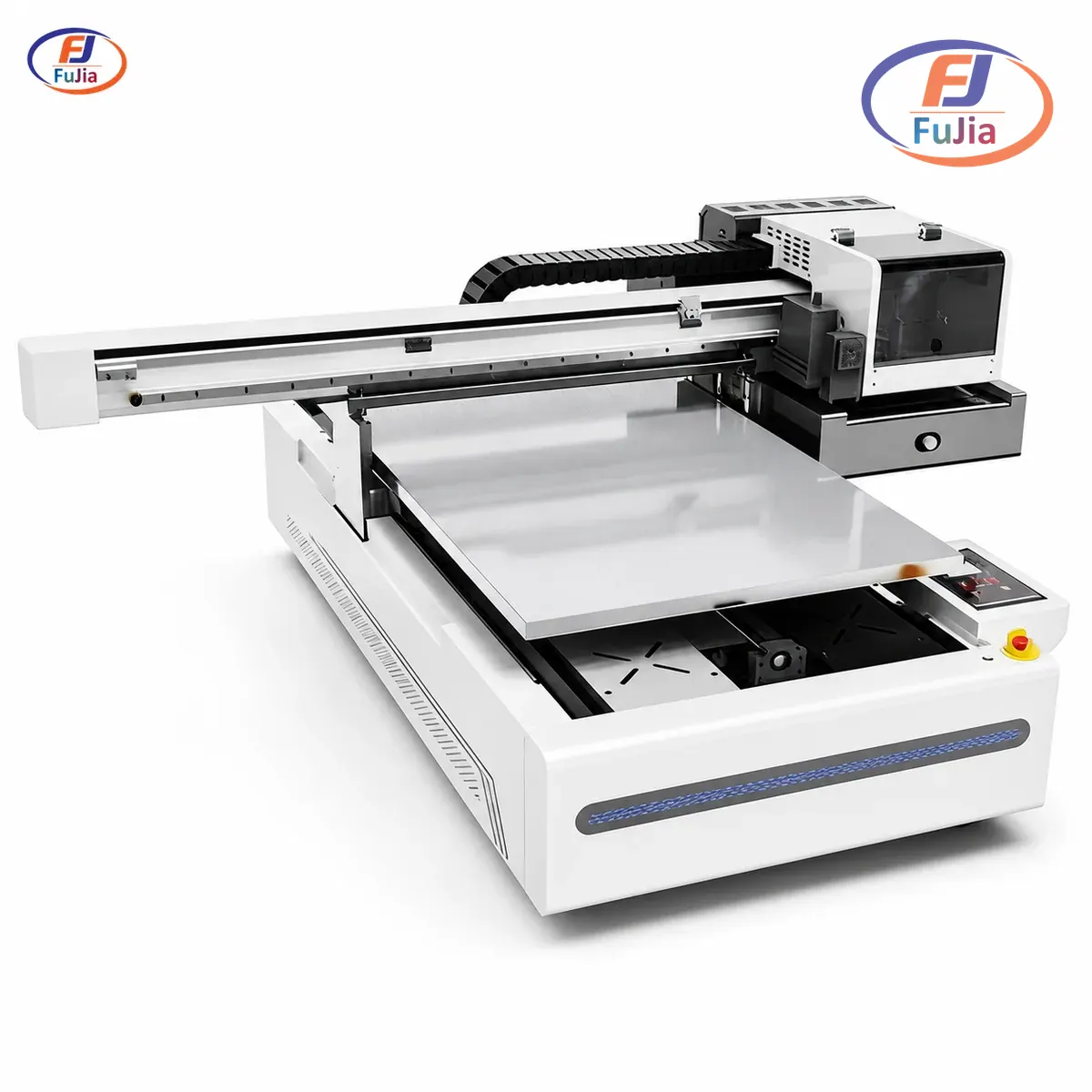
A UV printing service uses ultraviolet light to cure ink the instant it lands, so it prints full color onto almost any hard surface: metal, wood, acrylic, glass, leather, and plastic. There are two shop models, the UV flatbed that prints straight onto the object and the UV DTF line that prints a transfer you press by hand. This guide covers what the service does, what it costs, how permanent the result is, and whether buying a printer beats outsourcing.
Key Takeaways
- A UV printing service prints on rigid and curved items that paper and fabric printers cannot handle.
- Two methods exist: UV flatbed prints directly, UV DTF prints a transfer you apply by hand in about 15 seconds.
- Retail service prices run from about $1 for a small item to $25 plus for signage, while in house cost per piece is far lower at volume.
- UV cured prints are permanent for indoor use and resist scratch and water far better than solvent prints.
- Fujia’s UV line uses CMYK plus white plus varnish and a database of 300 plus tested substrates for first try success.
What a UV Printing Service Actually Does
The core difference from other printing is the cure. A UV printer lays piezo inkjet drops, then a UV-LED lamp hardens them on contact. There is no drying rack, no off gassing wait, and no bleed into the material, because the ink never stays liquid. The ultraviolet light cross links the ink molecules as it cures, which is why UV printing works on glass and metal where water based ink would just wipe off.
A service bureau usually runs one of two setups. A UV flatbed holds the item on a bed and sweeps the head over it, good for panels, phone cases, and awards. A UV DTF line prints onto AB film, and the finished transfer is pressed onto the item by hand, which suits curved and small batch work without fixturing every shape.
What You Can Print On
UV ink sits on the surface and cures there, so the material list is long. The practical limit is height under the head and whether the surface is too reflective or flexible.
| Material | Flatbed | UV DTF | Notes |
|---|---|---|---|
| Acrylic and glass | Yes | Yes | Crystal clear, no coating |
| Metal and aluminum | Yes | Yes | Panels, tags, awards |
| Wood and plywood | Yes | Yes | Grain shows through |
| Leather | Yes | Yes | Wallets, patches |
| Plastic and phone cases | Yes | Yes | Up to 180 mm tall items |
| Ceramic and stone | Yes | Yes | Coasters, tiles |
Fujia maintains a database of more than 300 tested substrates, so a new material prints correctly on the first try instead of after a stack of ruined samples. A 60 by 90 cm bed fits 6 to 8 wine glasses or 12 phone cases per cycle. Fujia’s UV line runs a CMYK plus white plus varnish ink set through a water cooled UV-LED lamp, and the varnish channel adds a spot gloss finish that commands 30 to 50 percent higher per unit pricing on premium items.
How Permanent Is UV Printing?
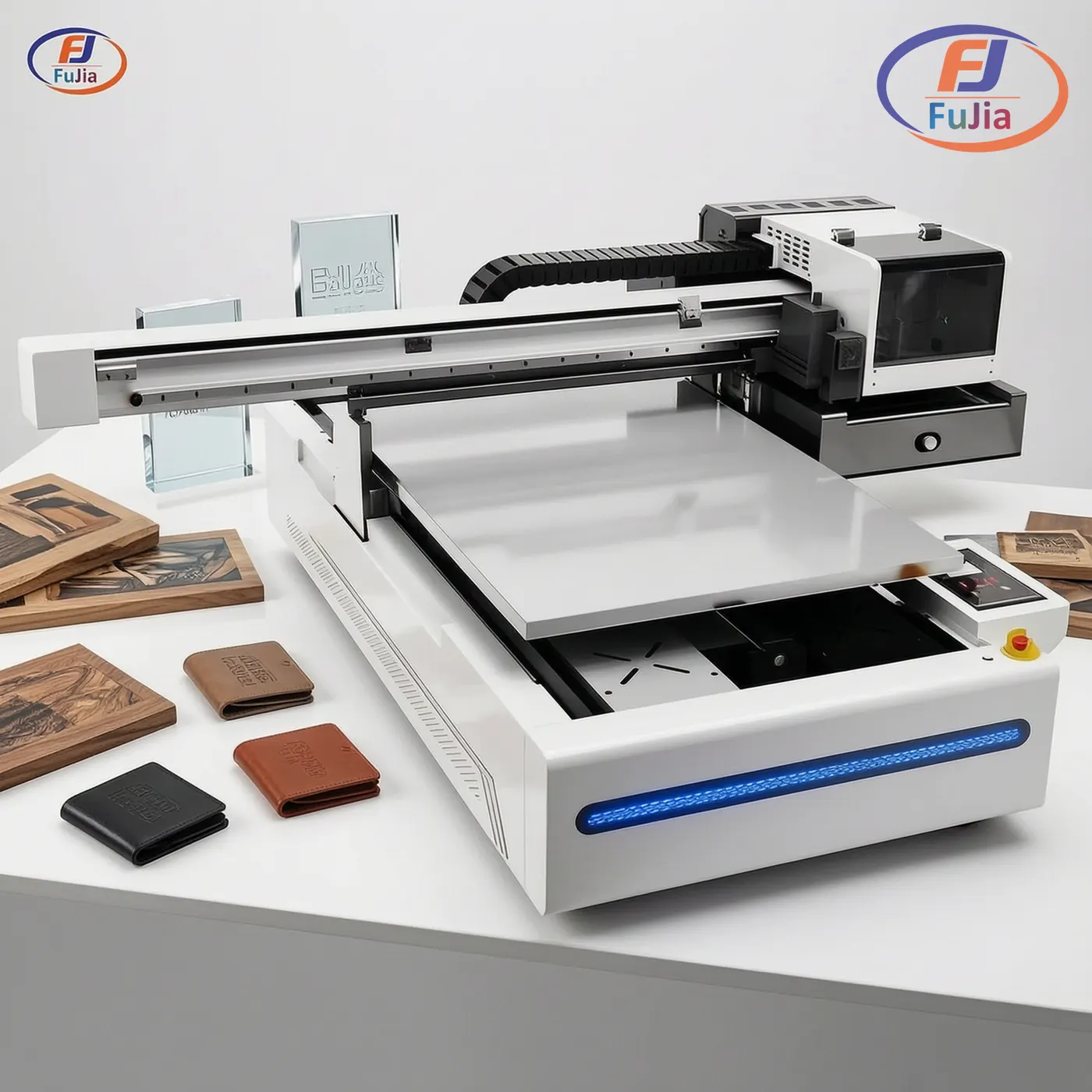
UV cured ink is far more durable than air dried or solvent ink because the molecules cross link under light. For indoor items it is effectively permanent, and the surface resists water, scratches, and fading from office or retail lighting. On drinkware the varnish channel adds scratch resistance rated 3H plus on the pencil scale, a result checked against the abrasion and hardness methods published by measurement bodies such as NIST.
Outdoor life depends on the substrate and sun exposure. The cure itself does not wash away, but a printed plastic left in direct sun for years will eventually fade like any printed plastic. For most promotional and product work the print outlasts the item it sits on. Based on data from our customers across 50 plus countries, UV printed gift and product runs show near zero adhesion failures when the surface is clean and the lamp is tuned.
How Much Does UV Printing Cost?
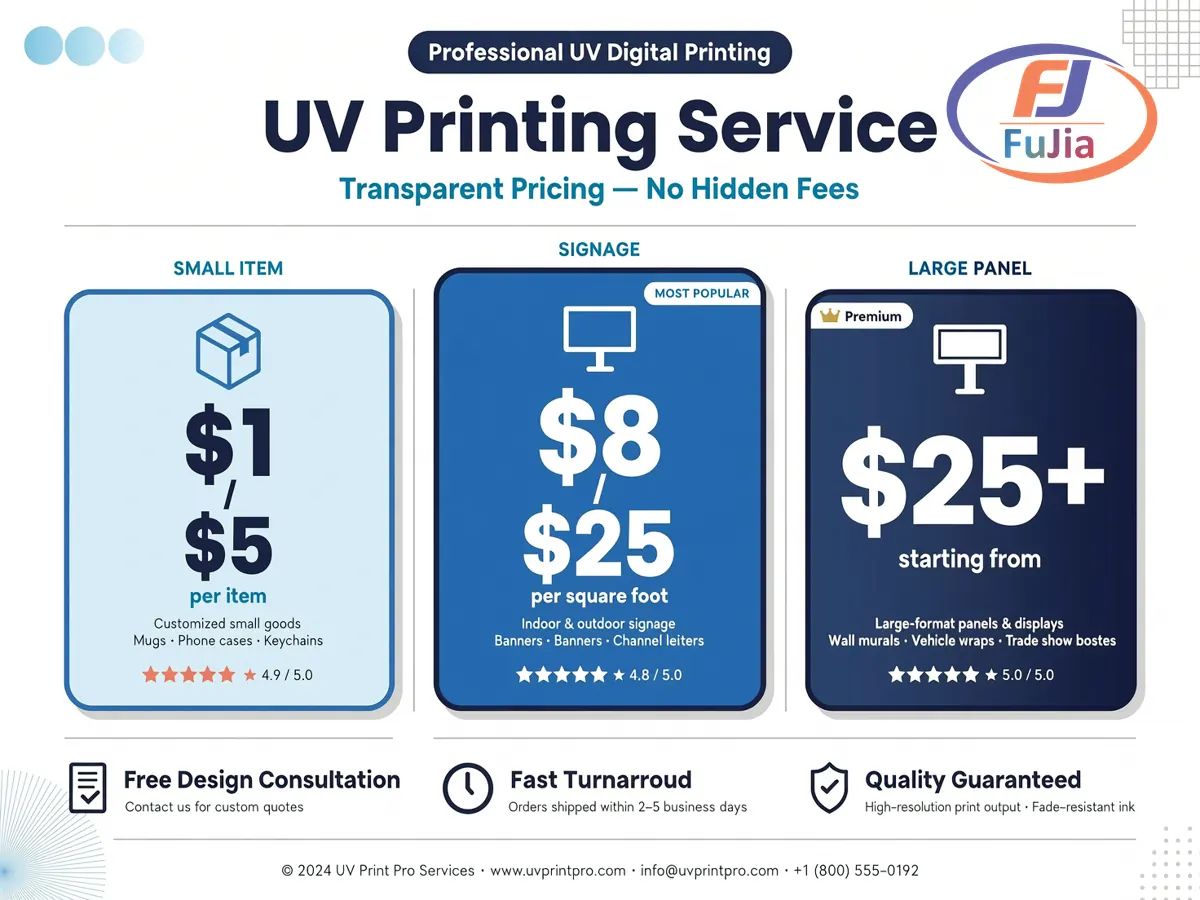
Retail service prices vary by size and substrate. Small custom items listed by shops start near $1 for a cut transfer, about $5 for a printed speaker or tag, $8 for a plywood or acrylic sign up to 36 inches, and $25 or more for larger or framed pieces. Photo and canvas style UV prints sit around $7 to $40 depending on size.
The more useful number is in house cost. Once you own the printer, the per piece cost is ink plus a little power, often cents rather than dollars, which is why shops that print daily almost always bring the work in house. Based on aggregate data from our customers across 50 plus countries, a UV flatbed used for daily custom work typically pays back in 3 to 8 months, because the saving against outsourced pricing compounds on every order.
Is a UV Printer Worth It?
A UV printer is worth it if you print custom items on a regular basis, because the per piece saving and the ability to say yes to any substrate is the whole business case. Outsourcing is fine for one off gifts, but the moment volume clears a few pieces a week, the markup you pay a service bureau exceeds a printer payment.
The comparison against screen printing makes the point. Screen setup runs $150 to $400 per design and takes 2 to 3 hours, with a 500 plus minimum. A UV flatbed has zero setup cost, loads a new design in about 30 seconds, and prints a single piece. A small appliance brand using Fujia’s UV A1 flatbed lifted output from 200 to 800 pieces a day, loaded designs in 30 seconds instead of paying $150 to $400 per screen, and took minimum order from 500 to 1. A glassware workshop in Nairobi shows the same pattern on a flatbed: it lifted daily output from 200 to 300 pieces, cut material waste from 15 percent to 9 percent, and shortened turnaround from 5 to 7 days to 1 to 2 days. A promotional phone case brand using Fujia’s UV 6090 with a rotation jig grew from 12 to 40 plus SKUs in 60 days and ships more than 8,000 cases a month at a 75 percent margin. For shops offering a UV printing service, that flexibility is what wins custom work.
How to Choose
| If you… | Do this |
|---|---|
| Need one off gifts | Use a local UV printing service |
| Print daily custom work | Buy a UV flatbed or UV DTF printer |
| Print curved or small items | Choose UV DTF for hand transfer |
| Print panels and awards | Choose a UV flatbed with 180 mm height |
| Want premium finish | Specify the varnish channel for gloss |
Outsource for occasional pieces, but buy once volume is steady, because the per piece economics flip hard past a few items a week. For the full lineup and substrate list from a Guangzhou manufacturer operating a 3,500 m² factory since 2011 and serving 500 plus print businesses across 50 plus countries, see Fujia Print UV printers or the UV DTF printers for hand transfer work. Fujia backs every printer with a 12-month warranty, 48 hour parts dispatch, and a 3 day remote onboarding plan inside a lifetime WhatsApp engineering group.
How much does UV printing cost?
Retail UV printing service prices depend on size and material. Small custom items start near $1 for a cut transfer, around $5 for a printed speaker or tag, about $8 for a plywood or acrylic sign up to 36 inches, and $25 or more for larger framed or display pieces, with photo and canvas styles near $7 to $40. The bigger saving appears in house: once you own a UV printer the per piece cost falls to ink plus a little power, often just cents, because you stop paying the service markup on every order. Across the 500 plus print businesses Fujia serves, shops that print custom work daily usually recover a UV flatbed within 3 to 8 months, since the saving against outsourced pricing adds up on each job. For occasional one off gifts, a local service is cheaper, but steady volume makes owning the printer the lower cost path.
How do I print my own UV DTF transfers?
You print your own UV DTF transfers with a UV DTF printer, AB film, and a UV-LED lamp, no coating or pretreatment needed. The printer lays CMYK, white, and varnish onto the film, and a 15 second hand transfer lays the finished print onto the item, where it cures on contact. This is the method for curved or small batch items because you press by hand instead of fixturing each shape on a flatbed. Fujia’s UV DTF lineup runs six ink channels and a water cooled lamp, and the company has tested more than 300 substrates so a new material prints right the first time. If you want to offer transfers as a service, a UV DTF line lets you produce waterproof, scratch resistant decals that customers apply themselves, which is how many small shops sell UV printing without a flatbed bed.
How permanent is UV printing?
UV printing is effectively permanent for indoor use because the UV-LED lamp cross links the ink molecules the instant they land, so the print bonds to the surface instead of sitting on top as a wet layer. It resists water, scratches, and the kind of fading you get under office or retail lighting, and on drinkware the varnish channel reaches 3H plus pencil hardness. Outdoor life depends on the substrate and sun: the cure will not wash off, but a printed plastic left in direct sun for years can fade like any printed plastic. For promotional products, awards, and packaging the print normally outlasts the item it is on. Fujia’s customer data across 50 plus countries shows near zero adhesion failures when the surface is clean and the lamp is tuned, which is why UV printing is trusted for daily use items rather than just display pieces.
Is a UV printer worth it?
A UV printer is worth it for anyone who prints custom items on a regular basis, because the business case is the per piece saving plus the freedom to print on almost any hard surface. Outsourcing works for a single gift, but once you clear a few pieces a week the markup a service charges exceeds a printer payment, and you also wait on their lead time. Against screen printing the gap is larger: screen setup costs $150 to $400 per design, takes 2 to 3 hours, and needs a 500 plus minimum, while a UV flatbed has no setup, loads a new design in about 30 seconds, and prints a single piece. A Fujia UV A1 flatbed customer lifted output from 200 to 800 pieces a day and cut minimum order from 500 to 1. If your work is steady custom printing, the printer pays for itself and expands what you can sell.
