

Custom sublimation printing is a heat-transfer method that turns solid dye into gas and bonds it permanently into polyester fabric and polymer-coated items such as mugs, ceramic tiles, and metal panels. Fujia Print supplies industrial sublimation printers for businesses that run this process at volume, and the method uses a dedicated sublimation printer, transfer paper, and a heat press set to 180-200°C for 45-60 seconds. The result is a print that will not crack, peel, or fade.
Key Takeaways
- Custom sublimation printing embeds dye into polyester and coated substrates at 180-200°C for 45-60 seconds, not on top like vinyl.
- Finished prints survive 50+ heavy washes and resist cracking because the dye becomes part of the material.
- The method works only on polyester (65%+ content) or on polymer-coated hard goods, never on pure cotton without treatment.
- A home setup costs roughly $350 to $1,200, while a factory-grade Fujia A1 line with dual printheads runs $3,000 to $15,000.
- Read our sublimation vs DTF comparison to pick the right machine.
What Custom Sublimation Printing Produces
Custom sublimation printing produces full-color, photographic images that become part of the product instead of sitting on its surface. The dye gas penetrates polyester fibers and re-solidifies inside them, so the printed area shows no film, no texture, and no stiffness.
The chemistry works only when the substrate gives the dye something to bond with. Polyester fabric needs at least 65% synthetic content, and 100% polyester gives the brightest result. Hard goods such as sublimated mugs survive 500+ dishwasher cycles because the image sits below the glaze.
Sublimation dye is transparent, so it cannot cover dark colors, and light blanks are required. See our guide to what a dye sublimation printer is.
How the Sublimation Transfer Process Works
The transfer workflow follows four steps that depend on temperature, time, and pressure. First, create artwork at 300 DPI or higher and flip it horizontally, because the mirror image prints in reverse on the transfer paper. Second, a sublimation printer deposits disperse dye onto high-release transfer paper using sublimation ink. Third, press the paper against the blank. Fourth, let the item cool so the dye locks inside the material.
Set the heat press to 180-200°C (roughly 356-392°F) and hold for 45-60 seconds with medium to firm pressure of 40-80 PSI. Pre-press every blank for 5-10 seconds to drive off moisture, because water in the fabric causes ghosting and color banding. Coated mugs use 180°C for 60 seconds per 11oz cup.
Solid dye particles skip the liquid phase, turn to gas under heat, enter the open polyester pores, and re-solidify as the item cools. Our explainer on how sublimation printing works covers ICC profiles. A single 11oz mug jig outputs 200-300 cups across an 8-hour shift once the settings are dialed in.
Which Substrates Work and Which Fail
The table below shows what accepts dye sublimation, the temperature and time each needs, and the common failure points to avoid.
| Substrate | Accepts sublimation? | Temp and time | Key note |
|---|---|---|---|
| 100% polyester fabric | Yes | 200°C, 45-60s | Brightest color, zero hand feel |
| Polyester blend 65%+ | Yes | 200°C, 45-60s | Colors look slightly muted |
| Pure cotton fabric | No | N/A | Dye sits on surface, washes out |
| Coated ceramic mug | Yes | 180°C, 60s | 500+ dishwasher cycles |
| Coated metal or aluminum | Yes | 180-200°C, 60s | Gloss or matte white panels |
| Coated glass or tile | Yes | 180-200°C, 45-60s | Needs rated coating |
| Uncoated leather or wood | No | N/A | No polymer layer to bond with |
Pure cotton fails because cotton fibers are short-chain cellulose that do not open under heat the way polyester does. If a customer demands cotton, add a polyester layer first using white heat transfer vinyl or a coating spray, then sublimate onto that layer at 375-400°F for 50-70 seconds.
Custom Sublimation vs DTF and HTV
Buyers compare sublimation with direct-to-film (DTF) and heat transfer vinyl (HTV) because all three use a heat press. The table below shows the trade-offs with concrete numbers.
| Factor | Sublimation | DTF | HTV |
|---|---|---|---|
| Best fabric | 100% polyester | Cotton and polyester | Any fabric |
| Press temperature | 180-200°C | 160°C | 135-160°C |
| Press time | 45-60 seconds | 15 seconds | 10-15 seconds |
| Hand feel | None, dye inside fiber | Slight film | Vinyl layer, tactile |
| Wash durability | 50+ heavy washes | 50+ heavy washes | Good, edges may lift |
| Color range | Full CMYK photo | Full color | One solid color per layer |
| Startup cost | Higher | Medium | Lower |
Sublimation wins on softness and all-over coverage but locks you to polyester and light blanks. DTF prints on cotton and dark garments because the adhesive powder carries white ink, which sublimation cannot do. Our DTF vs sublimation guide explains when each method protects your margin. Use HTV for simple one-color names and numbers.
For a decoration shop, the practical split is clear. Use sublimation for performance wear, jerseys, and coated drinkware. Use DTF for cotton tees and dark garments.
Home Studio vs Factory-Grade Setups and Costs
The table below shows three tiers with real market ranges.
| Tier | Printer | Heat press | All-in cost | Best for |
|---|---|---|---|---|
| Beginner | Converted desktop inkjet, 1 head | Swing-away 38x38cm, $150-400 | $350-1,000 | Hobby, gifts |
| Pro desktop | Dedicated sublimation, 1-2 heads | Slide press $400-900 | $1,000-2,500 | Etsy, small runs |
| Industrial A1 | Fujia SUB-A1-2H, 2 Epson heads, 650mm | Roll or pneumatic flatbed | $3,000-15,000 | Production, 500+ items/month |
Per-transfer consumable cost stays low at $0.50 to $2.00 for ink and paper, and a full ink set runs $100-150 while transfer paper costs $0.50-1.50 per sheet. Based on data from our customers across 50+ countries, in-house sublimation beats outsourced printing once a shop presses more than 150 to 200 items per week. Large ink tanks cut per-print cost by up to 60% versus cartridge systems.
A factory line also removes the per-sheet film step that DTF needs, which simplifies labor. The trade-off is substrate lock-in: a sublimation shop must stock polyester and coated blanks, while a DTF shop can take almost any garment. Plan your catalog before you buy the machine, not after.
Fujia’s Industrial Sublimation Printer Build
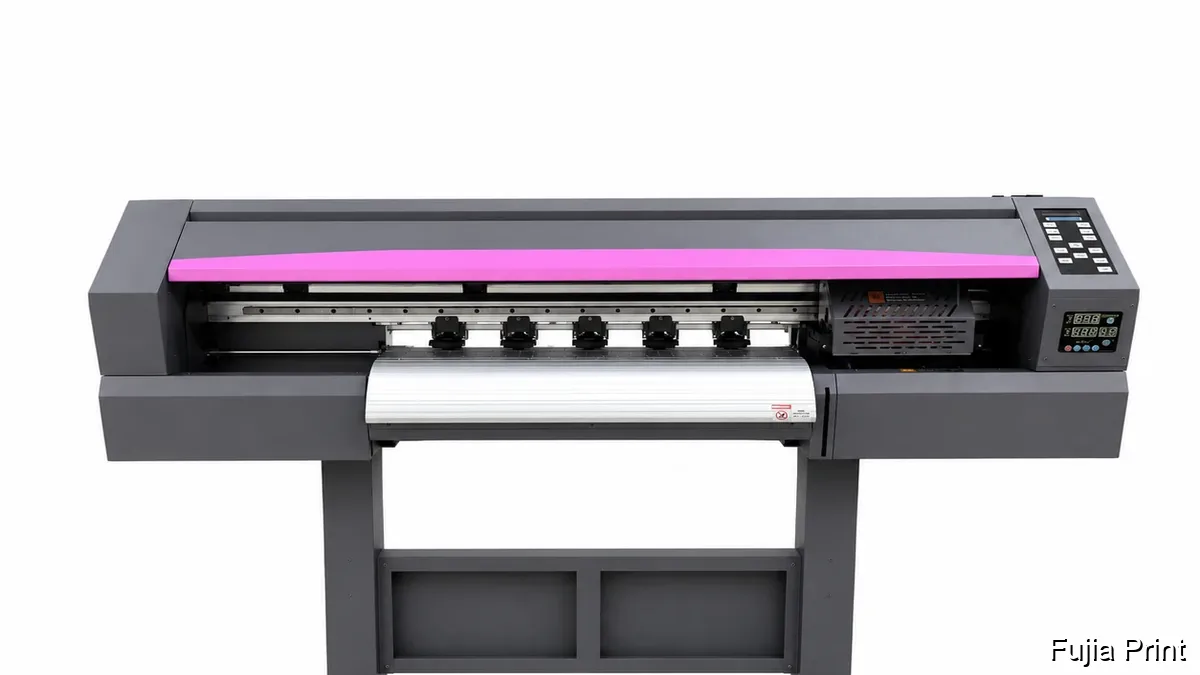
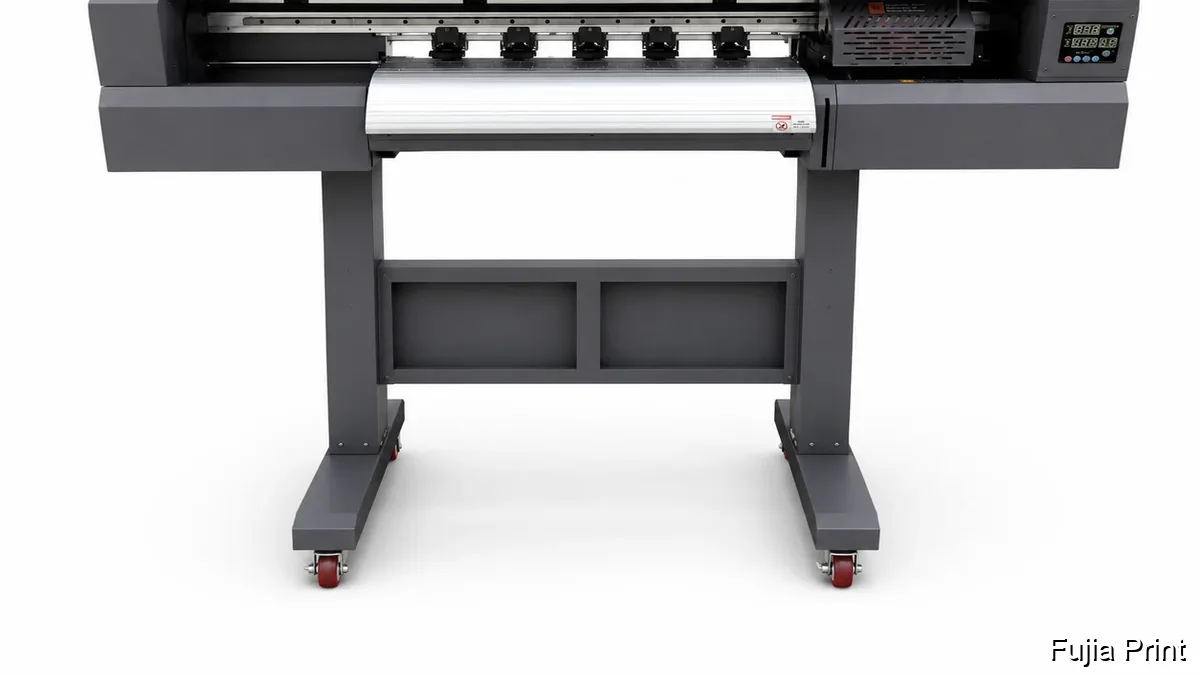
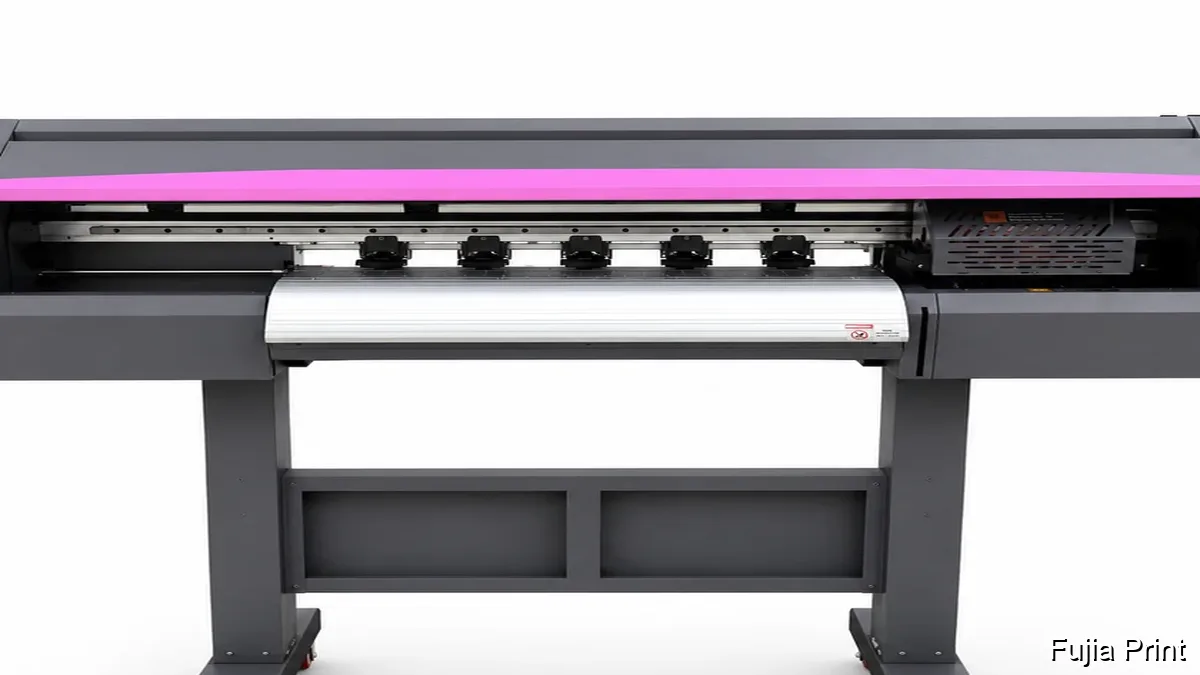
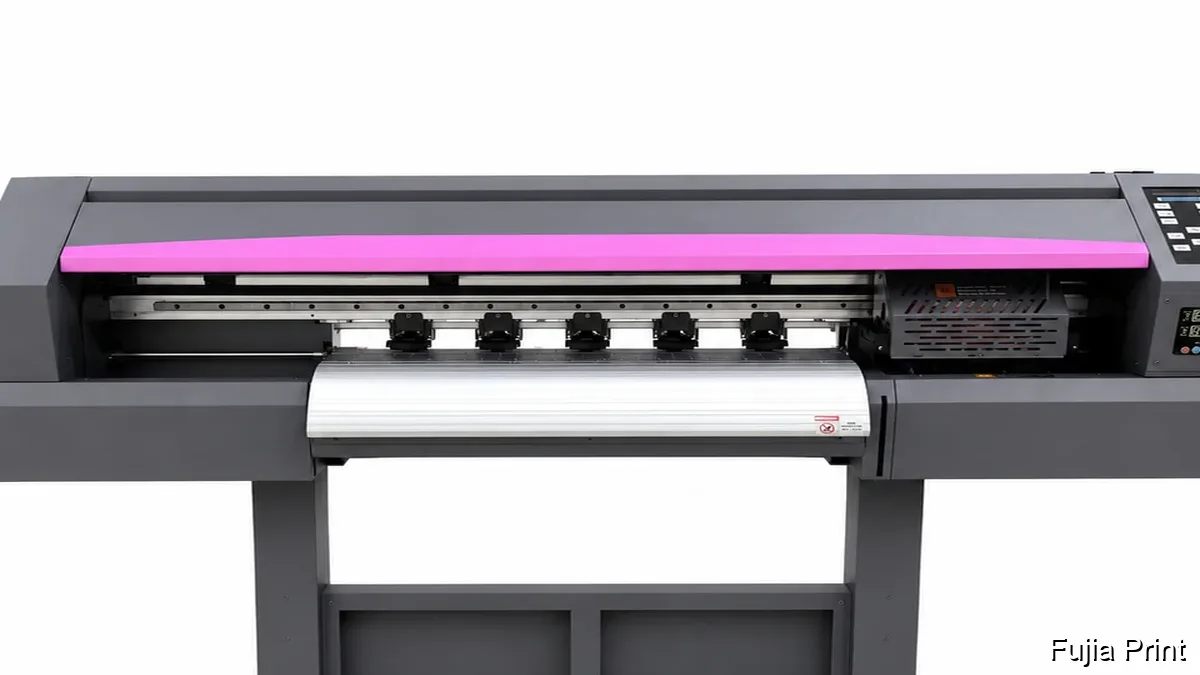
Fujia Print builds the A1 Sublimation 2-Head (model SUB-A1-2H) as a factory-direct production machine with a 650mm print width and two Epson printheads, each with 3,200 nozzles. The drivetrain uses a Honson mainboard, a Leadshine servo motor, and a THK silent guide rail. That combination supports 12-hour continuous production runs without quality drift.
Fujia also engineers its own consumables, including a 13-color DTF ink system (CMYK plus light cyan, light magenta, orange, red, green, and blue) for sister machines, and sublimation ink tuned for polyester. The Guangzhou factory covers 3,500 m², employs 80 staff, and ships 2,000 machines per year to more than 50 countries. Buyers get a 12-month warranty, common parts dispatched within 48 hours, and a 3-day remote onboarding that ends with a first perfect print.
Real output numbers show why the build matters. A garment factory in Istanbul running Fujia A1 dual-head industrial printers reported +40% throughput and -30% production cost, cutting delivery from 7 days to 2.5 days. A creative studio in São Paulo using a Fujia desktop printer cut per-order cost by 64% (from R$18 to R$6.5) with a 5.5-month payback. Compare the full industrial sublimation printer range or review sublimation ink options before you spec a line.
What materials can I sublimate with custom sublimation printing?
Custom sublimation printing works on any material with polyester or a polymer coating. The brightest result comes from 100% polyester fabric, used for jerseys and performance tees. Polyester blends of at least 65% also work, though colors look slightly muted. Hard goods need a polyester-like coating: ceramic mugs, aluminum panels, glass, and tiles accept sublimation when the maker applies a rated coating. Natural fibers such as cotton and untreated leather fail because they lack the polymer chains the dye needs, and bare wood or canvas needs a polyester layer first.
Can you sublimate on cotton shirts?
Direct sublimation on 100% cotton does not work, because cotton fiber is short-chain cellulose that stays closed under heat and gives the dye nothing to bond with. The ink sits on the surface and washes out after a few cycles. You can still decorate cotton by adding a polyester layer first. The most reliable method is to apply white heat transfer vinyl, then sublimate onto it at 375-400°F for 50-70 seconds. A coating spray is a second option, but it fades faster than vinyl. Poly-cotton blends at 65% polyester or higher sublimate directly with muted results, and DTF remains the stronger choice for cotton-heavy catalogs.
What temperature and time does sublimation need?
Sublimation needs a heat press set between 180 and 200°C, 356 to 392°F, held for 45 to 60 seconds with medium to firm pressure around 40-80 PSI. Fabric panels perform best at 200°C for 45-60 seconds, while coated mugs use 180°C for 60 seconds per 11oz cup. Always mirror the artwork before printing because the paper lays face down, and pre-press every garment for 5-10 seconds to remove moisture that causes ghosting. Peel while warm, then let the item cool flat. A laser thermometer check each month keeps a low-cost press honest, because budget platens can drift 10-20°F over time and quietly ruin color.
How long do sublimation prints last in the wash?
Sublimation prints last a long time because the dye lives inside the fiber rather than on top of it. On polyester apparel, a well-pressed image survives 50+ heavy machine washes with minimal fading, and testing against AATCC colorfastness methods rates at Grade 4-5. Coated hard goods last even longer: sublimated mugs withstand 500+ dishwasher cycles because the image sits under the glaze. A 100% polyester garment outlasts a 65% blend, and a correct 200°C, 45-60 second press outlasts a rushed one. Harsh bleach and direct sun shorten life on any method.
Is custom sublimation printing cheaper than DTF or vinyl?
Sublimation costs more to start than vinyl but less per item than most surface methods once you reach volume. A sublimation starter kit with a converted printer and press runs $350 to $1,200, and an industrial Fujia A1 line costs $3,000 to $15,000. The per-transfer side flips the math: sublimation uses $0.50 to $2.00 of ink and paper per item, HTV costs $1.00 to $4.00 by complexity, and DTF falls between them with powder and film added. Large ink tanks cut per-print cost by up to 60% versus cartridge systems.
Conclusion
Custom sublimation printing pays off for polyester and coated products when you need permanent, full-color results with no hand feel, and you can compare factory-direct Fujia sublimation printers at fujiaprinter.com before you buy.
Sources
- Dye-sublimation printing, Wikipedia: process description, polyester and polymer-coated substrate requirement, and activation temperatures of 350-420°F.
- AATCC, American Association of Textile Chemists and Colorists: textile colorfastness and wash-durability test standards referenced for the 50+ wash and Grade 4-5 claims.
- ASTM International: voluntary consensus standards for textile and material testing that back the durability and substrate claims above.
