

DTF stands for Direct-to-Film in printing: designs are printed onto a PET film, bonded with hot-melt powder, and pressed onto fabric at 160°C for 15 seconds. This page unpacks the acronym, walks through the four-step process, clears up the slang confusion, and explains why the term dominates custom apparel searches.
Key Takeaways
- DTF means Direct-to-Film: the design is printed onto a clear PET film rather than directly onto fabric or paper.
- The process runs in four steps, print on film, apply hot-melt powder, cure the print, and heat press at 160°C for 15 seconds with a cold peel.
- The letters DTF also carry an unrelated internet slang meaning, which search engines now separate by context, so the printing term is safe to research and use commercially.
- DTF prints hold grade 4-5 color fastness across 50+ machine washes and work on any fabric color or composition, cotton included.
- Related acronyms occupy different niches: DTG prints directly on cotton garments, DTP is desktop publishing, and DTF transfers are the finished press-ready products.
What Does DTF Stand For?
DTF stands for Direct-to-Film, and each word describes a stage of the process. Direct means the design is printed straight onto the film in one pass, with no screens, plates, or cutting between the file and the media. To marks the transfer step, where the printed image leaves the film and lands on the garment. Film names the medium itself, a clear PET sheet coated to hold ink and hot-melt powder through printing and curing before releasing everything under heat.
The expansion is easier to remember when read as a sentence: ink goes direct onto film, and the film carries the design to the shirt. The honest truth about this acronym: it is doing more work than most industry terms ever do. The word order also separates DTF from its acrostic cousins, DTG (direct-to-garment), which skips the film entirely and sprays into cotton, and DTP (desktop publishing), which has nothing to do with textiles at all. Here’s the thing about the acronym that no supplier page mentions: DTF is also an unrelated internet slang phrase, and the overlap is why the printing term generates so many awkward search suggestions. Search engines now separate the two contexts well, and in commercial settings, quotes, invoices, trade shows, the printing meaning is unambiguous, so buyers can use the term freely.
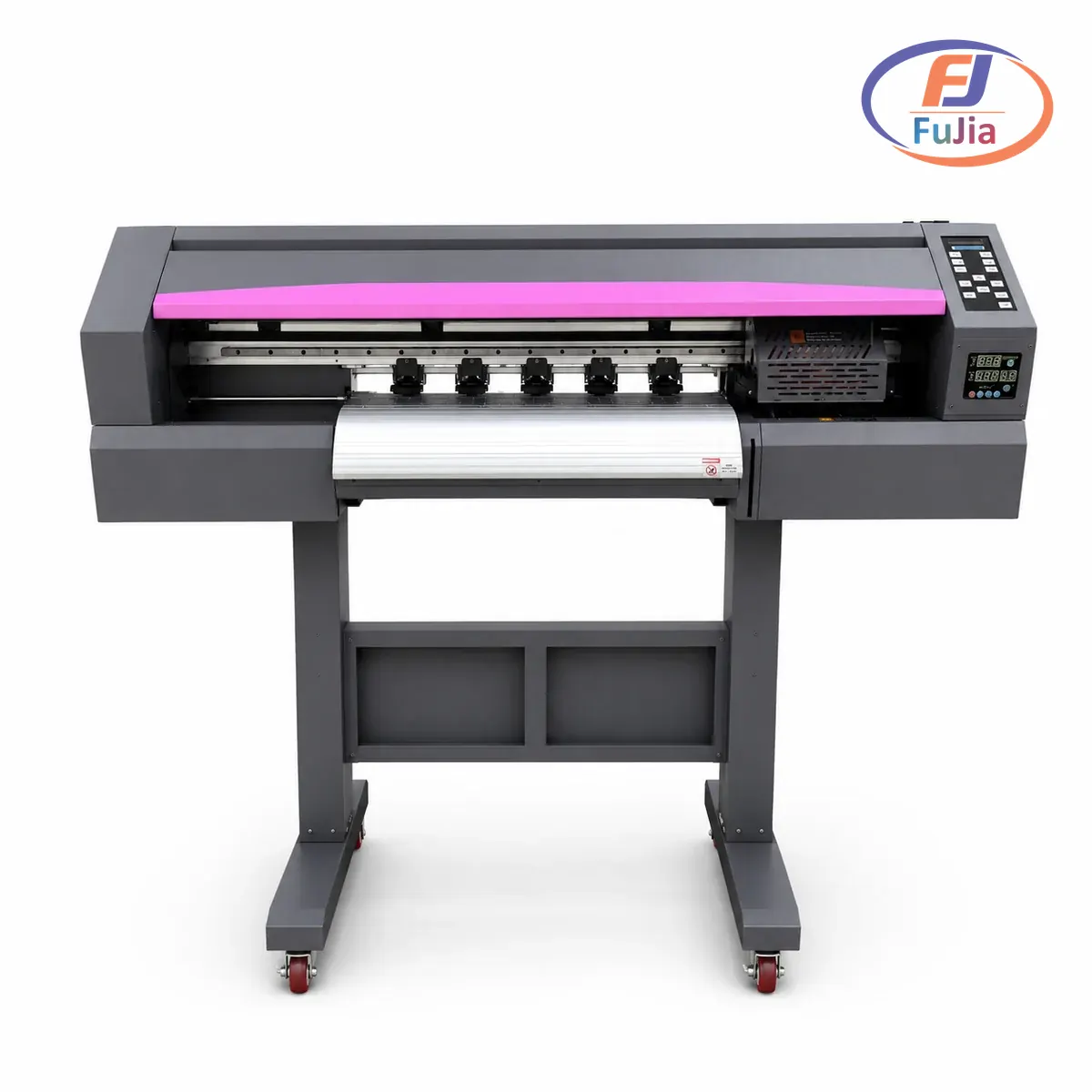
Terminology around the acronym shifts with context, and the variants describe different objects rather than different technologies. A DTF printer is the machine that prints the film. A DTF transfer is the finished, pressed design on a garment. DTF film is the consumable PET sheet itself. DTF printing is the whole workflow. Reading those four phrases correctly prevents most beginner confusion, because a seller offering “DTF” might be selling any one of the four.
How DTF Printing Works: The Four Steps
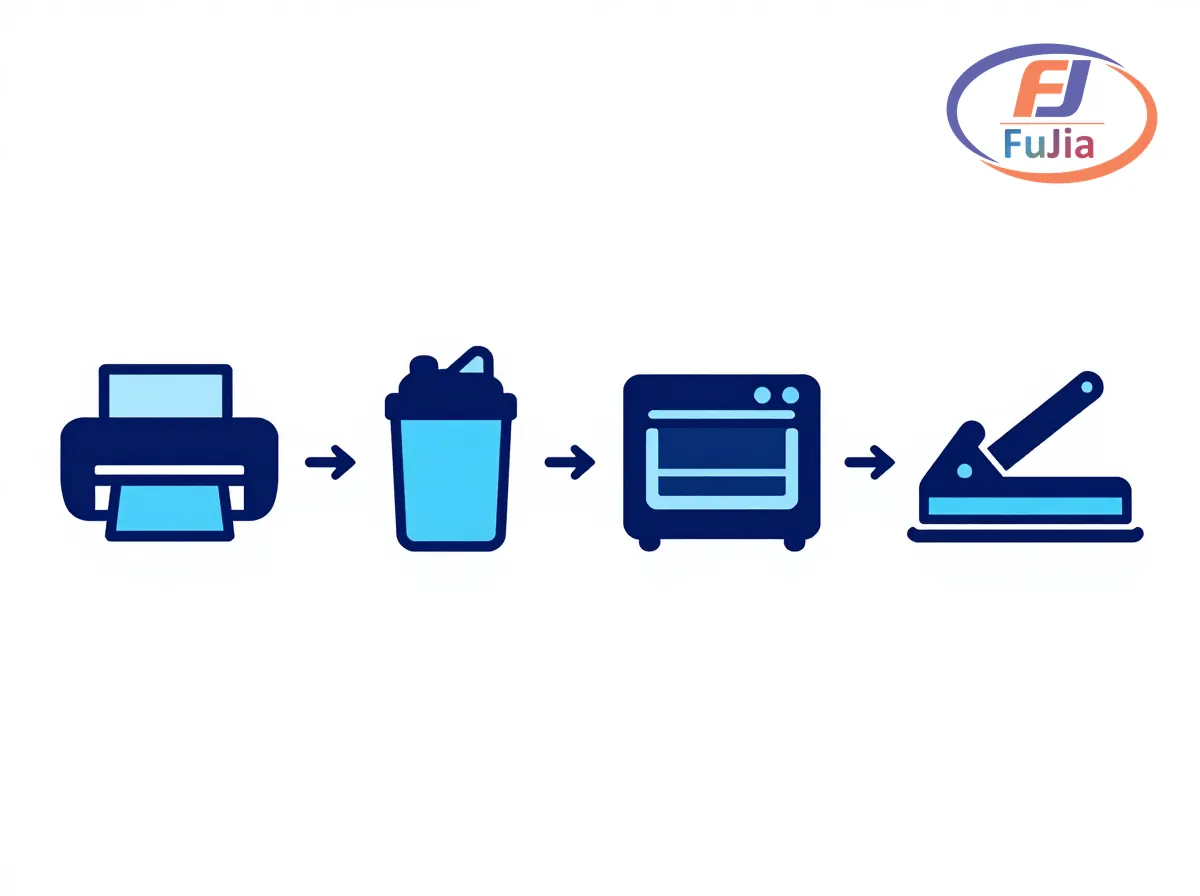
The workflow has four stages, and each one maps to a piece of equipment. First, a DTF printer lays CMYK ink plus a white underbase onto the film’s coated side, mirroring the design so it reads correctly after transfer. Second, hot-melt adhesive powder is applied to the wet white ink, either by hand for single sheets or by an automated shaker for production runs. Third, the powdered film passes through a curing oven where the powder melts and gels into the ink layer. Fourth, the film is pressed onto fabric at 160°C for 15 seconds, cooled, and peeled, leaving the design bonded to the fibers.
| Term | What it refers to | Where it appears |
|---|---|---|
| DTF printer | the machine that prints on film | equipment listings |
| DTF transfer | finished pressed design on a garment | seller catalogs |
| DTF film | the PET carrier sheet, consumable | supply stores |
| DTF printing | the whole four-step workflow | tutorials, this page |
| DTF gang sheet | film packed with multiple designs | wholesale transfer sellers |
The white ink channel is what makes the process universal. Because the white layer prints first and acts as a base, the color layers on top show correctly on black hoodies, gray blends, and white tees alike, which is the property screen printing needs screens for and DTG needs pretreatment for. Durability closes the loop: a correctly pressed DTF transfer holds grade 4-5 color fastness on the AATCC scale across more than 50 machine washes, which is why the technology moved from novelty to industry standard within a few years of its spread.
Why DTF Took Over Custom Apparel
The acronym spread because the process solved the custom apparel industry’s oldest trade-off, quality versus flexibility. Screen printing delivers durability but demands screens per color and volume per design. DTG delivers photographic quality but stays on cotton and slows on dark garments. DTF delivers photographic quality, any fabric, any color, and zero setup between designs, which removes the constraints that used to force small shops into one technology or one niche. Consumable costs run $0.40-0.80 per full-front print, low enough for the margins that made the technology spread through Etsy sellers and contract decorators alike.
Fujia’s own history tracks that industry shift. The company started as a print shop in 2011, hit the same supplier-blame wall every decorator knows, and pivoted into manufacturing in 2019, now building 2,000 machines a year in a 3,500 m² Guangzhou factory that ships to more than 50 countries. That practitioner origin is why the machines ship with matched RIP software, free sample printing, and a 3-day onboarding program rather than a manual and a warranty card.
That said, most readers arrive mid-research, and the natural next steps are already on the site: the DTF meaning page expands the process in plain language, the what is a DTF printer guide covers equipment tiers, and the DTF printers lineup shows the machines themselves.
DTF vs the Other Acronyms: DTG, DTP, and Friends
The apparel acronym zoo is small but confusing, and a table settles it faster than paragraphs.
| Acronym | Full name | What it does | Where it fits |
|---|---|---|---|
| DTF | Direct-to-Film | print film, powder, press to any fabric | mixed-fabric production, transfers |
| DTG | Direct-to-Garment | ink sprayed into cotton garment directly | cotton-only photorealistic runs |
| DTP | Desktop Publishing | page layout and document design | not textile related |
| HTV | Heat Transfer Vinyl | cut vinyl shapes, press layer by layer | simple spot designs, names, numbers |
| DTF gang sheet | multiple designs on one film sheet | cost-efficient transfer buying | wholesale transfers |
The acronyms matter because they encode trade-offs. Wherever a technology name contains “direct,” the ink lands in or on the product in one pass and gains speed but loses substrate flexibility. Wherever “transfer” appears, an intermediate carrier adds a press step but gains fabric freedom. DTF and DTG are the clearest pair: both direct digital processes, one freed by the film. Buyers who understand that pattern can decode any new acronym the industry invents, because the chemistry and the trade-off will be the same story with a different letter. We recommend reading the letters as a process map before comparing any two machines, because the names usually tell you where each one breaks.
Does DTF printing last long?
Yes, properly executed DTF transfers are among the most durable garment decoration methods available. The industry benchmark is grade 4-5 color fastness on the AATCC scale surviving more than 50 machine washes, provided the full system was tuned: correct powder melt, 160°C press temperature, 15 seconds of pressure, and a complete cold peel. Durability failures trace to process errors rather than the technology, usually under-cured powder, insufficient press pressure, or peeling before the transfer has cooled on cold-peel film. Buyers comparing vendors should request a sample, wash it ten times at home, and judge the edges and density, because that test predicts garment lifespan better than any brochure claim.
What is better, DTF or DTG?
Neither is universally better; they own different corners of the same market. DTG sprays ink directly into cotton garments and produces an exceptionally soft hand on cotton-only photorealistic work, but it needs pretreatment, slows on dark shirts, and machines cost $15,000-30,000. DTF prints on film and presses to any fabric, cotton or polyester, light or dark, at $0.40-0.80 per full-front print with machines starting far lower, which is why it has become the small-business default. The decision rule is fabric mix and order profile: cotton-only shops with design-heavy small runs fit DTG, and everyone handling mixed fabrics, dark garments, or transfer resale fits DTF. Fujia’s own line covers the DTF side of that split with 2-head and 4-head 60 cm machines.
What are the disadvantages of DTF?
Four disadvantages matter. The workflow adds equipment: a printer alone is not enough, and a powder application step plus a curing oven or shaker complete the chain. White ink needs daily attention, because pigment settles within hours and capping station wipes of 3-5 minutes are the price of reliability. The hand feel, while flexible, sits slightly heavier on large solid fills than DTG’s cotton-absorbed ink, which matters for full-coverage designs. And consumable logistics are real: film, powder, and ink must stay in stock and in date, since degraded film or settled powder shows up directly in print quality. None of these are dealbreakers for a working shop, but craft buyers expecting printer-only simplicity should know the full workflow before buying.
What is the average cost of a DTF print?
The consumable cost of a standard full-front DTF print runs $0.40-0.80 in 2026: roughly 2-3 ml of ink including the white underbase, about $0.19 of film from a 24-inch roll, and a few cents of hot-melt powder. Retail pricing sits far above that, with single transfers selling wholesale at $3-8 and finished pressed shirts at $15-25, which is where the technology’s 40-70% margins come from. Gang sheets change the math further, since packing 4-6 designs per 24-inch sheet drops the film share per design toward $0.10-0.20. Buyers comparing vendor quotes should convert every price to cost per finished transfer at their own coverage levels, because per-sheet and per-liter prices hide the differences that matter.
Verdict
DTF stands for Direct-to-Film, and the four letters describe a genuinely elegant idea: print the design on a coated film, powder it, cure it, and press it onto anything. The process explains its own dominance, any fabric, any color, photographic detail, with grade 4-5 fastness across 50+ washes, and the acronym now anchors an entire industry of printers, films, and transfers. If the research stage is over and the printing stage is calling, our DTF printers page shows the machines that turn those four letters into production.
Sources
- Wikipedia: Direct-to-film printing: the process definition behind the Direct-to-Film expansion.
- Wikipedia: Initialism: linguistic background on letter-by-letter acronyms like DTF.
- Wikipedia: Heat transfer: transfer process background for the press stage of the workflow.
- AATCC: the color fastness grading standard behind the 50+ wash benchmark.
