

The Brother DTF printer story starts and ends with the DTRx, an industrial system launched in February 2026 that prints 15 meters per hour across a 78 cm width, sold through certified dealers at unpublished pricing. This review clarifies how the DTRx differs from Brother’s famous GTX DTG machines and runs its specs against factory-direct 4-head alternatives. Brother entering DTF is a legitimacy signal for the technology; whether it fits your budget is a different question.
Key Takeaways
- Brother’s DTF machine is the DTRx, launched February 2026; the famous GTX series is DTG, a different technology for direct cotton printing, and the two names dominate search confusion.
- The DTRx prints up to 15 m per hour (roughly 125 sq ft/h) across a 78 cm print width on an 80 cm roll, using four Brother printheads, two color and two white.
- An industrial maintenance station with automatic ink circulation and a wet wiper system targets minimal downtime for extended production runs.
- The machine weighs 268 kg at 2,310 x 850 x 1,610 mm, sells only through certified dealers on quote-based pricing, and competes with the Mimaki TxF300-75 ($15,995 MSRP) in the industrial tier.
- Factory-direct 4-head 60 cm machines deliver 27 m²/h at under $10,000, so the DTRx competes on reliability engineering and the Brother service network rather than throughput per dollar.
First: GTX and DTRx Are Different Machines
Most Brother DTF searches begin in confusion, because Brother sells two garment technologies with similar names. The GTX series, GTXpro and its siblings, is direct-to-garment equipment: shirts load on a platen, ink sprays into the fabric, and results live or die on cotton pretreatment. The DTRx, launched in February 2026, is Brother’s first direct-to-film system: designs print onto PET film, powder bonds them, and a press transfers them to nearly any fabric. The two serve different production models, and buying one while expecting the other is the most expensive mistake in this search category.
| Brother line | Technology | Best for | Key machines |
|---|---|---|---|
| GTX series | DTG: ink sprayed directly into the garment | 100% cotton, photorealistic, small runs | GTXpro, GTXpro B |
| DTRx | DTF: print on film, powder, press to any fabric | mixed fabrics, dark garments, production transfers | DTRx (78 cm, 2026) |
The honest truth about this confusion: it is also the most expensive mistake in this search category. The split has a practical upside for buyers, because the two technologies answer different order books rather than competing head to head. DTG handles cotton-only photorealistic work in small runs; DTF handles mixed fabrics, dark garments, and transfer workflows that scale. Shops fielding both cotton fashion pieces and polyester sports jerseys need exactly the two-machine split Brother’s lineup now enables, while shops focused on transfers alone can ignore the GTX line entirely. Our white toner vs DTF guide covers a parallel technology split for buyers mapping the wider market.
One clarification matters before the specs: Brother has not released official DTRx pricing, and machines at this tier sell through certified dealers on quoted configurations, so this review anchors costs to published competitor pricing rather than guesses.
The Brother DTRx: Specs & Engineering
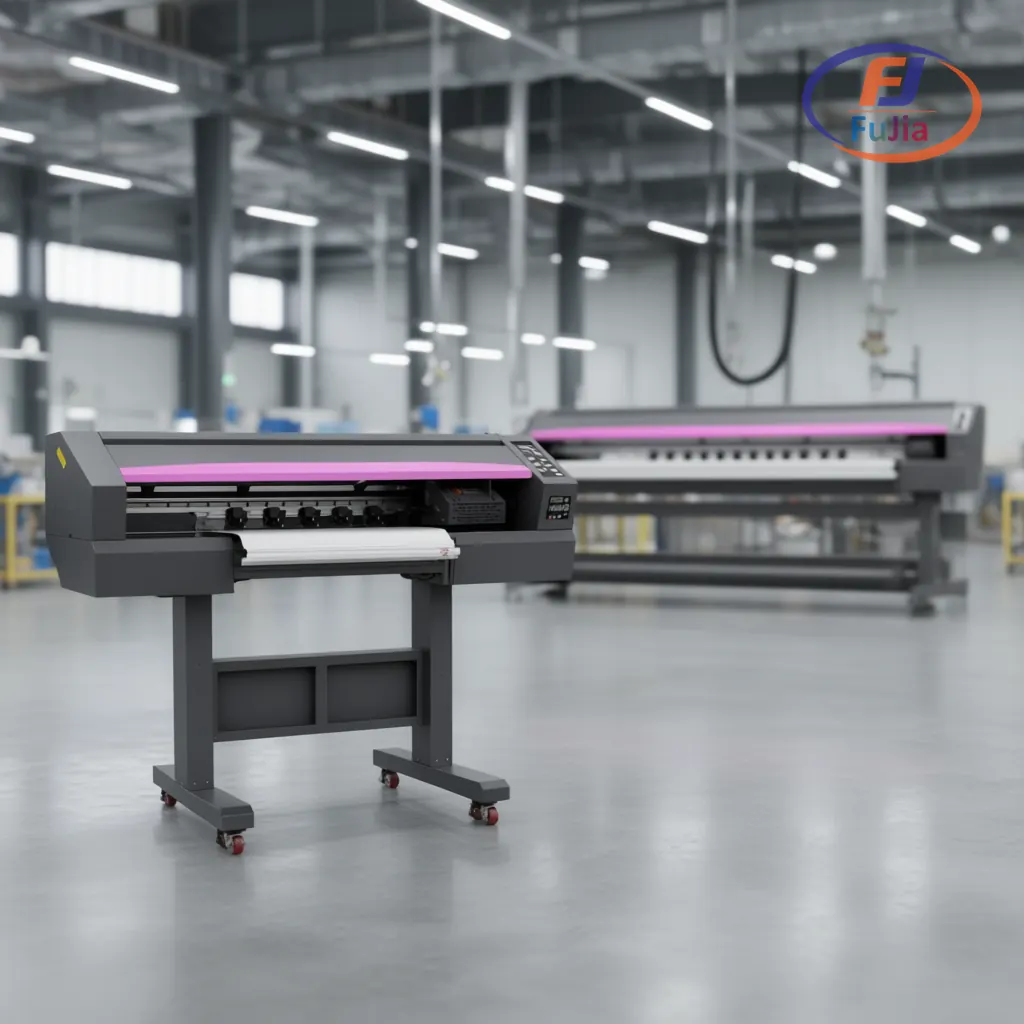
The DTRx is built as an all-in-one industrial production system rather than a prosumer printer with accessories. It prints up to 15 meters per hour, roughly 125 square feet per hour, across a 78 cm print width fed by an 80 cm roll, which puts it above the 60 cm class that defines most production DTF and enables full-panel prints and larger gang sheets. Four Brother-made printheads, two for color and two for white, run CMYKW water-based pigment ink in a machine measuring 2,310 x 850 x 1,610 mm and weighing 268 kg, so it arrives as freight and demands real floor planning.
The engineering headline is the industrial maintenance station. Automatic ink circulation keeps pigment moving through the supply path, and a wet wiper system automates the head cleaning that consumes most of an operator’s daily attention on conventional machines. Brother also emphasizes sustainable ink formulation, pitching durability and brightness alongside reduced environmental impact, and the system integrates with its own software or existing RIP workflows so factories can adopt it without rebuilding their file pipeline. Based on data from our customers across 50+ countries, the maintenance automation is the real product: at industrial volumes, minutes of daily upkeep multiplied across shifts is where machines actually earn or lose their keep. Most small shops will never need that tier of automation, and knowing which side of that line you are on saves thousands.
The 78 cm width deserves its own note because it changes what a shop can sell. Standard 60 cm gang sheets cap design layouts at one meter of film height per pass; a 78 cm roll fits full-panel prints, larger all-over graphics, and denser nesting that pushes film cost per garment down further. Shops running cut-and-sew or oversized athletic work have few DTF options at any price, and the DTRx is one of them.
What the DTRx Costs & Who It’s For
Brother sells the DTRx through its certified dealer network on quoted configurations, with no public MSRP, which is itself information: machines at this tier are sold with installation, training, and service contracts built in rather than dropped on a dock. The closest published anchors are the Mimaki TxF300-75 at $15,995 MSRP in the same industrial class and Epson’s SureColor G9070 roll-to-roll announced alongside it, so buyers should model DTRx quotes starting in the high teens of thousands and rising with finishing equipment and service terms.
That pricing positions the DTRx for contract decorators, established apparel manufacturers, and print-on-demand operations running multiple shifts, the buyers for whom a global dealer network and industrial uptime matter more than sticker price. A Brazil creative studio we supplied scaled a desktop A3 DTF printer into a full production business, cutting per-order costs by 64% and reaching payback in 5.5 months, and their trajectory illustrates the divide: desktop economics transformed a startup, while industrial machines like the DTRX serve the businesses that outgrow that tier and measure downtime in revenue rather than frustration. For shops in between, the 4-head 60 cm class covers most growth stages, and our DTF printer financing guide walks through spreading either purchase across monthly payments.
Regional availability follows the dealer network, with strong coverage in North America and Europe and quoted pricing that varies by market; search interest from India and other price-sensitive regions reflects the gap between list-tier industrial machines and local import economics, so buyers there should quote the certified channel and factory-direct alternatives side by side before committing either way.
DTRx vs Factory-Direct 4-Head 60cm Machines
The comparison that decides most purchases runs the DTRx against the 4-head 60 cm factory-direct class, which happens to match it on head count logic while differing on nearly everything else.
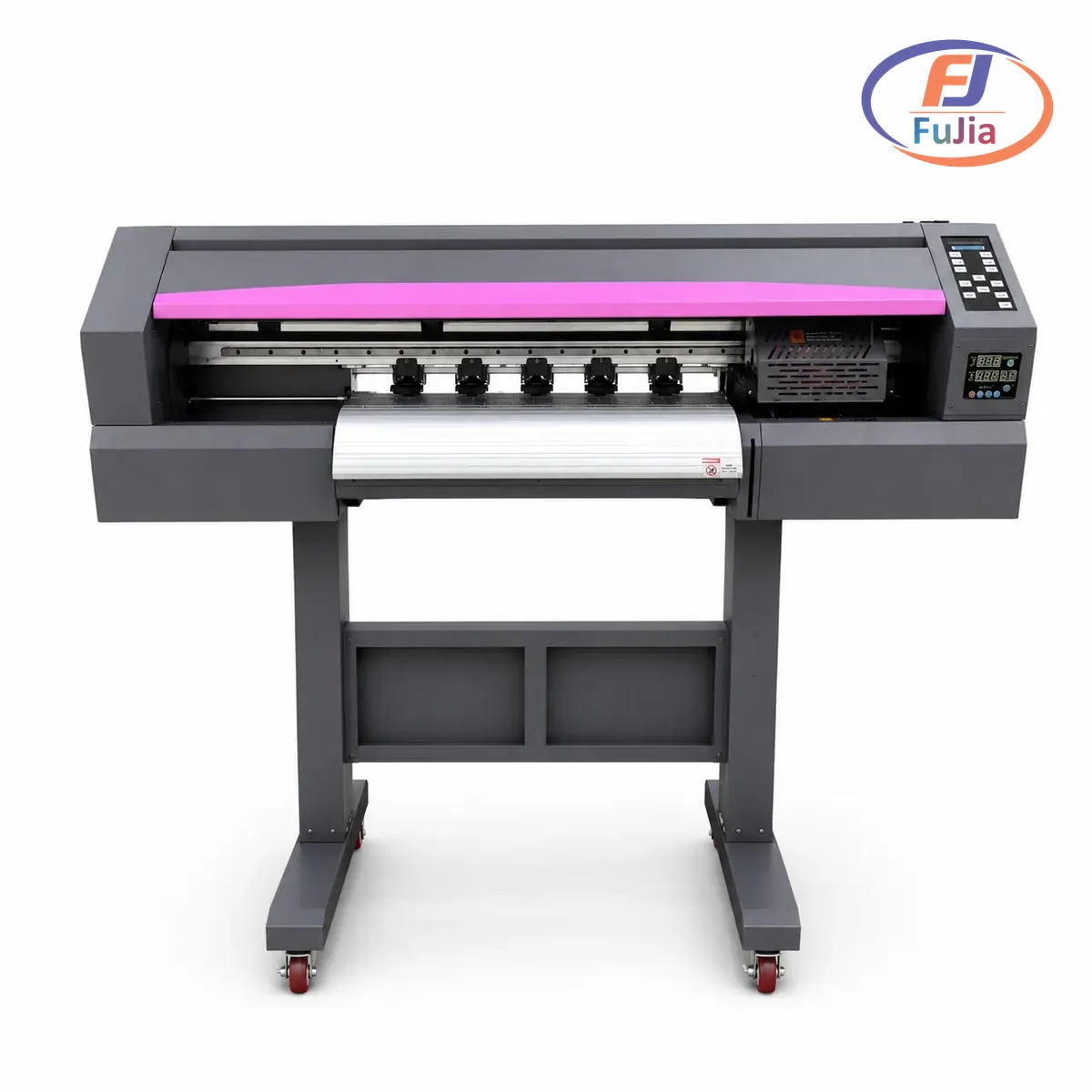
| Factor | Brother DTRx | Fujia A1 4-head (factory-direct) |
|---|---|---|
| Print width | 78 cm roll (80 cm media) | 650 mm (25.6 in) |
| Printheads | 4 Brother-made (2 color + 2 white) | 4-5× Epson i3200 |
| Speed | 15 m/h (~125 sq ft/h) | 27 m²/h @4-pass |
| Weight / footprint | 268 kg, 2,310×850×1,610 mm | 155 kg printer + 230 kg shaker |
| Maintenance | industrial station, auto circulation + wet wiper | daily 3-5 min routine, auto white circulation |
| Pricing | quote-based, dealer channel | under $10,000 published tier |
| Warranty & support | certified dealer network | 2-year warranty, 48h parts, lifetime engineer chat |
The throughput story is closer than the price gap suggests, and honest buyers should read it carefully. The DTRx’s 15 m/h at 78 cm moves substantial area per hour, while the factory-direct 4-head’s 27 m²/h at 4-pass on a 650 mm width is competitive in garments-per-hour terms once gang sheet density is factored; that 60 cm class is exactly what the factory-direct DTF printers lineup is built around. The deeper difference is that Brother’s four heads are its own industrial units with a maintenance station engineered around them, an architecture built for multi-shift uptime rather than spec-sheet speed. Where the DTRx pulls clearly ahead is width-dependent work: 78 cm rolls serve full-panel and oversized applications the 650 mm class physically cannot run.
Price and procurement are where the factory-direct class wins converts. A sub-$10,000 4-head machine with a 2-year warranty, 48-hour parts dispatch, and 3-day remote onboarding arrives at roughly half of any realistic DTRx quote, with no dealer dependency for consumables or service scheduling. The short version after six brand reviews in this series: every industrial-tier machine, Mimaki, Epson, Prestige XL4 and up, and now Brother, sells reliability engineering and service infrastructure, and every factory-direct machine sells capacity per dollar. We recommend listing your shift schedule before your budget, because it eliminates one of the two camps immediately. Your shift schedule and billing model pick the winner.
Buying Considerations
Channel is the first decision point: the DTRx only exists inside Brother’s certified dealer system, sold consultatively with installation, training, and service built in. Price the complete workflow, not the printer alone, and buyers outside core dealer regions should get regional service commitments in writing, because import-route machines forfeit exactly the support the premium funds.
Ink and consumables are the second consideration. The DTRx runs Brother’s own CMYKW water-based pigment formulation, positioned for sustainability compliance and repeatable color, which means ink supply follows the same certified-channel logic as the machine; production buyers should model ink consumption at their coverage levels and confirm regional availability before signing. The third consideration is workflow: the DTRx integrates with existing RIP software, so shops with established file pipelines, or existing Brother DTG fleets sharing operators and space, will adopt it faster than shops building from zero.
The final consideration is honest capacity matching: at 15 m/h on 78 cm film, the DTRx feeds multiple presses and shifts, and a shop running one of each cannot consume that output. Our best DTG printers for small business guide covers the cotton-direct alternative for shops whose orders turn out to be small-run cotton work.
Which printer is best for converting to DTF?
For conversions, the answer is older Epson tank and desktop models, not modern branded machines. Converted hardware works by replacing a printer’s dye ink with sublimation or DTF supplies and re-rasterizing output through a third-party RIP, which requires cheap, well-documented, easily serviced hardware; the Epson Ecotank series and C88+ dominate that niche because their supply systems accept third-party ink and their heads tolerate re-inking. Modern purpose-built machines like the Brother GTX series or DTRx are the opposite of conversion candidates: their proprietary heads, ink systems, and firmware are engineered as closed systems, so converting one voids warranty coverage and risks heads that cost more than the entire project. Buyers wanting DTF capability from Brother specifically should look at the DTRx through a certified dealer rather than converting a GTX, and buyers wanting cheap entry DTF should start from a purpose-built converted-class machine with its own support community rather than sacrificing general-purpose hardware, because the conversion path trades a few hundred dollars of savings for hours of undocumented setup work.
Is Brother or Epson better for sublimation?
Neither Brother nor Epson makes the machines this comparison assumes, so the honest answer sorts by ecosystem. In dedicated sublimation hardware, Epson’s SureColor F170 and F570 run Epson’s own sublimation ink with tuned profiles and are the mainstream small-shop choice, while Brother’s sublimation line (the SP1 ecosystem) is newer with fewer field hours; both are closed ink systems where using official supply protects both color accuracy and warranty. In converted printers, third-party sublimation ink for Epson tank models is the mature path with years of community documentation, while converting Brother hardware is uncommon and unsupported. For garment decoration specifically, note that both companies’ flagship garment machines are not sublimation printers at all, Brother’s DTRx being DTF and Epson’s F-series spanning DTG, so buyers should match the technology to their fabric mix before choosing between these brands on ink quality.
Which printers can print DTF?
Printers that can run DTF fall into three groups. Purpose-built DTF machines are the production answer: Brother’s DTRx, Mimaki’s TxF series, Epson’s SureColor DTF editions, and Chinese 60 cm multi-head lines from manufacturers like Fujia, all shipping with matched ink systems and white circulation engineered for pigment settling. Converted Epson desktop and tank printers are the entry answer, running DTF ink through third-party RIP software with the trade-offs of modest speed and self-managed maintenance. What cannot print DTF is everything else: laser printers, non-Epson-head inkjets without RIP support, and any machine sharing ink with general printing duties. A practical rule for buyers: if the shop’s orders exceed roughly 30 transfers daily, skip conversion entirely and buy a purpose-built machine with white ink circulation, because conversion economics only work below that line.
Are DTF printers worth it?
For shops with steady transfer demand above roughly 20-30 pieces daily, yes: $0.40-0.80 consumables against $3-8 resale yields 40-70% margins that recover equipment investment in months. A Brazil creative studio running an A3 desktop DTF machine cut per-order costs by 64% and reached payback in 5.5 months, a trajectory typical of shops that already sell the output. The honest caveats are daily white ink maintenance and order acquisition, because the printer pays for itself only when a sales channel feeds it, so line up Etsy listings, team contracts, or corporate accounts before the crate arrives. A useful rule from our customer base: budget the machine only when current outsourcing spend exceeds $400 monthly, because below that line the savings rarely cover maintenance time and consumables logistics, and above it the arithmetic turns favorable quickly.
Verdict
The Brother DTRx is a genuine industrial DTF system, four self-made printheads, automated maintenance, and 78 cm width for full-panel work, and its arrival legitimizes DTF for contract decorators who waited for a major OEM stamp. Its quote-based pricing and 268 kg footprint target multi-shift operations, and shops at that scale should get a dealer quote alongside the Mimaki and Epson industrial alternatives. For everyone below that tier, factory-direct 4-head 60 cm machines under $10,000 deliver comparable garments-per-hour economics with 2-year warranties and published pricing, and our DTF printers lineup is where that comparison starts.
Sources
- Brother DTRx official specifications: primary source for printhead configuration, maintenance station, and machine dimensions.
- Wikipedia: Brother Industries: company background for the manufacturer behind the DTRx.
- Wikipedia: Direct-to-garment printing: context for the GTX DTG line and how it differs from the DTRx DTF system.
