

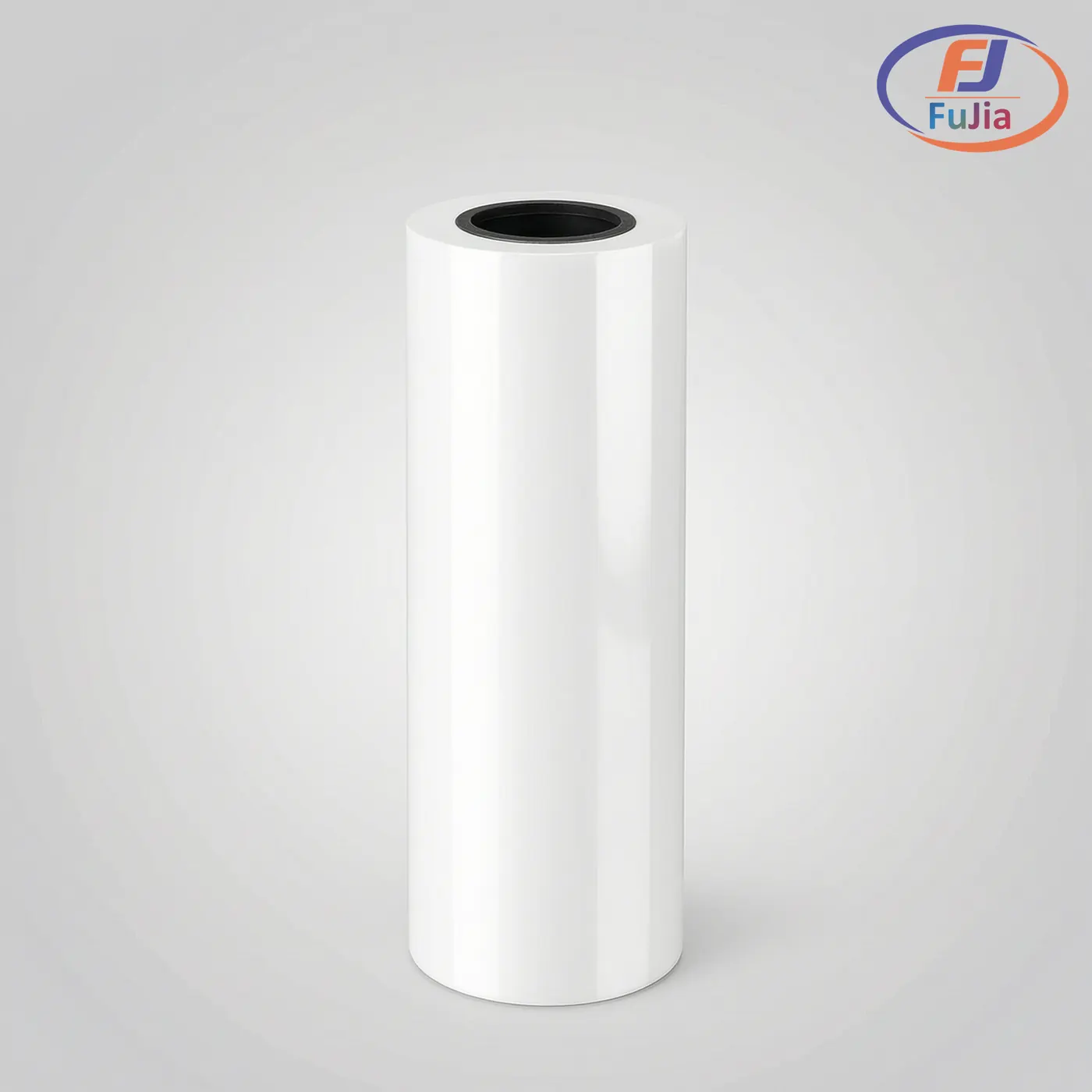
UV DTF AB film is a two-part transfer system that applies durable full-color graphics onto hard surfaces without heat or pretreatment. FUJIA supplies this film for its UV DTF printer range: A film receives the printed image, B film carries it onto the object through cold lamination.
Key Takeaways
- UV DTF AB film uses two rolls: A film holds the printed layer, B film is the adhesive carrier.
- Transfer needs only pressure, no heat press, no powder, no pretreatment.
- It bonds to glass, metal, acrylic, plastic, and coated wood, where standard DTF film cannot work.
- Common widths are 30 cm (A3) and 60 cm (roll), rolls about 100 m long.
- Indoor durability runs two to three years; outdoor use lasts one to two years.
What Is UV DTF AB Film
UV DTF AB film is a consumable pair built for UV DTF printing, unlike a single DTF transfer film that uses hot-melt powder and a heat press. The A film is a PET base with a release and ink-absorbing layer where the UV printer lays white, CMYK, and varnish, cured by UV light. The B film is a PVC pressure-sensitive adhesive laminated onto printed A so the cured graphic transfers to the object.
How the A and B Layers Work
The process follows five steps, with no heat at any stage.
- Print on A film. UV printer deposits white, color, varnish; UV LED cures instantly.
- Laminate B film. Run printed A with B adhesive through a cold laminator.
- Peel A film. Pull PET A away; graphic stays on B.
- Apply to object. Position B on target, press with squeegee or roller.
- Remove B film. Peel B backing; graphic remains.
This cold method reaches materials standard heat transfer cannot. Epson notes its UV LED curing inks resist weather, stains, chemicals, and water. See our guide to UV curable ink.
UV DTF AB Film vs Regular DTF Transfer Film
Regular DTF film works with DTF inkjet printers and powder shakers, then a heat press at 150 to 160 degrees Celsius for 10 to 15 seconds bonds the design to fabric. UV DTF AB film works with UV printers and needs only pressure, suiting non-porous rigid items.
| Feature | UV DTF AB Film | Regular DTF Transfer Film |
|---|---|---|
| Printer type | UV DTF printer | DTF inkjet printer |
| Layers | A film plus B film | Single PET film |
| Bonding method | Cold pressure | Hot-melt powder and heat |
| Typical surface | Glass, metal, plastic | Cotton, polyester fabric |
| Powder required | No | Yes |
| Heat press required | No | Yes |
For garment work the standard DTF transfer film remains the right choice; UV DTF AB film covers hard goods.
What Materials Can It Print On
UV DTF AB film adheres to smooth non-porous surfaces: glass, ceramic, coated metal, acrylic, PVC, ABS plastic, painted wood. It does not bond to textiles; fabric needs the stretch a heat-activated adhesive provides. For a side-by-side of the two printer types, see our comparison of UV DTF printers and UV flatbed printers.
Choosing Width, Length, and Film Type
Width matches your printer. A3 units use 30 cm A film; 60 cm roll printers use 60 cm A film. The B film is about 2 cm wider so adhesive covers the printed edge. Roll length is commonly 100 m.
A film comes in transparent, white ground, gold, silver, and matte finishes; white ground may yellow outdoors. The UV-curable ink market grows steadily, valued at USD 8,480.8 million in 2023 and projected at USD 13,784.9 million by 2030. EU buyers should confirm RoHS and REACH declarations per the EU RoHS Directive.
Users Also Search For
Readers comparing options also look at these related searches:
- Best UV DTF AB film – match A and B widths and core size before ordering.
- UV DTF AB film for t-shirts – not advised; fabric needs heat-activated adhesive, so use standard DTF film.
- UV DTF AB film for sale – buy matched A/B sets from one supplier to avoid weak bonding.
Does UV DTF AB film need a heat press?
No. UV DTF AB film transfers with cold lamination and hand pressure only. After printing and curing on A film, you laminate the B adhesive film, peel A, press the graphic onto the object, and remove the B backing. No heat press, no hot-melt powder, no pretreatment. Regular DTF film needs a heat press near 150 to 160 degrees Celsius to melt powder into fabric. The cold process suits heat-sensitive items like thin plastics and coated glass.
What is the difference between the A film and the B film?
The A film is the printing receiver: a PET base with a release coating and ink-absorbing layer where the UV printer lays white, CMYK, and varnish, cured by UV light. The B film is the adhesive carrier: a PVC pressure-sensitive film laminated onto printed A, then A peels away so the cured graphic sits on B. You cannot swap them: B has no ink-absorbing surface and A has no adhesive. Most suppliers sell the pair as a matched set. Mixing A and B from different brands often causes weak bonding or bubbles, so check roll width and core size before ordering.
How long does UV DTF AB film last on a product?
Indoor applications last two to three years on a clean smooth surface. Outdoor use lasts one to two years because sunlight and weather break down the adhesive and printed layer. Transparent A film outlasts white ground film outdoors, since white ground can yellow under prolonged UV. For often-handled items like drinkware or phone cases, the varnish pass adds a clear coat that extends wear resistance.
Start Your UV DTF Project
FUJIA supplies UV DTF printers and matching AB film in 30 cm and 60 cm widths. Read our UV DTF printer buying guide to pair the right machine with your film, or contact our team for a sample pack.
