

A high volume dtg printer is a direct-to-garment machine built to hold 20 to 65 finished dark shirts per hour on mid-range industrial units, and it reaches roughly 400 garments per hour only on fully automated systems such as the Kornit Apollo. This article breaks down real throughput, cost per shirt, and the exact point where DTG stops scaling and a DTF hybrid line takes over.
Key Takeaways
- A mid-range industrial DTG unit prints about 20 to 65 dark shirts per hour, with the Kornit Apollo the rare exception at up to 400 garments per hour under full automation.
- The real ceiling is not the print head. Pretreatment, curing, white ink maintenance, and manual garment loading decide daily output.
- Cost per dark shirt stays high because white ink and pretreatment fluid dominate spend, so volume alone does not guarantee savings.
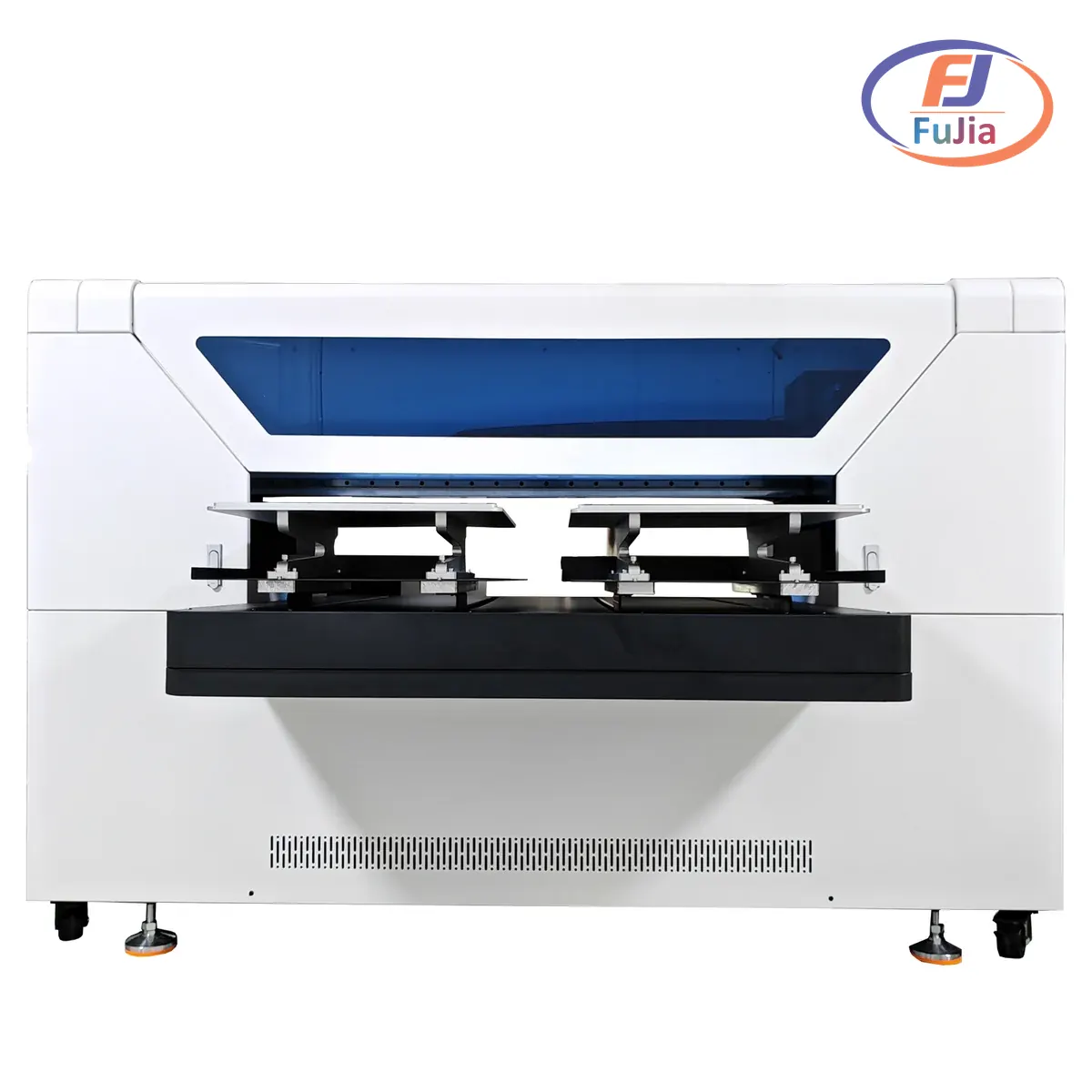
- Fujia Print builds a dual-station DTG printer for on-demand cotton and a high-volume DTF line that removes the pretreatment bottleneck for true scaling.
- Shops past roughly 300 to 500 dark shirts per day usually lower cost per shirt more by adding a DTF hybrid line than by buying a faster single DTG unit.
What Throughput Does a High-Volume DTG Printer Actually Deliver?
Real-world DTG speed depends on garment color, print size, and how the shop counts loading time. Published ratings measure a 14 by 16 inch design on dark shirts, including the time to load and unload the platen. The Epson SureColor F3070 prints about 60 dark shirts per hour at a $49,995 MSRP. The Kornit Storm II reaches 65 dark shirts per hour but costs $225,000. The Brother GTX Pro B is rated by Brother at 42 dark and 57 light garments per hour, though real-world output including garment loading runs closer to 25 dark shirts per hour per third-party benchmarks, at a $36,000 MSRP.
Those numbers describe a single print station doing one garment at a time. A dual-platen industrial unit such as the Kornit Avalanche HD6 lifts output to 180 light garments per hour and 140 dark garments per hour because it prints while the operator loads the second platen. The fully automated Kornit Apollo pushes to 400 garments per hour with automated load-to-cure and a single operator, targeting 550,000 to 700,000 impressions per year.
The honest read is that most garment decorators run a mid-range DTG bay, not an Apollo. At steady production a single bay realistically sustains 150 to 400 finished dark shirts per 8-hour shift once pretreatment and curing queues are counted, not the raw print-head rating. The DTG printers buyers actually install sit far below the marketing headline.
Where the Bottlenecks Sit: Pretreatment, Curing, White Ink
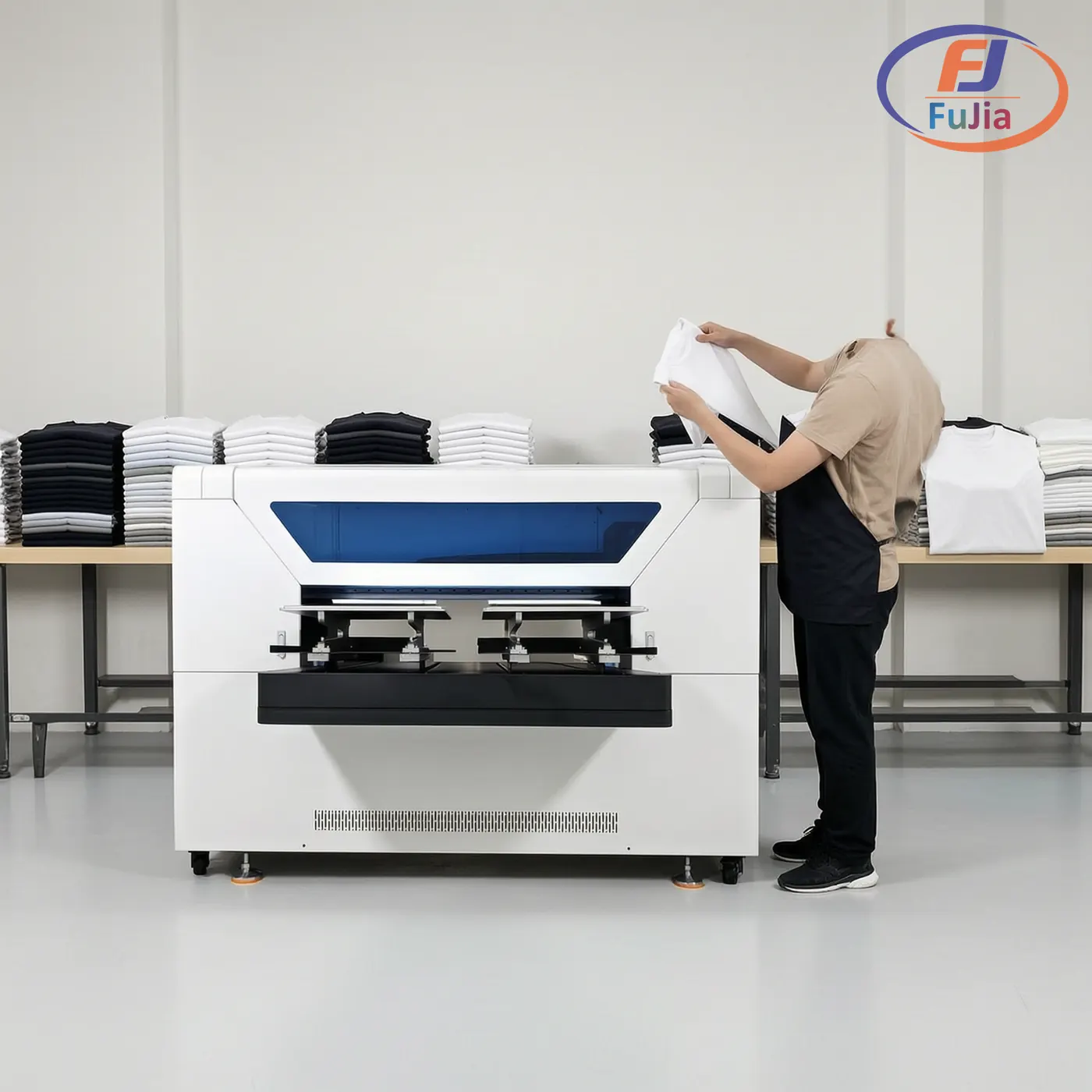
Throughput collapses at the steps around the printer, not on the print head. Dark garments need a liquid pretreatment so white ink sits on top of the fiber instead of soaking in. A manual spray station then requires a heat press for 15 to 25 seconds to dry the garment before printing. That pretreatment step is a fixed tax on every dark shirt, and it does not speed up when you buy a faster printer.
Curing is the second gate. Most DTG inks cure at 150 to 165°C for 45 to 90 seconds, either on a heat press or through a conveyor dryer. A shop printing faster than its dryer can cure simply builds a pile of wet shirts. White ink is the third constraint. White pigment is heavier than CMYK and settles, so a daily agitation or circulation cycle plus a nozzle check is required to avoid clogs. Skipping that routine is the fastest way to turn a profitable DTG bay into constant downtime.
The wash-fastness of finished DTG output is graded against AATCC textile test methods, which is why correct pretreatment and curing matter as much as the machine itself. Industry production benchmarks from the PRINTING United Alliance consistently treat DTG as a small-batch, high-mix method rather than a bulk replacement for screen printing.
Mid-Range vs Industrial: Real Production Numbers
The table below compares sourced specifications from published DTG buyer guides. Prices and speeds vary by region and configuration, but the spread shows the trade you make between capital cost and output.
| Model | Dark shirts / hour | MSRP | Ink cost | Notes |
|---|---|---|---|---|
| Epson SureColor F2100 | 20 to 30 | ~$13,995 | ~$150/L | Desktop entry, reliable cotton |
| Brother GTX Pro B | 42 dark / 57 light (rated); ~25 dark in practice | $36,000 | $220/L | Mid-volume, larger platen |
| Epson SureColor F3070 | 60 | $49,995 | $150/L | Best value per shirt in this tier |
| Kornit Breeze | 20 | $65,000 | ~$150/L | Integrated pretreat |
| Kornit Storm II | 65 | $225,000 | ~$150/L | Industrial, high capital |
| Kornit Avalanche HD6 | 140 (dark) / 180 (light) | used ~$45,000 | bulk | Dual-platen, ~2,200 kg |
| Kornit Apollo | up to 400 | enterprise | per-impression | Automated load-to-cure, single operator |
Two patterns stand out. First, the price gap between 60 shirts per hour and 400 shirts per hour is roughly 4.5x in capital, so most shops never reach the automated tier. Second, you can buy four Epson F3070 units for the price of one Kornit Storm II and quadruple production at the same investment, at the cost of four operators and four curing lanes. Brother’s own GTX600 sits above the GTX Pro B as the higher-throughput flagship for shops that want to stay on the Brother platform.
Cost per Shirt at Volume (and the Break-Even Point)
Cost per shirt on DTG is dominated by white ink and pretreatment fluid on dark garments, not by the machine lease. A small logo uses a fraction of the ink a full-front print needs, so coverage area swings unit cost more than print count. Based on data from our customers across 50+ countries, shops crossing roughly 300 to 500 dark shirts per day typically hit the point where adding capacity lowers cost per shirt more through a second process lane than through a faster single DTG unit.
| Volume tier | Typical DTG cost driver | Practical move |
|---|---|---|
| Under 100 dark shirts/day | Ink + pretreatment dominate | One DTG bay is enough |
| 100 to 300 dark shirts/day | Curing lane becomes the limit | Add a conveyor dryer or second bay |
| 300 to 500+ dark shirts/day | Labor + white ink scale poorly | Move to DTF hybrid or automated line |
Market data from Keypoint Intelligence shows digital textile decoration growing as on-demand apparel expands, which is why the scaling question matters more than the headline speed. The cost curve flattens only when pretreatment and curing stop being manual, per-garment steps.
When DTG Stops Scaling: DTF Hybrid and Automated Lines
A pure DTG line has a structural ceiling because every dark shirt carries a pretreatment and curing step that scales with labor. Past a few hundred dark shirts per day, the cost per shirt stops falling even as volume rises, because white ink and operator time keep climbing. This is the moment a DTF hybrid approach wins.
Direct-to-film printing moves the image onto PET film, shakes adhesive powder, and cures it into a transfer that a heat press applies at 160°C for 15 seconds with a cold peel. DTF skips garment pretreatment entirely, so the bottleneck of spraying and drying each dark shirt disappears. Fujia Print’s A1 DTF 4-Head carries 4 or 5 Epson I3200 printheads across a 650 mm width and holds 27 m² per hour at 4 pass, built on a Honson mainboard, Leadshine servo motor, and THK silent guide rail for 12-hour continuous runs.
| Dimension | Pure DTG at volume | DTF hybrid line |
|---|---|---|
| Dark garment prep | Pretreat + dry each shirt (15 to 25s) | No garment pretreat, film-based |
| Curing step | Per-shirt heat or conveyor | Film cure, then 15s press |
| Cost per dark shirt | White ink + fluid dominate | Lower ink and labor per piece |
| Scaling path | More operators or $200k+ unit | Add shaker lines or parallel printers |
| Best fit | On-demand cotton, low MOQ | Small-batch to mid-volume scaling |
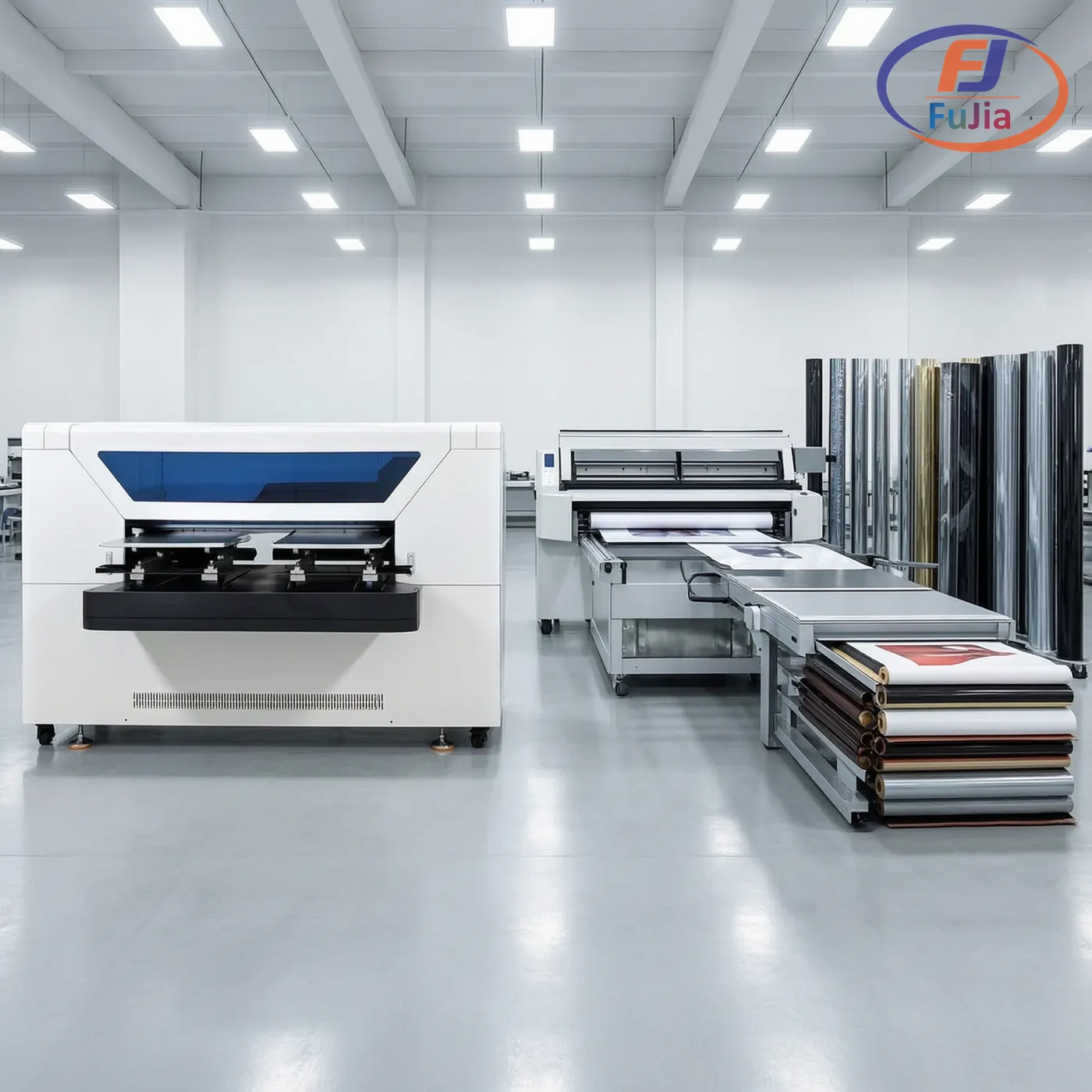
Fujia Print’s own commercial DTF printer lineup and dual-station DTG printer (DTG-DS) let a shop run cotton on-demand while scaling output through DTF. A Turkish garment factory using Fujia’s A1 dual-head DTF gained 40 percent more throughput and cut cost by 30 percent, dropping delivery from 7 days to 2.5 days. That result came from removing per-garment pretreatment and running 12-hour continuous production, exactly the scaling problem DTG alone struggles with. For a deeper look at the trade, see our DTF vs DTG comparison and what direct-to-garment printing involves.
How many shirts per hour can a high-volume DTG printer produce?
A mid-range industrial DTG printer produces about 20 to 65 finished dark shirts per hour when you count garment loading time. The Epson SureColor F3070 reaches 60 dark shirts per hour, the Kornit Storm II reaches 65, and the Brother GTX Pro B is rated at 42 dark / 57 light garments per hour by Brother, with real-world output including loading closer to 25 dark shirts per hour per third-party benchmarks. Dual-platen units raise that figure because they print on one platen while the operator loads the other, with the Kornit Avalanche HD6 rated at 180 light garments per hour and 140 dark. Fully automated systems are the only ones that approach 400 garments per hour, and the Kornit Apollo does so with automated load-to-cure and a single operator, targeting 550,000 to 700,000 impressions per year. The key point is that the print head rating is not your daily output. Pretreatment, curing, and manual loading decide the real number, so most shops sustain 150 to 400 finished dark shirts per 8-hour shift rather than the headline speed.
What are the main bottlenecks that limit DTG throughput?
The first bottleneck is pretreatment on dark garments. Dark shirts need liquid pretreatment so white ink adheres, and a manual spray station then requires a heat press for 15 to 25 seconds to dry the garment before printing, a fixed cost on every dark piece. The second bottleneck is curing. Most DTG inks cure at 150 to 165°C for 45 to 90 seconds, so a shop that prints faster than its dryer or heat press can cure simply builds a backlog of wet shirts. The third bottleneck is white ink maintenance. White pigment settles faster than CMYK, so a daily circulation or agitation cycle plus a nozzle check is required to avoid clogs and downtime. The fourth constraint is labor, because each garment must be loaded and unloaded by hand on a single-station printer. Removing any one of these gates, not buying a faster head, is what actually raises daily output.
When should you switch from DTG to a DTF hybrid or industrial line?
The switch makes sense once a shop passes roughly 300 to 500 dark shirts per day, based on data from our customers across 50+ countries. Below that range a single DTG bay handles on-demand cotton well. Between 100 and 300 dark shirts per day the curing lane becomes the limit, and adding a conveyor dryer or a second bay helps. Past 300 to 500 dark shirts per day, white ink and operator time stop scaling efficiently, so cost per shirt stops falling even as volume climbs. At that point a DTF hybrid line wins because it skips garment pretreatment entirely, prints the image onto PET film, and applies it with a 15 second cold-peel press at 160°C. Fujia Print’s A1 DTF 4-Head holds 27 m² per hour and runs 12-hour continuous shifts on its Honson, Leadshine, and THK drivetrain. A Turkish factory using Fujia’s A1 dual-head DTF gained 40 percent throughput and cut cost 30 percent, the kind of scaling a pure DTG bay rarely matches.
What does a high-volume DTG printer cost in 2026?
Pricing spans a wide range by tier. A desktop Epson SureColor F2100 runs about $13,995 and prints 20 to 30 shirts per hour. The Brother GTX Pro B costs $36,000 and is rated at 42 dark / 57 light garments per hour by Brother, though independent benchmarks put real-world dark-shirt output near 25 per hour once loading is counted, while the Epson SureColor F3070 costs $49,995 at 60 shirts per hour and is the best value in the mid range. The Kornit Breeze is $65,000, the Kornit Storm II is $225,000 at 65 shirts per hour, and the automated Kornit Apollo is sold on a per-impression enterprise model rather than a flat price. Ink is a separate and recurring cost, with Epson and Kornit ink near $150 per liter and Brother GTX Pro ink near $220 per liter. The real expense at volume is not the machine but white ink, pretreatment fluid, and the labor to run pretreatment and curing on every dark shirt, which is why total cost per shirt matters more than the MSRP when you plan to scale.
Conclusion
A high volume dtg printer is the right tool for on-demand cotton up to a few hundred dark shirts per day, after which a DTF hybrid line scales output and lowers cost per shirt more reliably. For factory-direct dual-station DTG and high-volume DTF printers with 48-hour parts dispatch and a 12-month warranty, contact Fujia Print.
