

The latest DTF printing news for 2026 shows the technology moving past its role as a low-cost screen-print alternative and becoming a fully automated, multi-substrate production platform. Fujia Print, a Guangzhou manufacturer shipping DTF equipment to 50+ countries since 2011, tracks these shifts directly from its 3,500 m² factory. The headline shift below plus five trends outline what procurement buyers should watch before committing budget this year.
Key Takeaways
- The DTF segment is projected to climb toward roughly $2B by 2030 at an estimated 14–15% compound annual growth rate, outpacing many legacy decoration methods.
- Powder-free DTF moved from lab to launch in 2026: DuPont Artistri with Brown Manufacturing Group and Nur Ink with Hosonsoft shipped adhesive-integrated systems that drop the powder shaker step.
- New 64-inch roll-to-roll machines (Epson SureColor G9000, launched January 2026) and 6-head 60cm systems running at 34 m²/hr are raising the production ceiling.
- UV DTF has matured into a multi-billion dollar hard-surface category for glass, metal, and acrylic, opening markets well beyond apparel.
- Automated shaker-plus-oven units and low-VOC eco inks are becoming baseline expectations rather than premium upgrades.
- Procurement buyers should weigh throughput, substrate range, and after-sales response (Fujia ships common parts within 48 hours) before choosing a vendor.
What Drove DTF Into the Spotlight in 2026
Digital textile printing is one of the fastest-growing segments in decoration, with apparel making up the bulk of demand. Within that shift, direct-to-film, detailed in the Wikipedia entry on direct-to-film printing, is the fastest-moving subsegment. Industry analysts project the DTF market climbing toward roughly $2B by 2030 at an estimated 14–15% CAGR, and several 2026 briefings report DTF is outpacing DTG adoption this year.
The pull comes from short-run, on-demand apparel. FESPA’s reporting notes that DTF is now the go-to method for T-shirt printing, while the number of DTG machines introduced to the market in 2024 suggests DTG lost relative ground. The Wikipedia overview of textile printing frames this as part of a broader move from analog screen lines to digital printing, where variable-data inkjet eliminates minimum order quantities. For buyers, the practical takeaway is simple: the technology risk of adopting DTF has dropped, and the competitive risk of ignoring it has risen.
The 2026 Headline Shift: Powder-Free DTF
The single biggest story in DTF for 2026 is powder-free printing, a change that removes the powder shaker and adhesive-curing stage that has defined DTF since its start. Two partnerships brought it to market this year.
DuPont Artistri and Brown Manufacturing Group demonstrated a powder-free system at the Apparel Decoration Summit in Nashville in June 2026, integrating DuPont’s Jettable Adhesive JA1100 directly into Brown’s Yet-Tee DTF line so the adhesive is applied in liquid form and needs no hot-melt powder tossing or separate cure oven. Separately, Nur Ink signed a China-exclusive deal with Shenzhen Hosonsoft in June 2026 to embed its powder-free adhesive chemistry into Hosonsoft’s RIP and printer ecosystem.
For buyers, the implications are practical rather than hype. Powder-free DTF cuts the labor and spoilage tied to manual powdering, removes a heat-cure gate from the workflow, and reduces the fine-particle exposure that home and small-shop users worry about. The trade-off is early-stage availability and a different consumable model: you buy adhesive-integrated ink or film rather than separate powder.
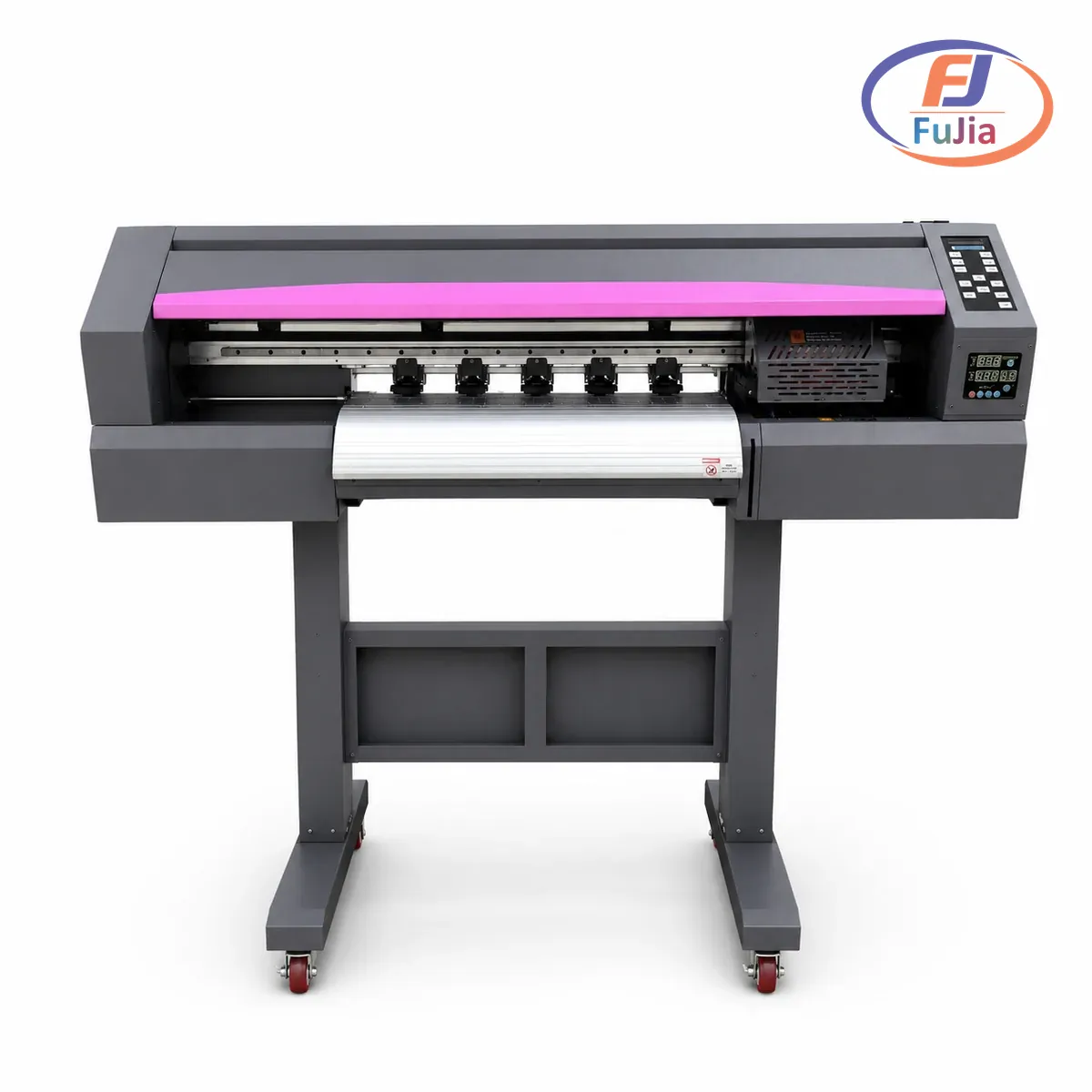
Fujia Print’s production DTF line still ships with the integrated shaker-and-oven workflow described in Trend 3, because that is what most shops run today and what delivers the 27 m²/hr A1 throughput buyers order. Procurement teams should watch powder-free DTF as the next capability tier, not a replacement for current lines, and ask vendors for sample runs before committing budget. Fujia tracks these launches directly from its 3,500 m² Guangzhou factory and will add powder-free options as the chemistry matures.
Trend 1: Wider, Faster Roll-to-Roll Machines Hit the Floor
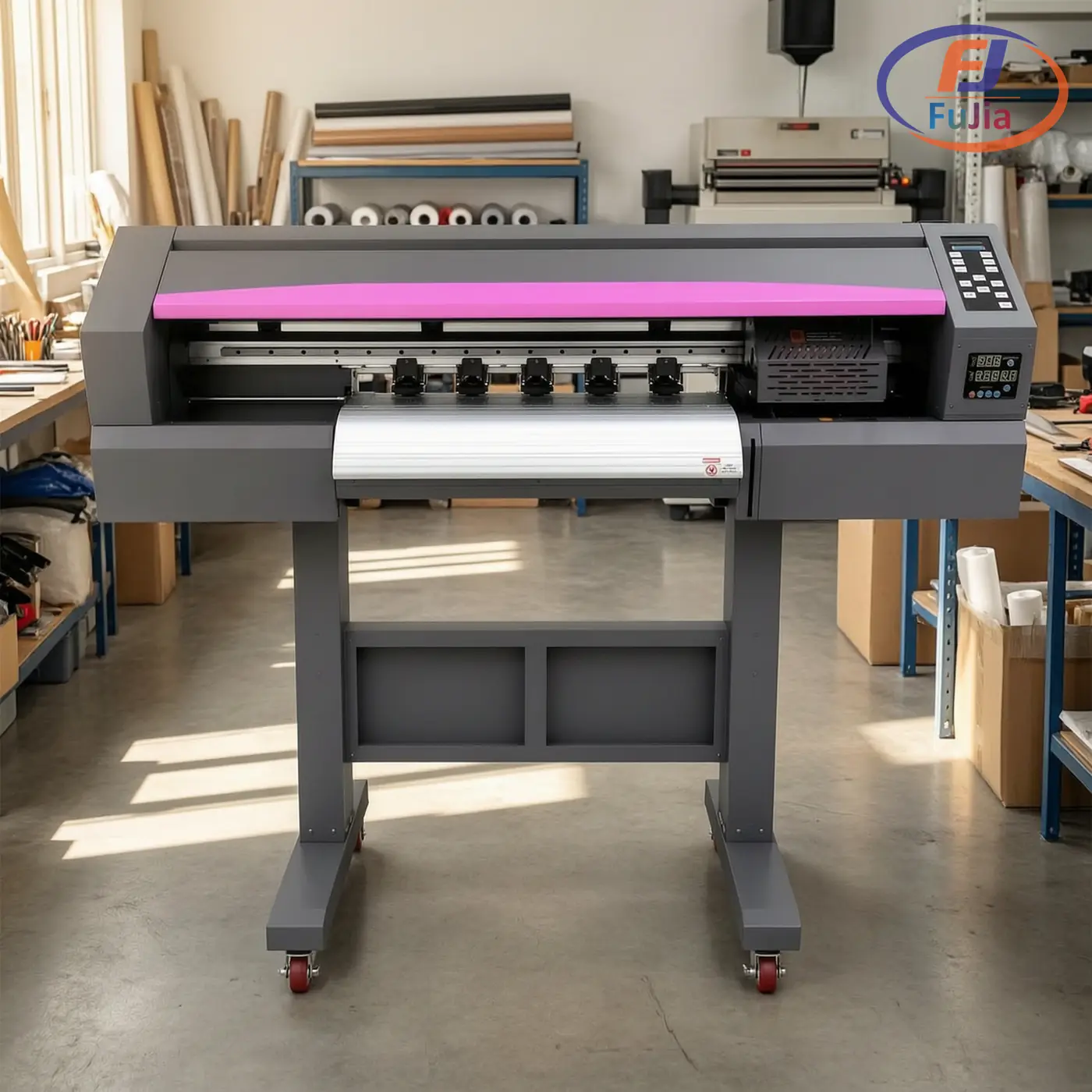
Hardware unveiled at Impressions Expo 2026 set a clear direction: bigger width, higher speed, less manual intervention. Epson launched the SureColor G9000 on January 23, 2026, a high-production roll-to-roll DTF printer supporting media up to 1626 mm (about 64 inches) with automated daily maintenance. Audley showed a 6-head premium DTF printer on a 24-inch (60cm) bed using six Epson i3200-A1 printheads, rated at up to 34 m²/hr in 6-pass mode.
Fujia Print’s own production-tier machine shows where the category is heading. The A1 4-head DTF printer runs a 650mm print width on 4 or 5 Epson I3200 heads, delivering 27 m²/hr at 4-pass and 17 m²/hr at 8-pass. Its transmission stack uses a Honson mainboard, Leadshine servo motor, and THK silent guide rail, a combination built for 12-hour continuous runs without quality drift. Buyers comparing production lines should read the commercial DTF printer specifications before sizing a purchase, because speed claims only matter against the substrates and volumes a shop actually runs.
Trend 2: UV DTF Opens Hard-Surface Markets
The most discussed expansion in early 2026 is UV DTF moving from curiosity to a multi-billion dollar commercial category. Unlike textile DTF, UV DTF transfers use ultraviolet-cured inks on an A+B film and apply by pressure rather than a heat press, which means they stick to glass, metal, acrylic, wood, and ceramic. The finished transfers are scratch-resistant, waterproof, and UV-stable, with a raised, embossed feel that reads as premium on tumblers, laptop skins, and signage.
This matters to procurement because it turns one printer investment into two revenue streams: fabric decoration and hard-goods branding. Runs as small as a single unit are now viable, which is why Etsy sellers and promotional-product resellers adopted the process quickly. For print businesses already running textile DTF, adding UV DTF is a relatively small step that diversifies away from seasonally concentrated apparel demand. The substrate range is the differentiator, not just the print quality.
Trend 3: Shaker-and-Oven Automation Becomes Standard
Powder shaking and curing used to be the labor-heavy, inconsistent part of the DTF workflow. In 2026, an integrated DTF printer with shaker and oven is moving from optional to expected. Fujia’s paired shaker unit weighs 230kg and draws 2300W, handling powder coating and curing inline so an operator loads film and collects finished transfers without manual tossing or separate ovens.
Automation here directly protects margins. Inline curing stabilizes adhesion, reduces powder burn, and cuts the spoilage that eats into small-batch jobs. Combined with auto-nesting RIP software and barcode job tracking, a shop can run gang sheets with less labor per transfer. The 2026 buyer question is no longer “does it print” but “how much manual handling survives between file and finished transfer.” Lower handling equals lower cost per unit at volume.
Trend 4: Eco Inks and Sustainable Workflows Gain Ground
Sustainability moved from marketing language to a procurement filter in 2026. The EU’s Ecodesign for Sustainable Products Regulation (ESPR) framework running 2025 to 2030 pushes textile durability and recyclability standards, and China’s 2025 textile recycling target of 25% accelerates demand for precise, low-waste digital application. Ink suppliers responded with lower-VOC pigment formulations and powders that melt at lower temperatures, improving wash life while reducing energy at the cure stage.
Fujia Print’s DTF ink system runs a 13-color configuration, CMYK plus light cyan and light magenta with orange, red, green, and blue, which expands the gamut buyers can hit on dark garments without layering. Wash durability for properly cured DTF sits at 50+ heavy machine washes with color fastness around Grade 4 to 5 on the AATCC scale, the textile testing standards body that defines wash-fastness methods. Specifiers comparing chemistries should review DTF ink types alongside film and powder, because the three consumables decide both hand-feel and longevity.
Trend 5: DTF and DTG Converge in Hybrid Workflows
The old “DTF versus DTG” framing is giving way to hybrid shops. FESPA’s 2025 analysis pointed to “new hybrid solutions” as a core direction, with improvements in software, a broader range of materials and finishes, and better print quality across both methods. Kornit’s Apollo DTG system, shown at FESPA 2025, reaches up to 400 garments per hour with a single operator, while DTF excels on mixed-fiber and dark garments without pretreatment.
Studios now split work by strength: DTF for bold, graphic-heavy designs on cotton, polyester, and blends; DTG for soft-hand and subtle gradients on ready-wear. The DTF vs DTG comparison helps buyers decide which to lead with, but the 2026 answer is frequently “both, on one workflow.” Software is the glue. Smarter RIP settings now adjust ink flow by fabric type, which stabilizes color across runs and reduces the rework that undermined early digital textile adoption.
What These Trends Mean for Procurement Buyers
Buying decisions in 2026 should start from throughput and substrate range, then factor total cost of ownership. A complete starter DTF setup, printer, heat press, curing system, RIP software, and supplies, can launch in the $8,000 to $15,000 range depending on production scale, an industry figure consistent across 2026 buying guides. The differentiator is no longer owning a printer but running it efficiently: gang-sheet layout, ink control, batch sizing, and spoilage reduction beat raw speed for most shops.
| Buying factor | What to specify | Why it matters in 2026 |
|---|---|---|
| Production width | 30cm desktop to 65cm A1 to 1626mm roll | Matches transfer size to order mix |
| Throughput | 2 to 34 m²/hr by tier | Decides same-day vs batch fulfillment |
| Automation | Integrated shaker + oven | Cuts labor cost per transfer |
| Substrate range | Textile plus UV DTF hard goods | Diversifies beyond apparel seasonality |
| After-sales | Parts dispatch window | Fujia ships common parts within 48 hours |
Based on data from our customers across 50+ countries, in-house DTF payback typically lands in the 3 to 8 month range once a shop fills even a modest custom-apparel or hard-goods order book. Break-even varies by region because labor cost and freight change the math, but the pattern holds: process control, not equipment price, drives the return.
2026 DTF Printer Comparison Snapshot
The table below maps the 2026 machine tiers so buyers can place a vendor’s claim against the category. Fujia Print’s figures come from its published A1 specifications; third-party figures come from 2026 expo coverage.
| Tier | Print width | Speed | Notable spec |
|---|---|---|---|
| Entry desktop | 30cm (A3) | 2 to 3 m²/hr | Single Epson XP600, fits a 20 m² workspace |
| Mid production | 650mm (A1) | 8 to 13 m²/hr | Dual Epson heads, 138kg printer |
| High production | 650mm (A1) | 27 m²/hr at 4-pass | 4 to 5 Epson I3200, Honson + Leadshine + THK |
| Wide roll-to-roll | 1626mm (64in) | up to 34 m²/hr | 6-head systems shown at Impressions Expo 2026 |
A Turkish garment factory running Fujia’s A1 dual-head DTF reported a 40% throughput gain and a 30% cost reduction after replacing screen-print minimums with zero-MOQ digital runs, with delivery falling from 7 days to 2.5 days. That case is the clearest evidence that the 2026 trends are not vendor hype but operating reality for shops that commit to the workflow.
What is the future of DTF printing?
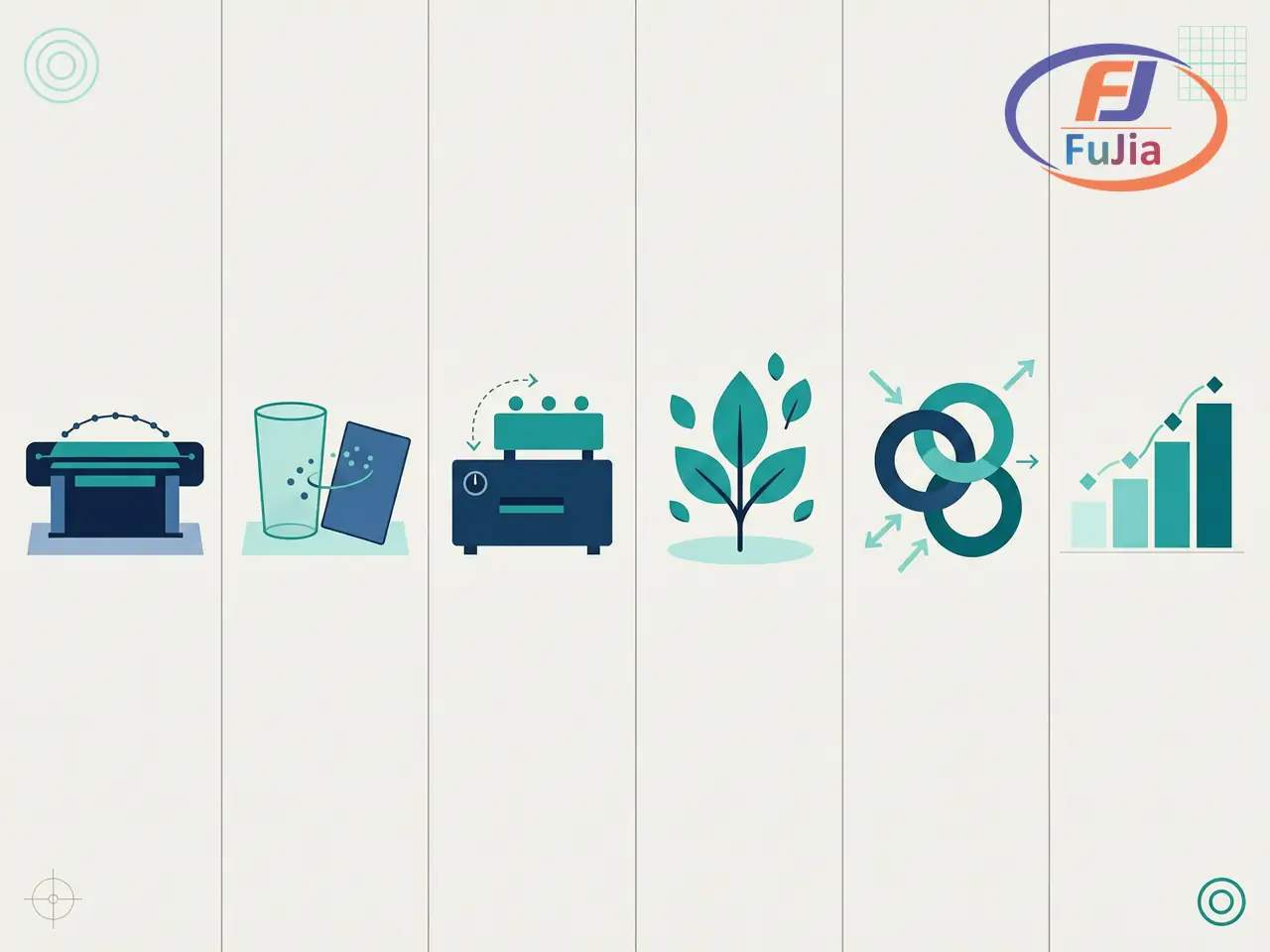
The future of DTF printing in 2026 points to five connected shifts. First, machines are getting wider and faster, with 64-inch roll-to-roll models like the Epson SureColor G9000 and 6-head 60cm systems rated at 34 m²/hr reshaping what counts as production volume. Second, UV DTF is expanding the process beyond fabric into a multi-billion dollar hard-surface category for glass, metal, and acrylic. Third, automation is standardizing the shaker-and-oven stage so less manual labor sits between file and finished transfer. Fourth, eco inks with lower VOC content and recyclability-aligned workflows are becoming a procurement filter under frameworks like the EU ESPR. Fifth, DTF and DTG are converging into hybrid workflows where software decides which method runs each job. The market backs this direction: analysts project DTF growth from $782M in 2023 to $2.1B by 2030 at a 14.5% CAGR. Buyers should plan for a platform that prints fabric and hard goods, not a single-purpose box.
Is there money in DTF printing?
There is money in DTF printing for operators who compete on margin and turnaround rather than price alone. A starter setup, printer, heat press, curing system, RIP software, and supplies, typically launches in the $8,000 to $15,000 range, a low barrier that has pulled thousands of small shops and Etsy sellers into the market. That same low barrier also means price competition is fierce, so profitability now comes from high-margin customization, short-run on-demand work, and niche specialization instead of commodity volume. Based on data from our customers across 50+ countries, in-house DTF payback usually falls in the 3 to 8 month range once a shop builds a steady custom-apparel or hard-goods order book. The shops that struggle are the ones that bought a fast printer and assumed speed alone would profit. Process control, gang-sheet efficiency, and low spoilage outperform more expensive hardware with weak production systems. DTF fits one-piece or one-hundred-piece runs without screens, which is exactly where screen printing cannot compete.
Is the print industry in decline?
The analog print industry is contracting in specific segments, but digital decoration is growing, and DTF is a large part of that growth. Traditional screen printing still wins at very high volumes, but it needs large runs and specialist labor, so it keeps losing short-run and customized work to digital methods. Digital textile printing reached about $6.6B in 2026 and is forecast at $13.9B by 2036, with apparel near 58% of demand, a clear signal that the center of gravity is moving to inkjet. Within digital, DTF is outpacing DTG in 2026 by roughly 20% according to several industry briefings, because DTF handles cotton, polyester, blends, and dark garments without pretreatment. FESPA’s reporting shows DTF is now the default for T-shirt printing while DTG introductions slowed through 2024. The honest answer is that old, analog, minimum-order production is declining, and on-demand digital production, led by DTF and UV DTF, is expanding into apparel, hard goods, and signage at the same time.
Who prints the best DTF transfers?
The best DTF transfers come from disciplined control of film, ink, powder, and press parameters, not from any single magic machine. Print quality starts with the consumables: Fujia Print’s DTF ink runs a 13-color system and its transfer film comes from five years of R&D iteration on a virgin PET base with a proprietary coating, which stabilizes release and stretch recovery. Powder coverage and cure temperature decide adhesion, and the standard Fujia press setting is 160°C for 15 seconds with a cold peel. When those variables align, cured prints survive 50+ heavy machine washes with AATCC color fastness around Grade 4 to 5. A shop can run a premium printer and still get peeling transfers if powder is uneven or cure is off, which is why process discipline beats hardware on this metric. For procurement, the practical test is to request a sample on the exact fabric you sell and wash it before buying, because the transfer quality you feel after ten washes matters more than any show-floor demo.
Conclusion
DTF printing in 2026 rewards buyers who treat it as a production platform, wider machines, UV DTF for hard goods, automated shaker-oven curing, eco inks, and hybrid DTF-DTG workflows, rather than a single decorative shortcut. For factory-direct pricing, full specifications, and a free printed sample on your own fabric, explore Fujia Print’s commercial DTF printer lineup.
