

DTG pretreatment liquid is a coating applied to dark garments before direct-to-garment printing so white ink stays on the surface and bonds instead of soaking into the fibers. This guide covers what it is, what it is made of, when you need it, and how it behaves after washing.
Key Takeaways
- DTG pretreatment liquid helps white ink sit on top of dark fabric and bond during the cure.
- It is mainly needed for dark and colored garments; light shirts often skip it.
- The typical formula is a polymer or titanium-dioxide-based aqueous solution; Fujia’s DTG cure runs at 170°C for 30 seconds.
- Pretreatment is cured into the fabric and does not fully wash out in normal laundering.
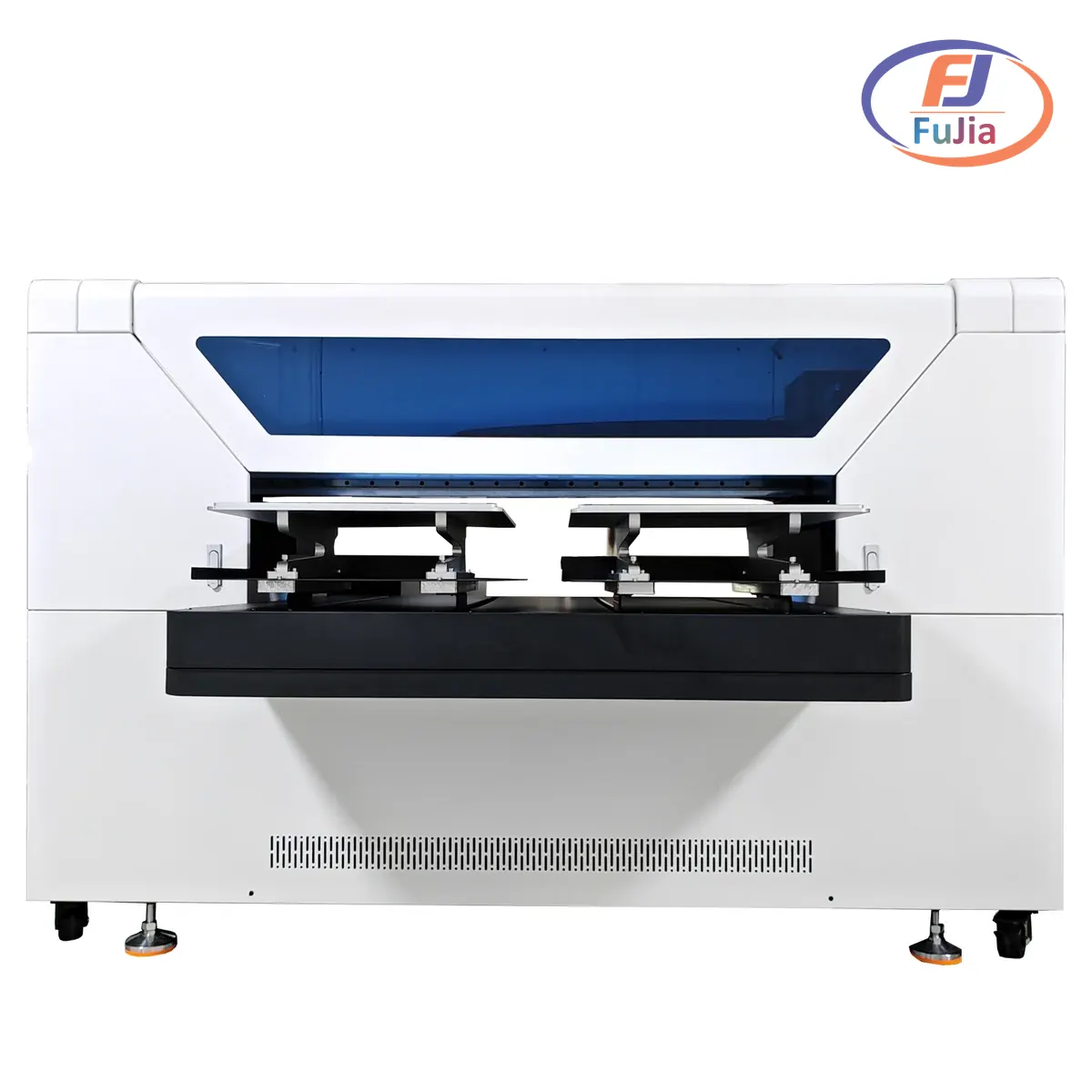
- Fujia’s DTG-DS dual-station printer ships with a 12-month warranty, 48-hour parts dispatch, and 3-day onboarding.
What Is DTG Pretreatment Liquid?
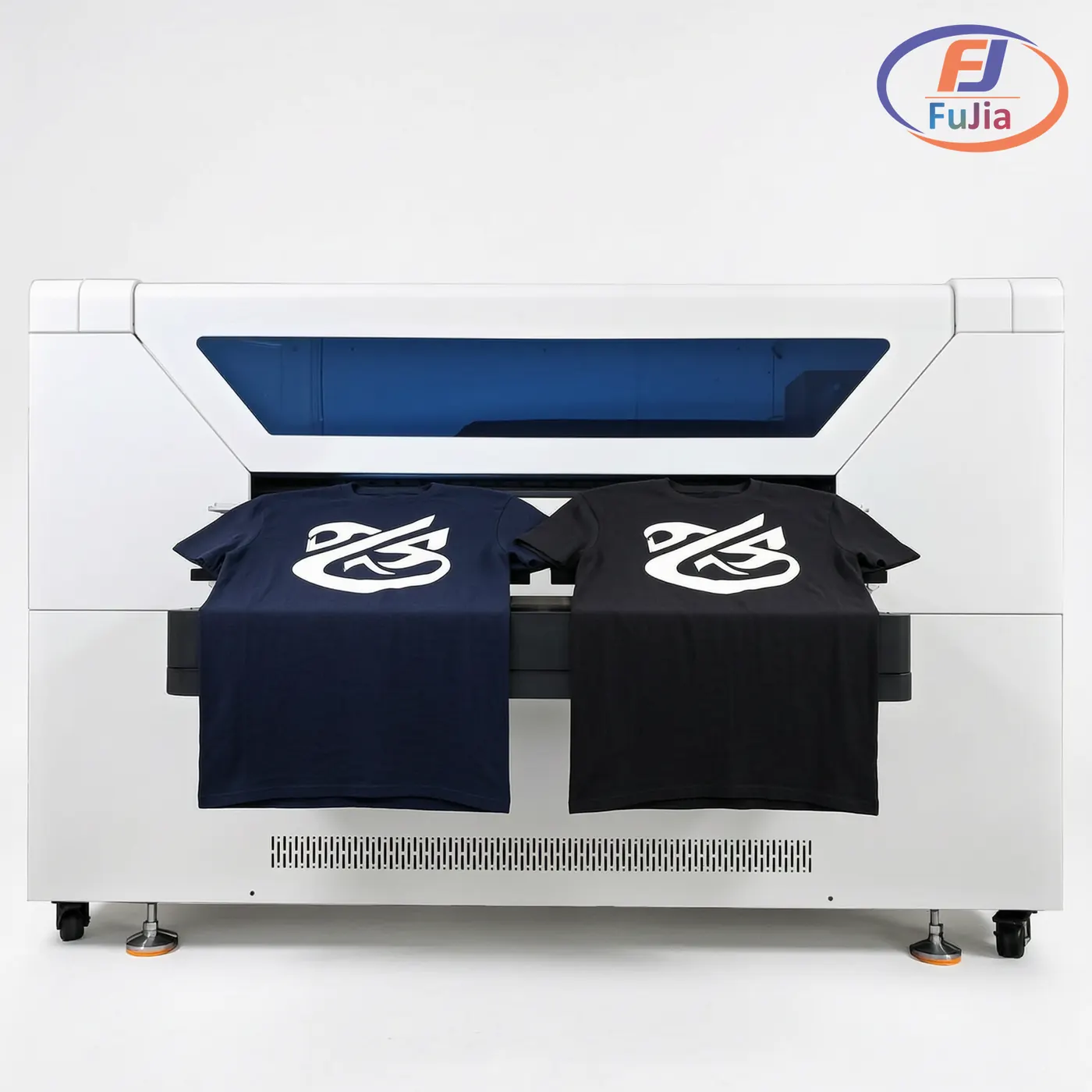
DTG pretreatment liquid is a pre-coat brushed or sprayed onto a garment before the DTG printer lays down ink. On a dark shirt, white ink would otherwise sink into the fibers and look dull or wash away; the pretreatment forms a receptive layer that holds the white ink on the surface so the color image prints bright and stays put. The DTG printer lineup from Fujia is built around this dark-garment workflow.
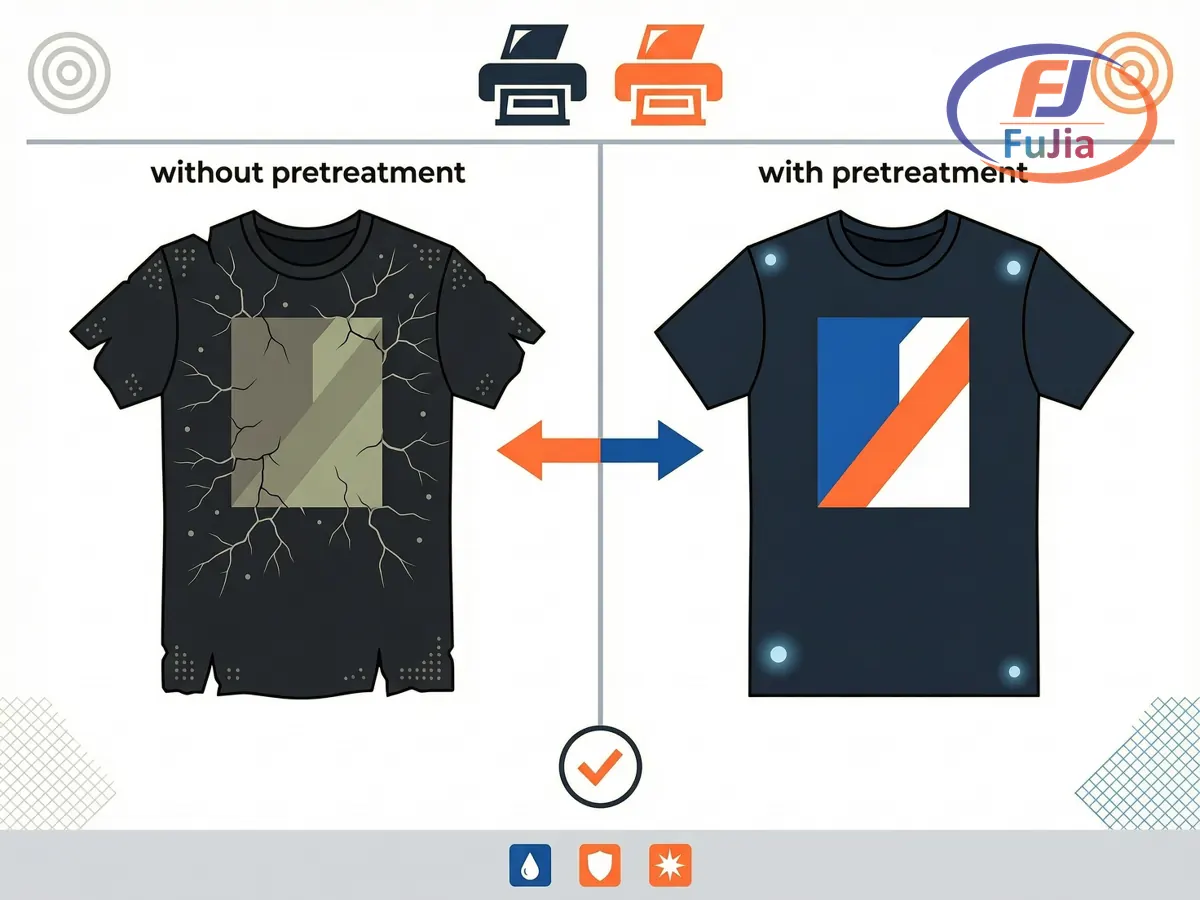
The effect is easiest to see side by side. Without pretreatment, white ink on black fabric looks washed-out and cracks in the wash; with it, the same design is opaque and durable. Most shops pretreat only the print area, not the whole shirt, to keep the fabric soft.
| Condition | No pretreatment | With pretreatment |
|---|---|---|
| White ink on dark fabric | Soaks in, dull | Opaque, bright |
| Wash durability | Poor, cracks | 50+ heavy washes |
| Fabric feel | Normal | Slightly stiffer at print |
| Best for | Light garments | Dark and colored garments |
What Is DTG Pretreatment Made Of?
DTG pretreatment is an aqueous solution built around a polymeric binder, often with titanium dioxide or another opacifying agent, plus water and humectants. The binder is what grabs the white ink and the fabric during the heat cure, while the opacifier boosts whiteness on dark grounds. Different brands tune the polymer mix for spray, roll, or dip application and for cotton versus blends.
Because it is water-based, pretreatment is cured with heat, not chemicals. Fujia’s DTG process cures the printed and pretreated garment at 170°C for 30 seconds, which sets the binder and locks the ink. The what is DTG printing guide covers the full print-and-cure sequence for new owners.
Do You Have to Pretreat DTG?
You have to pretreat DTG when printing on dark or saturated colored garments, because that is the only way white ink stays opaque and bonded. On light or white shirts, white ink is not needed as a base, so many shops skip pretreatment entirely and print CMYK straight onto the fabric. Some operators use a light pretreatment even on pastels to improve wash life, but it is optional there.
The decision really tracks the garment color, not the printer model. Fujia’s DTG-DS dual-station printer handles both modes, so a shop can run light shirts untreated and dark shirts pretreated on the same machine. Across the 500+ print businesses Fujia serves, the dark-garment pretreat step is the single biggest quality lever for DTG work.
Does DTG Pretreatment Wash Out?
DTG pretreatment does not wash out in the normal sense, because the cure at 170°C for 30 seconds chemically sets the binder into the fabric. What you feel as a slightly stiffer print area is the cured coating plus ink, not loose liquid waiting to rinse away. A small amount of surface residue can wash off on the first laundry, but the bonded layer that holds the ink stays.
Wash durability for a properly pretreated and cured DTG print reaches 50+ heavy machine washes at AATCC Grade 4-5 color fastness (AATCC). The key is a full cure; under-cured pretreatment can stiffen or flake, so shops should confirm temperature and dwell time on every garment type. Fujia supplies ICC and cure profiles tuned for its DTG-DS to remove that guesswork.
How to Apply DTG Pretreatment
Apply pretreatment to the print area only, using a sprayer, roller, or automatic pre-treat machine, then let it dry before printing. Even coverage matters more than heavy volume; too much pretreatment can stain or feel crunchy. After the DTG print, cure the garment at 170°C for 30 seconds with a heat press or tunnel dryer.
Epson-based DTG printheads, used across the industry and in Fujia’s DTG line, jet the water-based ink reliably when the pretreatment and cure are set correctly (Epson). Fujia’s 3-day remote onboarding plan walks new owners through the exact spray, dry, print, and cure steps for their DTG-DS so the first dark-garment job comes out right.
Fujia DTG-DS and the Pretreatment Workflow
Fujia’s DTG-DS is a dual-station direct-to-garment printer that runs the dark-garment pretreat workflow on the same footprint as light-shirt work. The dual-station layout lets one platen cure while the other prints, which keeps throughput up on mixed orders. Fujia manufactures the machine in its 3,500 m² Guangzhou factory under ISO 9001 and CE certification (ISO).
The same service backbone backs the DTG line as every Fujia printer: a 12-month warranty, 48-hour parts dispatch, and lifetime engineering support over WhatsApp. For shops weighing the technology, the best DTG printers for small business guide compares configurations and the dark-garment workflow in practice.
What is DTG pretreatment?
DTG pretreatment is a liquid coating applied to a garment before direct-to-garment printing, mainly so white ink bonds to dark fabric instead of soaking into the fibers. On a black or colored shirt, untreated white ink looks dull and washes out, while pretreatment forms a receptive layer that holds the ink on the surface for a bright, durable print. Shops usually apply it only to the print area with a sprayer, roller, or automatic pre-treat machine, then dry it before printing. Fujia’s DTG-DS printer is built around this dark-garment workflow, and the cure at 170°C for 30 seconds sets the coating. The result is an opaque white base that lets CMYK colors print true on any garment color, which is the whole point of pretreatment in DTG.
What is DTG pretreatment made of?
DTG pretreatment is a water-based solution built around a polymeric binder, often with titanium dioxide or another opacifying agent, plus water and humectants that keep it from drying too fast. The binder is the active part: during the heat cure it grabs both the white ink and the fabric so the print stays put. Brands tune the polymer mix for spray, roll, or dip application and for cotton versus polyester blends. Because it is aqueous, pretreatment is set by heat rather than by a chemical reaction with the ink, which is why the cure step matters so much. Fujia’s DTG process cures at 170°C for 30 seconds to lock the binder and ink together for wash durability rated at AATCC Grade 4-5 over 50+ heavy washes.
Do you have to pretreat DTG?
You have to pretreat DTG when printing on dark or saturated colored garments, because white ink will otherwise sink into the fibers and fail to stay opaque or bonded. On light or white shirts, no white base is needed, so most shops print CMYK directly and skip pretreatment entirely. A light pretreatment is sometimes used on pastels to improve wash life, but it is optional there. The rule tracks garment color, not printer model, so Fujia’s DTG-DS handles both modes on one machine. Across the 500+ print businesses Fujia serves, getting the dark-garment pretreat step right is the single biggest quality lever for DTG work, so it is treated as standard for any colored-shirt order.
Does DTG pretreatment wash out?
DTG pretreatment does not wash out in normal laundering, because the 170°C for 30 seconds cure chemically sets the binder into the fabric. What remains after washing is the cured coating plus ink, not loose liquid, which is why the print area can feel slightly stiffer than the rest of the shirt. A little surface residue may come off on the first wash, but the bonded layer that holds the ink stays put. A properly pretreated and cured DTG print reaches 50+ heavy machine washes at AATCC Grade 4-5 color fastness. Under-curing is the main failure mode: too-low temperature or too-short dwell can leave pretreatment crunchy or flaky, so confirming cure settings per garment type is essential for a print that lasts.
Can you use DTG pretreatment on light shirts?
You can use DTG pretreatment on light shirts, but it is usually unnecessary because light fabric does not need a white ink base, so the main reason for pretreatment disappears. Some shops apply a light pretreatment to pastel or heather shirts to improve white-ink opacity and wash life, and to even out tone variations, but on white shirts it only adds stiffness and cost. The cleaner workflow is to print CMYK directly on lights and reserve pretreatment for darks and saturated colors. Fujia’s DTG-DS supports both paths, and the best DTG printers for small business guide notes that skipping pretreatment on lights is the faster, cheaper default. Use it on lights only when a specific design demands a white underbase.
Print Dark Garments With Fujia DTG-DS
Fujia has built DTG and other printers in its 3,500 m² Guangzhou factory since 2011, serving 500+ print businesses across 50+ countries with ISO 9001 and CE certified quality (ISO). The DTG-DS dual-station printer runs the full pretreat, print, and cure workflow at 170°C for 30 seconds, backed by a 12-month warranty, 48-hour parts dispatch, and a 3-day remote onboarding plan. Send us a dark garment and your design and we will pretreat, print, and cure it on our DTG-DS line, record the process, and ship the sample back at no cost. Contact the Fujia team today to add durable dark-garment DTG to your shop.
