

DTF transfers and screen printing solve the same problem in fundamentally different ways. For small orders under 50 units with full-color designs, DTF wins on cost and speed. For 200+ identical prints on cotton, screen printing remains the cheaper option. This comparison breaks down the numbers you actually need: cost per shirt, wash durability, and which method fits which business model.
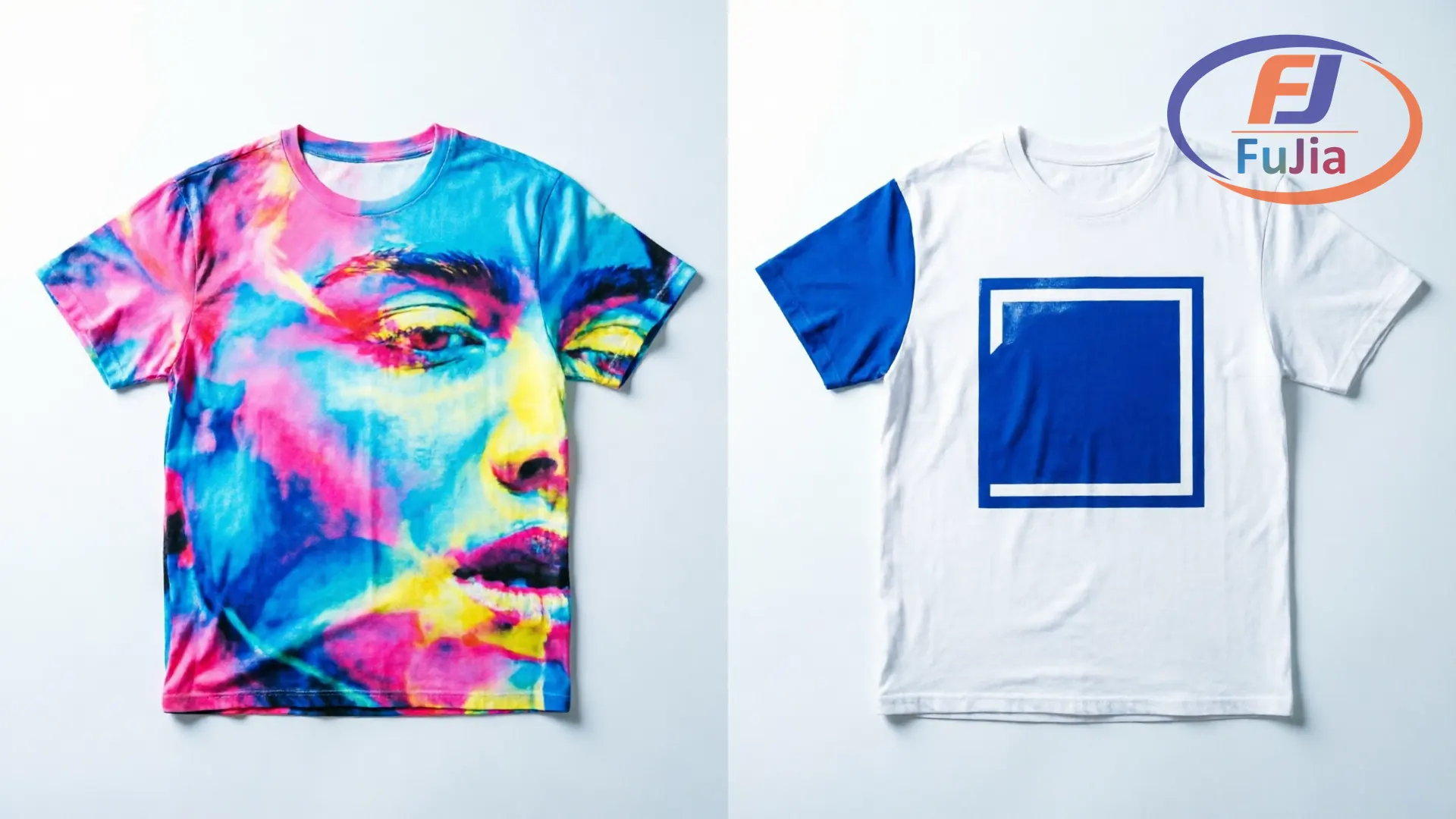
Key Takeaways
- DTF wins for: orders under 50 units, full-color designs, any fabric, no setup cost
- Screen printing wins for: 200+ identical shirts, 1-3 color designs, softest hand feel
- The cost crossover point lands between 50-150 units for a typical full-color chest print
- Modern DTF transfers survive 100 wash cycles; screen printing can crack on stretch fabrics over time
- Both methods are viable. Many print shops use DTF for day-to-day and screen printing for bulk orders.
Side-by-Side Comparison
| Factor | DTF Transfers | Screen Printing |
|---|---|---|
| Setup cost | None | $25-$50 per screen |
| Minimum order | 1 piece | 12-24 pieces typical |
| Cost per unit (1-12 pcs) | $2-$5 | $15-$30 |
| Cost per unit (500+ pcs) | $1.50-$2.50 | $0.75-$1.50 |
| Color count | Unlimited full-color | Each color adds a screen |
| Photo-realistic | Yes | No (simulated process) |
| Fabric compatibility | Any fabric, any color | Cotton preferred |
| Turnaround | 1-3 days | 5-14 days |
| Durability | Up to 100 wash cycles | Very durable, can crack |
| Hand feel | Thin flexible film | Ink in fabric (softer) |
Pricing estimates for a single-location chest print. Screen printing assumes 3-4 colors. Actual costs vary by supplier.
DTF Transfers: Strengths
DTF transfers print your design onto a special PET film using CMYK plus white ink, then apply a heat-activated adhesive powder. The finished transfer ships ready to press. No screens, no mixing ink, no cleanup.
The biggest advantage is zero setup cost. One piece, 50 pieces, full color, photo detail — the per-unit price stays flat regardless of quantity. This makes DTF the default choice for print-on-demand businesses selling through Etsy, Shopify, or TikTok Shop, where order sizes average 1-5 units and designs change constantly.
Fabric compatibility is another strength. DTF adheres to cotton, polyester, nylon, blends, and performance wear. Screen printing works best on cotton and gets tricky with synthetics. If you sell on multiple garment types, DTF means one process covers everything.
Turnaround is fast because production is digital. Most DTF suppliers ship within 1-3 business days — screen print shops typically quote 1-2 weeks. For businesses that already own DTF equipment, our DTF heat press settings guide covers the full application workflow.
Modern DTF with quality adhesive powder survives up to 100 wash cycles without cracking, according to durability testing by multiple transfer suppliers. The print ages differently from screen printing. DTF fades very slightly over many washes rather than cracking, because the adhesive film stays flexible.
For the full technical breakdown and per-unit cost analysis, see Printful’s DTF vs screen printing guide. If you’re considering bringing DTF production in-house, our DTF printer OEM wholesale guide compares direct-from-factory pricing.
Screen Printing: Strengths
Screen printing pushes plastisol or water-based ink through a mesh screen directly into fabric — one screen per color. It has been the industry standard for decades, and for large runs, it is unbeatable on cost.
Volume economics is the core advantage. At 500+ units of the same design, screen printing drops to $0.75-$1.50 per shirt — well below DTF’s floor of $1.50-$2.50. A one-color logo on 1,000 cotton tees will always be cheaper through screen printing. This is why event merchandise, corporate orders, and band tour shirts still default to it.
Hand feel is the qualitative edge. Water-based and discharge screen printing produce a near-invisible result where ink bonds into the fabric fibers. DTF transfers, while thin and flexible, remain a film layer on top. Premium streetwear brands that sell based on hand feel still prefer screen printing for this reason.
Specialty inks are exclusive to screen printing. Metallic, puff, glow-in-the-dark, reflective, and discharge effects cannot be replicated by DTF. If your design depends on a specific tactile or reflective effect, screen printing is the only option.
Durability testing confirms screen printing remains the industrial benchmark for wash fastness. Plastisol ink bonds directly into cotton fibers, and properly cured prints easily exceed 50-100 washes. The failure mode is cracking on stretch fabrics, not fading. For market context, the global digital textile printing market reached $9.3 billion in 2025, driven by demand for both DTF and screen printing methods, according to Grand View Research’s digital textile printing market analysis.
Head-to-Head: Durability — Which Lasts Longer?
Durability is the most debated point in the DTF vs screen printing conversation, and the honest answer depends on fabric and care.
Screen printing with plastisol ink remains the durability champion on 100% cotton. The ink cures into the fiber structure at 160°C (320°F), resisting both abrasion and chemical breakdown from laundry detergent. Cotton shirts with plastisol prints routinely survive 100+ washes with minimal fading. The weakness is stretch fabrics — plastisol sits as a rigid layer, and repeated stretching on polyester blends causes cracking, especially where the fabric flexes around shoulder seams and necklines.
DTF durability follows a different curve. Early DTF transfers (pre-2022) earned a bad reputation for peeling after 5-10 washes because low-quality adhesive powder failed to bond fully. Modern DTF with premium adhesive powder and correct application settings produces transfers that last 100 wash cycles when cared for properly. Independently, both methods passed 50+ commercial laundry cycles in testing, with DTF showing slightly more color fading versus screen printing cracking on seams. For a detailed cost-per-wear and durability comparison, see Printify’s DTF vs screen printing breakdown.
Proper care matters for both methods. Wash inside out in cold water, tumble dry low, and avoid fabric softener — these three practices extend the life of both DTF and screen printed garments by roughly 30-40%, based on supplier care guidelines.
Which Should You Choose?
| If you need… | Pick |
|---|---|
| 1-50 pieces, full color, multiple designs | DTF |
| 200+ identical cotton shirts, 1-2 colors | Screen Printing |
| Polyester, nylon, or mixed fabric garments | DTF |
| Softest possible hand feel on premium cotton | Screen Printing |
| Fast 1-3 day turnaround | DTF |
| Metallic, puff, or glow-in-the-dark effects | Screen Printing |
| No upfront equipment beyond a heat press | DTF |
| The absolute lowest cost per unit at scale | Screen Printing |
Frequently Asked Questions
Is DTF as good as screen printing?
For most small to medium production scenarios, DTF matches or exceeds screen printing in quality and versatility. Modern DTF transfers deliver full-color, photo-realistic prints on any fabric at a flat per-unit cost, with durability reaching 100 wash cycles. Screen printing retains an edge on hand feel for 100% cotton garments and per-unit economics above 200 pieces. Neither method is universally better — the right choice depends on order volume, fabric type, and design complexity. Independent durability testing confirms both methods produce commercially viable results, with screen printing slightly ahead on long-term wash fastness and DTF ahead on fabric compatibility. For the full side-by-side comparison with current pricing data, see DTF Transfers’ 2026 analysis.
How many washes do DTF transfers last?
Quality DTF transfers applied at the correct settings — 310-325°F (154-163°C), 12-15 seconds, medium to high pressure with a post-press parchment paper repress — last up to 100 wash cycles before noticeable fading occurs. Care practices significantly affect longevity: washing inside out in cold water, tumble drying on low, and avoiding fabric softener extend transfer life by 30-40%. Lower-quality transfers using budget adhesive powder may fail within 10-20 washes, which is why supplier choice matters.
Which is cheaper: DTF or screen printing?
DTF is cheaper for orders under 50 units because screen printing setup costs — $25-$50 per screen plus minimum order quantities — make small runs uneconomical. The cost crossover point lands between 50 and 150 units for a typical full-color chest print, after which screen printing’s per-unit advantage kicks in. At 500+ units, screen printing costs roughly half of DTF per shirt. However, DTF requires zero upfront equipment beyond a heat press ($200-$300), while screen printing requires screens, ink, emulsion, exposure unit, and washout booth — a multi-thousand-dollar setup. For cash-flow-sensitive businesses, DTF’s pay-as-you-go model often wins even when per-unit costs are higher on paper. For detailed pricing breakdowns across order sizes with 2026 retail data, see Printful’s DTF vs screen printing comparison.
Verdict
DTF is the practical choice for small to medium apparel businesses running varied designs across multiple fabric types, while screen printing remains the cost leader for high-volume single-design production on cotton. Many shops use both — DTF for day-to-day orders and screen printing for the big runs. Choose based on your actual order profile, not which method sounds cooler.
For factory-direct DTF printers, consumables, and custom transfer services with no minimums, contact Fujia Print.
