

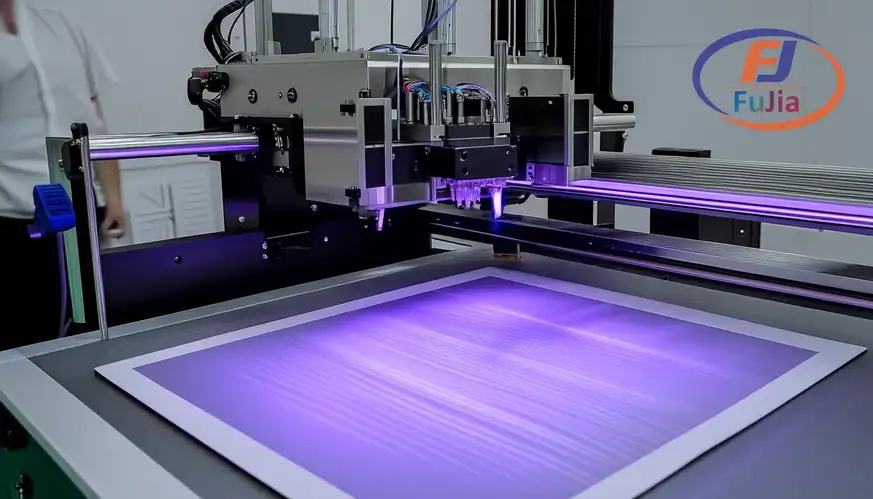
A UV flatbed printer machine is a gantry of print heads that jets liquid ink onto objects held flat on a vacuum table, curing each pass instantly under LED light, and the whole system exists because rigid objects cannot run through roll printers the way paper does. The machine prints acrylic, wood, glass, metal, leather, and phone cases directly, at tiers from $1,799 desk units to $28,000 production gantries, and the physics behind it explains every spec that matters. This guide explains the mechanism, the five working specs, the object canon, and the tiers that serve it.
Key Takeaways
- The mechanism is print-then-cure: piezo heads jet 2-7 picoliter droplets, and LED arrays polymerize the ink in under a second.
- The five working specs are head class, motion system, vacuum bed, ink channels, and bed size, each mapping to a purchase decision.
- The object canon covers acrylic, wood, glass, metal, leather, phone cases, awards, signage, and decor at thicknesses to about 2 inches.
- Tiers run $1,799-2,800 desk, $3,500-8,000 mid twin-head, and $9,000-28,000 production, priced by throughput rather than quality.
- We recommend the desk tier for object personalization up to 30 objects daily, and mid tier when the order book says faster.
How the Machine Works
| Stage | What happens | Spec behind it |
|---|---|---|
| hold | vacuum pins the object flat | bed flatness |
| jet | piezo heads fire 2-7 pl droplets | head class, native dpi |
| cure | LED polymerizes ink instantly | wavelength match |
| repeat | gantry returns, next pass | motion precision |
The stage table is the machine’s whole mechanism, and the cure row is what separates UV from every inkjet that came before: the ink contains photoinitiators that polymerize solid the instant LED light hits them, so prints exit finished, stackable, and usable with no drying rack. The jet row places droplets at 2-7 picoliters through Epson-class heads, the motion row repositions the gantry with the precision that registration demands, and the vacuum row holds objects that would otherwise shift under head vibration, per the mechanism detail our UV printers guides document for the whole category.
The mechanism’s consequence is the category’s product promise: because ink cures on contact rather than soaking in, the machine prints on glass, metal, and plastic that water-based inks cannot grip, building a raised, dimensional ink layer that sits on the surface. In our experience that single physics fact answers most of what buyers call spec questions. White underlay enables full color over dark and clear objects, varnish adds texture effects, and the same physics serves phone cases and architectural panels with only scale changing between them.
The Five Specs That Matter
| Spec | What it decides | Range in market |
|---|---|---|
| head class | speed and resolution | XP600 at 1.5 m2/h to Ricoh arrays at 25+ |
| motion system | registration over years | belt drive to servo gantry |
| vacuum bed | object hold and flatness | decorative to true vacuum |
| ink channels | white, varnish capability | CMYK only to CMYK+W+varnish |
| bed size | object canon | 30×50 cm to 2.5 m |
The spec table is the buying checklist, and each row decides a different complaint. Head class prices throughput, motion class prices year-three registration, the vacuum bed prices print sharpness, ink channels price what colors are possible on dark and clear objects, and bed size prices the object canon itself. White circulation is the row that cheap machines cut first, and its absence shows as a dead white channel within months, per the spec-by-complaint logic our flatbed pricing guide applies across the market.
The five specs also order themselves by budget honesty: a buyer can economize on speed and size without regret, but circulation, bed truth, and motion are the three cuts that year one invoices back. We recommend holding those three firm and letting throughput and width flex with the budget, and the same cut-order logic our affordable printer guide applies to the value tier applies here across all tiers.
What the Machine Prints
| Object | Blank cost | Typical retail | Notes |
|---|---|---|---|
| phone cases | $0.50-2 | $12-60 | volume entry product |
| acrylic awards | $2-8 | $25-80 | corporate staple |
| wood signs and panels | $3-12 | $25-80 | grain-through option |
| glass and mirror | $5-20 | $40-150 | white underlay essential |
| leather goods | $3-10 | $30-100 | patch and journal work |
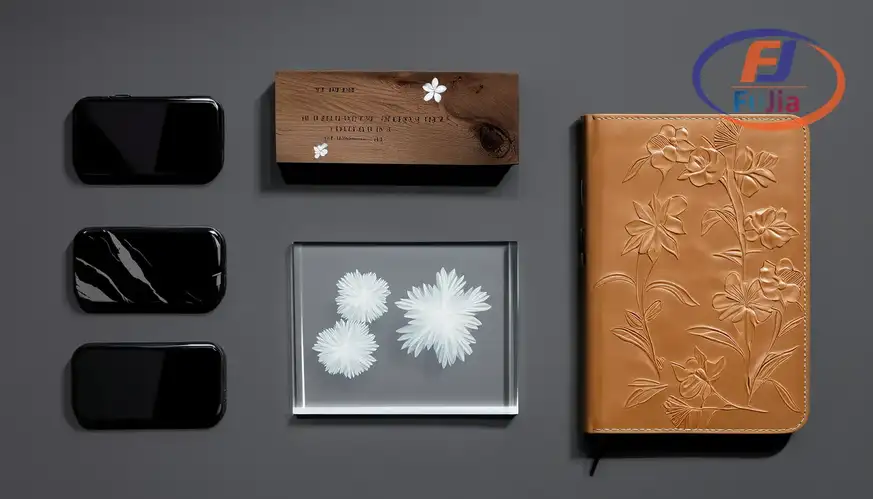
The canon table is the machine’s business case, and its spread explains the category’s appeal: one machine serves personalization, corporate awards, signage, and decor with only fixtures changing between them. Fixture changes take minutes, and the fixture drawer is where a canon actually lives. Ink costs run $0.10-0.50 per object, margins run 10-20 times blank cost at craft retail, and the desk tier’s 30×50 cm bed covers the personalization canon while larger beds scale into panels, per the product economics our signage and decor guides document across markets.
Glass and metal reward the UV process most visibly, because their non-porous surfaces reject every water-based alternative, and white ink on clear glass is the premium effect the category sells. Wood prints with the grain-through option our wood guide details at length, leather takes lightly primed, and the full canon runs on one ink set, which is the workflow simplicity that one-machine shops run on.
The Tiers and Their Buyers
| Tier | Price | Throughput | Buyer |
|---|---|---|---|
| desk A3 | $1,799-2,800 | 1-1.5 m2/hour | personalization startups |
| mid twin-head | $3,500-8,000 | 8-13 m2/hour | sign and awards shops |
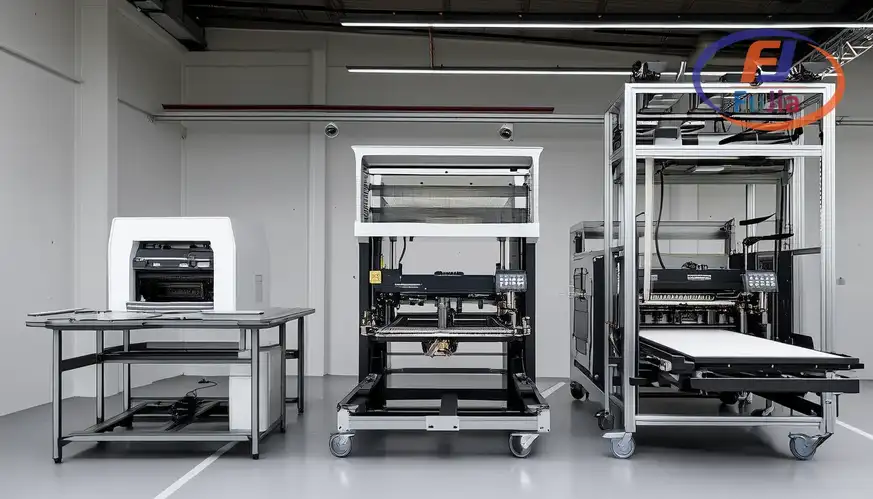
| production gantry | $9,000-28,000 | 20-27 m2/hour | industrial jobbing |
The tier table prices the canon’s scale, and the tiers differ by throughput rather than by print quality: a desk machine prints a phone case as sharply as a gantry prints a panel, and the buyer climbs tiers to serve volume, not to improve dots. That framing, volume not quality, is the sentence to hold onto in any showroom. The desk tier serves the startup canon at 30 objects daily, the mid tier serves sign shops at commercial deadlines, and the production tier serves jobbing houses running nesting schedules, per the tier logic our flatbed pricing guide applies across the market.
Financing converts the tiers into monthly figures that orders can service: the desk tier at $1,799 runs $55-65 monthly over 36 months, and a modest personalization order book clears that inside its first week of each month. Here’s the thing about the climb: each tier’s monthly payment should be serviced by the orders the previous tier proved, and the shops that follow that rule never finance hope. The growth path is mechanical, desk earns mid, mid earns production, and the same utilization honesty our tumbler and sign guides apply to hardware decisions prices every climb.
A workshop case we supply anchors the desk tier: a personalization startup running cases, awards, and sign samples on a $1,999 machine, recovering the hardware inside 6 weeks of marketplace orders, and adding the fixtures that extended the canon rather than a bigger machine. The canon-first, machine-second sequence is the pattern every successful UV shop we document has followed, per the growth cases our applications pages maintain.
How much does a flatbed UV printer cost?
A flatbed UV printer machine costs $1,799-2,800 at the desk tier, $3,500-8,000 in the mid twin-head class, and $9,000-28,000 for production gantries, with head class, motion system, bed size, and ink channels setting each price. The desk tier serves object personalization at 1-1.5 m2 per hour, and each tier above doubles or triples throughput for commercial and industrial volumes. Budget another $200-500 beyond the machine for fixtures, blanks, first inks, and power protection, because the sticker prices capability and the setup prices the business. Setup honesty is the affordable class’s whole secret. The full cost ladder sits in our flatbed pricing guide.
How much does a UV print machine cost?
A UV print machine costs the same ladder by scale: $1,799-2,800 desk, $3,500-8,000 mid, $9,000-28,000 production for flatbeds, with UV roll and hybrid machines at $8,000-45,000 for flexible media work. The machine’s price tracks throughput and bed size rather than print quality, because every tier jets and cures the same chemistry, and running costs of $0.10-0.50 in ink per object stay constant across tiers. Buyers price the tier their order book fills, and the financing math at $55-720 monthly by tier is serviceable at the margins the object canon carries. That said, no tier is worth it to a shop that has not counted its orders. The order count is the first spec, and it is free to check.
What is the best flatbed UV printer?
The best flatbed UV printer machine is the tier matched to daily volume, verified by five specs: a named head class, a motion system that holds registration, a true vacuum bed, white ink circulation with agitated supply, and a bed size covering your object canon. Desk class serves startups, mid twin-heads serve commercial shops, and production gantries serve jobbing houses, with factory-direct and branded routes pricing support differently at every tier. Demo on your own objects, check the circulation pump in person, and let the order book pick the tier. Best is the machine your objects asked for, and the spec table is how you hear them.
What can you print with a UV flatbed printer?
A UV flatbed printer prints directly onto rigid and thick objects: phone cases, acrylic awards, wood signs, glass and mirror panels, metal plates, leather goods, ceramic tiles, and signage panels, at thicknesses up to about 2 inches on standard classes. White underlay enables full color on dark and clear surfaces, varnish adds texture effects, and LED curing means pieces exit finished and sellable with no drying time. Ink costs $0.10-0.50 per object against retail multiples of blank cost, which is the margin structure that personalization and awards businesses run on. The canon scales with bed size, and the same ink set serves it all.
Verdict
The UV flatbed printer machine is print-then-cure physics packaged into tiers: a gantry of heads jetting picoliter droplets onto vacuum-held objects, LED light polymerizing each pass instantly, and five specs, head, motion, bed, channels, and size, that decide everything the brochure claims. The object canon from cases to panels runs on one ink set, the tiers from $1,799 to $28,000 price throughput rather than quality, and the buyer who holds circulation, bed truth, and motion firm while flexing speed and width buys well at any budget. To see the mechanism print your own objects across the tiers, contact Fujia Print for a working demo.
Sources
- Epson print heads: head specifications.
- Wikipedia: UV curing: photoinitiator chemistry.
- AATCC: durability testing standards.
- Fujia Print applications: production cases.
