

PET film for DTF printing is the coated polyester sheet that carries your design from the printer to the garment, and the wrong choice causes more wasted prints than any other consumable. This guide covers coating types, peel methods, real 2026 prices from $0.79 per sheet, and the storage mistakes that ruin film before it reaches the press.
Key Takeaways
- PET film is the transfer medium in DTF: ink and adhesive powder sit on its coated side, cure, then release onto fabric under a 160°C press for 15 seconds.
- The two coating classes are single-sided (one glossy, one matte face) and double-sided (matte both sides for better roller grip); peel methods split into hot, warm, and cold.
- Street prices in 2026 run about $0.79 per 13″x19″ sheet in 100-packs, with rolls from $20 to $425 depending on width and length.
- Cold peel delivers a smoother, more solid image finish; hot peel gives a softer, fabric-textured hand feel at the cost of tighter timing.
- Film quality shows up in the wash, not on delivery: properly matched film, powder, and press settings hold grade 4-5 color fastness across 50+ machine washes.
What Is PET Film in DTF Printing?
PET film is a polyethylene terephthalate plastic sheet with a release coating tuned to hold DTF ink and hot-melt powder during printing, then let go of the cured design under heat and pressure. In the workflow it sits between the printer and the heat press: the printer lays CMYK plus white ink onto the film’s matte side, powder sticks to the wet white ink, the powder melts and gels in a curing oven, and the press transfers the gelled layer onto the fabric before the film peels away. Without that coated carrier, white ink would pool, powder would scatter, and nothing would arrive at the press in transferable condition.
The material itself is ordinary polyester film; the coating is where the engineering lives. A well-coated film releases the design cleanly at the peel, holds fine white underbase detail without beading, and feeds through roller systems without slipping. A cheap film does the opposite on all three counts, which is why film choice decides whether your rejects pile grows or shrinks. Based on data from our customers across 50+ countries, film-related misprints outnumber printhead-related misprints roughly three to one in the first month of a new shop’s operation.
PET Film Types: Single-Sided vs Double-Sided, Hot vs Cold Peel
Film classification runs along two independent axes, and confusing them is the most common buying mistake. The coating axis describes the surfaces: single-sided film has one glossy face and one matte face, printing on the matte; double-sided film carries a matte coating on both faces, which increases friction against printer rollers and prevents the sheet from sliding during printing. The peel axis describes release behavior: hot peel film releases immediately when the press opens, warm peel needs a few seconds of cooling, and cold peel waits until the print has cooled to room temperature.
| Attribute | Single-sided coated | Double-sided coated |
|---|---|---|
| Surface faces | 1 glossy + 1 matte | matte both sides |
| Best for | shaker-line conveyors, manual sheet feeding | roller-fed printers, dense gang sheets |
| Static behavior | higher static, needs careful handling | lower static, fewer background artifacts |
| typical failure mode | sheet slip on rollers | none noted; premium grade |
| 13″x19″ 100-pack street price | ~$75-85 | $79 (Ace Screen Supply) |
Peel choice is a finish decision, not just a timing one. Cold peel produces a smoother, glossier image because the entire ink layer releases in one cooled piece, which suits solid logos and detailed artwork; hot peel leaves a matte, fabric-textured surface because the film releases while the ink layer is still soft, which many apparel decorators prefer for full-coverage prints. The honest truth after watching thousands of production runs: cold peel is the safer default for a new shop because timing pressure at the press disappears, and the 160°C for 15 seconds press cycle stays identical either way. Most small shops will get more value from forgiving peel timing than from any other film feature.
Thickness & Coating: What Actually Matters
Thickness affects stiffness and curl more than print quality, and it is measured in microns (μm). Films in the 60-75 μm range feel floppy and can jam in roller systems when humidity climbs; 75-100 μm is the production sweet spot where sheets stay flat through printing, powdering, and curing without fighting the rollers; anything above about 110 μm gets stiff enough to curl at the press edges and waste corner detail. When a supplier lists a film without a micron rating, that omission is itself a data point about the supplier.
The coating quality decides everything the spec sheet cannot show. Fujia’s own DTF film line, developed over 5 years of iteration, uses virgin PET base material from Hengli and a proprietary cold/hot peel coating, part of the DTF consumables lineup, because the release layer is where cheap films cut corners: an under-formulated coating beads white ink, scatters powder, and leaves ghost edges around the design. That base-and-coating combination is also why the same film can pass a visual test and still fail a wash test, since coating chemistry only reveals itself after repeated 50+ wash cycles rather than on first inspection.
Storage conditions interact with coating chemistry in ways most guides skip. Coated PET is hygroscopic on the matte face, so film that sits uncovered in a humid shop absorbs moisture, curls at the corners, and produces inconsistent powder adhesion before anyone notices a problem. Fujia stores consumables in a climate-controlled warehouse zone for exactly this reason, and shops in Guangzhou-scale humidity should keep film in its sealed bag with desiccant until the moment it loads.
PET Film Prices in 2026
Film pricing in 2026 splits neatly between sheets and rolls, and the per-print math changes with format. Sheets win for low volume and mixed sizes; rolls win once a shop runs more than roughly 200 prints per week, where roll width matches the printer and cutting happens per design instead of per standardized sheet.
| Format | Typical spec | Street price (2026) | Per-print cost |
|---|---|---|---|
| A4 sheet pack | 8.3″x11.7″, 25 sheets | ~$15-20 pack | $0.60-0.80 small logo |
| 13″x19″ sheet pack | 100 sheets | $79 (Ace Screen Supply) | $0.79/sheet, ~$0.40 per print ganged 2-up |
| Roll, narrow | 11.8″ x 328 ft | $20-120 by grade | $0.15-0.35 per print |
| Roll, production | 24″ x 328 ft | $100-425 by grade | $0.15-0.45 per print, fits 60cm printers |
The ganged-sheet math is where most buyers leave money on the table. A 13″x19″ sheet at $0.79 holds two to four small-to-medium designs, so per-garment film cost drops to $0.20-0.40 before powder and ink, while an unsorted single-design-per-sheet workflow pays the full $0.79 for a print that occupies a third of the sheet. One of our customers, a custom sportswear brand running a 60 cm dual-head DTF printer, prints 3,000+ pieces per month at a 60% margin partly because their roll-fed workflow gangs designs across the full 60 cm width; film is among the smallest line items in their per-piece cost stack.
How to Match Film to Your Printer & Workflow
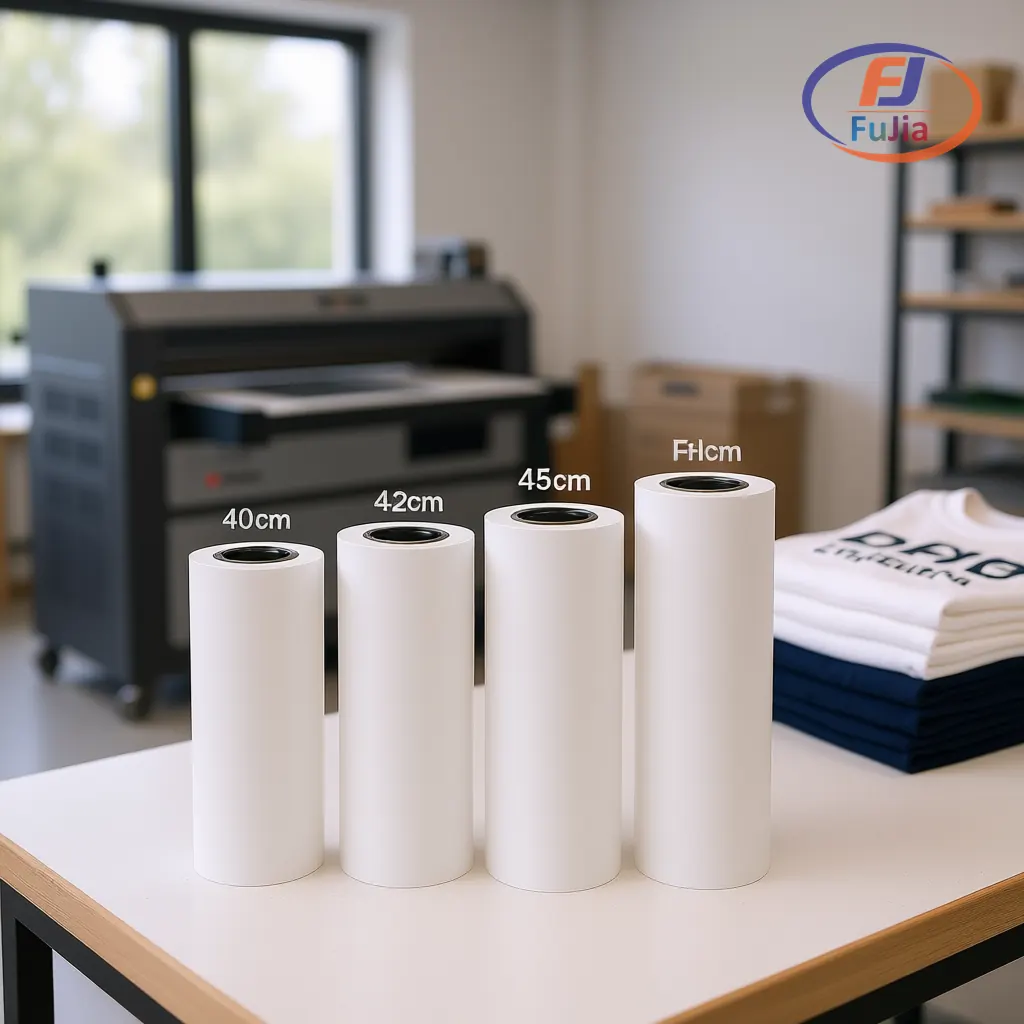
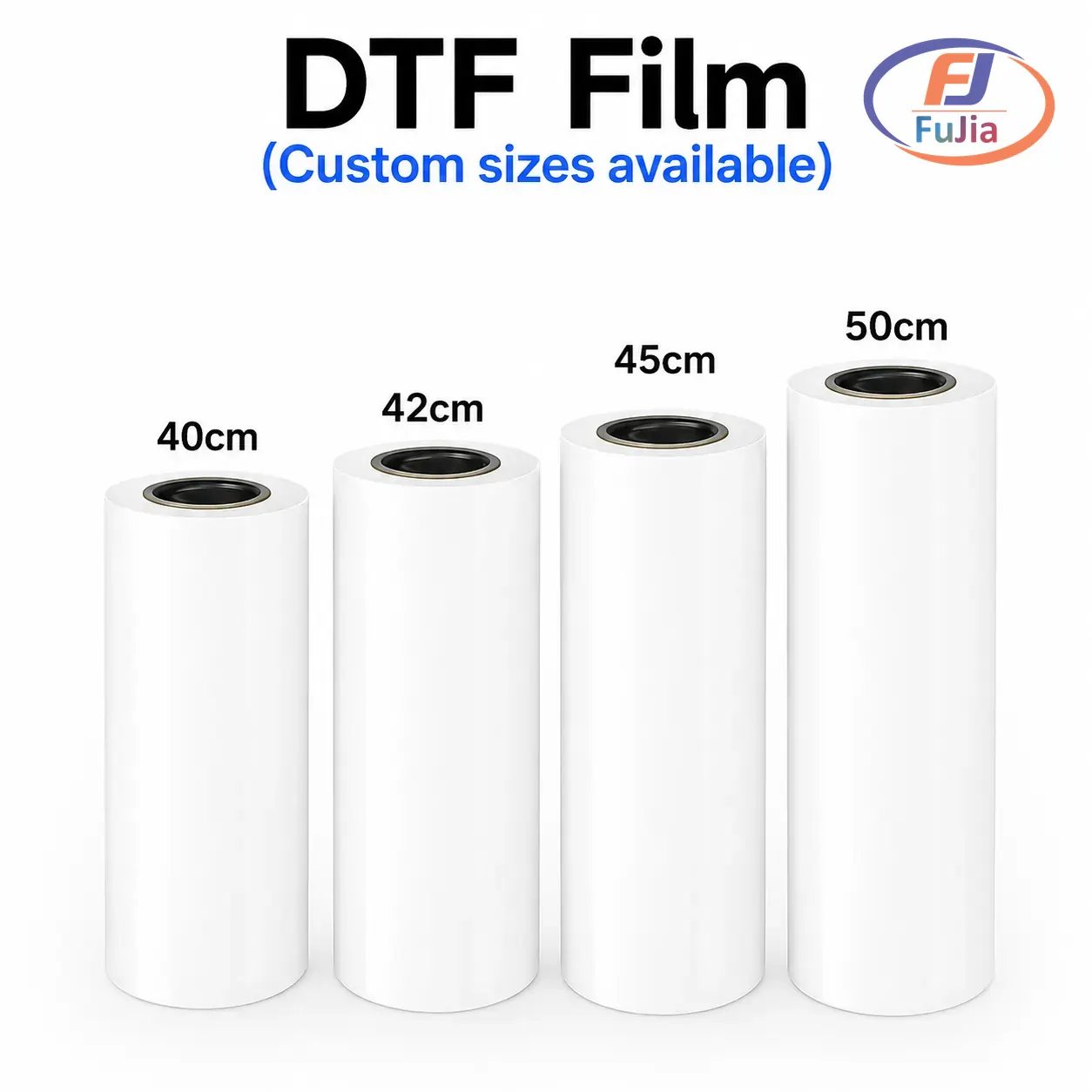
Based on data from our customers across 50+ countries, matching starts with width, not coating. Most small shops will waste more film on width mismatches and slip-fed misprints than on any coating defect. The film must fit the printer’s feed path: A3 30cm rolls suit compact desktop printers, 42cm suits A2 machines, and 60cm rolls match A1 production printers, with sheet formats working only for manual-feed workflows. Double-sided coating earns its premium on any roller-fed machine because roller traction is the difference between clean registration and slipped, ghosted prints; manual sheet feeding on a flatbed-style shaker line can run single-sided film without the slip penalty.
Peel method should match production rhythm. Hot peel suits high-throughput single-operator workflows where the press cycle never pauses, because the operator peels and loads the next shirt in one motion; cold peel suits batch workflows where pressed garments stack and cool before peeling, and it forgives the timing mistakes new operators inevitably make. Shops running mixed garments should default to cold peel rated film, since a triple-duty film tolerates hot, warm, and cold release without changing finish unpredictably. For the machine side of that workflow decision, our DTF vs heat transfer vinyl comparison explains when film-based transfers beat vinyl alternatives.
Film also interacts with the rest of the consumable stack more than buyers expect. Powder melt point, ink formulation, and oven temperature all assume a release coating with specific behavior, which is why mixing a new film into an existing workflow should trigger a small test batch: press ten transfers at 160°C for 15 seconds, wash them five times, and check edges for lifting before committing a full production run.
Storage & Handling Mistakes That Ruin Film
Humidity is the first killer. Coated film left open in a shop above roughly 60% relative humidity absorbs moisture within days, curls at the edges, and powders unevenly; the fix costs nothing beyond sealed bags and desiccant packs between uses. Direct sunlight is the second, since UV exposure yellows the polyester base and degrades the release coating long before the film visibly changes.
Pressure and dust finish off the rest. Stacking heavy objects on film flats leaves pressure marks that print as glossy bands, and uncovered film in a workshop collects fibers that block powder adhesion in small specks. The handling rule that covers all of it: film stays in its original packaging, sealed with desiccant, stored upright at room temperature, until the moment it feeds.
Where can I find PET film sheets for DTF printing?
PET film ships from three source tiers, and the right one depends on urgency and volume. US dealers like Ace Screen Supply stock 13″x19″ 100-packs at $79 with fast domestic shipping, which suits urgent replenishment and small shops; marketplaces like Amazon and Etsy carry A4 and letter packs from $15-20 that suit hobby volume; and factory-direct channels supply full rolls, 30cm to 60cm wide and 328 feet long, at $20-425 depending on grade and width, which is the economical route above roughly 200 prints per week. Whichever tier you buy from, confirm the micron rating (75-100 μm is the production standard) and the peel rating in writing before ordering, because both details separate production-grade film from repackaged generic stock.
What is the best DTF transfer film?
The best film is the one whose coating matches your printer feed method, your peel rhythm, and your wash requirements, in that order. For roller-fed printers, a double-sided matte coating is the practical best because roller traction prevents registration slip; for manual feeding, single-sided works fine. For finish, cold peel gives the smoothest solid-color result and forgives timing errors, while hot peel gives a softer hand feel at the cost of immediate-release discipline. Quality-wise, look for a stated micron rating (75-100 μm), a named base-material source, and wash-test evidence: film that survives 50+ washes at grade 4-5 color fastness (AATCC scale) earns its place in production. Fujia’s own film line, built on Hengli virgin PET with a 5-year coating iteration, exists because those three criteria were unmeetable on the open market at stable supply.
How much does PET film cost?
In 2026 the street prices break into three bands. Sheet packs run $15-20 for 25 A4 sheets and $79 for a 100-pack of 13″x19″ sheets, which works out to about $0.79 per large sheet; rolls run $20 for narrow 11.8″ widths up to $425 for production 24-inch grades, all in 328-foot lengths; and factory-direct pricing on 30-60cm rolls typically undercuts dealer sheet prices by 30-50% per square meter once volume justifies it. The number that actually matters is per-print film cost: $0.79 per sheet becomes $0.20-0.40 per garment when designs are ganged two-to-four-up, and roll-fed workflows land at $0.15-0.45 per print. Budget film at half the price that fails at wash ten is the most expensive film you can buy, because every reprint costs film, powder, ink, labor, and customer patience. That said, the mid-priced tier from established coating mills hits the same wash benchmarks as premium film, so check wash evidence before paying up.
What is PET film?
PET film is a sheet of polyethylene terephthalate, the same polyester plastic used in beverage bottles and photographic film, cut to printing thickness and finished with a functional coating. In DTF printing, the coating on one or both faces is engineered to accept ink, hold hot-melt powder, and then release the cured design under controlled conditions, which uncoated polyester cannot do. The film serves as the carrier that gets a full-color design with a white underbase from the printer to the garment intact; after the 160°C, 15-second press, the film’s job is done and it peels away, leaving the design bonded to the fabric. Grade 4-5 color fastness across 50+ machine washes is the realistic durability benchmark for a complete film-powder-ink system working correctly.
Verdict
PET film looks like the simplest line item in a DTF workflow, and it is the one that quietly decides print quality, per-piece cost, and wash durability at the same time. Buy double-sided coated film for roller-fed machines, default to cold peel until production rhythm demands otherwise, stay in the 75-100 μm range, gang your designs to cut per-print film cost to $0.20-0.40, and store sealed with desiccant. If you would rather source film from the same factory that builds the printers and stands behind the wash results, our DTF printers and consumables lineup ship with film matched to the ink system from day one.
Sources
- Wikipedia: Polyethylene terephthalate: material background for the PET base polymer.
- Wikipedia: Digital textile printing: workflow context for film-based transfer printing.
- AATCC: color fastness grading standards referenced in the wash durability benchmarks.
