

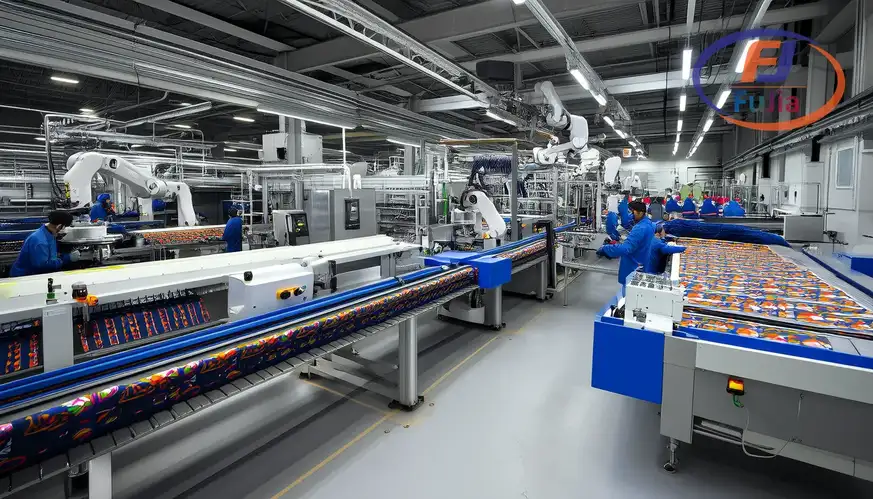
An integrated digital textile printing and garment manufacturer, the kind buyers find by searching names like NKP digital textile printing and garment manufacturing, runs the whole chain under one roof: digital printers print the fabric, cutting tables shape it, sewing lines assemble it, and finishing packs it, delivering finished garments rather than yardage. Integration changes the buyer’s job from coordinating three vendors to vetting one, and it changes the economics from fabric MOQs to garment MOQs with sampling economics attached. This guide explains the integrated chain, its MOQ and lead-time reality, and the vetting protocol that finds the facilities worth contracting.
Key Takeaways
- The integrated chain runs print, cut, sew, finish under one roof, delivering finished garments and collapsing vendor coordination.
- Integrated garment MOQs typically run 50-300 pieces per design at full-package pricing of $4-15 per piece by garment class.
- Lead times run 15-45 days after approval, and the sampling stage of 1-5 pieces costs $20-80 per piece at 2-3x production rates.
- Vetting is chain-deep: verify printers, cutting, sewing capacity, and QC as one audited system rather than four vendors.
- We recommend the integrated route for brands scaling proven designs, and split sourcing for the sampling phase.
What Integration Actually Means
| Stage | Integrated capability | Split-sourcing equivalent |
|---|---|---|
| digital textile printers in-house | fabric mill or print service | |
| cut | automated cutting tables | separate cutting contractor |
| sew | owned sewing lines | CMT contractor |
| finish | pressing, packing, QC | third-party finishing |
The stage table defines integration, and each row it internalizes is a vendor a split supply chain would coordinate separately. The buyer sends one design pack and receives finished garments, with the manufacturer managing fabric sourcing, print registration, cut efficiency, and sew quality as internal handoffs rather than as contracts. Integration’s promise is accountability at the garment level: one entity owns the finished piece, so color drift, cut errors, and stitch failures have nowhere to hide between vendors, per the chain logic our textile sourcing guides document across regions.
Integration also changes what can be negotiated. A split chain prices fabric, cutting, and sewing separately with margins at each layer, while an integrated quote is full-package, and the negotiation happens once across the whole garment. Buyers gain a single accountable contact and lose line-item transparency, and the vetting protocol below exists because the trade suits some buyers and not others, per the fabric-program context our apparel printing cases document. Accountability at the garment level is the product, and transparency at the line-item level is its price.
The MOQ and Lead-Time Reality
| Metric | Integrated typical | Notes |
|---|---|---|
| garment MOQ | 50-300 pieces per design | varies by garment class |
| sampling | 1-5 pieces at $20-80 each | 2-3x production rates |
| production lead time | 15-45 days | after sampling approval |
| fabric print MOQ | often internal, lower | the integration advantage |
| payment terms | 30-50% deposit | balance against shipment |
The reality table prices the integrated route, and the sampling row is its buyer-friendly surprise: integrated facilities run single-digit sample pieces because their own fabric printing has no external MOQ to satisfy, so a brand tests a design on finished garments before any production commitment. Production MOQs of 50-300 pieces sit below cut-and-sew minimums that require fabric MOQs to be met separately, and lead times of 15-45 days compress because the chain has no vendor handoffs in it. Payment terms follow the capital-equipment norm, deposit against start and balance against the bill of lading, per the payment practices our sourcing guides document across manufacturing regions.
The MOQ arithmetic favors brands whose designs sell in the hundreds, which is the digital printing economy working as intended: short-run garment production at MOQs mass manufacturing never offered, with the design variety that on-demand printing enables. Brands whose designs sell in tens should run the sampling route longer, and the same volume-honesty our sourcing guides apply to every MOQ decision applies here at garment level.
Vetting an Integrated Facility
| Check | What to verify | Red flag |
|---|---|---|
| printers in-house | census: heads, widths, count | “we outsource printing” |
| cutting capacity | automated tables, utilization | manual cutting at volume |
| sewing lines | machine count, garment classes | one line claiming all classes |
| QC protocol | inline checks, AQL standards | end-of-line only |
| sample history | finished garments, your design | fabric swatches only |
The vetting table audits the chain as a system, and the census discipline applies at every stage: a facility claiming integration should name its printers, its cutting tables, and its sewing machine count as readily as it names its address, because integration is capacity and capacity is countable. The trial that converts vetting into evidence is a paid sample run of your actual design through the full chain, arriving as a finished garment whose print registration, cut, stitching, and wash behavior answer every question the tour raised. Two current clients running your garment class close the file, per the same vetting discipline our Hangzhou sourcing guide prescribes for fabric mills and our reviews guide applies to machines. The finished sample is the reference that cannot be rehearsed.
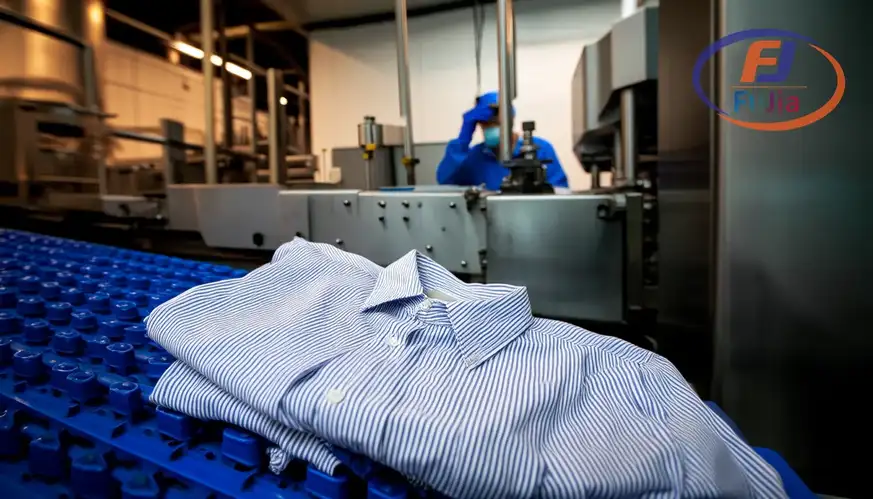
The QC protocol deserves specific attention at integrated facilities, because quality failures migrate: a print registered well can be cut off-grain, and a perfect cut can be sewn with the wrong thread tension, and only inline checks between stages catch failures while they are cheap. Facilities that describe inline QC with checkpoint names are running a system, and facilities that promise final inspection are promising archaeology. We recommend asking where QC sits between stages and waiting for the specific answer, because the pause before that answer is itself the review.
The Buyer Math and Lead-Time Planning
| Garment class | Full-package FOB | Retail multiple | Notes |
|---|---|---|---|
| printed tee | $4-8 | 3-5x | entry integrated product |
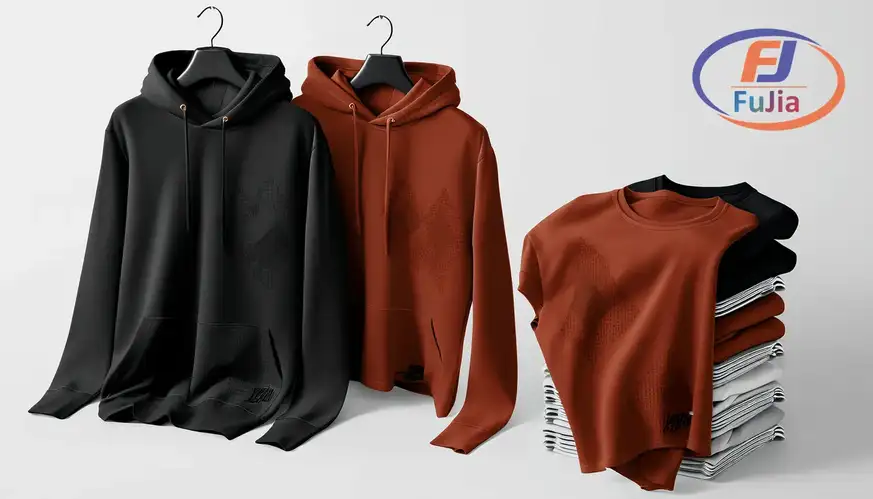
| printed hoodie | $8-15 | 3-4x | fleece premium |
| printed dress | $10-18 | 3-5x | pattern-matching labor |
| performance wear | $12-25 | 3-4x | technical fabric premium |
The buyer table prices finished garments at integrated rates, and the retail multiples are the margin structure that direct-to-consumer brands run on: a printed tee at $6 FOB retailing at $25 carries the margin that funds the next order, and the integrated route’s single quote makes that arithmetic simpler than split sourcing ever was. One quote, one accountable margin, one order that funds the next. Lead-time planning runs the same discipline as fabric: 15-45 day production plus freight means reorder points at 8-10 weeks of stock, and the brands that hold that cadence ship on time, per the reorder logic our fabric sourcing guides document at yardage scale.
Payment and iteration complete the math: deposits of 30-50% fund the fabric and cutting that start the chain, and the sampling-to-production loop iterates design at garment level, where fit comments and print placement corrections land in one revision rather than three vendor conversations. One revision cycle replaces a month of forwarding emails between vendors that blame each other. Iteration speed is the quiet advantage, and it compounds across a season. In our experience the integrated route’s deepest advantage is iteration speed, and the brands that exploit it out-develop competitors who coordinate vendors by email.
A brand case we supply anchors the integrated fit: a streetwear label that sampled three designs as finished pieces at $50 each, production-ordered its winner at 150 pieces per colorway on 8-week reorder points, and scaled to four integrated facilities across two regions inside two years, with the single-accountability structure carrying its quality reputation. The label’s buyers never learned the word integration, and they experienced it as consistency, per the supply-chain patterns our apparel cases document.
What is digital textile printing?
Digital textile printing is inkjet technology that prints designs directly onto fabric using reactive dyes for cotton, pigment inks for blends, and sublimation for polyester, with no screens or setup between file and fabric. The process prints sampling runs and short production economically, changes designs per panel, and delivers photographic color that screen methods cannot match, which is why integrated garment manufacturers build their chains around it. Print quality depends on fabric selection, color management, and fixation, and the wash durability of properly fixed prints passes standard consumer laundry. The technology is the reason integrated manufacturing can offer garment MOQs of 50-300 pieces. Without screens, every design is a first print, and that is the whole economics.
What is the best digital fabric printing machine?
The best digital fabric printing machine is the class matched to the fabric being printed: roll-to-roll polyester machines at $14,000-30,000 for decor and sportswear, dual-system reactive machines at $30,000-80,000 for cotton fashion yardage, and production platforms above $90,000 for contract volume, verified by a calibration print on your own fabric. Integrated manufacturers select machines by the garments they produce, and buyers vetting a facility should ask for the machine census the same way they would ask a dealer. A facility that cannot name its heads is renting its capability. The machine follows the fabric and the fabric follows the garment, in that order, per the class logic our textile machines guide documents in full.
What are the disadvantages of digital printing on fabric?
Digital printing on fabric carries four disadvantages: unit costs exceed screen printing above roughly 1,000 meters per design, printing speed caps below rotary volume for mass production, color density on deep blacks demands quality ink systems, and wash durability depends entirely on proper fixation rather than on the printer alone. White underlay on dark fabrics adds cost and stiffness, and fabric selection narrows to printable bases at some facilities. None of these disadvantages affects the short-run and sampling work digital printing exists for, and the run-length arithmetic routes each job between digital and rotary honestly, per the process-split logic our printing guides document. The disadvantages are volume problems, and volume is a different contract. At integrated garment MOQs of 50-300 pieces, that different contract belongs to someone else anyway.
How do I vet an integrated garment manufacturer?
Vetting an integrated garment manufacturer runs six checks: in-house printer census with head types and widths, automated cutting capacity, sewing line count matched to your garment class, inline QC checkpoints described by name, a paid sample of your design through the full chain, and two current client references in your garment category. Integration is capacity, and every claimed stage is countable, so facilities that answer in specifics are telling the truth and facilities that answer in adjectives are not. The sample converts the audit into fabric evidence at 2-3x production rates, and the protocol takes 2-4 weeks against a production relationship that runs years. Four weeks of vetting is the cheapest insurance the garment trade sells.
Verdict
Integrated digital textile printing and garment manufacturing collapses the print-cut-sew chain into one accountable contract: garment MOQs of 50-300 pieces at $4-25 full-package FOB, sampling at 1-5 pieces that tests designs at garment level, and lead times of 15-45 days behind an 8-10 week reorder cadence. Vet the chain as a system with counts and inline QC named, run the paid sample of your actual design, and scale the brands whose designs survive the wash test. Integration sells consistency, and consistency is what a brand’s customers actually buy. To connect your designs with vetted integrated manufacturing and printing support, contact Fujia Print with your garment plan.
Sources
- Wikipedia: Digital textile printing: technology overview.
- Wikipedia: Cut, sew, trim: garment manufacturing context.
- AATCC: wash durability standards.
- Fujia Print apparel cases: integrated program examples.
