

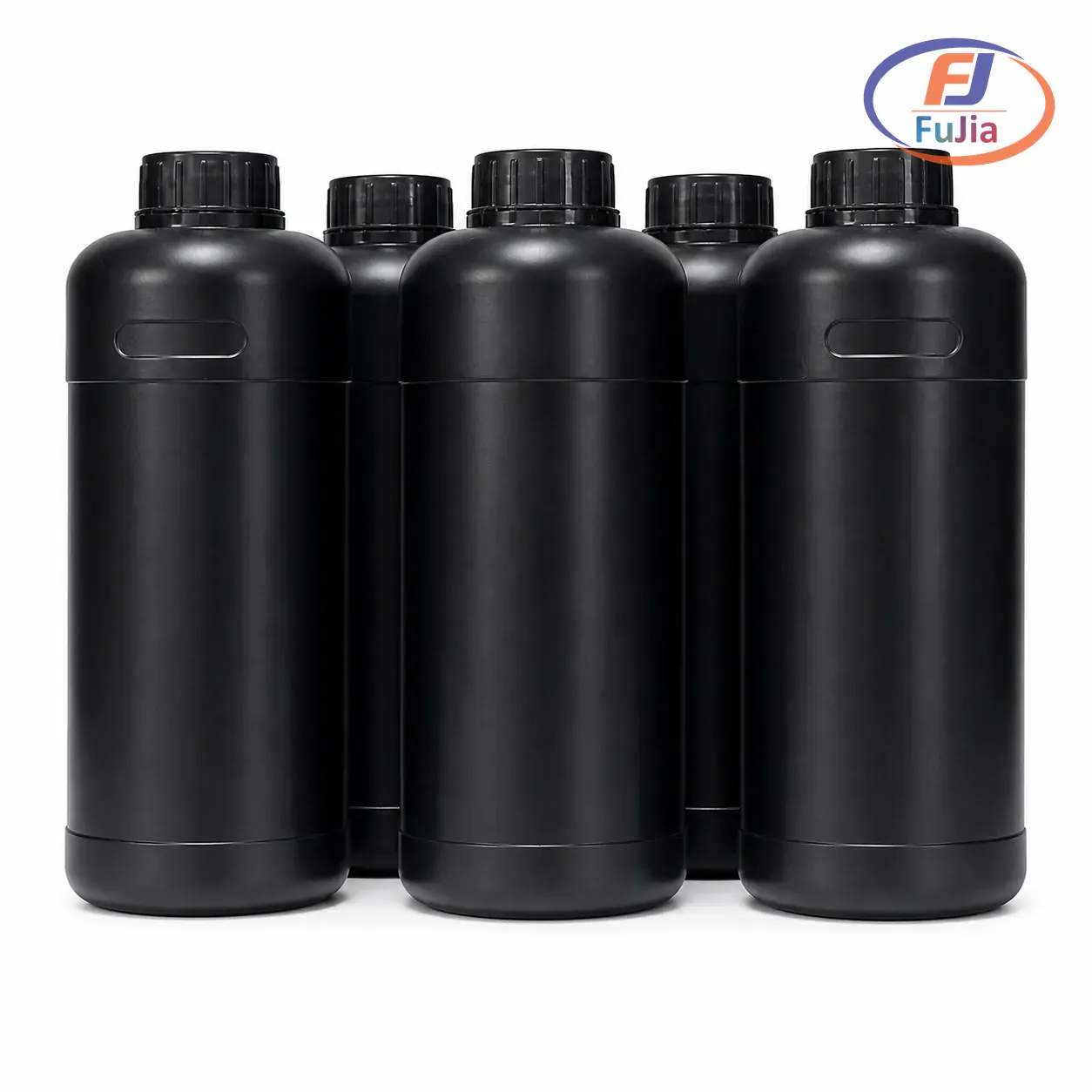
Flexible UV ink is a UV-curable formula that bends and stretches with leather, vinyl, and rubber without cracking, solving the crack problem of standard rigid UV ink. This guide covers how it works, the best surfaces, and how Fujia’s custom UVI-STD formula performs in production.
Key Takeaways
- Standard UV ink cures hard and cracks on soft surfaces; flexible UV ink bends without cracking.
- Fujia’s UVI-STD custom formula runs on roll-to-roll, flatbed, and UV DTF printers (CMYK + White + Varnish).
- Best surfaces include leather, faux leather, vinyl, rubber, soft PVC, and curved phone cases.
- Water-cooled UV-LED cures instantly, and varnish adds 30-50% per-unit pricing.
- Fujia validates 300+ substrates and backs UVI-STD with a 12-month warranty, 48-hour parts dispatch, 3-day onboarding.
What Is Flexible UV Ink?
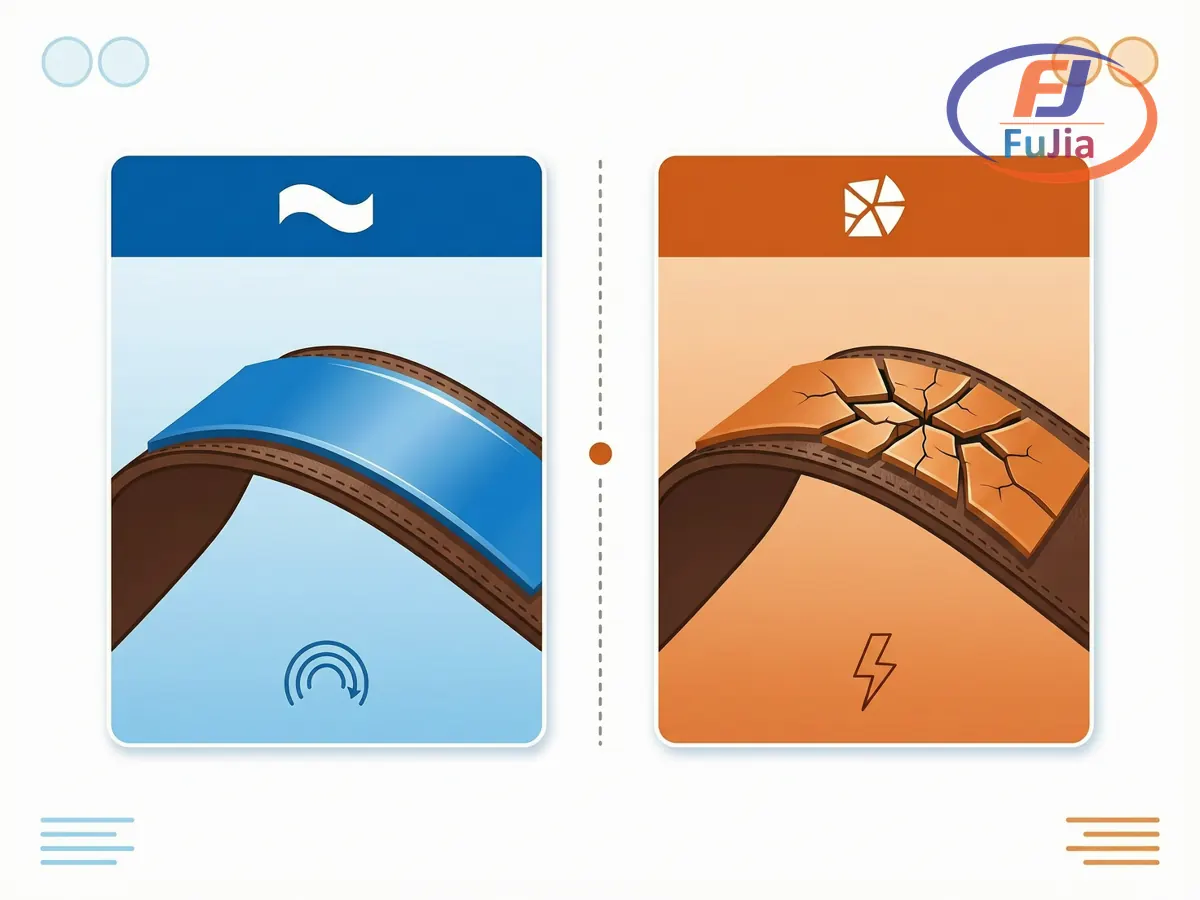
Flexible UV ink is a UV-curable printing fluid engineered so the cured layer stays elastic instead of becoming a hard shell. After a UV-LED lamp cures it, the ink film can bend, stretch, and fold along with the substrate without the image cracking or peeling. Standard UV ink cures into a rigid, glass-like layer that looks great on acrylic and metal but fractures the moment the surface flexes.
The difference is chemical: flexible UV ink uses more elastomeric monomers and a softer oligomer blend, trading a little surface hardness for stretch. Fujia’s UVI-STD is a custom high-end formula built for this balance, and it works across roll-to-roll, flatbed, and UV DTF printers in a 6-color set of CMYK plus White and Varnish.
| Property | Rigid UV ink | Flexible UV ink |
|---|---|---|
| Cured layer | Hard shell | Elastic film |
| Bends without crack | No | Yes |
| Best surfaces | Acrylic, metal, glass | Leather, vinyl, rubber |
| Color set | CMYK + White + Varnish | CMYK + White + Varnish |
| UV-LED cure | Instant | Instant |
Why Standard UV Ink Cracks on Soft Surfaces
Standard UV ink is formulated for dimensional rigidity, which is exactly what you want on a sign or a trophy plate. On a soft surface, the substrate moves but the ink does not, so the stress concentrates at the ink-film edge and the layer fractures. The harder the cure, the lower the elongation before failure.
This is why UV printing on fabric and soft goods historically meant a different technology. Flexible UV ink closes that gap for materials that are soft but not fibrous, like leather and vinyl, where a fabric-first method such as DTF or DTG would be the wrong tool. The UV printing machine guide explains where each UV approach fits.
How Flexible UV Ink Works
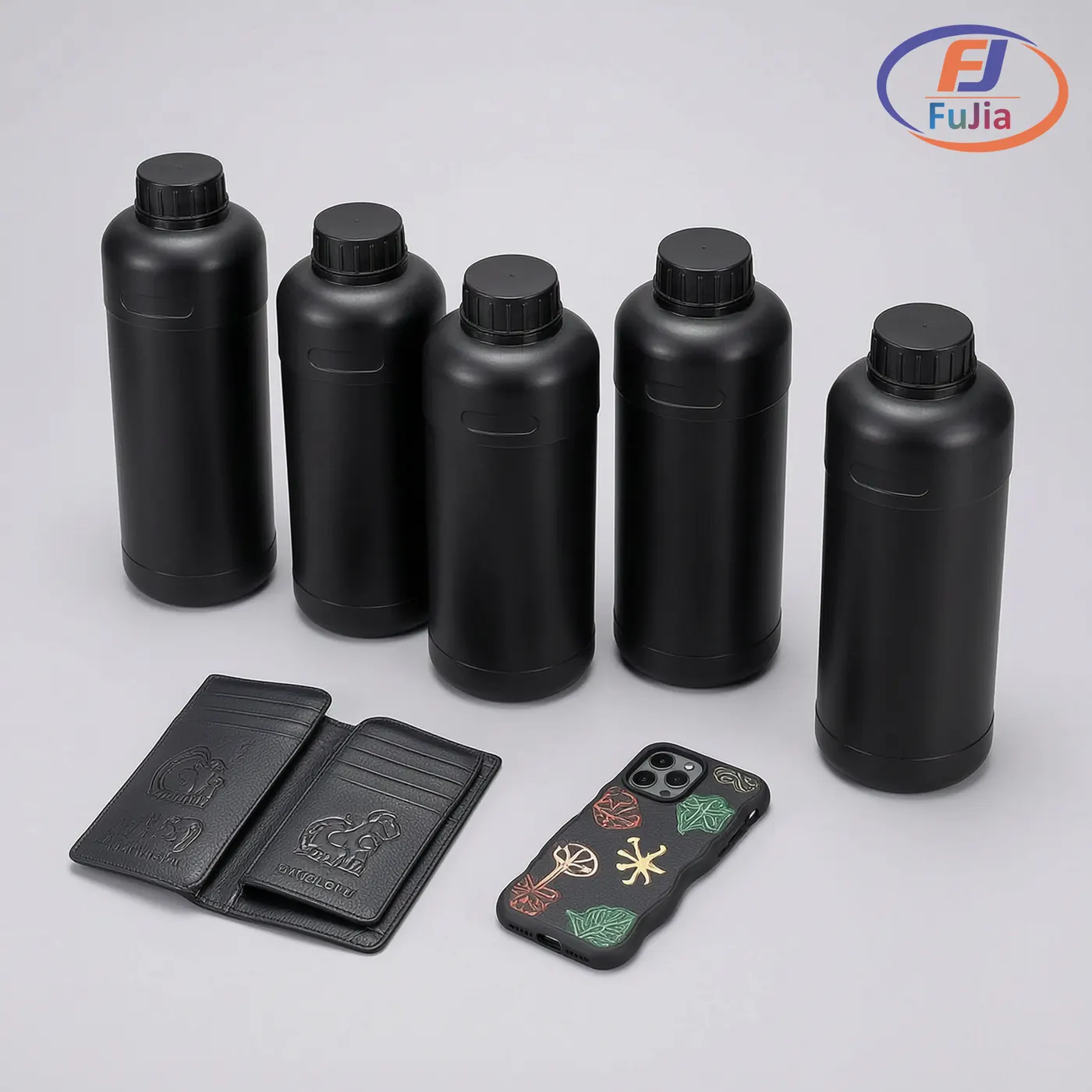
Flexible UV ink deposits CMYK plus White and Varnish through Epson or Ricoh printheads, then a water-cooled UV-LED lamp cures it instantly with no drying rack. The White layer builds an opaque ground on dark or clear substrates, and the Varnish layer adds a spot gloss or matte finish that commands 30-50% higher per-unit pricing. Fujia’s full UV printer lineup feeds UVI-STD through this same architecture.
Because the cured film stays elastic, the print survives handling, shipping, and repeated flexing. The chemistry also keeps viscosity stable across the 300+ substrates Fujia has tested, which is why the same ink batch behaves predictably from leather wallets to soft PVC badges.
Best Surfaces for Flexible UV Ink
Flexible UV ink performs best on non-fibrous soft materials. Leather and faux leather are the most common, from wallets and bags to car interiors and footwear. Vinyl, rubber, soft PVC, and TPU films print cleanly, and curved phone cases with a soft-coat finish take the ink without chipping at the edges. The UV flatbed printing on faux leather guide walks through a real leather workflow.
Avoid fibrous textiles, where the surface moves at the fiber level and even flexible UV ink can fatigue. For those, DTF or DTG remains the right choice. Across the 500+ print businesses Fujia serves, the strongest flexible-UV use cases are promotional leather goods, soft signage, and phone and accessory personalization rather than apparel.
Fujia UVI-STD Custom Formula
UVI-STD is a custom high-end formula compatible with roll-to-roll, flatbed, and UV DTF printers, so a shop standardizes one ink across three machine types. Fujia validates more than 300 substrates before recommending a profile, which removes most of the trial-and-error a shop would otherwise eat. With Varnish, finished pieces reach 3H+ pencil hardness for scratch resistance while keeping the flexible base layer intact.
Fujia manufactures UVI-STD in its 3,500 m² Guangzhou factory under ISO 9001 and CE certification (ISO), and the Kenya glassware workshop case study shows the wider UV line delivering +50% daily output and -40% material waste after switch-on. The formula is also low-VOC, which matters for enclosed workshops and indoor product lines (EPA).
How to Print With Flexible UV Ink
Start with a substrate profile from Fujia’s tested list, then print CMYK and White at normal UV pass settings and add Varnish only where the gloss or protection is wanted. Cure with the water-cooled UV-LED lamp as usual; flexible ink needs no special lamp, only the softer chemistry. Epson and Ricoh printheads jet UVI-STD reliably because the viscosity is tuned for piezo heads (Epson).
After printing, handle the piece normally; the elastic cure means light bending during packing will not crack the image. For maximum durability on high-touch items, pair the flexible base with a Varnish top layer, which is how Fujia hits the 30-50% price premium on premium leather and accessory work.
What is flexible UV ink?
Flexible UV ink is a UV-curable printing fluid engineered so the cured layer stays elastic instead of hardening into a rigid shell. After a UV-LED lamp cures it, the ink film can bend, stretch, and fold along with the substrate without the image cracking or peeling. The chemistry uses more elastomeric monomers and a softer oligomer blend than standard UV ink, trading a little surface hardness for stretch. Fujia’s UVI-STD is a custom high-end version built for this balance and runs on roll-to-roll, flatbed, and UV DTF printers in a CMYK plus White and Varnish set. It is the right choice for soft, non-fibrous materials where a hard UV cure would fracture the moment the surface flexes, such as leather, vinyl, and rubber goods.
What surfaces can flexible UV ink print on?
Flexible UV ink prints best on non-fibrous soft materials, especially leather and faux leather used in wallets, bags, footwear, and car interiors. Vinyl, rubber, soft PVC, TPU films, and curved phone cases with a soft-coat finish also take the ink cleanly and resist edge chipping. Fujia has tested more than 300 substrates and supplies a profile for each recommended material, which removes most trial-and-error. The ink is not ideal for fibrous textiles, where movement at the fiber level can still fatigue even a flexible cure, so DTF or DTG remains better for apparel. In practice, the strongest use cases are promotional leather goods, soft signage, and phone and accessory personalization rather than fabric printing.
Does flexible UV ink crack when bent?
Flexible UV ink is designed not to crack under normal bending, because the cured film stays elastic rather than forming a hard shell. Standard rigid UV ink fractures when the substrate flexes, but flexible UV ink stretches with the surface and recovers. The real limit is extreme or repeated creasing at a sharp fold, where any coating eventually fatigues, so very tight folds should still be avoided. Adding a Varnish top layer improves scratch resistance and helps the print survive handling and shipping. Fujia reaches 3H+ pencil hardness with Varnish while keeping the flexible base layer intact, so everyday bending of leather and vinyl goods will not crack the image under normal use.
Is flexible UV ink safe?
Flexible UV ink is safer to work with than solvent inks because UV curing is a low-VOC process, which matters for enclosed workshops and indoor product lines (EPA). The uncured liquid should still be handled as an industrial chemical: avoid skin contact, wear gloves, and keep it away from food surfaces until cured. Once UV-LED cured, the ink film is stable and inert for normal product use. Fujia manufactures UVI-STD under ISO 9001 and CE certification (ISO), and the water-cooled UV-LED cure means no solvent fumes or drying ovens in the workflow. As with any printing fluid, follow the supplied safety data sheet and ventilate the print area during operation.
Can flexible UV ink be used on a regular UV printer?
Flexible UV ink can be used on a regular UV printer as long as the machine uses compatible printheads and the ink is loaded into clean dedicated channels, because the curing still happens with the same UV-LED lamp. Fujia’s UVI-STD is formulated for Epson and Ricoh heads on roll-to-roll, flatbed, and UV DTF printers, so most standard UV platforms can run it after a profile change. The key is viscosity tuning for piezo heads and a substrate profile from the tested list, not a hardware modification. Shops should flush old ink from the lines before switching and run a nozzle check, because mixing a rigid and flexible formula in one channel can upset jetting. Once set up, the printer needs no special lamp, only the softer ink chemistry.
Print Flexibly With Fujia UVI-STD
Fujia has manufactured UV printers and ink in its 3,500 m² Guangzhou factory since 2011, serving 500+ print businesses across 50+ countries with ISO 9001 and CE certified quality (ISO). UVI-STD flexible ink is a custom formula validated across 300+ substrates and built to run on roll-to-roll, flatbed, and UV DTF printers from one supply. Every Fujia printer ships with a 12-month warranty, 48-hour parts dispatch, and a 3-day remote onboarding plan that covers UV ink setup. Send us your flexible material and a design and we will print a sample on our UV line, record the process, and ship it back at no cost. Contact the Fujia team today to add crack-free flexible UV printing to your shop.
