

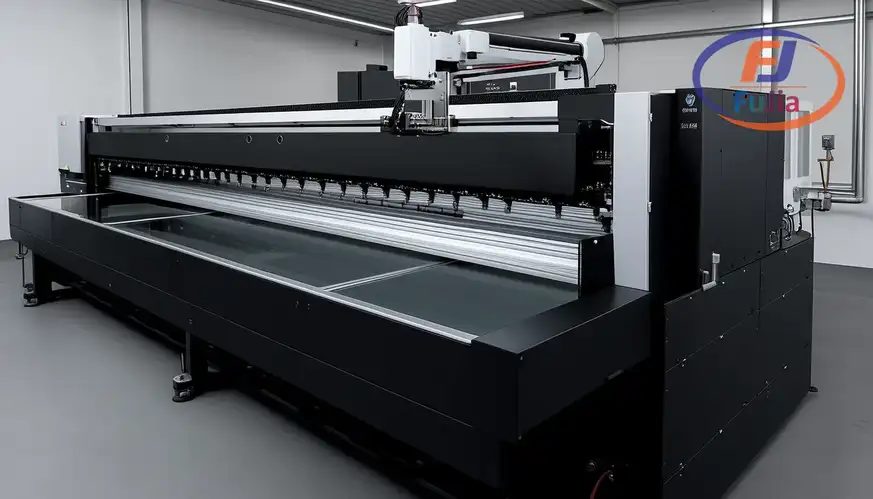
A Durst UV flatbed printer is the European premium tier of rigid printing: Tau and Rho lineage machines at $100,000-500,000-plus, engineered in Italy for the industrial and packaging-adjacent work where registration, uptime, and white-ink quality price themselves into six-figure contracts. Durst competes with EFI at the top of the market, and the brand’s argument is engineering depth rather than price, which is why the buyer conversation is about contracts and duty cycles rather than about spec sheets. This guide maps the Durst tiers, the buyers its engineering serves, and the alternatives at every scale below it.
Key Takeaways
- Durst’s UV flatbed lines span Tau mid-format at $100,000-250,000 and Rho grand-format at $200,000-500,000-plus.
- The engineering argument is registration stability, white-ink quality, and uptime at industrial duty cycles measured in years.
- The tier serves packaging-adjacent industrial work, premium signage, and contract production whose clients audit capability.
- Factory-direct wide-format equivalents at $35,000-80,000 share the print physics with 50-70% savings and self-support.
- We recommend Durst for industrial buyers whose contracts audit capability and finance uptime, and direct classes everywhere else.
What the Durst Name Covers
| Line | Format | Price band | Production |
|---|---|---|---|
| Tau mid-format | 1.8-2.5 m | $100,000-250,000 | signage, industrial panels |
| Rho grand-format | 2.5-3.5 m | $200,000-500,000-plus | industrial and display, 100-200 m2 per hour |
| Pwr hybrids | roll + rigid | $150,000-400,000 | mixed-media production |
The line table maps Durst’s presence, and the Italian engineering heritage shows in the details industrial buyers audit over years rather than demos: frame stability across years of multi-shift duty, white-ink systems whose density holds across 8-hour shifts, and registration that survives substrate changes at 3-6 mm tolerances and production pace. Durst’s Rho lineage built the brand in grand-format display work across 2.5-3.5 m beds, and the Tau line brings that engineering into mid-format production, with hybrids covering shops whose rigid and roll media share schedules, per the brand-tier logic our Canon and EFI guides apply across the premium market. Heritage, at this tier, is a service network measured in decades.
Here’s the thing about the premium tier’s argument: it is measurable, and industrial buyers measure it: registration drift over a year of production, white density consistency across batches, and uptime percentages of 95% and above that service contracts guarantee. Durst’s engineering prices those measurements at the top of the market, and the buyers whose contracts price them identically find the argument complete, while buyers without such contracts find the argument expensive, and both conclusions are correct in their own environments.
Who the Engineering Serves
| Buyer profile | Volumes | Why Durst fits |
|---|---|---|
| industrial packaging-adjacent | multi-shift, audited | registration and uptime contracts |
| premium signage producers | design-led contracts | white-ink and finish quality |
| contract display houses | exhibition programs | reliability at deadlines |
| government and enterprise suppliers | capability audits | documentation chain |
The buyer table profiles the engineering’s customers, and the audit row is the thread through all of them, because every premium tier has an auditor: Durst machines serve environments where someone verifies capability, whether a client’s procurement team, a certification body, or a finance partner underwriting the uptime. The engineering is the answer to audits, and audits are what the premium prices, per the audit-driven logic our EFI printer guide applies to the enterprise tier identically. Every audit has an auditor, and the machine is the answer sheet.
The shops that grow into Durst typically run wide-format classes at capacity first, because the skills and order books that justify $100,000-plus machines develop on $35,000-80,000 ones, and the growth path through the classes is the same escalation pattern our fleet guides document across industrial buyers. A shop buying Durst at its first machine is usually buying a contract that demanded it, and those contracts are real but rare at the entry stage. Contract-first buyers should document the contract before the machine, because the machine depreciates whether the contract renews or not.
The Alternatives at Every Scale
| Durst tier | direct equivalent | Saving |
|---|---|---|
| Tau $100,000-250,000 | wide-format servo $35,000-60,000 | $65,000-190,000 |
| Rho $200,000-500,000-plus | grand production class | volume-priced |
| Pwr hybrids | hybrid classes $30,000-45,000 | $120,000-plus |
The alternatives table prices the direct map, and the savings columns fund years of ink, additional machines, or the service contracts that bridge the support gap the direct route opens. The equivalents run the same LED-cured chemistry on the same vacuum-bed principles, and their gaps are registration engineering at industrial duty, European service networks, and the audit documentation chain, each of which is purchasable or manageable depending on the shop’s staffing. The used Durst market adds a middle route, industrial machines from upgrading producers at 30-50% of new with service histories attached, and the inspection protocol our reviews guide prescribes runs identically on premium-class used presses. Head hours, motion wear, and control-system support status are the audit lines that used premium presses answer on the buyer’s media.
That said, the support reality at the premium tier is contractual: European service networks dispatch engineers under SLAs, and the contracts price into the machines’ operating budgets the way ink does. We recommend collecting the service terms in writing at the quote stage, because the premium’s promise is the contract, and the contract is what the downtime audit reads, per the support-contract discipline our EFI guide applies to the enterprise tier.
A packaging-adjacent case we supply anchors the tier fit: an industrial decorator running multi-shift production of 200-400 printed panels daily for appliance and furniture brands, contracting with clients whose supplier audits inspect equipment classes, running a Tau-class machine whose registration survived 24 months of audits and whose service contract never lapsed past its SLA. The decorator’s clients audit, the machine answers, and the contract prices both, per the audit-chain cases our industrial guides document across premium buyers.
How much does a flatbed UV printer cost?
A flatbed UV printer costs $1,799-2,800 factory-direct at the desk tier, $3,500-8,000 mid class, $9,000-45,000 across commercial and wide classes, $60,000-400,000-plus for EFI-class industrial machines, and $100,000-500,000-plus for Durst’s premium European tier, with each rung pricing duty-cycle engineering and support depth rather than print quality. The chemistry runs identically at every tier, and the engineering scales with the hours and the audits the buyer’s contracts demand. The full ladder sits in our flatbed pricing guide, and the premium rung is bought by contracts rather than by comparisons. Contracts, at $100,000-plus, are the currency the tier trades in.
What is the best flatbed UV printer?
The best flatbed UV printer is the tier whose engineering matches your duty cycle and whose support model matches your staffing: desk and mid classes for single-shift shops, wide-format for panel volume, EFI and Durst-class machines for multi-shift industrial production with audited contracts, and factory-direct equivalents of every tier for technically-staffed buyers. The verification points, registration over time, white-ink consistency, and service terms in writing, run at every tier, and the premium tiers add audits and SLAs to the same checks. Best is the machine your contracts and your wrench set agree on, and that agreement precedes any ranking. The two rarely disagree once the audit question is answered honestly.
What are the downsides of UV printing?
UV printing’s downsides run consistent across tiers: adhesion on unprimed plastics needs promoters, the cured film is not food-contact certified, white ink demands daily circulation, and cured layers crack on deeply flexible media. The premium tier adds contract costs, ink program commitments, and European service dependencies to the same list, because the engineering prices its support as part of the system. Every downside manages with documented practice at every tier, and each maps to a routing rule, a maintenance ritual, or a contract line, per the limits our consumables guides document for the chemistry class. The paperwork, at this tier, is the product’s operating manual. Managed downsides are just specifications with paperwork.
Is a UV printer worth it?
A UV printer is worth it when the objects or panels it prints are a revenue line with recurring demand, because consumables at $0.10-0.50 per object against retail multiples service the financing at every tier from desk to premium, while idle machines price badly at every price point. The worth-it test is the order book’s consistency, the staffing answer for maintenance, and the support route matching both, with the premium tier’s additional test being whether contracts audit the capability the engineering provides. In our experience the buyers who counted orders before machines at every tier have been right, and the test remains free. Free tests with this good a track record deserve to run first.
Verdict
The Durst UV flatbed printer is the European premium tier: Tau and Rho machines at $100,000-500,000-plus whose engineering answers the registration, uptime, and audit questions that industrial contracts ask, with factory-direct equivalents at $35,000-80,000 running the same physics for shops whose staffing and contracts live below the audit line. Size the tier by contracts and duty cycles, collect the service terms in writing, and let the used premium market open the engineering at depreciation prices when new-enterprise exceeds the calendar’s needs. The premium engineering earns its prices in audited environments, and the audit is what puts a shop there. To benchmark factory-direct output against any premium-tier sample on your own media, contact Fujia Print for a comparison print.
Sources
- Durst Group: Tau and Rho reference.
- Wikipedia: UV curing: LED ink chemistry.
- AATCC: durability testing standards.
- Fujia Print signage cases: industrial production examples.
