

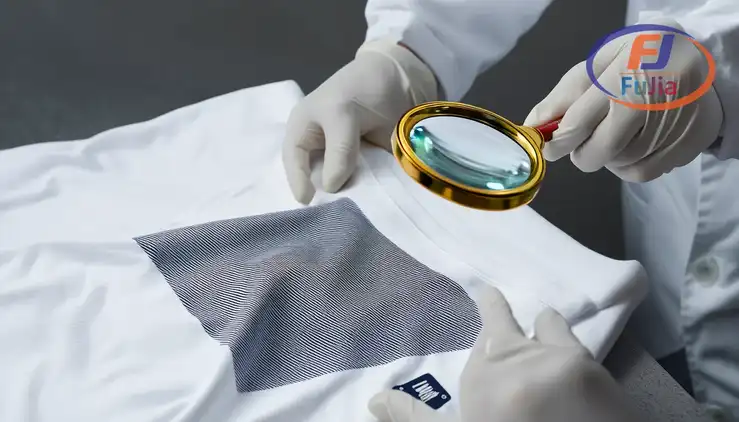
DTG printing quality is visible in five markers, sharp edges at 1200-2400 dpi, smooth gradients without banding, white underbase that blocks fabric show-through, color that matches the proof after curing, and a hand that survives 40-50 wash cycles at AATCC Grade 4, and every marker traces to a setting or a ritual rather than to luck. The quality conversation matters because garment buyers judge prints the way jewelers judge stones, at reading distance and under suspicion. This guide defines the markers, the settings behind them, and the QC ritual that keeps a DTG line honest.
Key Takeaways
- The five quality markers are edge sharpness, gradient smoothness, underbase opacity, color accuracy, and wash durability.
- Print at 1200 dpi minimum for text and detail work, with RIP halftone settings tuned per fabric rather than left at defaults.
- Wash durability runs 40-50 cycles at Grade 4 on properly pretreated and cured prints, verified by a 5-cycle first-wash test.
- DTF edges beat DTG on the sharpest detail, while DTG wins hand feel on 100% cotton; the processes split rather than rank.
- We recommend one QC garment per batch, washed five cycles before the production run releases.
The Five Markers of Quality
| Marker | What good looks like | What controls it |
|---|---|---|
| edge sharpness | crisp lines at 1200-2400 dpi | head condition, RIP resolution |
| gradient smoothness | no banding in blends | nozzle health, halftone settings |
| underbase opacity | no fabric show-through on darks | white laydown, choke settings |
| color accuracy | print matches proof post-cure | profiling, curing consistency |
| hand and durability | soft feel, 40-50 wash cycles | pretreat weight, cure time |
The marker table is the quality vocabulary, and each row’s control column points at something the shop sets rather than something it hopes for. Edge sharpness lives in head health and RIP output resolution, gradients live in nozzle completeness and halftone pattern choice, underbase lives in the white settings our dark-shirt guide details, and color accuracy lives in the profile-and-cure pair that survives from proof to production. Hand feel and durability are the chemistry stage’s verdict, and the five together are what a buyer’s fingers and eyes grade on arrival, per the quality markers our apparel printing guides apply across garment processes.
The markers interact, which is what makes quality an operation rather than a setting: an underbase laid heavy enough to guarantee opacity will stiffen the hand, and gradients smooth enough to satisfy a photograph may demand head conditions that text edges punish. The recipe per fabric is how the interactions get managed. The shops that hold quality define their own recipe per fabric type, dial it on test garments, and stop adjusting, because a recipe changed per job is a recipe that never stabilizes. We recommend writing the recipe per fabric class and taping it to the printer, because the recipe is the quality.
The Settings Behind the Markers
Resolution anchors the first marker, and 1200 dpi is the working minimum for text, line art, and photographic detail, with 2400 dpi reserved for fine-art reproduction where the throughput cost justifies itself. Half the quality complaints in any DTG forum trace to resolution set below that floor. The RIP’s halftone and ink-limit settings shape gradients and hand, and defaults are a starting point rather than a destination, because a 100% cotton tee, a tri-blend, and a polyester blend each want different laydown. Head condition gates everything: a single missing nozzle shows as a white streak through every gradient on the shirt, which is why the nozzle check that opens every shift is a quality instrument rather than a chore.
Curing and pretreat hold the back half of the markers. Pretreat weight per fabric class, the 15-35 gram spread by garment type, feeds the underbase’s opacity and the hand’s softness, and the curing pass sets both chemistry stages into the fabric. The IR thermometer reading of the platen settles curing arguments that display panels lose, and the same measured-recipe discipline our pretreat guides document for dark garments governs the whole stage here.
Color management is the quiet marker behind the visible four. A profiled workflow, RIP profile matched to ink and fabric, proof approved under daylight, and production run under the same conditions, delivers prints that match their proofs, while an unprofiled workflow delivers a different shirt every week from the same file. We recommend proofing on the actual garment fabric rather than on transfer paper, because the fabric is the color’s final address, and the same proof-first logic our textile guides document across every printing class applies doubly where the customer wears the result. That said, profiles drift with ink batches, and the proof catches the drift before the order does.
Wash Durability: The Grade That Matters
| Stage | Durability outcome | Verified by |
|---|---|---|
| proper pretreat and cure | 40-50 cycles at Grade 4 | 5-cycle first-wash test |
| under-cured chemistry | cracking by cycle 10 | same test, failed early |
| over-heavy underbase | stiffness and shoulder cracks | hand check before wash |
| customer hot drying | accelerated fade | care card prevention |
The durability table prices the chemistry stages, and the numbers hold across reputable ink and machine combinations when the recipe is honored: 40-50 machine wash cycles at AATCC Grade 4 is the working standard for properly produced DTG on cotton. The first-wash test is the ritual that verifies the standard before the order ships, one garment through five cycles, judged at full color and hand, and the test that passes predicts the grade. Care cards ship with every order because the customer’s dryer is the one stage outside the shop’s control, and the card is the cheapest durability insurance the industry sells, per the care discipline our garment guides document across print classes.
The DTF comparison arrives here because buyers ask it directly: DTF transfers hold sharper edges on the finest detail and match DTG’s wash grades on quality film, while DTG keeps the softer hand on 100% cotton that wearers feel every hour. The processes split by fabric and feel rather than rank, and shops running both route cotton comfort garments to DTG and mixed-fabric rush work to DTF, per the process-split logic our DTF comparison guides document in full.
The QC Ritual That Holds Quality
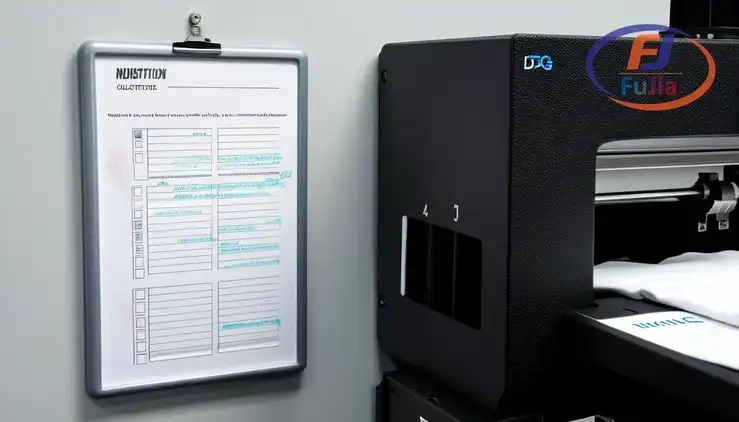
The QC ritual is three checks per batch and it takes fifteen minutes: a nozzle check before the run, a wet-print inspection of the first garment under good light, and a five-cycle wash test on one garment from the batch. The ritual catches every drift the category produces, nozzles clog overnight, pretreat batches vary, and cure times drift with platen temperature, and each failure surfaces at the cost of one garment rather than one order. We recommend logging the three checks with initials, because the log turns quality from a hope into a schedule, and the same batch-QC logic our sourcing guides prescribe for every printed input governs a DTG line identically.
The inspection criteria are the five markers translated into yes-or-no questions: edges sharp at reading distance, gradients free of banding, underbase blocking show-through on the darkest fabric, color matching the approved proof, and the wash test surviving five cycles. Any no stops the batch and starts a diagnosis ladder that begins at the cheapest fix, nozzle check before cleaning cycle, before deep clean, before head replacement. Here’s the thing about quality systems: the ladder’s order matters more than the ladder, because the shop that reaches for expensive fixes first spends its margin diagnosing.
The three-check ritual in one view:
A shop case we supply anchors the ritual’s economics: a campus printer producing 200-400 shirts weekly cut its reprint rate from 6% to under 1% after moving the three checks onto a wall card with initials per stage, and the only faults since have been a worn wiper blade and one failed thermistor, both genuine wear items rather than mystery failures. The ritual is the quality system, and the card is the system’s memory, per the checklist cases our production guides document across print operations.
Is DTG printing high quality?
DTG printing is high quality when the recipe is honored: 1200-2400 dpi output, dialed underbase and halftone settings, consistent pretreat, and verified curing produce prints with sharp photographic detail, smooth gradients, and 40-50 wash cycles at Grade 4 durability. Quality failures in DTG are almost always process failures, skipped nozzle checks, guessed pretreat weights, unverified curing, rather than technology limits. The technology prints better than most shops operate it. The proof is the workflow itself: a shop that runs the three-check QC ritual holds quality batch after batch, and the same operational definition our guides apply to every print process settles this one.
Is DTG higher quality than DTF?
DTG and DTF excel at different quality dimensions rather than ranking: DTF holds sharper edges on the finest detail because the transfer film prints at production resolution before application, while DTG delivers the softer hand on 100% cotton that wearers feel, and both reach Grade 4 wash durability when produced correctly. Photographic gradients run comparably on both at good shops. The processes split by fabric and feel, cotton comfort garments to DTG, blends and rush work to DTF, and the buyer wearing both on the same shelf will choose by hand rather than by resolution, per the comparison logic our DTF guides document in full.
What are the disadvantages of DTG printing?
DTG printing’s disadvantages are four: dark garments carry the underbase cost and pretreat stage that lights skip, print speed of 60-150 seconds per shirt caps daily capacity below transfer workflows, cotton content matters because poly blends shed water-based ink adhesion, and white ink demands the daily circulation ritual every pigment system needs. The cost per print also runs above transfer methods at small sizes, because the process prints the whole platen regardless of design area. None of the disadvantages is hidden, and each maps to a routing rule, fabric choice, volume expectations, and the maintenance ritual our guides document in full.
How long do DTG prints last?
A DTG print survives 40-50 machine wash cycles at AATCC Grade 4 color retention when the pretreat, cure, and care align, which is years of regular wear on a garment rotated through a wardrobe. The variables are pretreat weight, cure verification, fabric content, and the customer’s washing habits, with hot drying aging any print faster than its wash count. The first-wash test on one garment per batch verifies the number before orders ship, and the care card, cold wash, inside out, tumble low, protects it after. Prints that survive their first five cycles with full color reach the full range.
Verdict
DTG printing quality is a defined, achievable standard: five visible markers, settings that map to each, 40-50 wash cycles at Grade 4 when the recipe holds, and a fifteen-minute QC ritual that catches every drift at the cost of one garment. Dial the recipe per fabric, verify curing with a thermometer rather than a display, wash-test every batch, and log the checks where the crew initials them. Quality is an operation, and the operation fits on a wall card. To see QC-tested DTG output printed from your own artwork, contact Fujia Print with your designs and fabric list.
Sources
- Wikipedia: Direct-to-garment printing: process overview.
- AATCC: wash durability standards.
- Wikipedia: Inkjet printing: head mechanics.
- Fujia Print apparel cases: QC production examples.
