

A dual head DTF printer carries two printheads instead of one, which roughly doubles output per hour but also doubles the white ink maintenance that comes with it. This explainer covers how the dual-head layout works, what it costs, and when the second head is worth the money.
Key Takeaways
- A dual head DTF printer uses two printheads, often one for CMYK and one for white ink.
- Real-world speed roughly doubles versus a single-head unit of the same width.
- Entry A3 dual-head kits start near $2,249, while 24-inch i3200 dual-head systems run $11,995 to $15,995.
- Fujia’s A1 dual-head prints 8 to 13 m2/hr on two Epson I3200 heads with a named transmission stack.
- Buy dual head once you pass about 200 transfers a day. Below that, a single head costs less to run.
What Is a Dual Head DTF Printer?
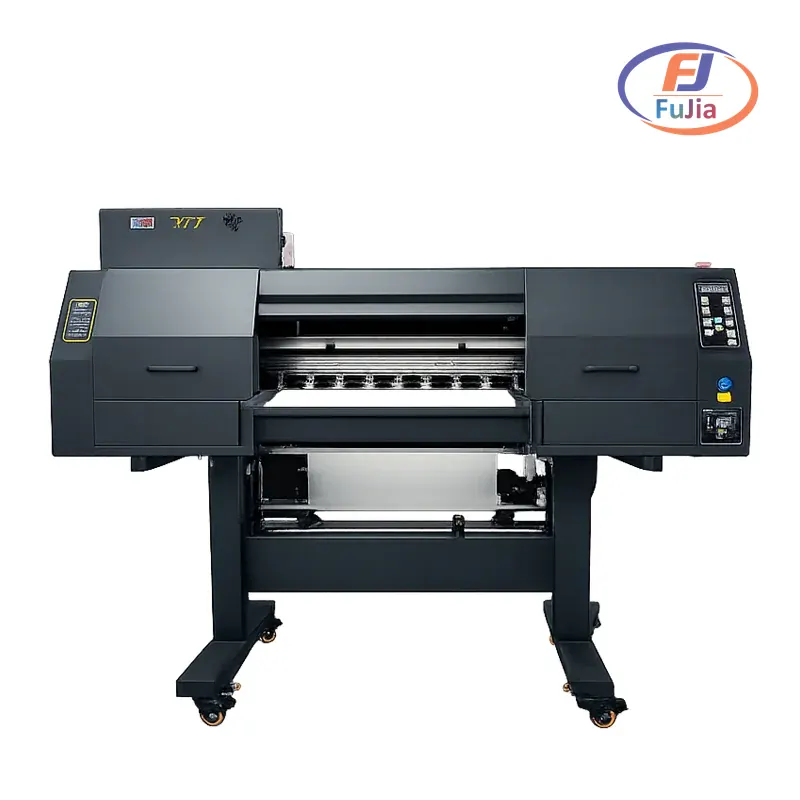
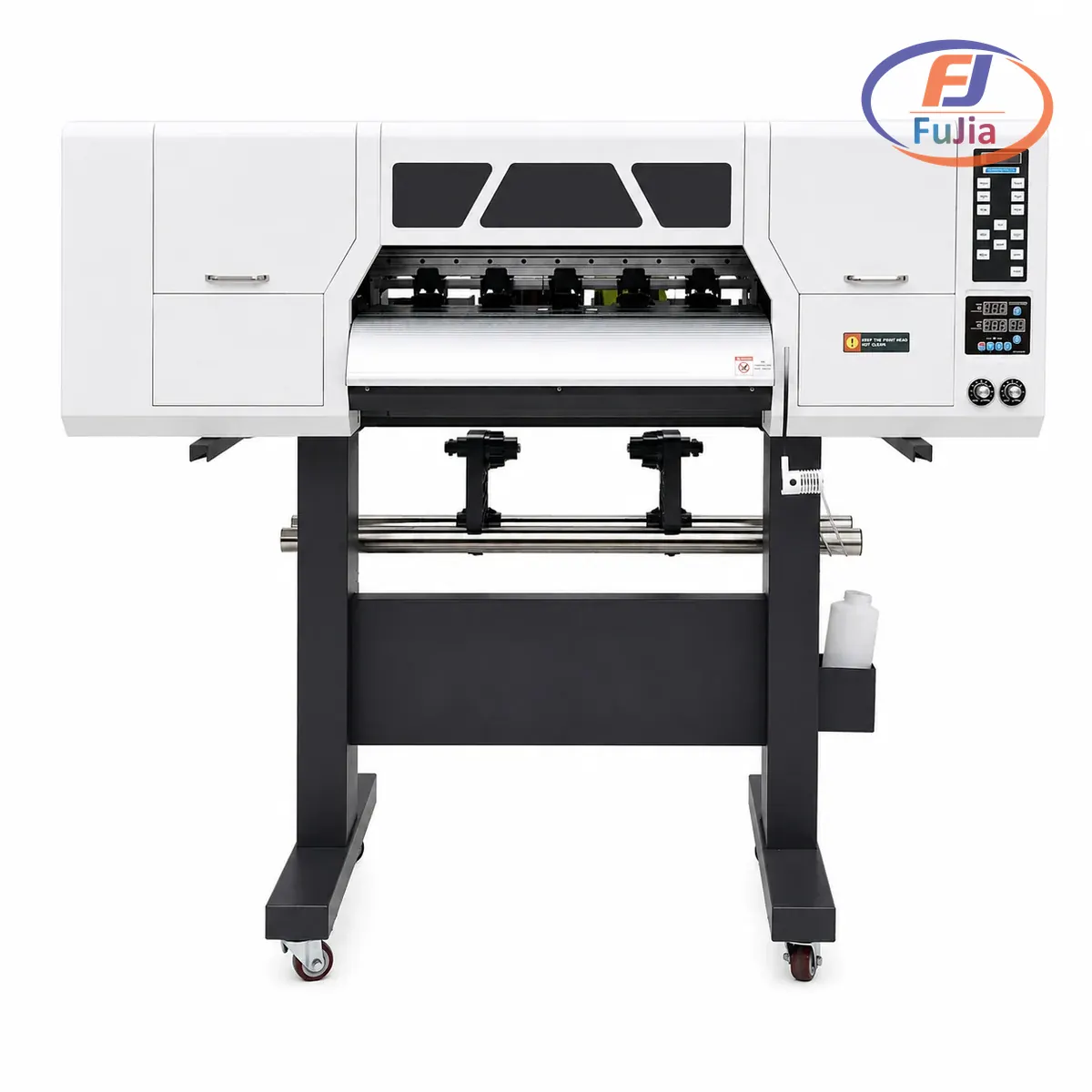
A dual head DTF printer places two printheads side by side in the carriage. The most common split assigns one head to CMYK and the other to white ink so each pass lays both layers, while some builds run two heads on the full color set to share the load and raise speed. Either way, the second head is what separates a dual-head machine from a single-head desktop unit.
Epson’s I3200 printhead is engineered for high-speed single-pass and multi-pass industrial printing, balancing resolution and throughput for production environments.
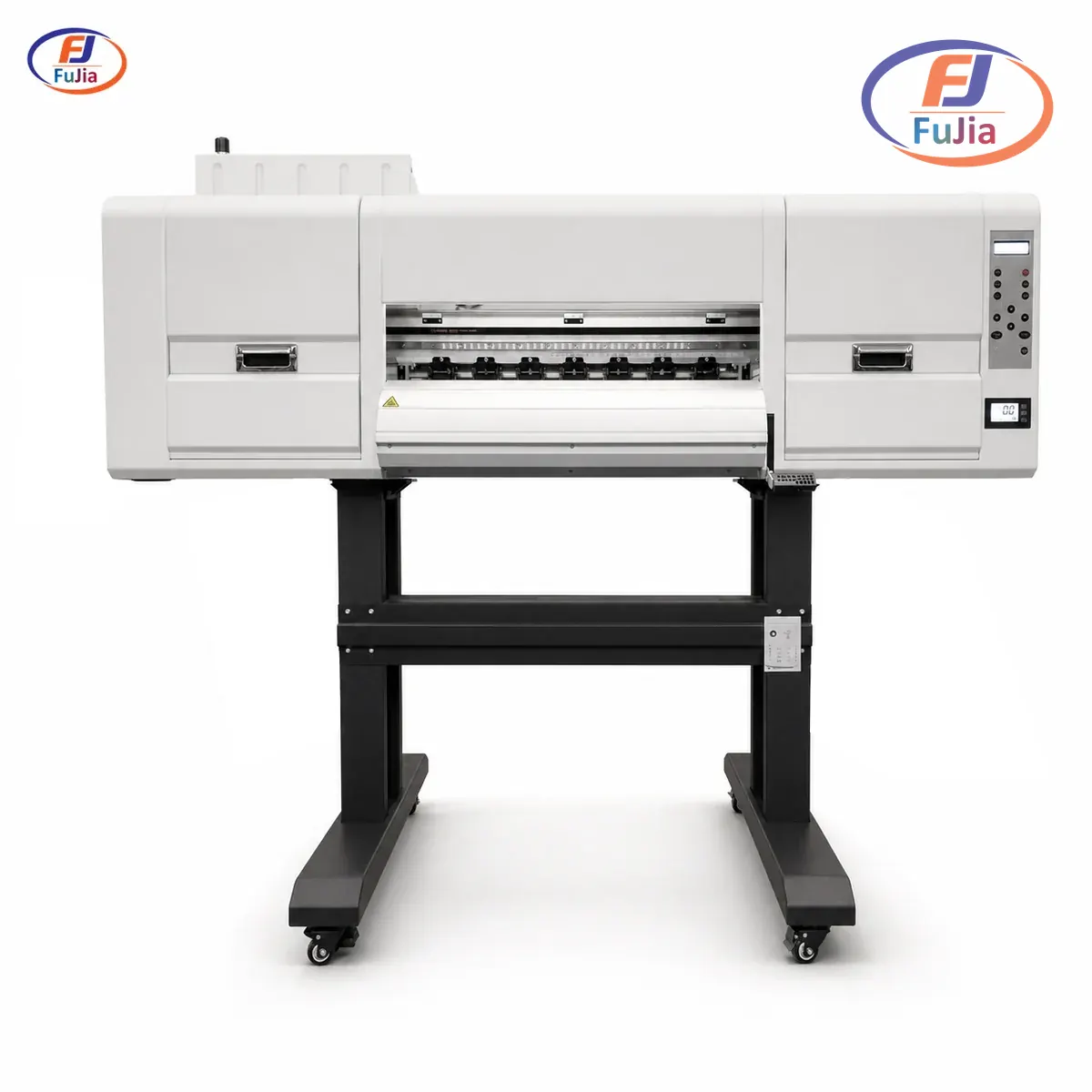
The dual-head design solves the core limit of single-head DTF: one head must print color and white in sequence, which caps throughput. With two heads, the white ink path gets its own dedicated nozzle bank. Fujia’s A1 dual-head model, the DTF-A1-2H, uses two Epson I3200 heads across a 650 mm width. That dedicated white path is why dual-head units hold color consistency on long runs. Our guide to what DTF printing is covers the underlying transfer workflow.
Single Head vs Dual Head
| Factor | Single Head | Dual Head |
|---|---|---|
| Printheads | 1 | 2 |
| Typical speed | 2-6 m2/hr | 8-13 m2/hr |
| White ink path | Shared head | Dedicated head |
| Maintenance | Lower | Roughly double |
| Best for | Hobby, low volume | 200+ transfers/day |
The numbers show the trade plainly. A single XP600 head manages 2 to 6 m2/hr by pass count, while a dual I3200 build reaches 8 to 13 m2/hr on the same width, and the cost is maintenance: two heads mean two white ink circuits to circulate and two sets of nozzles to keep clear.
Speed and What Fujia Builds
| Model | Heads | Width | Speed | Notes |
|---|---|---|---|---|
| Fujia A1 Dual-Head | 2x I3200 | 650 mm | 8-13 m2/hr | Honson + Leadshine + THK |
| Fujia A1 4-Head | 4/5x I3200 | 650 mm | 27 m2/hr | High-volume line |
| Entry A3 dual XP600 | 2x XP600 | 13 inches | ~5 m2/hr | Hobby to small shop |
Fujia’s A1 dual-head printer pairs its two Epson I3200 heads with a named transmission stack: Honson mainboard, Leadshine servo motor, and THK silent guide rail. That stack lets the machine hold 12-hour continuous runs without quality drift. The same approach sits in the Turkish garment factory that lifted throughput 40% and cut cost 30% after moving off screen printing. The A1 4-head model pushes to 27 m2/hr for shops that need volume above all else.
Pricing Across the Market
Dual-head pricing spreads wide by width and printhead grade. Entry A3 dual XP600 kits start around $2,249, with bundled A3 XP600 deals near $5,699 and 4.7 to 5.0 star ratings from buyers. A 24-inch dual I3200 system such as the DTF Pro 24-2H lists at $14,495 to $15,995 with an embedded roll feeder and in-line powder applicator. Andemes sells a 24-inch all-in-one dual i3200 unit at $11,995.
Based on data from our customers across 50+ countries, the break-even on a dual-head upgrade lands near 200 transfers per day. Below that line, the extra head mostly adds maintenance cost. Above it, the speed pays the premium back in 3 to 8 months. Our A1 DTF printer buying guide maps the width and head count to daily volume.
Who Should Buy a Dual Head DTF Printer?
The dual head pays off for three buyer types. First, production shops already past 200 transfers a day that cannot quote faster lead times on a single head. Second, print services taking larger custom apparel orders where batch time drives margin. Third, businesses replacing screen printing, where the Turkish factory case shows 40% more throughput at 30% lower cost.
If you’re just starting out, a single head is the safer first buy. For most shops below 200 transfers a day, a single head is the right choice. The honest truth is that the second head earns its keep only when volume is there, and idle capacity still needs daily circulation. For industrial DTF printing, the dual and quad head builds are the standard. See our DTF printer maintenance guide for the daily routine two heads require.
Maintenance Reality
Two heads mean two white ink circuits, and white ink is the part of any DTF system that demands the most care. A dual-head machine needs both circuits circulated, both damper sets watched, and both nozzle banks checked on a daily schedule. Skipping a day on either head risks a clog that costs a printhead.
Fujia counters this with an auto power-off white ink circulation system that keeps TiO2 from settling even during outages, plus a 12-month warranty with common parts dispatched within 48 hours. A 3-day remote onboarding plan gets a new operator fluent in the routine. Fujia also holds ISO 9001 and CE certification for its factory-direct DTF line. The second head adds work, but the support structure keeps that work manageable.
Frequently Asked Questions
What is a dual head DTF printer?
A dual head DTF printer has two printheads in the carriage instead of one. The usual layout gives one head the CMYK color set and the other the white ink, so a single pass lays both layers onto the PET film. This removes the sequential color-then-white limit of a single-head machine and roughly doubles hourly output on the same print width. Fujia’s A1 dual-head model uses two Epson I3200 heads across a 650 mm bed at 8 to 13 m2/hr. The trade is maintenance: two heads mean two white ink circuits to keep circulating. For a shop past 200 transfers a day, the speed gain beats the extra upkeep. Below that volume, a single head is cheaper to own and run.
Is a dual head DTF printer better than a single head?
A dual head printer is better only when volume justifies it. On the same width, two heads roughly double speed, moving a 13-inch unit from about 2 to 6 m2/hr up toward 5 m2/hr, and a 25.5-inch A1 from single-head rates to 8 to 13 m2/hr. The downside is upkeep: the search results and maker notes both state that a dual head roughly doubles white ink maintenance. For a hobbyist or low-volume seller, that extra work and cost is wasted. For a production shop at 200-plus transfers a day, the second head pays back in 3 to 8 months through faster turnaround. Match the head count to your daily sheet count, not to the spec sheet.
How much does a dual head DTF printer cost?
Dual head DTF printer prices scale with width and printhead grade. Entry A3 dual XP600 kits start around $2,249, with bundled A3 XP600 deals near $5,699 that include a shaker and accessories. A 24-inch dual I3200 system such as the DTF Pro 24-2H lists at $14,495 to $15,995 with an embedded roll feeder and in-line powder applicator, and Andemes sells a 24-inch all-in-one dual i3200 unit at $11,995. Fujia’s A1 dual-head sits in the production tier with factory-direct pricing and a 12-month warranty. The recurring cost that matters most is ink: dual heads use more white ink per hour, so price the consumable, not just the machine.
What is the maintenance difference between single and dual head DTF printers?
The maintenance difference is simple but significant: a dual head adds a second white ink circuit. White ink is the most demanding fluid in any DTF system because titanium dioxide settles and clogs nozzles, so two heads mean two circulation systems, two dampers, and two nozzle banks to check every day. Maker notes confirm a dual head roughly doubles white ink maintenance versus a single head. The payoff is speed, not ease. Fujia reduces the risk with an auto power-off white ink circulation system that runs even during outages, a 12-month warranty, 48-hour parts dispatch, and a 3-day remote onboarding plan. Budget the daily routine before buying the second head.
Conclusion
A dual head DTF printer roughly doubles speed at the cost of roughly double white ink maintenance, and it pays off once daily volume passes about 200 transfers. For factory-direct A1 dual-head DTF printers built for production, see the Fujia DTF printer lineup.
Sources
- Epson printhead technology: I3200 printhead architecture used in Fujia A1 dual-head models.
- Inkjet printing, Wikipedia: drop-on-demand inkjet principles behind DTF.
- Digital textile printing market, Grand View Research: market context for DTF adoption.
- ISO 9001 quality management: certification standard held by Fujia.
