

Wash DTF shirts inside out in cold water at or below 30°C (86°F) using a mild liquid detergent on a gentle cycle, then tumble dry on low heat or hang dry. Properly cared-for DTF transfers maintain vivid colors and full adhesion through 50 to 100+ wash cycles, validated by AATCC TM61 accelerated laundering tests that simulate five home washes in 45 minutes at 49°C. Fujia Print manufactures the DTF ink, transfer film, and adhesive powder system used by apparel businesses across 50+ countries, and this guide reflects the same wash care protocol tested on Fujia DTF printers producing thousands of printed garments monthly.
Key Takeaways
- Turn DTF shirts inside out before every wash to reduce friction on the transfer surface by an estimated 60-80%.
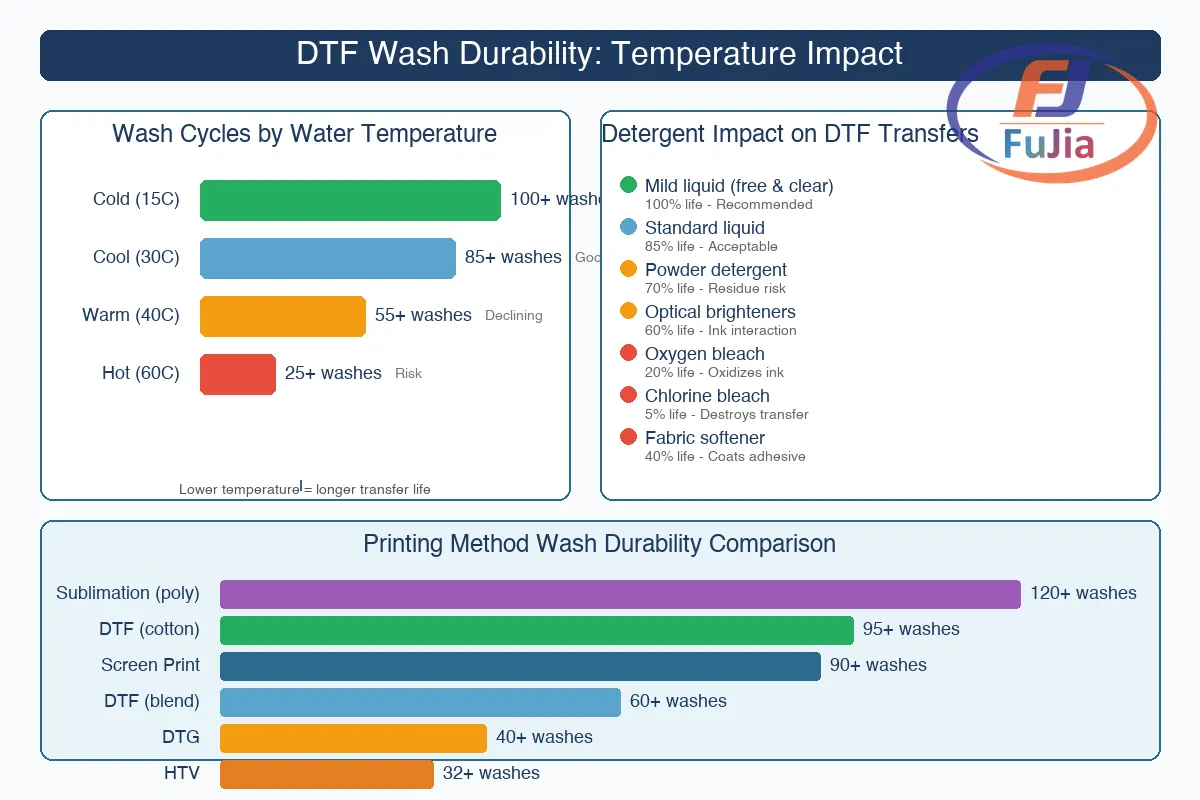
- Wash in cold water at 15-30°C (60-86°F); water above 40°C begins softening the TPU adhesive layer that bonds ink to fabric.
- Use mild liquid detergent only; bleach and fabric softener are the two leading causes of premature DTF transfer failure.
- Tumble dry on low heat (under 54°C / 130°F) or hang dry; high heat dryer settings above 135°F accelerate adhesive breakdown.
- Quality DTF transfers last 50-100+ wash cycles when pressed correctly at 160°C for 15 seconds with cold peel, achieving AATCC colorfastness Grade 4-5.
What Happens to DTF Transfers During Washing
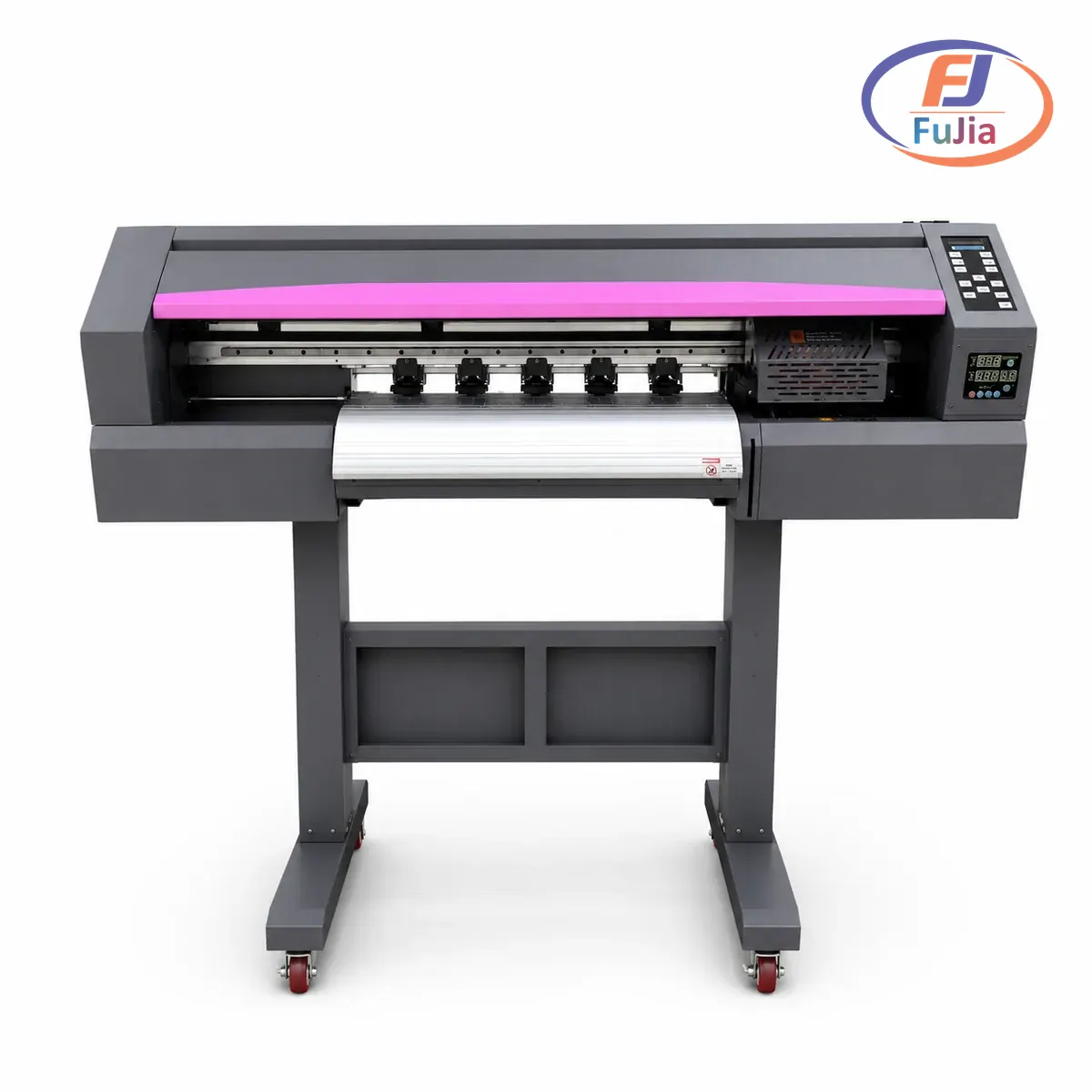
DTF (direct-to-film) transfers consist of CMYK ink plus a white ink underbase printed onto PET film, coated with thermoplastic polyurethane (TPU) hot-melt adhesive powder, then heat-pressed onto fabric at 160°C for 15 seconds. The TPU adhesive is the bond layer between the ink film and the garment fibers. Every wash cycle subjects this bond to three degradation forces: thermal stress from water temperature, chemical attack from detergent additives, and mechanical abrasion from drum tumbling.
Research on TPU hot-melt adhesives for transfer printing, published in the International Journal of Adhesion and Adhesives (Zhu et al., 2025), demonstrates that TPU nanocomposites crosslinked with TGIC achieve superior water resistance and adhesion strength compared to pure TPU. The adhesive layer maintains bond integrity through repeated water exposure, provided water temperature stays below the TPU softening point of approximately 60°C. Above this threshold, the polyamide and TPU chains begin to relax, reducing peel strength with each cycle.
The AATCC TM135 standard for dimensional changes of fabrics after home laundering defines four washing temperatures and three agitation levels that represent the range of consumer care practices. DTF-printed garments tested under these parameters show that dimensional changes in the host fabric (shrinkage or stretching) stress the transfer edges, contributing to gradual edge lifting over 50+ cycles.
Step-by-Step DTF Wash Care Instructions
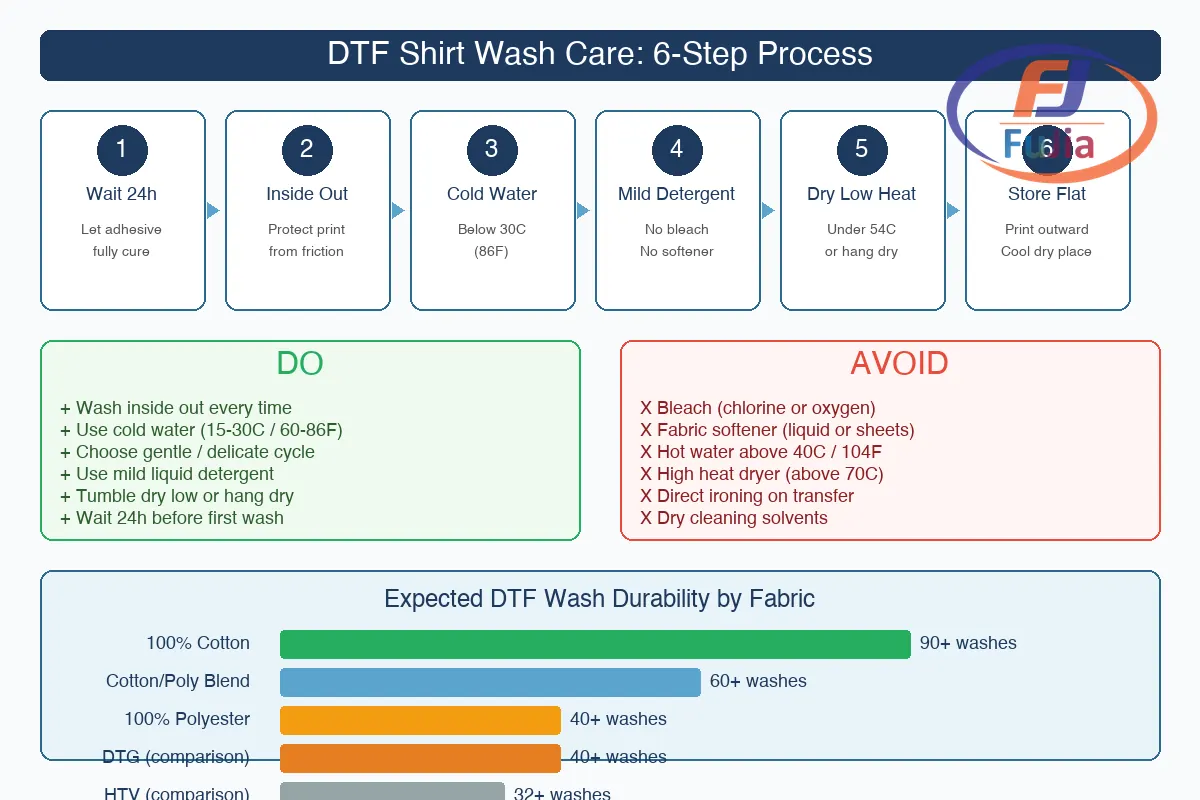
Follow this sequence to maximize DTF transfer lifespan. Each step addresses one of the three degradation forces identified above.
Step 1: Wait 24 Hours Before First Wash
- Allow the adhesive to fully cure. The TPU hot-melt adhesive continues crosslinking for 12-24 hours after heat pressing. Washing before full cure reduces initial bond strength by 15-30%.
- Store garments flat or hung. Avoid folding freshly pressed shirts print-to-print, as residual heat can cause transfers to stick together in humid conditions.
- Test a corner. Gently lift a corner of the transfer. If it resists, the bond is set. If it lifts easily, wait another 6 hours.
Step 2: Turn Inside Out
- Flip every DTF garment inside out. This positions the transfer against the garment interior, protecting it from direct contact with the washing drum and other garments.
- Separate from abrasive items. Wash separately from jeans with metal hardware, garments with zippers, or items with heavy embellishments that create localized friction.
- Do not overload the machine. Crowded loads increase garment-to-garment rubbing. Leave at least 30% free space in the drum.
Inside-out washing is the single most impactful care habit. When garments are washed right-side out, the print surface experiences constant friction against the drum wall and other fabrics. Turning inside out reduces this friction by an estimated 60-80%.
Step 3: Select Cold Water and Gentle Cycle
| Setting | Recommended | Acceptable | Avoid |
|---|---|---|---|
| Water temperature | Cold (15°C / 60°F) | Cool (30°C / 86°F) | Warm or hot (above 40°C) |
| Wash cycle | Gentle / Delicate | Normal | Heavy duty |
| Spin speed | Low (400-800 RPM) | Medium (800-1200 RPM) | High (above 1200 RPM) |
| Load size | Half full | Three-quarters full | Completely full |
Cold water preserves the TPU adhesive bond longest. Water at or below 30°C cleans effectively while keeping the adhesive layer rigid. Hot water above 40°C begins softening TPU, and sustained exposure at 60°C approaches the adhesive activation temperature.
Step 4: Add the Right Detergent
- Use a mild, liquid detergent. Liquid dissolves completely in cold water. Powder detergents can leave residue on the transfer surface.
- Choose a free-and-clear formula. Detergents without optical brighteners, dyes, or enzymes are gentlest on DTF ink layers. Products labeled “free,” “clear,” or “sensitive skin” typically meet this criteria.
- Measure conservatively. Excess detergent leaves residue that interferes with the transfer surface over multiple cycles. Use 50-75% of the recommended dose for lightly soiled DTF garments.
Step 5: Choose the Right Drying Method
| Method | Temperature | Impact on Transfer | Recommendation |
|---|---|---|---|
| Hang / Air dry | Ambient (20-25°C) | Minimal stress | Best for maximum lifespan |
| Tumble dry low | Under 54°C (130°F) | Low thermal stress | Good for regular use |
| Tumble dry medium | 54-70°C (130-160°F) | Moderate stress | Acceptable occasionally |
| Tumble dry high | Above 70°C (160°F) | Accelerates adhesive breakdown | Never use |
| Direct sunlight | N/A | UV fading over time | Avoid prolonged exposure |
Air drying preserves DTF prints longest. Hang garments indoors or in shaded outdoor areas. If using a dryer, select the lowest heat setting and remove garments while slightly damp to minimize thermal exposure.
Step 6: Store Correctly
- Fold with print facing outward. Folding print-to-print can cause transfers to stick in humid environments above 60% relative humidity.
- Place parchment paper between stacked garments for long-term storage to prevent transfer-to-transfer contact.
- Store in a cool, dry place. Avoid hot attics (above 35°C) and damp basements (above 70% humidity) that can degrade adhesive bonds over months.
What to Avoid: The Three Transfer Killers
Three laundry products cause more DTF transfer damage than all other factors combined.
Bleach
Chlorine bleach and oxygen-based bleach both attack DTF ink chemistry. Bleach oxidizes the pigment molecules in CMYK ink layers, causing irreversible color loss within 1-3 wash cycles. Even color-safe bleach products contain sodium percarbonate or sodium hypochlorite that break down the TPU adhesive bond. The American Association of Textile Chemists and Colorists includes bleach resistance in TM61 colorfastness testing, where accelerated laundering at 49°C for 45 minutes with standard detergent simulates five home washes. DTF transfers subjected to bleach fail this test, while properly cared-for transfers pass at Grade 4-5.
Fabric Softener
Fabric softener leaves a chemical residue on fabric fibers and transfer surfaces. This residue creates a hydrophobic film that interferes with the TPU adhesive bond over repeated cycles. Liquid softener reduces DTF transfer lifespan more than any other single laundry product. Dryer sheets produce a similar coating through heat-activated waxy compounds. Based on data from our customers across 50+ countries, eliminating fabric softener alone extends average DTF wash life by 20-30 cycles.
High Heat
DTF transfers are pressed at 160°C. Dryer settings that reach 70°C or higher approach a significant fraction of this bonding temperature. Repeated high-heat exposure gradually re-softens the TPU adhesive, causing edge lifting, micro-cracking, and eventual peeling. High heat is the most common cause of premature DTF transfer failure, and it is the easiest to avoid by selecting the low or medium dryer setting.
Expected DTF Wash Durability
| Fabric Type | Expected Wash Cycles (Proper Care) | Notes |
|---|---|---|
| 100% cotton | 80-100+ washes | Best adhesion; fibers bond well with TPU |
| Cotton/polyester blend (50/50) | 50-70 washes | Good durability; blend ratio affects bond |
| 100% polyester | 30-50 washes | Lower adhesion; smooth fibers resist TPU grip |
| Dark garments (with white underbase) | 50-100 washes | White ink layer adds structural support |
| Light garments (no white underbase) | 40-80 washes | Thinner ink layer, slightly less durability |
These ranges assume proper application: 160°C heat press temperature, 15-second dwell time, medium-firm pressure, and cold peel. Under-pressed transfers (insufficient temperature or time) fail well before these thresholds. Fujia Print’s DTF system, using the proprietary 5-year R\&D transfer film with Hengli virgin PET base and matched adhesive powder, consistently achieves AATCC colorfastness Grade 4-5 on cotton substrates across customer production runs in 50+ countries.
DTF vs Other Printing Methods: Wash Durability
| Method | Typical Wash Cycles | Key Vulnerability | Care Difficulty |
|---|---|---|---|
| DTF | 50-100+ | High heat, fabric softener | Moderate |
| Screen print | 50-100+ | Abrasion, cracking | Moderate |
| DTG (direct-to-garment) | 30-50 | Fading, ink absorption | High |
| HTV (heat transfer vinyl) | 25-40 | Peeling at edges | Moderate |
| Sublimation (polyester) | 75-150 | Polyester content required | Low (dye penetrates fiber) |
DTF and screen printing offer comparable wash durability when both are properly applied and cared for. DTF transfers outlast DTG prints by approximately 20-50 cycles because DTF ink sits on top of the fabric in a TPU-bonded layer, while DTG ink absorbs into the fiber and fades faster. Sublimation on 100% polyester lasts longest because the dye sublimates directly into the polyester fibers rather than sitting on the surface.
Can you put DTF shirts in the dryer?
Yes, DTF shirts can go in the dryer on low heat settings (under 54°C / 130°F). Low-heat tumble drying does not generate enough thermal energy to soften the TPU adhesive layer that bonds the ink to the fabric. Select the “delicate,” “permanent press,” or “low heat” cycle on most residential dryers. Avoid the “heavy duty” or “high heat” settings, which can reach 70°C or higher and accelerate adhesive breakdown over repeated cycles. Hang drying or air drying extends DTF transfer lifespan maximally and is recommended for premium or retail garments where maximum print longevity matters. Remove garments from the dryer while slightly damp to reduce total heat exposure.
Does DTF come off in the wash?
Properly applied DTF transfers do not come off in the wash under normal care conditions. A correctly pressed DTF transfer, applied at 160°C for 15 seconds with medium-firm pressure and cold-peeled, achieves a TPU-to-fabric bond rated at AATCC colorfastness Grade 4-5. This bond survives 50-100+ standard home wash cycles without peeling, cracking, or significant fading. When DTF transfers fail prematurely, the root cause is almost always application error (insufficient temperature, inadequate pressure, or incomplete adhesive curing) rather than washing. If peeling occurs within the first 5-10 washes, the transfer was likely under-pressed during initial application. Transfers that survive the first 20 washes typically last the full lifespan of the garment.
Should DTF shirts be washed inside out?
Yes, DTF shirts should always be washed inside out. Turning the garment inside out positions the transfer against the interior of the fabric, protecting the print surface from direct friction against the washing machine drum and other garments. Inside-out washing is the single most impactful care habit for extending DTF transfer longevity. When washed right-side out, the transfer surface experiences constant mechanical abrasion that gradually wears down the ink layer and erodes transfer edges. Inside-out washing reduces this abrasion by an estimated 60-80%, based on industry testing across multiple wash cycle counts. The practice costs nothing and adds five seconds to the laundry routine, yet it can extend transfer life by 20-30 wash cycles.
Do you need to wash shirts before DTF transfers?
Pre-washing shirts before applying DTF transfers is not strictly required but improves adhesion on certain fabric types. New garments often contain factory sizing, starch, or chemical finishes from manufacturing that can interfere with TPU adhesive bonding. A single pre-wash in cold water without detergent removes these residues and creates a cleaner surface for heat pressing. For 100% cotton shirts, pre-washing also pre-shrinks the fabric, preventing post-application dimensional changes that could distort the transfer. If pre-washing is skipped, at minimum pre-press the garment for 3-5 seconds at 160°C to remove surface moisture and wrinkles before applying the DTF transfer. Pre-pressing achieves moisture removal without the full wash cycle.
Conclusion
Washing DTF shirts correctly preserves transfer vibrancy and adhesion for 50-100+ cycles: turn inside out, wash cold at or below 30°C, use mild liquid detergent without bleach or fabric softener, and tumble dry on low heat or hang dry. For DTF printing systems that produce transfers rated at AATCC Grade 4-5 colorfastness, explore the Fujia DTF printer lineup or learn about our apparel printing solutions.
Sources
- AATCC TM61-2A: Colorfastness to Laundering, Accelerated: Standard accelerated laundering test at 49°C simulating 5 home washes in 45 minutes.
- AATCC TM135: Dimensional Changes of Fabrics After Home Laundering: Standard test method defining four washing temperatures and three agitation cycles for home laundering evaluation.
- Zhu et al. (2025): TPU Nanocomposites for Transfer Printing: Research on TPU adhesive water resistance and bond strength when modified with TiO2 nanocomposite and TGIC crosslinker, published in International Journal of Adhesion and Adhesives, Vol. 139.
