

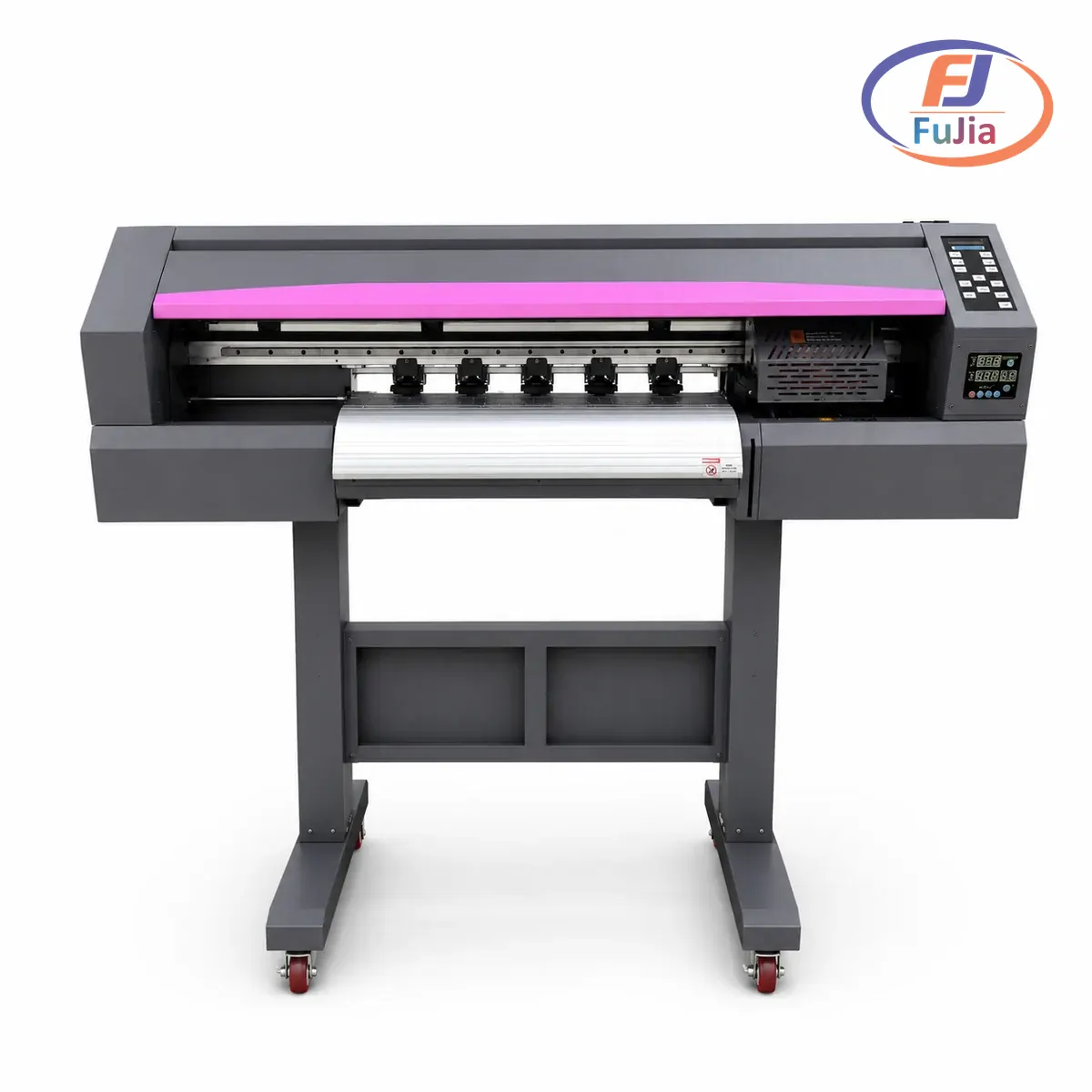
A ricoh dtg printer is a direct-to-garment machine built by Ricoh that sprays water-based pigment ink straight onto cotton and cotton-blend garments. Ricoh’s current lineup runs from the entry Ri 100 up to the Ri 4000, with the Ri 1000 and Ri 2000 sitting in the middle as the most common production models. This guide breaks down real Ricoh DTG printer specs, 2026 pricing, and the difference between Ricoh-built machines and third-party printers that run Ricoh printheads.
Key Takeaways
- Ricoh builds its own DTG lineup spanning the Ri 100 / Ri 100Lt entry portables, the Ri 1000 / Ri 1000X / Ri 2000 production models, the regional Ri 3000, and the Ri 4000 with built-in pretreatment.
- The Ri 1000 prints a 10″ x 8″ light-garment graphic in 28 seconds, while the Ri 2000 does it in under 10 seconds.
- New Ricoh DTG printers cost roughly $3,200 to $20,000 in 2026, with the Ri 2000 landing around $13,600 to $13,800.
- Ricoh also sells industrial printheads (Gen5 and GH series) to third-party makers, including Fujia’s A1 UV flatbed.
- Buyers who want factory-direct DTG or DTF can compare Ricoh models against Fujia’s direct-to-garment and DTF lineup.
What Ricoh Ships in Its DTG Lineup
Ricoh entered garment printing with a clear tier strategy, and each model targets a different shop size. The Ri 100 is the countertop entry machine for events and micro-shops, and the Ri 100Lt is its ultra-portable variant built to sit on a store counter or travel to events for light-garment printing (now discontinued but still supported). The Ri 1000 and Ri 1000X serve mid-volume print businesses that change designs every few minutes. The Ri 2000 is the production workhorse, and in some Asia-Pacific and Latin American markets Ricoh also sells the Ri 3000, a three-printhead mid-tier unit printing up to a 14 x 18 inch area at 600 x 600 dpi for roughly 2,500 prints per month. The Ri 4000 adds built-in Enhancer technology that removes manual pretreatment for cotton and polyester.
Every model in the range uses Ricoh’s own piezo inkjet heads rather than a bought-in engine. That vertical integration is why Ricoh controls both the ink chemistry and the maintenance routines across the family. The official Ricoh Ri 100 page lists the same water-based pigment CMYK plus white ink system that scales up through the range.
Ricoh Ri 1000 vs Ri 2000: Specs That Matter
The two mid-tier models look similar on paper but diverge where production shops feel it: speed, monthly volume, and head count. The table below uses Ricoh’s own specification sheets.
| Spec | Ricoh Ri 1000 | Ricoh Ri 2000 |
|---|---|---|
| Printheads | 4 Ricoh piezo heads | 8 Ricoh GH2220 heads, 2 carriages |
| Max resolution | 1,200 x 1,200 dpi | 1,200 x 1,200 dpi |
| Print area | 406 x 498 mm (16″ x 19.6″) | 406 x 498 mm (16″ x 19.6″) |
| Light-garment speed (10″ x 8″) | 28 seconds | under 10 seconds (Super Speed) |
| Dark-garment speed (CMYK + White) | 140 seconds (High Speed) | 60 seconds (Max Speed) |
| Weight | 110 kg | 140 kg |
| Monthly max volume | 2,000 sheets | 4,000 sheets |
| Rated life | 30,000 sheets / 5 years | 40,000 sheets / 5 years |
| Power draw | 100 W max | 120 W max |
The Ri 2000 doubles the head count and roughly doubles the rated monthly throughput, which is why its street price sits about $5,000 higher. For shops printing fewer than 200 garments a week, the Ri 1000’s 28-second light-shirt speed is already faster than most manual workflows need. A closer DTF vs DTG comparison helps when the choice is between processes rather than between two Ricoh models.
Ricoh Printheads vs Ricoh-Built Printers
This is the point most buying guides get wrong. There are two different “Ricoh” stories in garment printing, and mixing them up leads to bad purchasing decisions.
The first story is Ricoh-built DTG. The Ri 1000 and Ri 2000 described above use Ricoh’s own piezo heads (the GH2220 family in the Ri 2000). These machines are assembled, inked, and supported by Ricoh as a complete system.
The second story is Ricoh the component supplier. Ricoh’s Gen5 industrial printhead, sold under model numbers MH5420 and MH5440, is a separate product. It carries 1,280 nozzles in a 4 x 320 staggered layout, spans a 54.1 mm print width, fires drops from 7 pl up to 35 pl in greyscale, and runs at up to 60 kHz. The stainless-steel body weighs 155 g and is rated for UV, solvent, and aqueous inks. Industrial printhead manufacturing follows quality-management standards such as ISO 9001, which is part of why these heads show up in flatbed, roll-to-roll, and DTF/DTG systems from many brands.
Fujia’s A1 UV flatbed (model 6090) is one real example: it is built on 3-4 Ricoh GEN5 / Epson I3200 printheads. That is the genuine first-party fact, not a marketing claim. Ricoh supplies the head, and the printer builder wraps it in its own frame, RIP, and ink system. So when a vendor says “Ricoh head inside,” confirm whether you are buying a Ricoh machine or a Ricoh-powered OEM machine.
What a Ricoh DTG Printer Costs in 2026
Machine price is only half the budget. The table below uses live Google Shopping listings captured in July 2026 across US resellers.
| Model | New price (2026) | Notes |
|---|---|---|
| Ri 100 | $3,179 to $3,999 | Entry model; refurbished from $2,900 |
| Ri 1000 | about $8,450 | Commercial garment printer |
| Ri 1000X | about $9,547 | Bundle price |
| Ri 2000 | $13,617 to $13,775 | Top production DTG and DTF model |
| Ri 4000 | about $19,995 | Built-in automatic pretreatment |
Ricoh publishes ink cartridge pricing in yen, with high-yield 500 ml CMYK cartridges and paired white cartridges. Those recurring costs matter more than the sticker over a machine’s 30,000 to 40,000 sheet life. The official Ricoh garment printer range is the place to confirm current bundles, and industry analysts such as Keypoint Intelligence track direct-to-garment adoption as a growing production segment rather than a decorating niche.
Where a Ricoh DTG Machine Fits
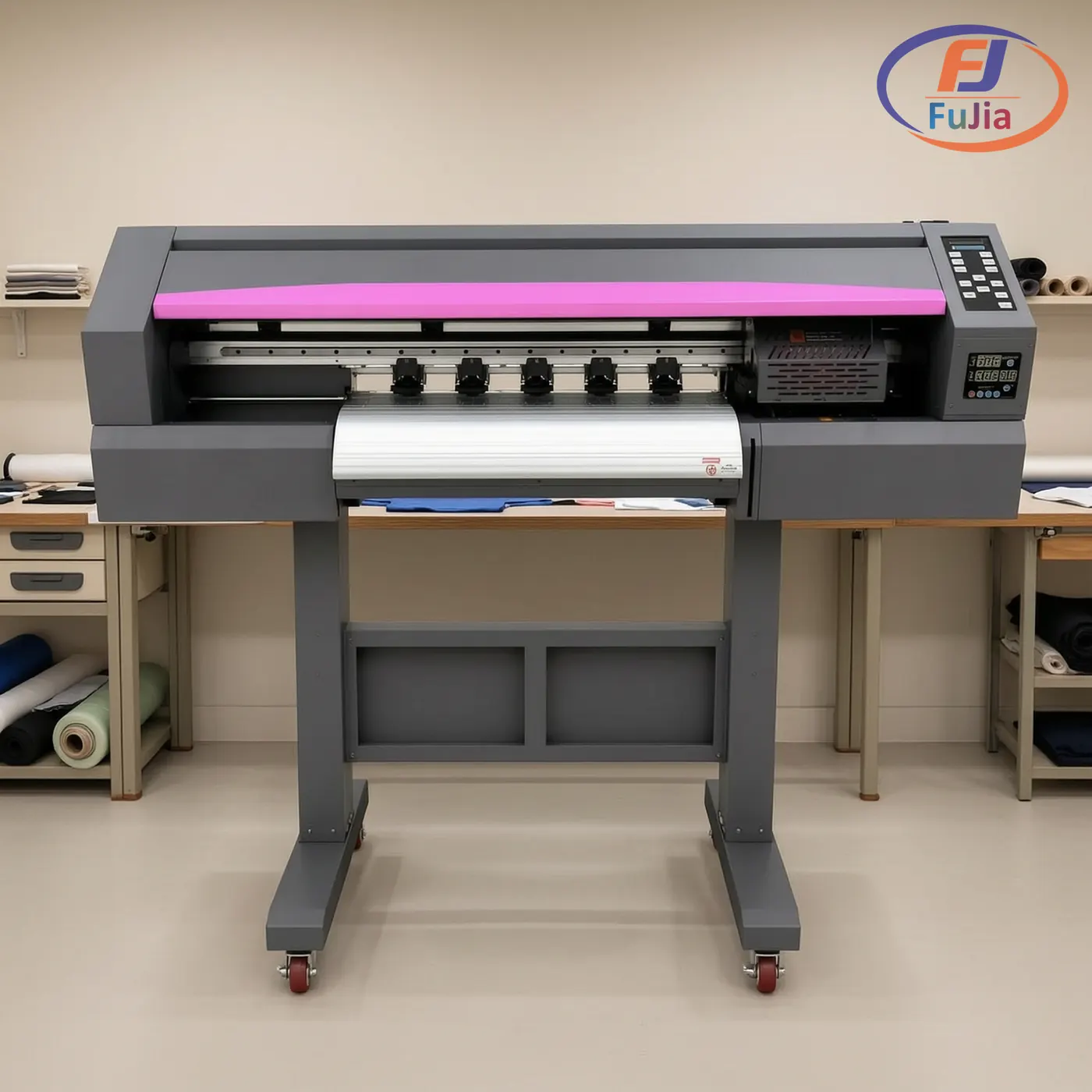
The right Ricoh model depends on weekly volume and whether pretreatment space is available. The Ri 100 and the lighter Ri 100Lt fit pop-up shops and Etsy sellers doing under 50 pieces a week, with the Ri 100Lt the more portable of the two. The Ri 1000 suits established print shops adding garment personalization at 200 to 800 pieces a week. The Ri 3000 (where available) fits shops wanting a dedicated mid-tier unit above the Ri 1000 without the Ri 2000’s higher capital. The Ri 2000 is built for decorators pushing past 1,000 garments a week who cannot afford platen downtime. The Ri 4000 targets operations that want to drop manual pretreatment entirely and run cotton and polyester without a separate pre-coat step.
Shops comparing against the best DTG printers for small business should weight service distance and ink cost, not just print speed. A 28-second print means little if a clogged head takes two days to clear because the nearest technician is overseas. The DTG vs heat transfer breakdown is useful when the real question is process choice, not brand choice.
Beyond Ricoh: Factory-Direct DTG and DTF Options
Ricoh is one route into garment printing. Fujia Print, a Guangzhou manufacturer operating since 2011 from a 3,500 m² factory, exports to 50+ countries and serves 500+ print businesses with both direct-to-garment and direct-to-film equipment built and supported in house. Fujia’s dual-station DTG printers and its DTF lineup are factory-direct, which removes the reseller margin that inflates the Ricoh street prices above.
What direct-to-garment printing involves is the same core idea Ricoh sells: ink into fiber, then cure. Fujia’s process guidance calls for a 170°C cure for 30 seconds on DTG and a 160°C, 15-second cold-peel on DTF transfers. Fujia backs its machines with a 12-month warranty, 48-hour parts dispatch, and a 3-day remote onboarding plan. For buyers who like Ricoh’s Gen5 component quality, Fujia’s A1 UV flatbed runs on that same Ricoh GEN5 head family, so the printhead pedigree carries over even on a different machine architecture.
How much is the Ricoh RI 1000 DTG printer?
The Ricoh Ri 1000 sits in the middle of the Ricoh DTG range and its 2026 street price runs about $8,450 for a new commercial unit, with the newer Ri 1000X bundle listed around $9,547 across US resellers. Refurbished and promotional packages can land lower, and business-startup bundles that include a finisher and 60-month financing have appeared near $4,999 when the financing is bundled in. The machine price is not the whole story. Ricoh sells ink in 200 ml standard and 500 ml high-yield cartridges, with white ink using two cartridges per machine, so a busy shop replaces consumables on a monthly cadence. Against the Ri 2000 at roughly $13,600 to $13,800, the Ri 1000 saves about $5,000 up front while keeping the same 406 x 498 mm print area and 1,200 x 1,200 dpi resolution. Buyers should budget the cartridge refill cost over the 30,000-sheet rated life, not just the sticker, because that recurring spend usually exceeds the price gap between two Ricoh models within the first year of regular production.
How much does a DTG printer cost?
A DTG printer in 2026 costs anywhere from about $2,900 for a refurbished Ricoh Ri 100 up to roughly $19,995 for a new Ricoh Ri 4000 with built-in pretreatment. The realistic sweet spot for a serious startup is $8,000 to $14,000, which covers the Ricoh Ri 1000 through the Ri 2000 and comparable machines from other brands. That range buys a 16″ x 19.6″ print area, CMYK plus white ink, and monthly volume rated between 2,000 and 4,000 sheets. Beyond the machine, plan for pretreatment fluid, a heat press for curing, and ink cartridges that recur monthly. Financing changes the math: Ricoh and resellers have offered 60-month plans that bring a complete startup package under $5,000 up front. When comparing, always separate the machine price from the per-cartridge ink cost, because the ink spend over a 30,000 to 40,000 sheet machine life typically dwarfs the initial discount between two competing models.
Is DTG printing profitable?
DTG printing is profitable for shops that reach consistent weekly volume, because the per-garment ink cost stays low once the machine is paid off. Based on data from our customers across 50+ countries, in-house DTG tends to break even around 150 to 300 garments per week, with payback commonly landing within 4 to 10 months depending on local labor cost and how much outsourced printing the shop replaces. The economics improve when a shop already sells custom apparel and simply insources what it used to subcontract, since the marginal cost of a print drops to ink plus a few minutes of labor. Profitability breaks down below that volume because pretreatment, curing, and daily head maintenance still cost the same whether you print 10 shirts or 300. Regions with high outsourced-print rates see faster payback, while very low-volume hobby use rarely clears the break-even line. The honest test is your current spend on outsourced garments: if it exceeds the monthly lease plus ink, bringing DTG in house usually pays.
What is the best DTG printer on the market?
The best DTG printer depends on volume, not on a single winner. For high-weekly production where downtime is the enemy, the Ricoh Ri 2000 is a strong pick because its 8-head, two-carriage layout prints a 10″ x 8″ light garment in under 10 seconds and is rated for 4,000 sheets a month. For mid-volume shops, the Ricoh Ri 1000 at 28 seconds per light shirt offers nearly the same quality at a lower entry cost. The Ri 4000 leads on workflow because its built-in Enhancer removes manual pretreatment, which matters for polyester and mixed-fiber runs. Outside Ricoh, factory-direct makers such as Fujia Print compete on price and support: Fujia’s direct-to-garment and DTF machines ship without reseller markup and carry a 12-month warranty with 48-hour parts dispatch. The right answer weighs print speed, service distance, and ink cost together, because the fastest machine loses money if a clogged head sits unfixed for days waiting on a distant technician.
Conclusion
For factory-direct DTG and DTF printer pricing with free sample prints, contact Fujia Print.
