

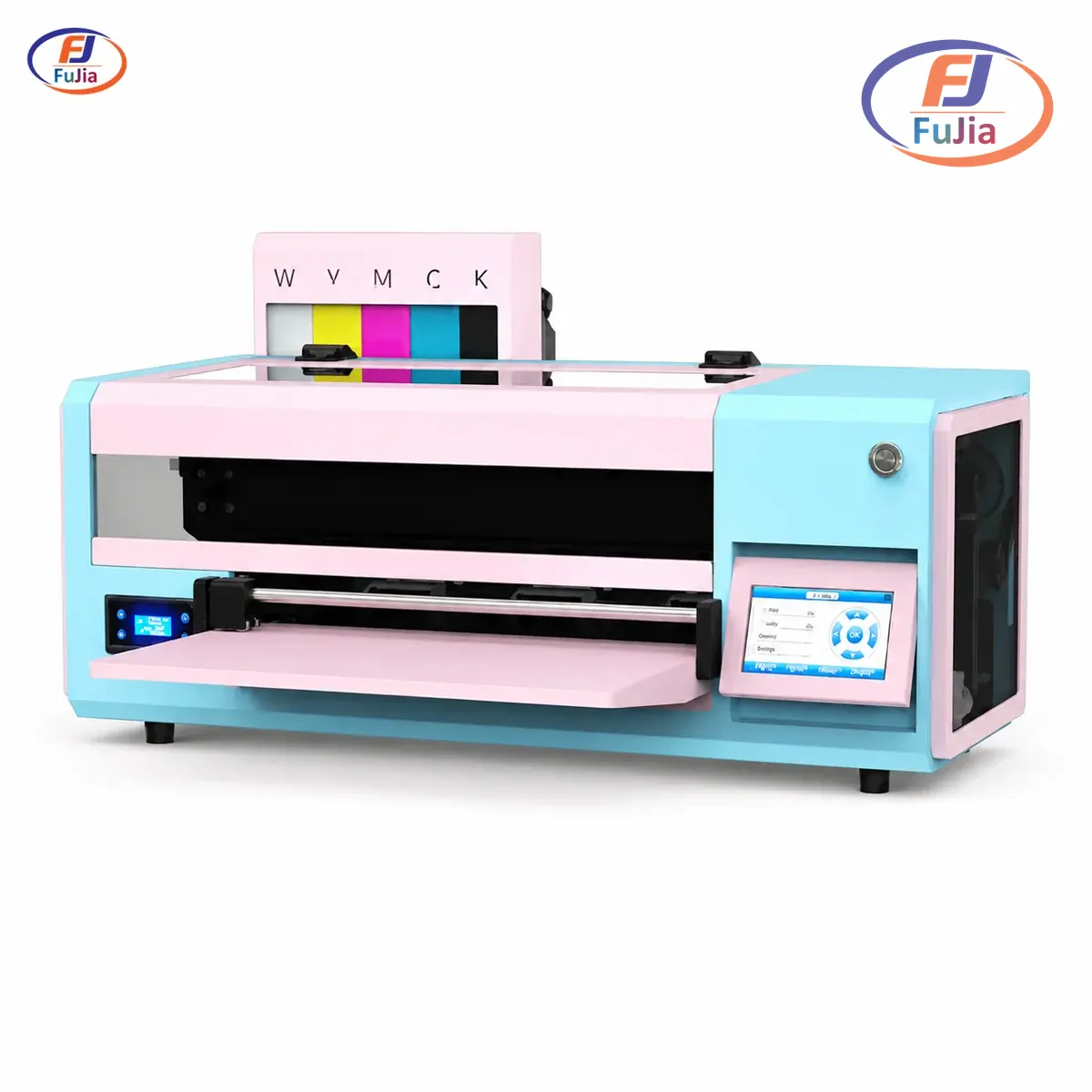
An XP600 DTF printer is any direct-to-film machine built on Epson’s XP600 printhead, spanning desktop A4 units near $1,200 up to A3+ workhorses listing at $4,099 and selling at $2,899. This guide maps the four price tiers, runs the lifespan arithmetic that decides whether the cheap head is actually cheap, and separates the buyers XP600 serves from the ones who should step up to i3200. The short answer: XP600 is the value king of entry DTF, and its math flips right where your business starts growing.
Key Takeaways
- XP600-based DTF printers run from about $1,200 (A4 desktop) through $2,899-4,099 (A3+ bundles like InkSonic U13) to $6,199 (loaded configurations), with Procolored P13 and Punehod A4 filling the entry brackets.
- The XP600 head costs roughly $150-250 versus $400-600 for an i3200, which makes entry cheap but flips the cost math once print volume passes roughly 100-150 pieces daily.
- Head lifespan on DTF duty typically runs 6-12 months of regular production with disciplined maintenance, and white ink is the variable that decides which end of that range you hit.
- Fujia’s lineup uses XP600 in the FJ-A30 desktop (2-3 m²/h, up to 1440×1440 dpi) and offers it as a head option on the 65 cm A1 dual-head alongside I1600 and I3200.
- Buy XP600 to learn and produce at entry volume; buy i3200 when gang sheets run full width daily and per-hour throughput becomes the constraint that money can remove.
What the XP600 Actually Is
The XP600 is Epson’s budget micro-piezo printhead, a single-channel architecture derived from the Stylus Pro photo lineage and adopted across the converted-printer world because it tolerates third-party ink, costs a fraction of industrial heads, and delivers up to 1440 dpi where it matters for film output. In DTF service it runs six channels for CMYK plus white, prints 720×1200 to 1440×1440 dpi depending on the machine’s pass configuration, and produces quality that surprises buyers who assumed the price tag implied toy output. The trade sits elsewhere: channel count per head, firing frequency ceiling, and durability under pigment-heavy white ink loads are where it differs from the i3200 class, and those differences translate directly into throughput and replacement cadence.
That trade is also why the XP600 dominates the entry market’s search results. Every serious budget brand, InkSonic, Procolored, Punehod, LOKLiK, and dozens of factory-direct sellers, anchors at least one model on it, which makes “XP600 DTF printer” less a product query than a price-band query: searchers want to know what the cheap tier actually costs to own.
The 2026 Price Tiers
| Tier | Width | Example models | 2026 price | Fits |
|---|---|---|---|---|
| Desktop A4 | 8.3 in | Punehod A4 | ~$1,200-1,800 | learning, samples, very low volume |
| A3 single-head | 12-13 in | Fujia FJ-A30, LOKLiK iPrinter | $2,000-3,500 | 40-60 transfers/day |
| A3+ bundles | 13 in | InkSonic U13 ($4,099 → $2,899), Procolored P13 | $2,899-4,500 | solo shops, Etsy-scale |
| Dual-head 65 cm | 25.6 in | Fujia A1-2H (XP600/I1600/I3200 config) | $5,000-6,199 | 100-250 pieces/day |
Two reading notes on the table. First, bundle prices move constantly, and the InkSonic U13’s $4,099 list dropping to $2,899 on promotion is typical of the tier, so the honest budget number is the sale price plus consumables for a month, not the sticker; buyers comparing across that ceiling should see what the DTF printer wholesale tier looks like before settling. Most small shops will land in the A3+ row, and pretending otherwise is how A4 desktops get returned. Second, the dual-head row matters because it is where XP600 stops being only an entry play: configured as a pair on a 65 cm chassis, two XP600 heads deliver 4-6 m²/h at 8-pass, a legitimate production rate at half the i3200 configuration’s price, and Fujia ships the A1 dual-head with all three head options precisely because different buyers sit on different points of that curve.
Our LOKLiK DTF printer review covers one A3 XP600 machine in depth, and the head-level trade-offs live in our XP600 vs i3200 printhead comparison.
Lifespan Math: The Number That Decides Everything
Head longevity on DTF duty is the variable every listing hides behind “long lifespan” language. Production data across the converted-printer world puts XP600 service life at roughly 6-12 months of regular use, with the spread explained less by luck than by white ink discipline: pigment settling, daily circulation, and capping hygiene are what move a head from the 12-month end toward the 6-month end. At a $150-250 replacement cost, that is $15-40 per month in head depreciation on the A3 tier, a number so small it disappears in consumables, and it is the correct way to see the cheap head: not as fragile, but as a consumable you budget.
| Factor | XP600 | i3200 |
|---|---|---|
| Head price | $150-250 | $400-600 |
| Practical speed (1 head) | 2-3 m²/h | 8-13 m²/h (dual-head class) |
| Max resolution | 1440×1440 dpi | 720×2400 dpi (8-pass) |
| Lifespan on DTF duty | 6-12 months | 12-24 months typical |
| Third-party ink tolerance | high (budget ecosystem) | moderate (matched ink preferred) |
| Sweet spot | under ~150 pieces/day | 150+ pieces/day, multi-shift |
The math flips at volume, and it flips on throughput rather than longevity. A single XP600 maxes out around 2-3 m²/h in practice, so a shop printing 200 pieces daily needs the head running near its ceiling every hour of the workday. That is where firing frequency, not ink, becomes the wear mechanism, and where the i3200’s higher channel density sustains the same output at lower stress. Run the numbers honestly: one i3200 head at $400-600 lasting a comparable period and driving triple the area per pass costs less per square meter than three XP600 replacements pushing the same volume, which is why the upgrade decision is a volume threshold, roughly 100-150 pieces daily, not a quality verdict.
Who Should Buy XP600 (and Who Should Not)
Volume decides the entry point, and the data from our customers across 50+ countries backs a simple threshold: under roughly 100 pieces daily, XP600 economics win outright, because the head cost you are not paying for funds the learning curve, and mistakes on a $2,899 machine are tuition instead of tragedy. Between 100 and 250 daily, the dual-head XP600 configuration holds the line, doubling throughput while keeping the cheap-head consumable profile. Past that band, i3200 configurations take over, and the money argument, not the marketing one, is decisive: at 27 m²/h on a 4-head machine, per-square-meter head cost drops below what any XP600 layout can reach.
A practical middle path from our order book: a phone case brand we supplied started with UV printing on a 6090 flatbed, grew from 12 to 40-plus SKUs in 60 days and batch times from 48 hours to 4, and only then added a DTF line for full-coverage shell wraps, choosing an A3 XP600 machine for that second process because the volume band for case-size transfers sat squarely in XP600 territory. The lesson generalizes: match the head to the transfer size and daily count, not to the brand badge, and the XP600 tier is precisely where small-format, high-SKU businesses land first.
That said, buyers in South Asia searching “XP600 price in India, Pakistan, or Bangladesh” should quote ex-works and landed prices separately, because distributor margins and duties stack 15-40% onto factory quotes, and the same head arithmetic applies after taxes only if you input the real landed figure.
Is XP600 printhead good?
Good is a volume verdict, not a quality one, and the honest framing is: excellent per dollar, adequate per hour. The XP600 produces 1440-class output that indistinguishable from pricier heads on film, costs $150-250 to replace, and tolerates third-party ink that keeps consumable prices down. What it cannot do is sustain high utilization gracefully: past roughly 100-150 pieces daily, its firing ceiling makes it the bottleneck, and wear economics shift toward the i3200 class. For a solo shop, a learning buyer, or a small-format SKU business, it is genuinely the right head; for a production floor, it is the wrong one, and both answers are correct.
Is XP600 good for DTF?
Yes, and it is the default head of the entry DTF market for concrete reasons: it runs six channels including white, holds 720×1200 to 1440×1440 dpi in production passes, and its tolerance for third-party pigment ink is what makes budget DTF possible at all. The failure mode to manage is white ink settlement, which kills XP600 heads faster than print volume does, so the machines that succeed on this head are the ones with automated circulation and owners who respect the daily routine. Fujia’s FJ-A30 desktop runs a single XP600 at 2-3 m²/h precisely because that duty cycle sits inside the head’s comfort zone, and buyers matching that band get years, not months, from the hardware.
How long does XP600 printhead last?
On regular DTF production with disciplined maintenance, plan on 6-12 months, and treat the spread as a maintenance report card. Heads living at 12 months belong to shops running daily circulation, fresh capping station wipes, and filtered ink, while 6-month heads almost always trace back to idle periods with settling white ink. At $150-250 per replacement, the arithmetic lands at $15-40 monthly in head depreciation on an A3 machine, smaller than monthly film spend. Budget it as a consumable line rather than a failure, and the machines last longer precisely because panicked emergency printing is what actually murders heads.
Which printer is best for DTF printing?
The best printer matches head count to weekly volume, and the XP600 tier illustrates the rule at the entry end. Under 50 prints weekly, a desktop or A3 single-head XP600 machine at $1,200-3,500 does the job with money left for consumables; from 100-250 daily, a dual-head XP600 or i3200 65 cm platform keeps gang sheets feeding; above that, 4-head i3200 machines running 27 m²/h at 4-pass take over, with several factory-direct options under $10,000. Within any band, the differentiators are white ink management, transmission quality, and support response, which is why we recommend choosing the volume band first and the badge second; our factory-direct lineup maps the full range for exactly that exercise.
Verdict
The XP600 DTF printer category is the on-ramp that works: real 1440-class output, $15-40 monthly head economics, and a model list running from $1,200 desktops to $6,199 dual-head production machines. Its ceiling is equally real, arriving at roughly 100-150 pieces daily where throughput stress turns the cheap head into the expensive one, and the upgrade path to i3200 is a volume decision, not a brand one. Buy the tier that matches your last 30 days of orders, budget the head as a consumable, and the XP600 platform will out-earn its price tag; when orders outgrow it, the same logic that chose it will tell you exactly when to step up. To price both tiers side by side, contact Fujia Print for configurations and same-file comparison prints across the XP600 and i3200 lines.
Sources
- InkSonic XP600 DTF printer collection: 2026 model lineup and price range $1,200-6,199.
- Wikipedia: Micro Piezo: piezoelectric printhead architecture behind the XP600.
- Wikipedia: Epson: manufacturer background and head lineage.
- Wikipedia: Direct-to-film printing: process context for DTF workflows.
