

A fabric printer machine in 2026 means one of three very different things: a home sewing printer for quilters, a DTF or sublimation setup for businesses selling printed goods, or an industrial direct-to-fabric line, with prices from $2,000 to well past $14,000. This guide separates those markets, matches each technology to the fabrics it actually works on, and maps complete budget tiers. Most small-business buyers land in the middle market, and most search results skip it entirely.
Key Takeaways
- The category splits three ways: home sewing printers for quilters, DTF and sublimation systems for businesses selling printed goods, and industrial direct-to-fabric lines for mills.
- Fabric chemistry decides the technology: cotton requires DTF or DTG ink systems, polyester accepts sublimation dye, and blends follow their polyester percentage.
- Complete budget tiers run from about $2,000 for a home printer through $6,000 for an A3 DTF starter kit to $13,800-15,200 for a production 24-inch system.
- Home sewing printers top out around A4 sheets and hobby volumes; production claims built on them collapse at real order flow.
- Free sample printing settles the fabric question before purchase: send your material to the factory, receive the printed and pressed result back on video.
What Is a Fabric Printer Machine?
A fabric printer machine is any inkjet system that applies designs to textile, and the phrase covers three markets that barely overlap. Home sewing printers, exemplified by the Brother PrintModa HLJF1, print A4 sheets of treated fabric for quilting and craft projects. Business-grade transfer systems, DTF and sublimation, print designs onto film or paper that a heat press bonds into finished garments and home goods. Industrial direct-to-fabric machines print directly onto mill rolls of prepared textile for yardage production. Search results mix all three, which is why buyers shopping for one keep landing on machines built for another.
Here’s the thing that matters commercially: where the ink meets the fabric. Transfer systems separate printing from application: the design is produced on film or paper first, then bonded with a press, which is why one printer can serve cotton, polyester, blends, and dark garments alike. Direct-to-fabric and home printers must match their ink chemistry to a specific textile from the start. That single difference explains most buyer regret in this category, because a machine chosen for its fabric list fails on the one fabric the business actually sells.
Volume completes the picture. Home printers measure output in sheets per day, small-business systems in transfers per hour, and industrial lines in meters per minute, and each tier carries a cost structure built for that rhythm. Based on data from our customers across 50+ countries, the most common mismatch is not buying too small a machine but buying a home-class printer while holding small-business order expectations.
Matching the Machine to Your Fabric
Fabric composition is the first filter, and it eliminates technologies faster than any price comparison. Cotton has no chemistry for sublimation dye, so cotton work belongs to DTF or DTG systems. Polyester accepts sublimation beautifully and is the only fabric where sublimation reaches full durability. Blends follow their polyester percentage, printing well at 65/35 and faintly below 40%. Dark fabrics rule out sublimation entirely, since its dye is transparent, and hand the order to DTF, which prints its own white underbase.
| Fabric | Best technology | Why | Runner-up |
|---|---|---|---|
| 100% cotton | DTF (or DTG) | pigment ink + powder bonds mechanically, no polyester needed | DTG for cotton-only shops |
| Polyester (100%) | Sublimation | dye bonds chemically, softest hand, lowest cost per print | DTF for dark polyester |
| 65/35 poly-cotton | DTF or sublimation | sublimation at 65% poly prints slightly muted; DTF prints full strength | HTV |
| 50/50 and below | DTF | sublimation too faint below ~40% poly | screen printing for bulk |
| Dark fabrics, any blend | DTF | white underbase layer built in | none practical |
Press parameters complete the match. DTF presses at 160°C for 15 seconds with a cold peel, DTG cures at 170°C for 30 seconds, and sublimation runs 200°C for 45-60 seconds with a hot peel on polyester only. A shop mixing fabrics needs a press that handles all three profiles, which any quality digital press does, and needs to stop expecting one technology to cover one order book full of mixed materials. That mixed-material reality is exactly why DTF has become the small-business default while sublimation holds the polyester niches it wins outright.
Fabric Printer Machine Prices in 2026
Complete-setup pricing is the honest way to compare, because a printer without its press, powder system, and consumables cannot produce anything. Three tiers cover the real market, and every figure below is a listed or dealer-verified 2026 price.
| Tier | Complete budget | Equipment | Output | Fits |
|---|---|---|---|---|
| Home craft | ~$2,000 | Brother PrintModa class, A4 fabric sheets | hobby sheets | quilting, craft sewing |
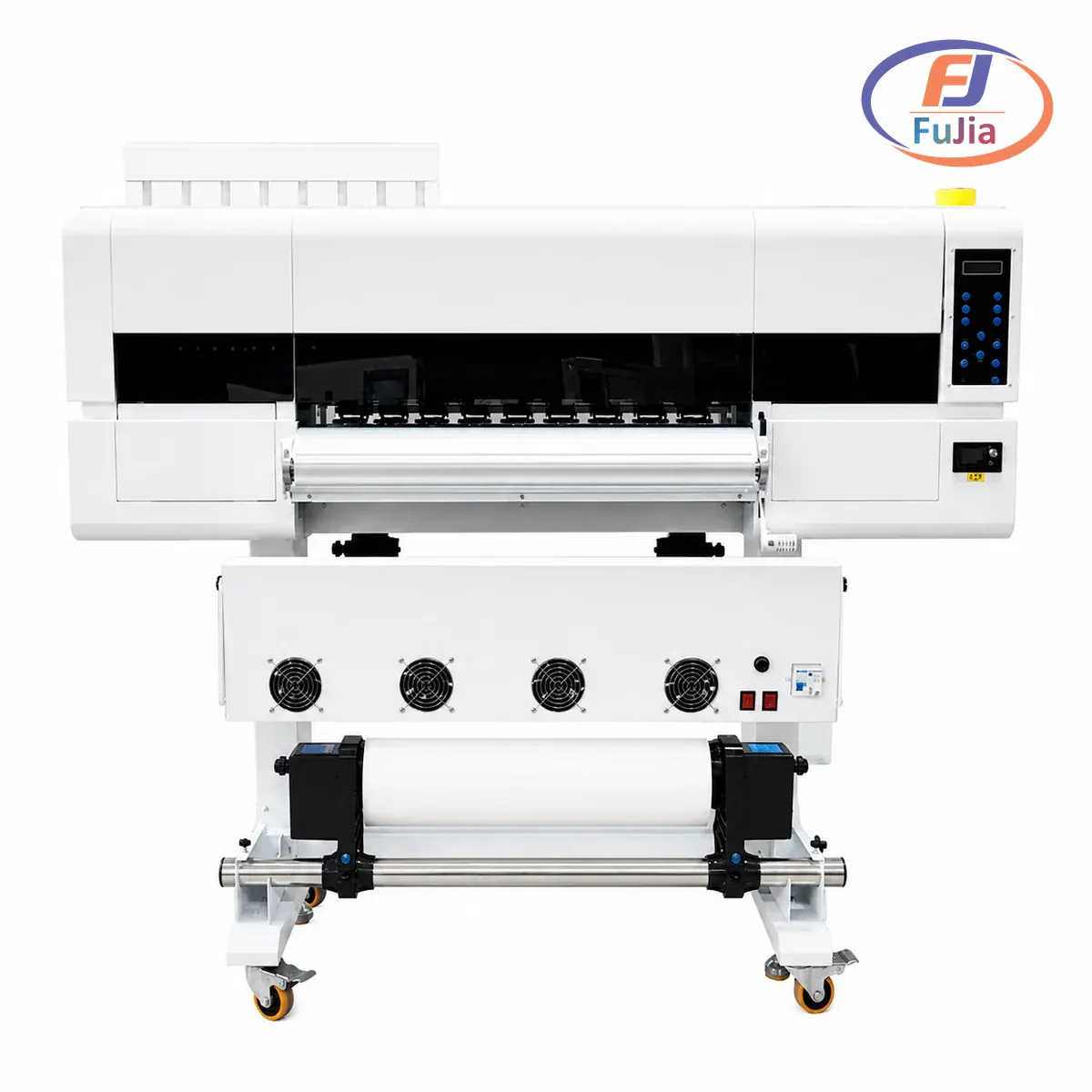
| Business starter | ~$6,000 | A3 DTF printer + shaker bundle ($5,599), manual press | 40-60 transfers/day | Etsy, local teams |
| Production | $13,800-15,200 | 24″ 2-head DTF + shaker ($11,499), pneumatic press ($1,999-3,200), consumables ($300-500) | 200-400/day | growing brands, B2B |
The home tier serves its market well and its market is sewing. PrintModa-class machines produce fabric sheets for quilting and craft at A4 size, and comparing them to production DTF on speed or cost per garment misses the point: they compete with sewing-room alternatives, not with order fulfillment. The business tiers are where fabric printing becomes a revenue line. One hotel textile supplier we supplied paired DTF for cotton headers with sublimation for polyester runs, cut 8 days per batch with in-house printing, and won 5 hotel chain contracts on the strength of same-week sampling; that trajectory, starter machine into production machine on earned cash flow, is the pattern our data shows most often among shops that lasted.
Sublimation pricing sits alongside rather than inside this table, and that is by design: because it serves polyester production: an A1 dual-head sublimation printer covers wide fabric runs at costs per square meter that DTF cannot match on polyester. Shops selling both cotton tees and polyester home textiles typically run both technologies, sharing a press between them.
Home Sewing vs Business Production: An Honest Line
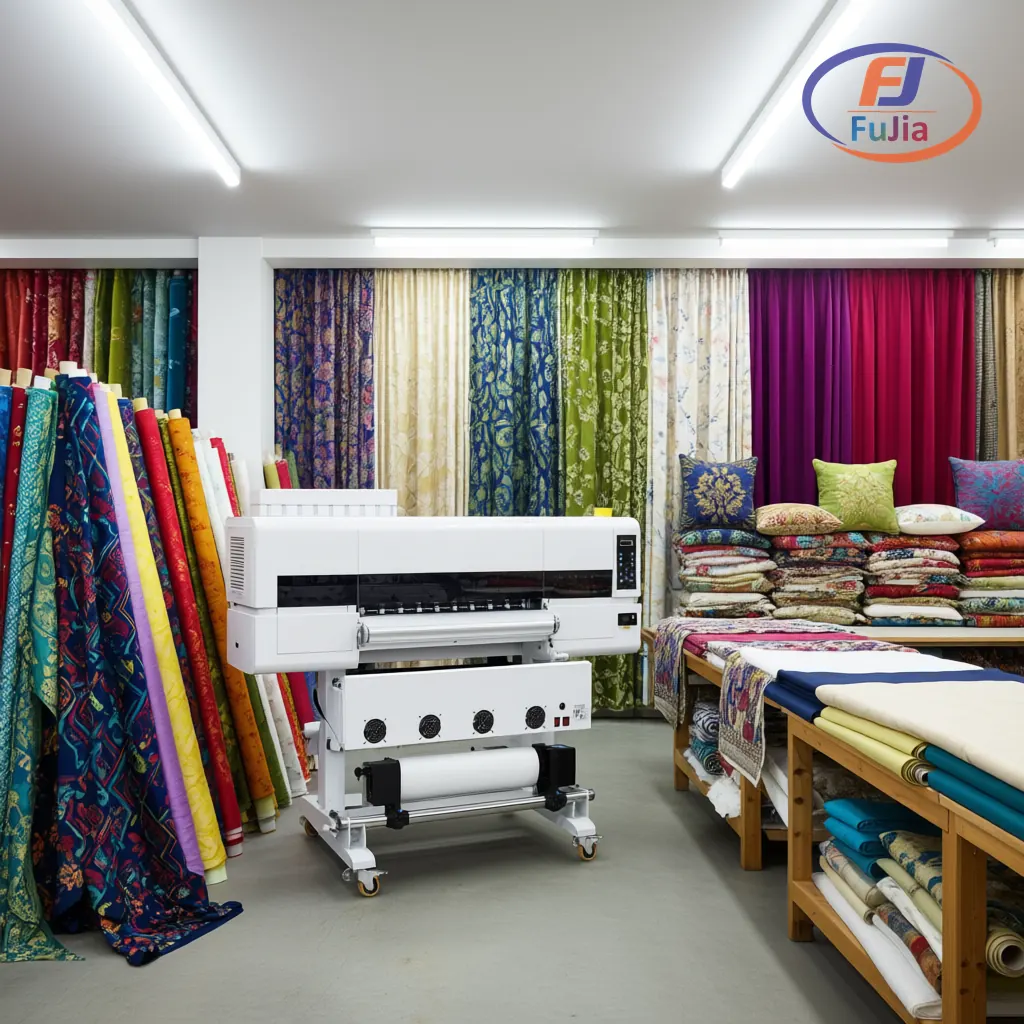
The line between the home and business tiers is order flow, and crossing it changes every economics in the workflow. A home fabric printer produces a handful of sheets daily at a few dollars each, which suits craft sales at craft prices; the moment orders demand dozens of finished garments weekly with consistent color and wash durability, sheet-based printing becomes the bottleneck, and transfer systems take over. We recommend counting realistic weekly orders before choosing a tier, not aspirational ones; the gap between the two is where most idle machines live. Most small shops that survive this choice bought one tier below their ambition.
Durability separates the tiers as much as speed does: business-grade DTF transfers hold grade 4-5 color fastness across 50+ machine washes, while home printer output on treated fabric sheets is decorative with no commercial wash standard. A quilt top and a weekly-worn t-shirt are different products with different rules, and marketing that blurs them does buyers no favors.
The upgrade path is nonetheless real and well-trodden. Craft sellers who find steady demand move to an A3 DTF starter kit, keep their existing press if it reaches temperature, and learn production habits, gang sheets, powder discipline, nozzle routines, on hardware whose mistakes are cheap. Our fabric printing machine types guide covers the technology families in more depth, and the home textiles page shows the product categories the production tier serves.
Test Before You Buy
Fabric is too variable to buy on faith, and any serious vendor proves compatibility on your material before taking your money. The standard that matters is a free sample program: you send your design file and your actual fabric or blank, the factory prints and presses the sample, records the process on video, and ships the physical result back. That single exchange answers the questions no spec sheet can, whether your cotton accepts the transfer at full density, whether your blend shifts color, and how the hand feels after pressing.
Video documentation matters as much as the sample itself, because it shows the press temperature and timing used rather than leaving buyers to reverse-engineer settings from a finished piece. Combine the sample test with a wash test, ten home laundry cycles on the received sample, and the fabric-versus-machine question is settled with evidence instead of testimonials.
Buyers comparing vendors should run the same file through each one. Identical artwork on identical fabric makes color density, edge quality, and wash behavior directly comparable, and it exposes the vendors who only show cherry-picked samples on ideal polyester.
What type of printer is best for printing on fabric?
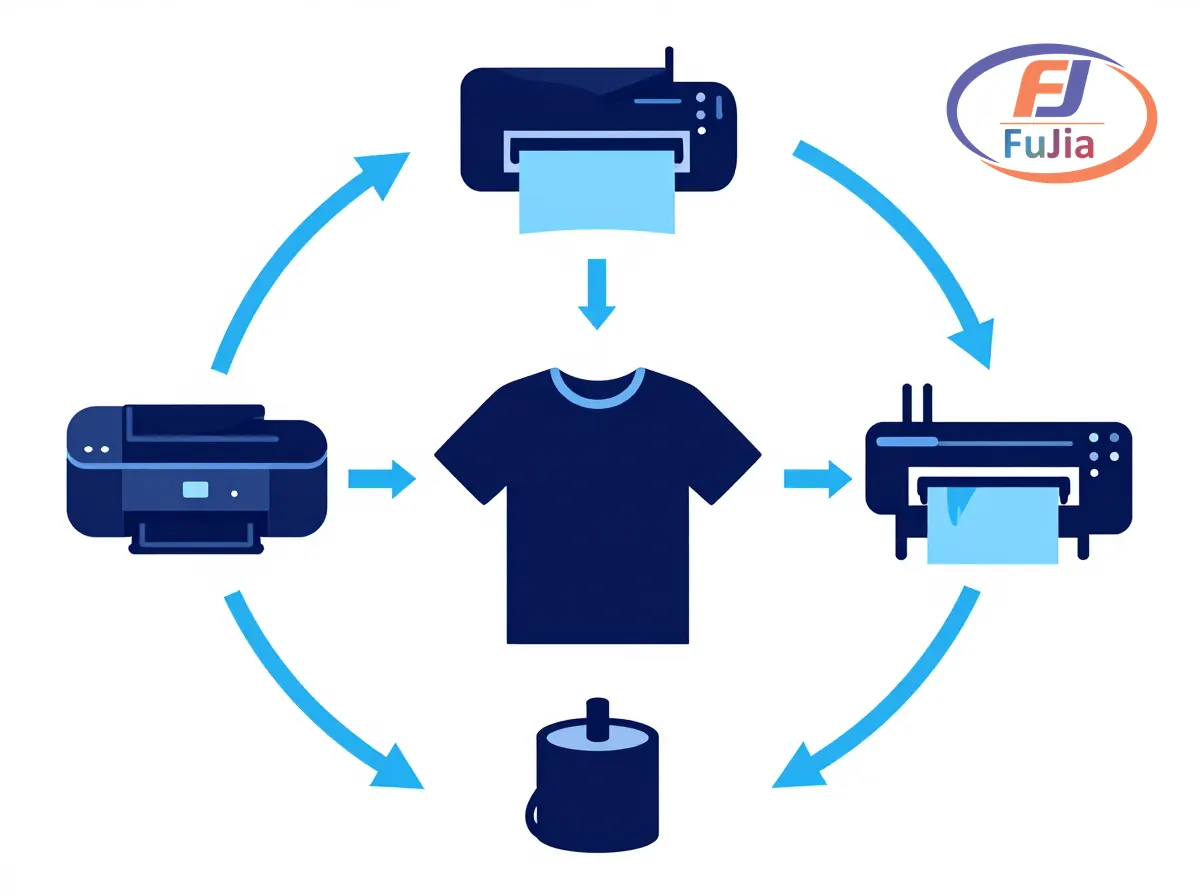
The best printer type follows the fabric first. For cotton and blends, DTF systems are the 2026 default because pigment ink bonded with hot-melt powder prints any color on any fiber at 160°C for 15 seconds, holding grade 4-5 fastness across 50+ washes. For 100% polyester, sublimation wins on cost per square meter and hand feel because the dye bonds chemically rather than sitting in a layer. For home sewing and quilting, dedicated fabric sheet printers like the Brother PrintModa serve the craft market at A4 size. For mill-scale yardage, direct-to-fabric industrial lines are their own category entirely. Match the technology to your fabric and volume before comparing brands, because every mismatch in this category is expensive.
How much does a fabric printing machine cost?
Complete 2026 pricing runs in three tiers. Home craft printers like the Brother PrintModa class sit around $2,000 and produce A4 fabric sheets for sewing projects. Business starter DTF setups, an A3 printer with powder shaker bundle at $5,599 plus a manual press, total around $6,000 and produce 40-60 transfers daily. Production systems built on a 24-inch dual-head DTF printer at $11,499 with a pneumatic press and consumables total $13,800-15,200 and sustain 200-400 pieces daily. Industrial direct-to-fabric lines for mill yardage run well beyond this range and are quoted project-by-project. Whatever the tier, budget includes the press and consumables, because a printer alone produces nothing sellable.
What is the best fabric printing machine for home use?
For home use, the honest best machine is a home-class fabric printer such as the Brother PrintModa, which prints A4 fabric sheets designed for quilting and craft sewing, rather than a production system scaled down. Home sewists who want to print their own quilt fabric need sheet output and craft-grade durability, and PrintModa-class hardware serves exactly that. Home users selling finished goods, however, cross into business territory: an A3 DTF starter bundle at around $6,000 produces 40-60 washable transfers daily on any fabric, which is the practical entry point for Etsy-scale sales. The distinguishing question is whether the output will be washed weekly; if yes, a business-grade system is the home-use answer, because craft-print durability will not survive it.
How can I print my own fabric?
Three routes exist, and the right one depends on volume and fabric. Craft route: use a home fabric sheet printer, which feeds treated A4 sheets through an inkjet mechanism for quilting and decor, at hobby cost but hobby durability. Business route: print designs onto PET film with a DTF printer, apply hot-melt powder, cure, and press at 160°C for 15 seconds, which works on any fabric including 100% cotton and dark colors, or print sublimation transfer paper and press at 200°C for 45-60 seconds for polyester only. Mill route: direct-to-fabric industrial lines print prepared rolls for yardage production. Beginners should start with a sample test, sending a design and fabric swatch to a printer vendor for a pressed, video-documented result, before committing to any hardware route.
Verdict
The fabric printer machine market is three markets wearing one name, and the right purchase starts with your fabric and your order flow: cotton and mixed orders point to DTF, polyester production points to sublimation, and craft sewing points to home sheet printers around $2,000. Business buyers should budget complete setups, around $6,000 to start and $13,800-15,200 to produce daily, and demand a tested sample on their own fabric before signing anything. Our home textiles guide shows what production-tier fabric printing ships as finished product, and the DTF printers lineup lists machines matched to free sample testing.
Sources
- Wikipedia: Digital textile printing: technology background for digital fabric printing methods.
- Wikipedia: Textile printing: traditional and digital printing classification referenced in the market segmentation.
- AATCC: color fastness standards behind the wash durability benchmarks.
