

A DTG pretreatment machine applies the adhesive base layer that lets white DTG ink sit on dark cotton, running from a $16 hand sprayer through the $1,495 Viper Mini up to the $7,220 Viper MAXX. This guide maps the four equipment tiers with real prices, explains what pretreat liquid does, and covers the comparison nobody search-facing admits: against DTF, which needs no pretreatment at all. The machine matters, but the process choice matters more, so both get honest math.
Key Takeaways
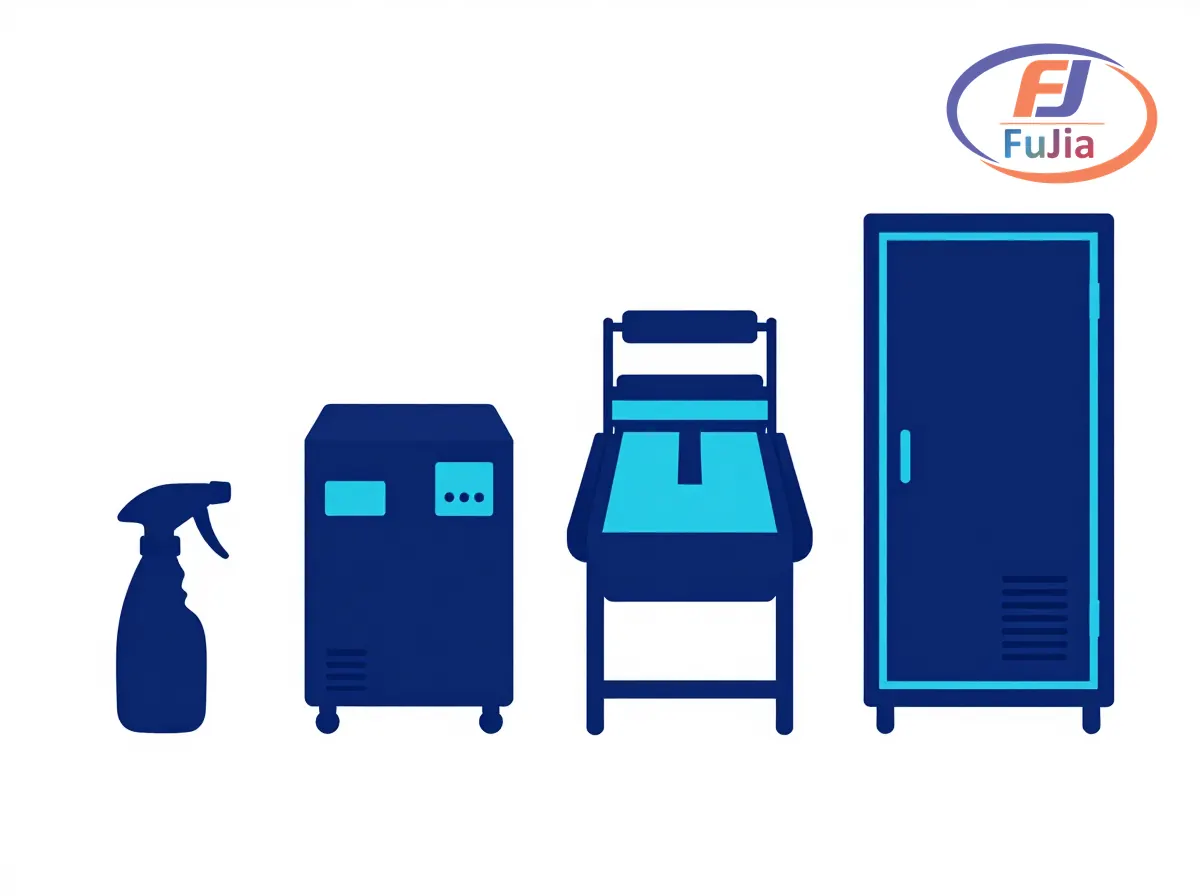
- Four equipment tiers cover the market: hand sprayers ($16-125), compact semi-auto (Viper Mini $1,295-1,495), production automatic (Viper XPT-1000 $2,995, Pearl PTM $3,195-3,295, Lawson Silver Jet $3,590), and enclosed high-volume (Pearl Elite $4,195-4,395, Viper E3 $4,995, Viper MAXX $6,995-7,220).
- Pretreatment is a liquid adhesive layer sprayed on dark garments before printing; without it, white DTG ink soaks into cotton fibers and disappears, so every dark-garment DTG shirt gets pretreated, no exceptions.
- Automation buys consistency and throughput: hand spraying averages 30-60 shirts/hr with operator variance, while the Pearl PTM’s automated path reaches roughly 300 shirts/hr on a 16 in platen with repeatable deposition.
- DTF eliminates the pretreatment step entirely, which is the quiet reason many small shops add a DTF printer alongside or instead of scaling DTG pretreat hardware.
- The real cost comparison is per clean printed shirt: pretreat liquid adds roughly $0.10-0.30 per shirt plus labor, and inconsistent application shows up as print failures that cost more than the liquid.
What Pretreatment Actually Does
DTG white ink is formulated to sit on top of fabric rather than soak into it, and cotton fibers are thirsty, so without a base layer the white sinks in and vanishes. Pretreatment liquid is a clear adhesive-containing spray that bonds with the fabric surface and gives the white ink something to sit on, the same underbase logic DTF builds into its white ink layer and powder step. Light garments skip the layer, which is why white-shirt DTG looks deceptively easy, while every dark garment in every shop on earth gets pretreated before printing, no exceptions, and the consistency of that layer is what separates crisp white underbases from blotchy failures.
Application quality is the hidden variable the machine tiers monetize. Hand spraying varies with operator rhythm, distance, and passes, so a shop’s Tuesday shirts and Friday shirts can differ visibly. Automated machines fix distance, spray pattern, and volume per cycle, which converts pretreatment from a skill into a setting. That consistency argument, more than raw speed, is what the mid-tier machines sell.
The Four Equipment Tiers with Real 2026 Prices
| Tier | Examples | 2026 price | Throughput | Fits |
|---|---|---|---|---|
| Hand sprayer | Wagner ($99-125), hand pump ($16) | $16-125 | 30-60 shirts/hr, operator variance | starting out, very low volume |
| Compact semi-auto | Viper Mini | $1,295-1,495 | consistent single-shirt cycles, 14 in platen | entry shops upgrading from hand |
| Production automatic | Viper XPT-1000 ($2,995), Pearl PTM ($3,195-3,295), Silver Jet ($3,590) | $2,995-3,590 | up to ~300 shirts/hr (PTM) | daily dark-garment production |
| Enclosed high-volume | Pearl Elite ($4,195-4,395), Viper E3 ($4,995), Viper MAXX ($6,995-7,220) | $4,195-7,220 | production with zero overspray | multi-shift, emission-sensitive spaces |
Reading the tiers honestly: the jump from hand to Viper Mini buys consistency, not speed, and it is the right first upgrade once pretreat-related reprints appear. The jump to production automatic buys both, and the Pearl PTM’s 300-shirts-per-hour figure is dealer-published throughput at full utilization. The enclosed tier buys environment control as much as output, because enclosed spray chambers with internal filtration eliminate the overspray that fine textile dust and pretreat mist deposit around an open shop, a real concern in shared or retail-adjacent spaces.
The Liquid Itself Costs Less Than the Failures
Pretreat liquid runs about $50 per 3.8 L gallon at the quality tier most shops buy, and a 3.8 L gallon covers 300-500 shirts across a 14 in print area, landing the liquid cost around $0.10-0.30 per garment. The expensive part is application failure. Too little liquid and the white underbase turns translucent in under 10 washes; too much and the layer stiffens the hand and can crack after washing, and both failures surface after printing when the shirt and ink are already spent. That asymmetry is the business case for automation in one sentence: a $1,495 machine pays for itself in reclaimed failures at surprisingly low volumes, and shops that track their pretreat reprint rate usually stop debating the upgrade within a quarter.
The Comparison Searchers Actually Need: Pretreat vs DTF
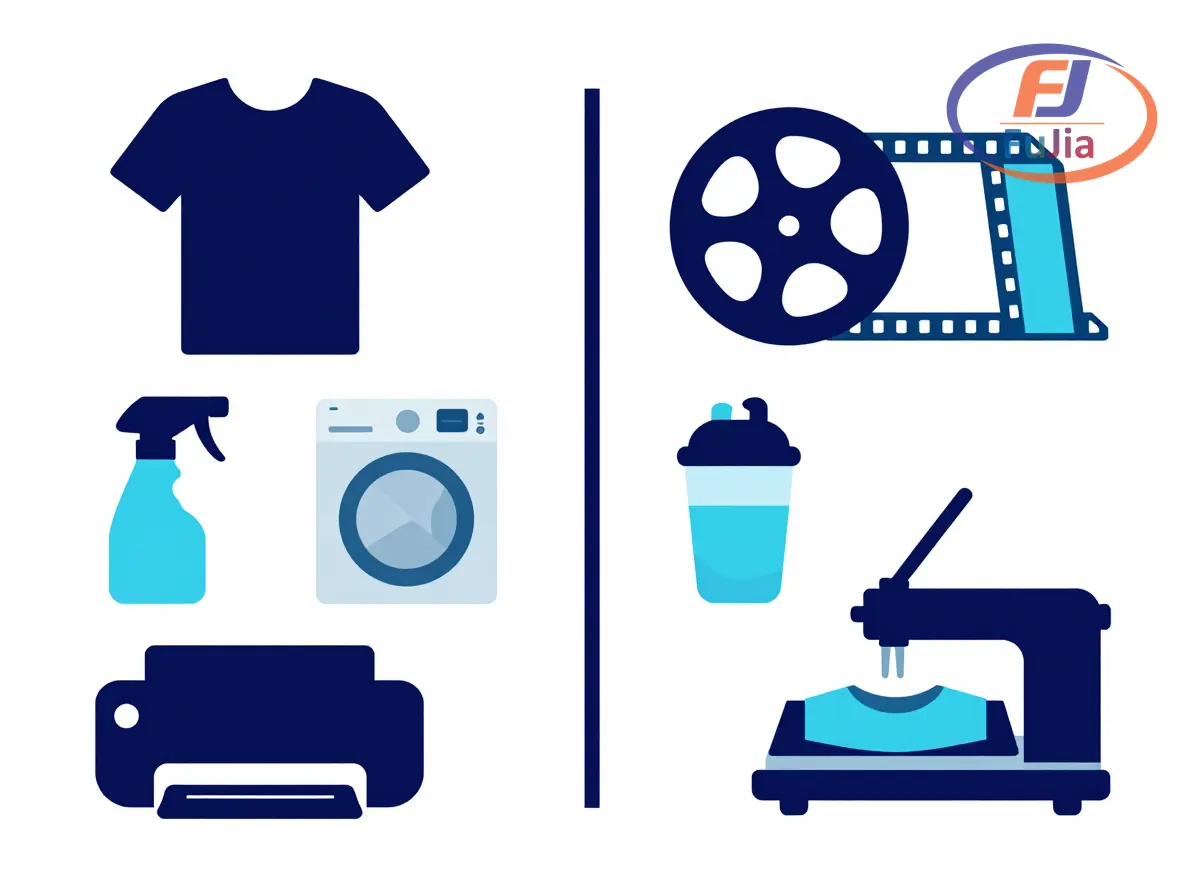
Here’s the thing the equipment pages do not surface: every dollar of pretreatment hardware exists to solve a problem DTF eliminated. DTF prints white ink onto film with powder bonding, so garments arrive at the press untreated and untouched, no liquid, no drying pass, no operator variance, and no pretreat reprints, and it does so across fabric types DTG cannot touch. The trade is real in both directions: DTG prints directly into cotton with a softer hand feel that brand merchandisers prefer, while DTF’s transfer layer sits slightly more on the surface, and our white toner vs DTF and DTG printers for small business guides map both technologies in full.
| Workflow step | DTG dark garments | DTF |
|---|---|---|
| Pretreat garment | required, every shirt | not needed |
| directly on garment | on PET film | |
| Apply adhesive | none (pretreat is the base) | hot-melt powder |
| Cure | platen heat | powder shaker + oven |
| Press to garment | no press needed | 160 °C, 15 seconds |
| Fabric range | cotton best | any fiber |
Most small shops will run the numbers this way: a shop already owning a DTG printer buys the pretreat tier that matches its volume and keeps the workflow, while a shop buying new equipment for dark-garment work prices a DTF machine first, because the $2,995 spent on a Viper XPT-1000 competes directly with entry DTF hardware that removes the process step entirely. The factory-direct DTF printers lineup covers that alternative from desktop to production widths. That said, established DTG shops upgrading pretreat hardware should absolutely automate, because the investment compounds against their existing workflow rather than replacing it.
What is the best pretreatment machine for DTG printing?
The best machine matches daily dark-garment volume: under 50 shirts daily, the Viper Mini at $1,295-1,495 delivers automated consistency without paying for throughput you cannot use; from 100 to 300 daily, the Pearl PTM at $3,195-3,295 or Viper XPT-1000 at $2,995 produce at rate with repeatable deposition; multi-shift or emission-sensitive spaces justify the enclosed Pearl Elite or Viper MAXX at $4,195-7,220. We recommend buying the tier your reprints justify rather than the tier your aspirations suggest, because pretreat automation pays for itself through reclaimed failures, and that math only works when the failures exist.
Do you have to pretreat DTG?
Yes for every dark garment, without exception, because pretreatment is the adhesive layer that stops white DTG ink from soaking into cotton and disappearing; skipping it produces translucent prints that fail customer inspection on sight. Light garments skip the layer, which is why white-shirt DTG feels deceptively simple and dark-shirt work separates professionals from hobbyists. The only process that skips pretreatment entirely is DTF, which builds its white underbase into the film and powder stage instead, and that difference is the entire comparison behind this article.
How to pretreat shirts for DTG?
The workflow is spray, dry, press, print. Apply pretreat liquid evenly across the print area, by hand sprayer or machine, then dry the layer with a 160 °C heat press hover pass or dedicated dryer. Smooth-press to flatten fibers before loading the shirt on the DTG platen. The variables that matter are coverage evenness, liquid volume per shirt, and complete drying, because wet pretreat causes adhesion failures and uneven application causes blotchy white, and machine application collapses those variables to settings.
Are DTG printers worth it?
Worth it for shops whose orders are photorealistic designs on light-to-mid cotton at small run sizes, where DTG’s soft hand and no-weeding workflow beat every alternative, and not worth it for shops whose orders are high-volume dark garments, where pretreatment labor and ink economics hand the advantage to DTF. The honest framing compares complete workflows, DTG plus pretreat hardware plus liquid versus DTF plus powder plus shaker, at your actual volume, because both technologies are mature and the wrong choice is a workflow mismatch rather than a bad machine. Most shops that choose correctly keep the printer for years, and most shops that choose wrong replace it within one.
Verdict
The DTG pretreatment machine market is mature and honestly priced: $1,295 buys consistency at entry, roughly $3,000 buys production rate, and $7,000 buys enclosed multi-shift capacity, with the liquid itself a minor cost against the failures bad application causes. Buy the tier your reprint rate justifies, automate before scaling, and price the alternative honestly, because DTF removes this entire equipment category for shops not yet committed to direct-to-cotton work. To compare a DTF line against your DTG workflow with real samples, contact Fujia Print and print the same file both ways.
Sources
- Printer Biz pretreatment equipment listings: 2026 pricing for Viper, Pearl, and Lawson pretreat machines.
- Garment Printer Ink pretreatment collection: tier pricing cross-reference.
- Wikipedia: Direct-to-garment printing: DTG process background.
- Viper XPT: manufacturer pretreatment machine line.
