

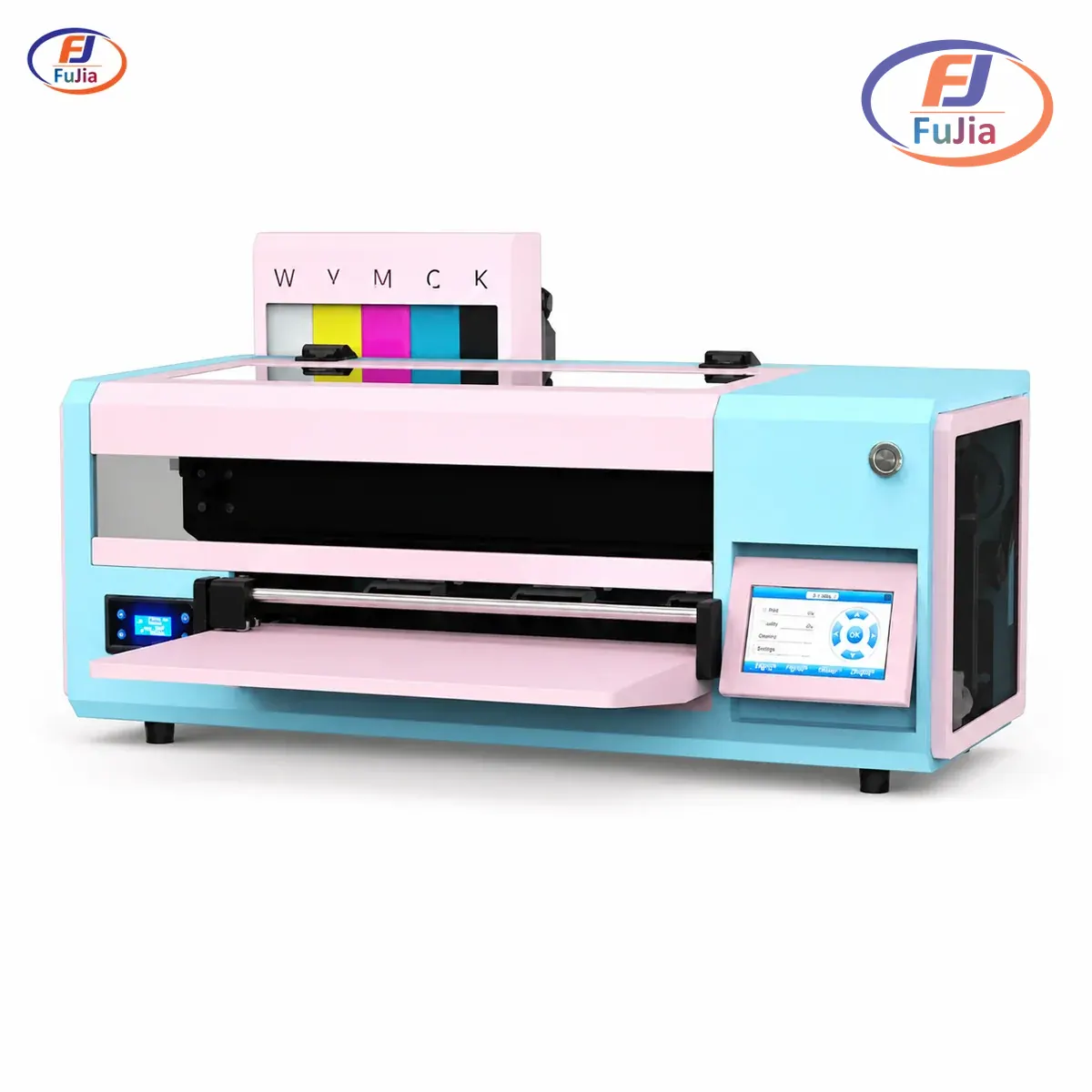
The best t shirt printing machine for a small business is a DTF system for almost everyone starting today: a complete production setup runs $13,800-15,200, prints any fabric and color, and carries 40-70% margins per shirt. This guide compares the four real technologies, screen printing, DTG, sublimation, and DTF, then maps three complete budget tiers. Dealer roundups recommending $15,000-30,000 DTG machines skip the DTF category entirely, which is exactly where most small shops should start.
Key Takeaways
- Four technologies matter for small business: screen printing, DTG, sublimation, and DTF, and the right choice follows daily volume plus fabric mix, not brand marketing.
- DTF wins the default slot: any fabric, any color, $0.40-0.80 consumables per full-front print, and 40-70% margins at street resale prices of $3-8 per transfer.
- Three complete budget tiers work: around $6,000 for an A3 starter setup, $13,800-15,200 for a production 24-inch DTF system, and about $20,000 for a 4-head expansion build.
- DTG machines at $15,000-30,000 suit cotton-only shops with design-heavy work under 20 pieces per run, which is a niche most new shops do not actually occupy.
- Break-even on a production DTF setup lands near 3,400 transfers, roughly three months at 50 prints per working day at a $4 average profit.
What “Best” Means for a Small Business
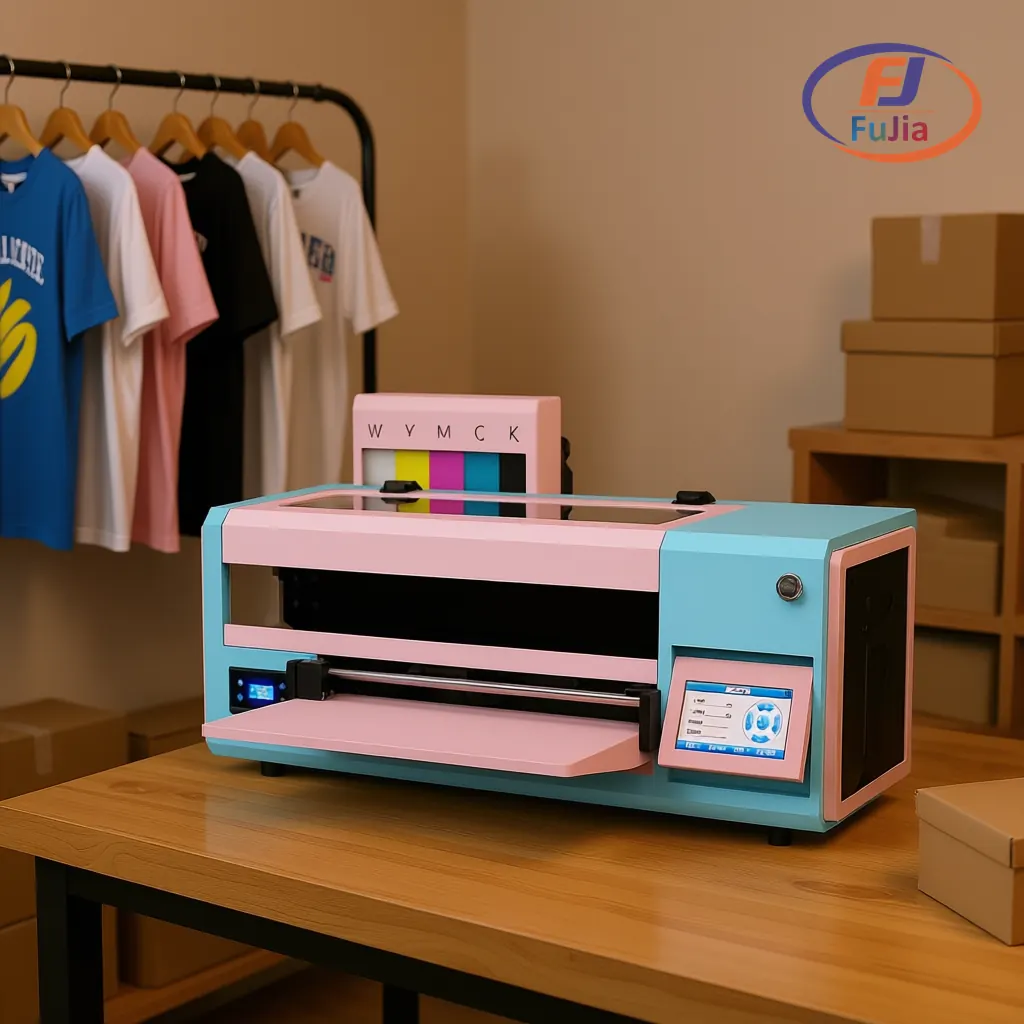
“Best” in t-shirt printing equipment is a volume-and-fabric question before it is a brand question, because the four technologies each own a different slice of the order curve. Screen printing owns bulk runs of simple designs, DTG owns cotton-only photorealistic small runs, sublimation owns polyester, and DTF owns everything mixed: any fabric, any color, moderate volume, full color. A shop printing 200 identical company-logo shirts has a different best machine than an Etsy seller shipping 12-piece personalized orders, and dealer roundups that ignore this produce expensive mistakes.
Three numbers decide the purchase before any model name does. Daily print volume sets the head count and automation tier. Fabric mix, cotton versus polyester versus blends, dark garments versus light, eliminates technologies outright: sublimation exits on dark cotton, and DTG struggles on polyester. Budget ceiling decides between a complete starter kit and a production line, and honest budgeting includes the heat press, shaker or oven, and starter consumables, not just the printer.
Here’s the thing about failure patterns: the most expensive one is buying for the shop you want in two years rather than the orders on the books today. Machines depreciate while sitting idle, head count you cannot feed with orders is dead capital, and upgrading later costs less than carrying capacity that never runs. Based on data from our customers across 50+ countries, most successful small shops bought one tier below their ambition and upgraded inside 18 months with cash flow rather than debt.
The Four Technologies Compared
Each technology carries a distinct profile across setup cost, per-print cost, fabric range, and volume sweet spot, and no single machine wins all four columns.
| Technology | Setup cost | Per-print cost | Fabrics & colors | Sweet spot |
|---|---|---|---|---|
| Screen printing | $2,000-20,000+ (presses, screens, exposure) | cents at volume, high setup per design | any fabric, spot colors | 200+ identical pieces per design |
| DTG | $15,000-30,000 | $2-4 incl. pretreatment | 100% cotton best, light/dark | <20-piece photorealistic cotton runs |
| Sublimation | $1,000-5,000 | $0.50-1.50 | polyester only, white/light base | full-bleed polyester, mugs, promo |
| DTF | $6,000-20,000 complete | $0.40-0.80 | any fabric, any color, dark native | 20-500 piece mixed orders, any fabric |
Screen printing remains the bulk king and the worst starter technology, because screens, exposure units, and reclaim chemistry only pay off when designs repeat in hundreds, and setup time per color kills small mixed orders. DTG prints beautifully on cotton but carries the highest machine cost, the slowest print times, and a pretreatment step that adds labor to every shirt; dealer favorite machines like the dual-platen Col-Desi M2 at $19,995 are serious production tools, yet their economics target exactly the high-cotton, low-volume niche that describes a slice of the market rather than its center. Sublimation is the cheapest entry and the most limited, locked to polyester and light bases. DTF lands in the middle of every cost column while covering every fabric and color, which is why it has become the default recommendation for shops that cannot predict their order mix.
Machine Picks by Budget
Complete setup budgeting matters more than printer price, because the press, powder shaker, and consumables are not optional. Three tiers cover the real small-business span, and each tier below is a working business, not a compromise.
| Tier | Complete budget | Core equipment | Capacity |
|---|---|---|---|
| Starter | ~$6,000 | A3 DTF printer + shaker bundle ($5,599), manual press | 40-60 transfers/day |
| Production | $13,800-15,200 | 24″ 2-head DTF + shaker ($11,499), pneumatic double-station press ($1,999-3,200), consumables ($300-500) | 200-400/day |
| Expansion | ~$20,000 | 4-head 60 cm DTF (under $10,000), industrial press, consumables | 500+/day |
The starter tier proves the model before scaling it. An A3 single-head machine prints 2-3 m² per hour, enough for 40-60 transfers in a working day from a 20 m² room, which covers an Etsy shop or a team-jersey side business while the owner learns gang sheets, powder discipline, and press timing. One of our customers, a pillow brand, started small and scaled to a 60 cm dual-head machine shipping 2,000+ pieces per month at a 65% margin with same-day turnaround, and their B2B orders doubled once same-day delivery became a promise rather than an aspiration.
The production tier is where most real small businesses land: the 24-inch 2-head class at $11,499 with an industrial press totals around $13,800-15,200 ready to print, sustains 200-400 pieces daily, and holds $0.40-0.80 per-print consumables. The expansion tier adds a 4-head machine under $10,000 running 27 m²/h at 4-pass for shops whose presses have become the bottleneck, a good problem that arrives only after the first two tiers worked, and the broader apparel printing playbook covers what comes after the first press.
Profitability: The Numbers That Decide
The per-print math is what makes DTF the small-business default, and it is worth running end to end. A full-front transfer consumes roughly 2-3 ml of ink including white, about $0.19 of film from a 24-inch roll, and a few cents of powder, landing at $0.40-0.80 in consumables. Those transfers retail at $3-8 wholesale or become finished shirts selling at $15-25, which produces the 40-70% margins standard across the industry and leaves room for the heat press labor.
Break-even on the production tier arrives quickly when orders exist. At a conservative $4 average profit per transfer, the $13,500 production setup pays for itself at roughly 3,400 transfers, which is about three months of working days at 50 prints per day; shops running promotional seasons or school-sports cycles typically cut that timeline in half. Financing spreads the entry cost across monthly payments when cash flow is tight, and the realistic risk is not the math but order acquisition, so buyers should have a sales channel identified before the machine arrives rather than after.
Profitability also has a ceiling worth knowing. A single production-tier DTF line tops out around 400-600 finished pieces daily including press time, at which point the expansion tier’s 4-head machine doubles printer throughput and shifts the bottleneck to the press; shops scaling past roughly 500 pieces daily should budget the second press alongside the bigger printer.
Setup & Support Reality Check
Physical requirements are modest but real. A production DTF line wants roughly 20-30 m² accommodating printer, shaker-dryer, and press in sequence, standard 220V power for the shaker’s 2,300W curing stage, and ventilation near the powder station; no compressed air is needed unless the press is pneumatic. Operating skill is learnable in days, and the honest support question is not whether training exists but whether it is included: Fujia bundles a 3-day remote onboarding program, day one covering hardware setup in about 2 hours, day two covering RIP installation and ICC profiling, and day three ending with the first production-grade print, plus a 12-month warranty with common parts shipped within 48 hours and a lifetime WhatsApp engineering group staffed by actual engineers.
Support shape matters more at 3 a.m. than in brochures. When a white ink sensor faults mid-order, the difference between a lifetime engineer group chat and a business-hours ticket queue is a shipped order versus an apology, and buyers should ask any vendor exactly who answers the chat after purchase. Free sample printing settles material questions before money moves: send your design and fabric, receive the printed and pressed sample on video, and judge with your own eyes rather than a spec sheet.
What is the best printer for a T-shirt printing business?
For most small businesses starting today, the best printer is a DTF system, specifically a 24-inch dual-head machine with a powder shaker, because it prints any fabric in any color at $0.40-0.80 per full-front transfer and supports 40-70% margins at standard resale prices. A complete production setup runs $13,800-15,200 including an industrial heat press and starter consumables, and it sustains 200-400 pieces daily with gang sheets. DTG machines at $15,000-30,000 only win for cotton-only shops printing photorealistic designs in runs under 20 pieces, and screen printing only wins at 200+ identical pieces per design. Fujia’s A1 dual-head line, built on a Honson mainboard, Leadshine servo motor, and THK guide rail, competes directly in this bracket with a 12-month warranty and 3-day remote onboarding included.
Which T-shirt printing machine is best?
The best machine is the one matched to daily volume and fabric mix, and the four technologies divide the market cleanly. Screen printing owns 200+ piece bulk runs of repeating designs. DTG owns sub-20-piece photorealistic cotton work, sublimation owns polyester and hard-surface blanks, and DTF owns the mixed orders that describe most real small-business demand. Within DTF, the decision is head count: a single-head A3 around $5,599 with shaker proves the model at 40-60 prints daily, a 24-inch 2-head at $11,499 runs 200-400 daily, and a 4-head machine under $10,000 doubles throughput to 27 m²/h when the press becomes the bottleneck. Buyers should map their last 30 days of realistic orders to those tiers before looking at brand names.
Is T-shirt printing business profitable?
Yes, with standard small-business caveats about order flow. Consumables for a full-front DTF transfer run $0.40-0.80 against wholesale transfer prices of $3-8 and finished-shirt retail of $15-25, producing 40-70% margins that comfortably exceed most retail categories. At a conservative $4 average profit per transfer, a $13,500 production setup breaks even near 3,400 transfers, about three months at 50 prints per working day, and seasonal demand for school, team, and corporate orders typically compresses that further. The honest risks are order acquisition rather than production: the machine prints all day, but the owner must feed it, so profitable shops usually start with an identified channel, Etsy, local teams, or corporate accounts, before the equipment arrives.
What is the best quality T-shirt printing machine?
Print quality in t-shirt decoration depends less on the printer than on the complete system: RIP color management, ink chemistry, film and powder quality, and press discipline together decide whether a transfer survives 50+ washes at grade 4-5 color fastness. Within DTF, machines built on Epson i3200 heads at 720×2400 dpi produce resolution the eye cannot distinguish between brands, so quality comparisons at that point come down to transmission stability and white ink reliability over long runs. A 4-head machine with servo-driven media handling and auto-circulating white ink holds quality across 12-hour production days where cheaper builds drift. Buyers should demand a same-file test print on their own fabric from any vendor, including us, and judge the washed result rather than the sales sheet.
Verdict
For a small business starting today, the best t shirt printing machine is a 24-inch dual-head DTF printer with a powder shaker inside a complete $13,800-15,200 setup, because DTF covers any fabric, any color, and the 20-500 piece mixed orders that define real small-shop demand while carrying 40-70% margins. Screen, DTG, and sublimation each own their niche, but none of them owns the center the way DTF does at this price. Map your weekly volume to the three budget tiers, demand a test print on your own fabric, and if the numbers hold, our apparel printing guide and the DTF printers lineup show exactly what arrives in the crate.
Sources
- Wikipedia: Screen printing: process background for the screen printing comparison row.
- Wikipedia: Direct-to-garment printing: DTG technology background referenced in the technology comparison.
- IRS: Small business and self-employed resources: official small-business operational reference for new printing businesses.
