

A UV printer for phone case production is a 6090 flatbed at $3,500-16,000 with case-specific jigs, printing 40-150 cases daily at production costs of $0.60-2.00 per case against retail prices of $12-25. Phone cases are the volume anchor of personalization economics: blanks are cheap, designs are infinite, reorder cycles are short, and the margins of 70-85 percent absorb every operating cost the station carries. This page specs the station, prices the case economics that justify it, and details the jig discipline that turns a flatbed into a case factory.
\n\n\n\n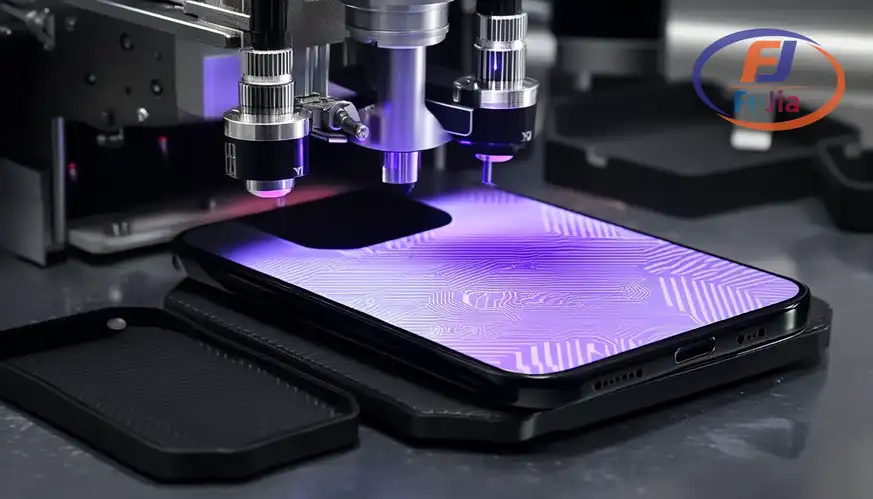
Key Takeaways
\n\n\n\n- \n\n\n
- The station: 6090 flatbed at $3,500-16,000 plus case jigs at $50-300, white ink channel required for the dark-case half of demand. \n\n\n
- Case economics: blanks at $0.60-2.00, ink at $0.05-0.15 per case, retail at $12-25 custom and $8-15 stock designs, margins at 70-85 percent. \n\n\n
- Jig trays hold 8-12 cases per pass, and daily volume runs 40-150 cases depending on design mix and ordering traffic. \n\n\n
- Popular models matter: stocking jigs for the top 8-10 phone models covers 70-80 percent of case demand in most markets. \n\n\n
- We recommend starting with 3D-printed jigs for your best-selling models and graduating to machined trays as each model proves volume. \n\n\n
The Station Table
\n\n\n\nThe station table lists what phone case production requires beyond the printer, and the jig line is where phone economics actually operationalize:
\n\n\n\n| Component | \nPrice band | \nRole | \n
|---|---|---|
| 6090 flatbed printer | \n$3,500-16,000 | \nprint engine with white channel | \n
| Case jigs (8-10 models) | \n$50-300 | \nregister cases per pass | \n
| White ink system | \nincluded | \nunderbase for dark cases | \n
| RIP software | \n$0-500 | \nlayout and color control | \n
| Opening case stock | \n$200-600 | \ntop models, light and dark | \n
The station in production:
\n\n\n\nThe 6090 bed fits 8-12 cases per pass in a jig tray, and a working session of 10-15 passes covers 80-180 cases, per the station economics our promotional products cases document across phone-case operations.The printer is the smallest decision in the station, because head platforms print cases identically at equal settings, and the jig library plus case stock are where phone businesses actually differentiate.
\n\n\n\nCase Economics: From Blank to Retail
\n\n\n\nThe economics table runs the per-case ledger, and the retail column shows why phone cases anchor personalization businesses:
\n\n\n\n| Line | \nCost | \nNotes | \n
|---|---|---|
| Blank case | \n$0.60-2.00 | \nmodel and material dependent | \n
| Ink including white | \n$0.05-0.15 | \nunderbase on dark cases | \n
| Jig amortization | \n$0.02-0.05 | \nspread across volume | \n
| Total production | \n$0.67-2.20 | \nper finished case | \n
| Retail custom | \n$12-25 | \npersonalization premium | \n
| Retail stock design | \n$8-15 | \ndesign-library range | \n
The ledger in view:
\n\n\n\nThe real question with the margin structure is simple: the blank-to-retail spread is so wide that production discipline matters more than procurement skill, because a case printed crooked or a white layer printed cloudy costs more in returns than any blank negotiation recovers. Custom name and photo cases command the top of the retail range because personalization is the product, while stock designs compete on library breadth, per the personalization pricing our case studies document across case sellers. We recommend pricing custom work at a 50-100 percent premium over stock designs, because the customer who supplies the design has already paid the margin for exclusivity.
\n\n\n\nJig Discipline and the Volume Math
\n\n\n\nThe jig table specs the model coverage strategy, and the volume math that follows times the station honestly. Figures assume standard adult phone models at trade volumes:
\n\n\n\n| Jig strategy | \nModels covered | \nDemand share | \nInvestment | \n
|---|---|---|---|
| Top 5 models | \nflagship line | \n50-60% | \n$50-150 | \n
| Top 8-10 models | \nplus mid-range | \n70-80% | \n$80-250 | \n
| Full catalog chase | \nlong tail | \n+10-15% | \n$300+ | \n
The volume math in practice:
\n\n\n\nA case seller we supply runs 80-120 cases daily on a top-8 jig library, and its model coverage data showed the long tail contributing returns risk rather than revenue, which is why the library stopped expanding at eight, per the model-coverage analysis our phone-case cases document across personalization sellers. We recommend the 80/20 audit before any jig expansion, because each new model carries tray cost, stock risk, and layout work, and the tail models rarely pay for their own fixtures. Local markets vary. The model census of your own orders is the only coverage chart that matters, and three months of order data draws it for free.
\n\n\n\n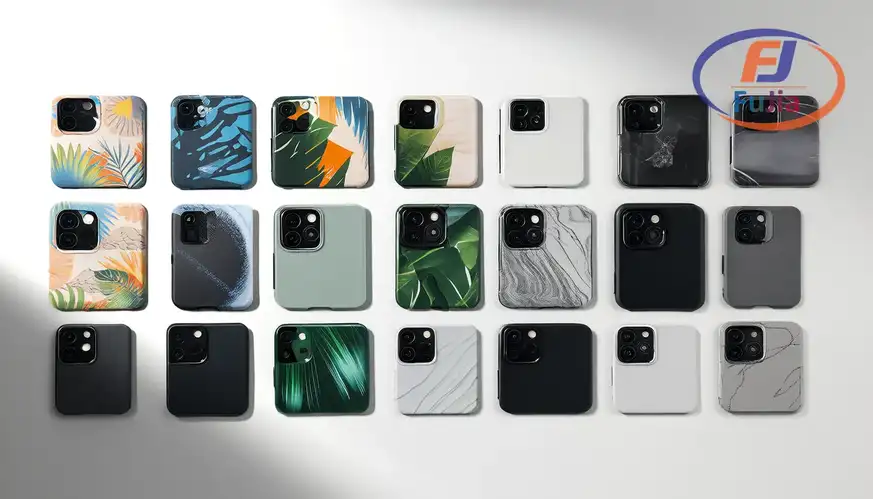
What printer do I need to print phone cases?
A UV flatbed printer with a 6090 bed at $3,500-16,000 and a white ink channel is the standard phone case production machine, printing 8-12 cases per pass in jig trays at production speeds. The white channel is required because dark and clear cases need an underbase for colors to read, and skipping it cuts the addressable market in half. Entry 2030 desktops at $1,200-2,800 handle smaller volumes of 20-50 cases daily. The 6090 becomes the rational step once daily demand passes that range, and the jig library matters more than the head platform inside either class.
How much does it cost to start a phone case printing business?
Starting a phone case printing business costs $4,000-17,000 complete: the 6090 flatbed at $3,500-16,000, case jigs for top models at $50-300, RIP software at $0-500, and $200-600 of opening case stock. Production cost per case runs $0.67-2.20 against retail of $12-25 custom and $8-15 stock designs, delivering 70-85 percent margins that pay the station back inside 200-400 cases. Entry desktop setups under $3,000 validate the market at lower volumes before the 6090 step.
Is a phone case UV printing business profitable?
A phone case UV printing business is profitable at 70-85 percent margins when model coverage matches local demand: blanks at $0.60-2.00 plus ink convert to $12-25 custom retail, and 40-150 daily cases fund the station inside months at working volume. Profitability concentrates in jig coverage of the top 8-10 models, custom personalization pricing at 50-100 percent over stock designs, and repeat channels such as corporate orders and event merchandising. The failure mode is chasing long-tail models whose fixtures and stock never pay for themselves. Print at 720×1440 dpi with disciplined white density and the returns line stays as short as the margin line is long.
What phone cases can UV printers print on?
UV printers print on hard-shell phone cases of polycarbonate, TPU hybrids, and coated plastic in any color, with dark and clear cases requiring the white ink underlay and light cases printing without it. Silicone and fabric cases bond poorly with UV ink and belong to other decoration methods, and case thickness under 5 millimeters presses into standard jig trays. The case surface should be wiped with isopropyl before printing, because case manufacturing leaves release agents that invisibly break adhesion exactly like they do on glass.
Verdict
\n\n\n\nA UV printer for phone case production is a 6090 flatbed at $3,500-16,000 plus a jig library covering the top 8-10 models, converting $0.67-2.20 of production cost into $12-25 custom retail at 70-85 percent margins across 40-150 daily cases. The white channel is required equipment for half the market, the 80/20 audit disciplines jig expansion, and the isopropyl wipe is the step that decides whether adhesion survives handling. Stock the top models, price personalization at its premium, and let model census order the jig library. For 6090 stations with case jig packages, contact Fujia Print for factory-side pricing.
\n\n\n\nSources
\n\n\n\n- \n\n\n
- Epson industrial printheads: head platforms behind case stations. \n\n\n
- Wikipedia: UV curing: ink adhesion on plastics. \n\n\n
- SGIA printing resources: production benchmarks. \n\n\n
- Fujia Print phone case cases: station setups and model coverage. \n\n\n
- Fujia Print UV format guides: station comparisons. \n\n\n
