

DTF film in 60 cm rolls is the production width of the DTF chain: 100 micron PET sheets with double-sided matte coating on both faces, priced $25-60 per 100-meter roll, and nesting 8-12 adult front designs per pass against the 4-6 that 30 cm desktop rolls carry. The width decision is a production economics decision, because wider film nests tighter, wastes less between designs, and feeds dual-head and A2-class printers that narrower rolls starve. This page specs the 60 cm roll format, runs the prints-per-roll math, and matches the width to the shops it serves.
\n\n\n\n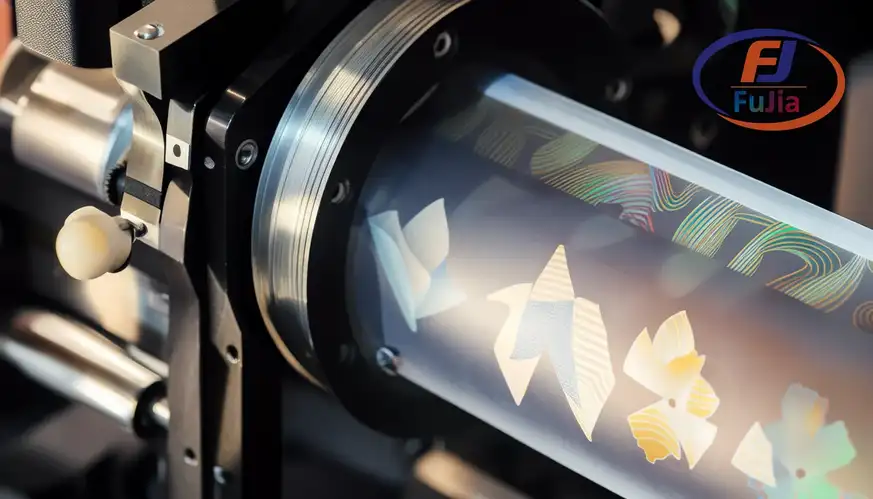
Key Takeaways
\n\n\n\n- \n\n\n
- 60 cm roll spec: 100 micron PET, double-sided matte coating on both faces, standard 100-meter rolls at $25-60 by quality tier. \n\n\n
- Prints per roll: a 100-meter roll carries 700-1,200 adult front designs at production nesting, landing film at $0.04-0.08 per shirt. \n\n\n
- The double-sided coating doubles usable area when one face is consumed, an economy budget single-side films do not offer. \n\n\n
- 60 cm matches dual-head XP600 and i3200 printers and A2-class beds, and it starves below 100 shirts daily where 30 cm rolls suffice. \n\n\n
- We recommend 60 cm for shops past 100 shirts daily, and single-side 30 cm below that line, because width should follow printer feed and volume together. \n\n\n
The Roll Spec Table
\n\n\n\nThe spec table defines the 60 cm format against its neighbors, and the coating row carries the quality question most buyers skip:
\n\n\n\n| Spec | \n60 cm roll | \n30 cm roll | \nNotes | \n
|---|---|---|---|
| Width | \n60 cm | \n30 cm | \nprinter feed match | \n
| Thickness | \n100 micron | \n75-100 micron | \nproduction standard | \n
| Coating | \ndouble-sided matte | \noften single-side | \ndouble = 2x usable area | \n
| Roll length | \n100 m standard | \n100 m | \nlonger on request | \n
| Price per roll | \n$25-60 | \n$12-30 | \ntier dependent | \n
| Adult fronts per meter | \n8-12 per pass width | \n4-6 | \nnesting efficiency | \n
The roll in context:
\n\n\n\nThe double-sided matte coating is the 60 cm tier’s quiet advantage: when one face exhausts its release quality, the roll flips and the second face serves a full production run, effectively halving the per-print film cost against single-side stock, per the film spec analysis our consumables guides document across the DTF chain.Buyers who spec single-side film at budget prices pay the difference in waste, because failed prints and test strips consume the only face the roll has.
\n\n\n\nPrints per Roll and the Film Ledger
\n\n\n\nThe ledger table runs a 100-meter roll through production volume, and the per-shirt line is the number that joins the transfer cost chain:
\n\n\n\n| Metric | \nValue | \nNotes | \n
|---|---|---|
| Roll length | \n100 m | \nstandard | \n
| Designs per meter | \n7-12 | \nnesting dependent | \n
| Designs per roll | \n700-1,200 | \nadult fronts | \n
| Film cost per shirt | \n$0.04-0.08 | \nat $25-60 per roll | \n
| Roll lifespan in shop | \n1-3 weeks | \nat 100+ shirts daily | \n
The ledger in view:
\n\n\n\nWhen it comes to the film ledger, film at $0.04-0.08 per shirt looks small until multiply-by-volume reveals that a shop printing 3,000 shirts monthly spends $120-240 on film alone. Storage discipline becomes a real operational line at that consumption, per the consumables scaling our production cases document across DTF operations. The prints-per-roll math also exposes the width decision directly, because a shop running 100 shirts daily consumes a 30 cm roll in days while a 60 cm roll lasts the week with tighter nesting. We recommend tracking rolls against shirts monthly, because that ratio exposes both nesting waste and quality drift before they reach customer orders.
\n\n\n\nWidth Matching and the Storage Discipline
\n\n\n\nThe width table matches roll format to printer and volume, and the storage row covers the humidity discipline PET film demands:
\n\n\n\n| Shop profile | \nRight width | \nPrinter match | \nRolls monthly | \n
|---|---|---|---|
| Craft starter | \n30 cm | \nsingle XP600 A3 | \n1-2 | \n
| Growing shop | \n60 cm | \ndual XP600 | \n2-4 | \n
| Production line | \n60 cm | \ni3200 dual or A2 | \n4-10 | \n
| Contract volume | \n60 cm multi-roll | \nmulti-head line | \n10+ | \n
The storage discipline in view:
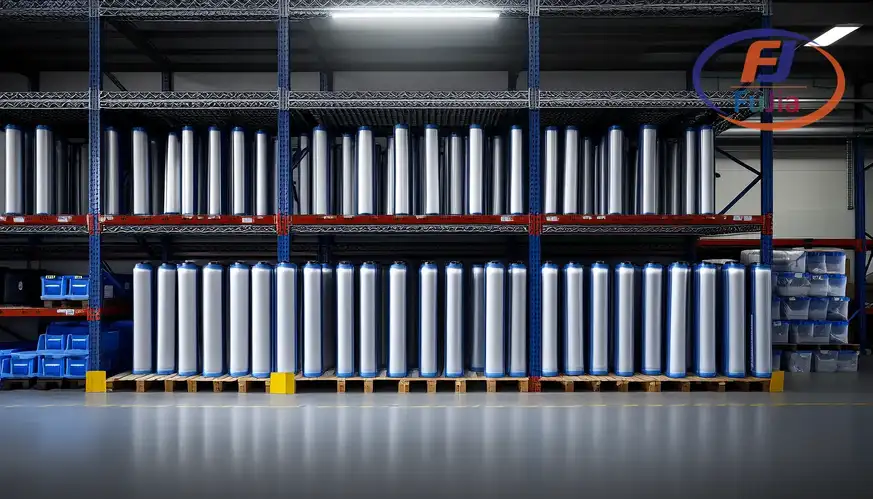
\n\n\n\nA production shop we supply stores its 60 cm rolls sealed with desiccant at 20-25 °C and 40-60 percent humidity, and its film failure rate stays near zero while a peer shop storing open rolls in a humid back room fought moisture-stuck coating for months, per the storage discipline our DTF supply cases document across humid-climate operations. We recommend sealed storage with humidity awareness as part of the width upgrade, because 60 cm rolls represent more capital per unit and deserve the care their price implies. The width upgrade decision is printer-plus-volume rather than film enthusiasm. Shops whose printers feed 30 cm should upgrade the printer first, and the film follows the feed path it serves.
\n\n\n\n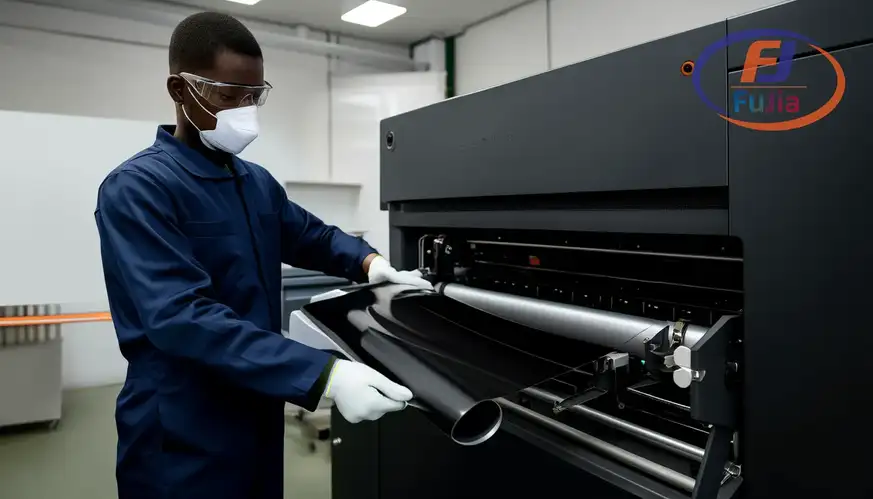
What size is DTF film sold in?
DTF film sells in sheet sizes of A4 and A3 for desktop printers, and in rolls of 30, 45, 60, and 120 cm widths at standard 100-meter lengths, with 60 cm being the production width that matches dual-head printers and A2-class beds. Film thickness runs 75-100 microns, with 100 micron double-side-coated PET as the production standard. The width decision follows printer feed capability first and volume second, because the best-rolled film in the world cannot serve a printer that feeds 30 centimeters.
How much does a 60cm DTF film roll cost?
A 60 cm DTF film roll costs $25-60 for 100 meters depending on quality tier, with double-side-coated 100 micron production film at the upper band and single-side budget stock below it. Per-shirt film cost lands at $0.04-0.08 at production nesting of 7-12 designs per meter, and the double-sided coating effectively halves that cost when both faces serve production runs. Prices under $20 per roll deserve coating and thickness verification. PET film has a real material cost, and sub-$20 pricing undercuts that cost visibly at the press where release quality fails.
How many prints come from a 100 meter DTF film roll?
A 100-meter DTF film roll yields 700-1,200 adult front designs at production nesting of 7-12 designs per meter, with the count rising for small logos and falling for full-coverage prints. At 100 shirts daily, a 60 cm roll lasts 1-2 weeks, and film cost per shirt lands at $0.04-0.08 at $25-60 per roll. Tracking rolls against shirts monthly exposes nesting waste and print-setting drift early, because both show up as a falling designs-per-roll ratio before customers ever see a problem.
How should I store DTF film rolls?
Store DTF film rolls sealed in original packaging with desiccant at 15-25 °C and 40-60 percent humidity, standing on end rather than flat, because humidity degrades the matte coating’s release properties and flat storage pressures the lower wraps. Opened rolls should re-seal between uses, and rolls stored in humid climates without sealing develop coating adhesion problems that look like print defects rather than storage failures. The storage discipline costs nothing and protects film whose per-roll price justifies care, and shops in humid regions should treat it as equipment maintenance rather than housekeeping.
Verdict
\n\n\n\nDTF film 60 cm rolls are the production width: 100 micron double-side-coated PET at $25-60 per 100 meters, yielding 700-1,200 adult fronts per roll at $0.04-0.08 per shirt, and matching the dual-head and A2-class printers that feed past 100 shirts daily. The double-sided coating is the tier’s quiet economy, the width upgrade follows printer feed capability rather than film enthusiasm, and sealed storage with humidity discipline protects the capital a wider roll represents. Match width to printer, track rolls against shirts, and store the rolls like the production asset they are. For 60 cm rolls with documented double-side coating, contact Fujia Print with your printer spec.
\n\n\n\nSources
\n\n\n\n- \n\n\n
- Wikipedia: Polyethylene terephthalate: PET film material science. \n\n\n
- Wikipedia: Direct-to-film printing: film’s role in the process chain. \n\n\n
- Epson industrial printheads: printer feed specifications. \n\n\n
- ASTM International standards: film testing methods. \n\n\n
- Fujia Print DTF consumables guides: film specs and storage cases. \n\n\n
- Fujia Print production cases: width economics at scale. \n\n\n
