

UV flatbed printer applications span personalized phone cases, corporate awards, signage panels, promotional goods, and home decor, and the categories share one production truth: a 6090 bed prints any rigid item under 60 by 90 centimeters at margins of 50-85 percent when jigs hold the product where the head expects it. The application list is why flatbeds sell, because no other single machine serves awards one hour and signage the next without changeover beyond a fixture swap. This page maps the major application categories with their economics, the jig systems that make irregular products printable, and the product mixes that real shops run profitably.
\n\n\n\n
Key Takeaways
\n\n\n\n- \n\n\n
- Core categories: phone cases at 70-85 percent margins, awards at 60-80, signage panels at 50-70, promo goods at 50-75, and decor items at 60-80. \n\n\n
- Jig systems are the application enabler: machined or 3D-printed holders turn irregular products into registered print targets within minutes of setup. \n\n\n
- A 6090 bed covers 90 percent of personalized-product demand, printing 40-200 items daily depending on category mix and setup discipline. \n\n\n
- White ink underlay expands the addressable catalog to dark and transparent products, adding 20-40 percent ink cost on those jobs. \n\n\n
- We recommend building the product line around 2-3 categories rather than chasing the full list, because jig investment and workflow depth beat catalog breadth. \n\n\n
The Application Category Table
\n\n\n\nThe category table prices the major applications by margin, volume, and entry difficulty, and the jig column flags where fixtures decide printability:
\n\n\n\n| Category | \nTypical margin | \nDaily volume | \nJig demand | \n
|---|---|---|---|
| Phone cases | \n70-85% | \n40-150 | \ndedicated trays | \n
| Awards and plaques | \n60-80% | \n20-60 | \nflat nests | \n
| Signage panels | \n50-70% | \n10-40 | \nvacuum only | \n
| Promo goods | \n50-75% | \n50-200 | \nper-product jigs | \n
| Home decor | \n60-80% | \n20-80 | \nmixed | \n
The categories on the bed:
\n\n\n\nPhone cases anchor the personalization economy of every flatbed shop, and their 70-85 percent margins at $12-25 retail come from $0.60-2.00 blank cases and under a dollar of ink, per the category economics our promotional products cases document across personalization businesses. Signage sits at the opposite pole of volume and unit value, where 10-40 panels daily at $25-120 each reward the same machine with different labor, and the flatbed serves both without pretending they are the same workflow.The shops that thrive pick two or three categories and build jigs, ink presets, and pricing templates around them, because the application list is a menu rather than a to-do.
\n\n\n\nJig Systems: The Application Enabler
\n\n\n\nThe jig table explains the fixture hierarchy that turns irregular products into registered print targets, and the tier matches budget to product diversity:
\n\n\n\n| Jig tier | \nMethod | \nCost | \nBest for | \n
|---|---|---|---|
| Flat nests | \nmachined sheets with cutouts | \n$20-80 each | \nsingle product at volume | \n
| Modular systems | \npeg-and-slot grids | \n$100-300 | \nmixed catalogs | \n
| 3D printed | \ncustom per product | \n$5-30 each | \nnew products, iteration | \n
| Vacuum only | \nno jig | \nincluded | \nflat rigid stock | \n
Jigs in production:
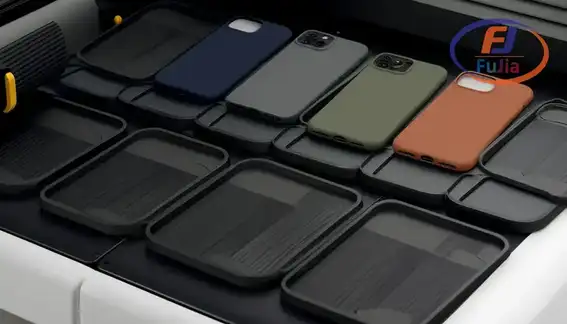
\n\n\n\nWhen it comes to jigs, they convert product variance into fixture geometry. A $15 3D-printed holder is what lets a flatbed print a phone case, a wallet. A compact mirror in the same session without registration drift. The modular peg systems serve shops whose catalogs change weekly, because re-pinning a grid takes minutes rather than the machining a dedicated nest needs, per the fixture strategy our production cases document across personalization operations. We recommend 3D printing as the standard prototyping path for any new product, because a test jig costs pocket change and teaches the registration lesson before any production run risks it.
\n\n\n\nThe White Ink Question and Product Mix
\n\n\n\nThe white table prices the underlay decision across product classes, and the mix table that follows shows how real shops balance their daily runs:
\n\n\n\n| Product class | \nWhite underlay | \nInk cost impact | \n
|---|---|---|
| Clear and dark products | \nrequired | \n+20-40% ink | \n
| Light rigid stock | \noptional | \nminimal | \n
| Mirrors and glass | \nrequired | \n+30-40% ink | \n
| White and light blanks | \nskipped | \nnone | \n
The mix in practice:
\n\n\n\nA promo shop we supply runs a daily mix of 60 percent white-blank products that skip the white channel and 40 percent dark or clear items that demand it, and its ink ledger prices the two classes separately because the white circulation schedule lives and dies on that demand split, per the mix discipline our production cases document across flatbed fleets. We recommend shops publish their own white share internally. The number drives ink buying, circulation scheduling, and the honesty of per-product margins, and it is the one production stat that predicts next month’s ink invoice.
\n\n\n\n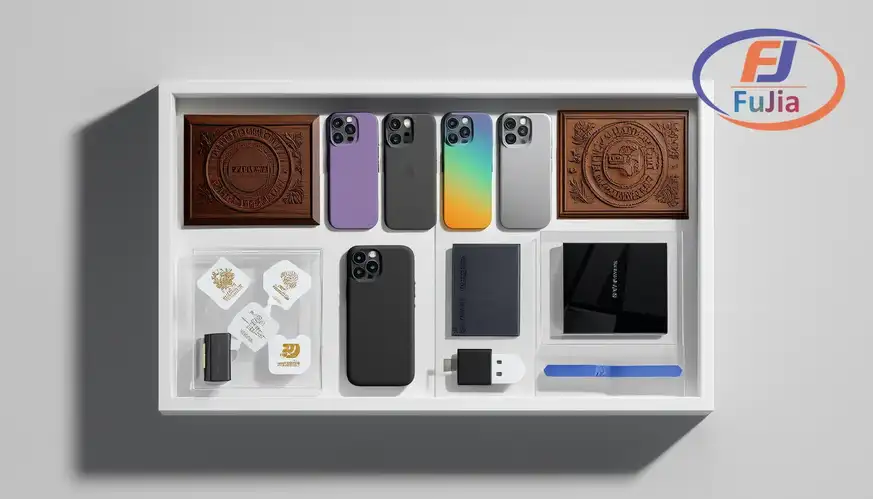
What products can a UV flatbed printer print?
A UV flatbed printer prints any rigid product that fits its bed: phone cases, awards and plaques, signage panels, promo goods such as pens and keychains, home decor items, leather goods, ceramic tiles, glass panels, and wood products. The 6090 format at 60×90 cm covers roughly 90 percent of personalized-product demand, and jig systems hold irregular shapes in registered positions for printing. Products carry 50-85 percent margins across these categories. White ink underlay extends the catalog to dark and transparent items at a 20-40 percent ink premium on those jobs, and that premium is the price of a full catalog.
How profitable is a UV flatbed printing business?
A UV flatbed printing business runs 50-85 percent margins across its product categories: phone cases retail at $12-25 against $1-3 in blank and ink cost, awards at $25-80 against $4-10, and signage panels at $25-120 against $6-20. A working 6090 station pays back inside 200-400 decorated products, and shops printing 40-200 items daily reach that inside months when demand exists. Profitability concentrates in jig investment and repeat clients, because the shops that build fixture libraries and roster-driven reorder relationships convert equipment capability into annuity revenue.
What is a jig in UV printing?
A jig in UV printing is a fixture that holds a product in a fixed registered position on the print bed, converting irregular shapes into consistent print targets that the machine can address without realignment. Jig tiers run from machined flat nests at $20-80 per product, through modular peg-and-slot systems at $100-300 for mixed catalogs, to 3D-printed custom holders at $5-30 that prototype new products cheaply. Jigs are the application enabler for everything beyond flat rigid stock. Shops with deep jig libraries serve catalogs that jig-less competitors must decline, and the library compounds with every product the shop adds.
Do UV flatbed printers need white ink?
UV flatbed printers need white ink for printing on dark, clear, or transparent products, because the white underlay layer gives colors a base to read against, and the channel is optional only for shops printing exclusively on white and light stock. White adds 20-40 percent to ink cost on the jobs that use it, and it demands daily circulation discipline because its pigment settles faster than any other channel. The underlay expands the addressable catalog to phone cases on dark blanks, mirrors, glass awards, and clear decor, and shops that skip the channel compete on half a catalog by choice.
Verdict
\n\n\n\nUV flatbed printer applications are a catalog of 50-85 percent margin products sharing one machine: phone cases, awards, signage, promo goods, and decor items that a 6090 bed serves across 40-200 items daily, with jig systems converting irregular products into registered print targets for pocket-change fixture costs. White ink is the catalog expander that dark and transparent products demand, and the winning shops build depth in 2-3 categories rather than breadth across all of them. Pick the categories your market buys, print the jigs, and let repeat rosters turn capability into revenue. For application-matched flatbed quotes with jig guidance, contact Fujia Print with your product list.
\n\n\n\nSources
\n\n\n\n- \n\n\n
- Wikipedia: UV curing: ink systems behind rigid printing. \n\n\n
- Wikipedia: Jig (tool): fixture fundamentals. \n\n\n
- SGIA printing resources: application benchmarks. \n\n\n
- Fujia Print application cases: category economics and jig libraries. \n\n\n
