

Bulk sublimation prints come in two forms, pre-printed transfer sheets bought wholesale at $0.10-0.60 each and unprinted rolls you print yourself at $0.05-0.20 in paper and ink, and the sourcing decision is a volume-versus-control trade with MOQ ladders from 50 sheets at Etsy suppliers to 500-piece factory runs. Shops that understand both channels run them together: stock designs arrive pre-printed by the hundred, and custom designs print in-house same-day. This guide prices both paths, maps the supplier channels, and walks the QC rituals that keep a bulk order from becoming a bulk regret.

Key Takeaways
- Pre-printed transfer sheets run $0.10-0.60 wholesale at 50-500 piece MOQs, versus $0.05-0.20 of paper plus ink per in-house sheet.
- The two channels split by design ownership: stock designs buy pre-printed, custom designs print in-house, and most shops need both.
- Supplier tiers are Etsy/craft at 25-100 MOQs, US wholesalers at 100-500, and China factory-direct at 500+ with 2-4 week lead times.
- Print quality varies by supplier more than price does, so a 5-sheet sample order before any bulk PO is the cheapest insurance in the channel.
- We recommend the split supply chain: bulk pre-printed stock designs plus in-house printing for custom and rush work.
The Two Forms of Bulk and What Each Costs
| Form | Unit cost | MOQ | Lead time | Best for |
|---|---|---|---|---|
| pre-printed sheets, stock designs | $0.10-0.60 | 25-500 | 2-30 days | proven sellers |
| blank transfer paper, self-printed | $0.05-0.20 | 1 roll | same day | custom, rush |
| printed blanks (mugs, panels) | $0.60-6 | 50-500 | 7-30 days | full product resell |
The cost table frames the whole decision, and the per-sheet arithmetic hides the real difference: pre-printed sheets carry someone else’s design risk and someone else’s press time, while self-printed sheets carry your paper inventory and your printer uptime. A shop moving 500 copies of a proven design saves $100-200 buying pre-printed at $0.15 against $0.30 in-house, but waits 2-4 weeks for the freight, which is why the channels complement rather than compete. The third row extends the logic to printed blanks themselves, where sublimation-ready mugs and panels arrive already imaged at factory cost, per the sourcing map our sublimation printers guides document for the full channel landscape.
Design ownership is the cleanest split rule in the table. Stock designs that sell year-round, holiday themes, sports numbers, monogram frames, amortize a pre-printed order perfectly, because the design does not change between the order and the last sheet. Custom designs with customer names, dates, or photos cannot wait for a factory cycle, so they print in-house the day the order lands, and the in-house printer that serves them also serves the rush overflow of the stock lines. We recommend profiling your last 90 days of orders into stock versus custom before pricing any bulk PO, because the ratio is the order, and the same ownership split governs the blank sourcing our consumables guides cover.
The Supplier Channels and Their Trade-offs
| Channel | MOQ range | Unit price edge | Lead time | Risk profile |
|---|---|---|---|---|
| Etsy and craft suppliers | 25-100 | premium | 3-7 days | low, small scale |
| US wholesalers | 100-500 | mid | 5-15 days | low-mid |
| China factory-direct | 500+ | 20-40% under | 2-4 weeks | mid, freight |
| trade print brokers | 100-1000 | mid-high | 3-10 days | low |
The channel table is a staircase of commitment, and each rung trades price for lead time and scale. Etsy suppliers serve the 25-sheet test order with craft-quality prints at premium prices, and they are the right first step for validating a design before any factory conversation. US wholesalers bridge the middle with 5-15 day turns and case quantities, China factory-direct undercuts everyone at 500-piece MOQs with the freight wait priced in, and trade brokers sit across the middle bundling print with fulfillment for shops that outsource the whole function. The channel choice follows the volume table rather than the price column, because a stockout during peak season costs more than any unit-price saving. Match the rung to the order book, and the staircase prices itself.
Factory-direct sourcing carries the freight arithmetic that first-time buyers miss. Ocean freight adds $0.05-0.15 per sheet at typical densities over 25-35 days, air adds $0.30-0.80 with 5-8 day delivery, and the landed cost, unit price plus freight plus duty, is the only number that belongs in a margin calculation. A $0.15 factory quote lands near $0.25 by ocean against a $0.35 domestic wholesale price, and that 29% saving is real but only for designs with a 6-8 week shelf life ahead of them. Designs that trend for a season die in freight, and designs that sell year-round pay the freight twice over, which is the reorder-point logic that governs the China blanks trade applied here identically.
QC Rituals That Protect a Bulk Order
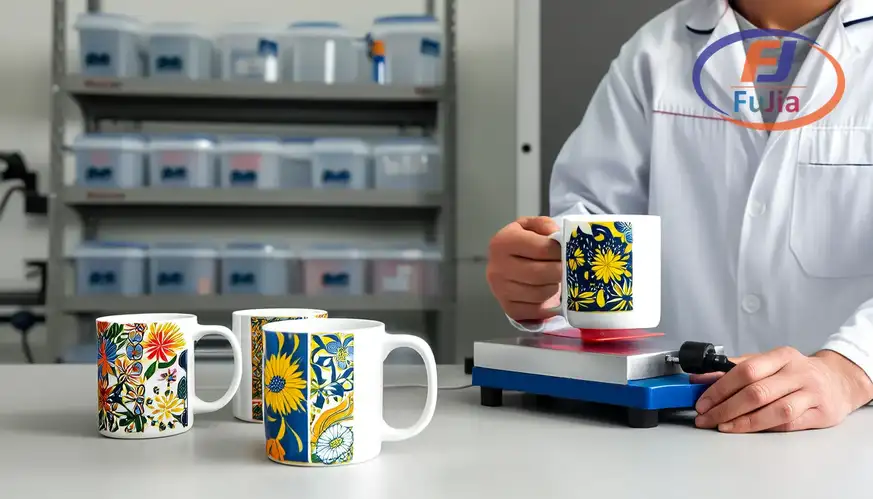
The sampling ritual precedes every bulk PO regardless of channel, and it costs $10-30 against orders that run $150-1,500. The ritual is fixed: press 5 sample sheets from different cartons onto your actual blanks, run one piece through 5 wash cycles, and press a second batch two weeks later to test batch consistency before reordering. Print density, registration, and paper coating vary more between suppliers than between their own batches, so the sample answers the supplier question and the two-batch test answers the reorder question. We recommend keeping one control sheet from every accepted batch on file, because the comparison makes drift visible before customers report it.
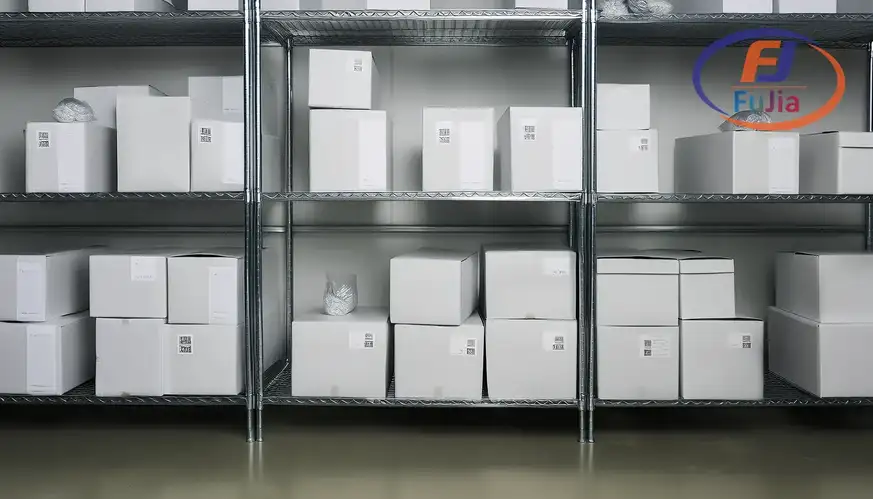
Storage is the second half of QC, because sublimation transfer paper is humidity-sensitive inventory. Sheets live sealed in their original packaging with desiccant, flat rather than rolled, away from windows whose UV degrades both paper coating and pre-printed density over months. Properly stored sheets press identically a year later, while humidity-curled sheets misfeed, ghost, and waste press time, and the storage discipline costs nothing against a spoiled hundred-sheet order.The shops that treat transfer paper like consumable stock rather than office paper keep that stock selling for a full year. When it comes to bulk inventory generally, the discount is only real if the last sheet presses like the first. Storage is what makes that sentence true.
The Split Supply Chain in Practice
The shops that scale this category run both channels on purpose, with a reorder cadence that matches each one’s lead time. Stock designs sit on 6-8 week reorder points against factory lead times, custom capacity lives in-house for same-day turns, and the domestic wholesaler bridges peak-season gaps that neither extreme covers alone. A gift-wall case we supply runs exactly this split: 70% of transfer volume arrives pre-printed from a factory program on seasonal themes, while the in-house printer handles personalization and the rush lines that outpace forecast, with the blended cost sitting well under pure in-house economics, per the inventory cadence our mug and drinkware cases document for drinkware retailers.
The decision compresses to one paragraph of arithmetic. When a design proves itself at 200+ copies per quarter, the pre-printed channel pays its MOQ and freight with margin left over, and the factory relationship becomes the default for that design line. Designs that sell in tens print in-house forever, because no MOQ amortizes at that volume. The shop that profiles its orders annually keeps the split honest, and the shop that guesses buys freight for designs its customers stopped wanting.
Where can I find wholesale sublimation blanks?
Wholesale sublimation blanks come from four channel tiers: Etsy and craft suppliers at 25-100 piece MOQs for testing, US wholesalers like Maryland China-class distributors at 100-500 pieces with 5-15 day turns, China factory-direct at 500+ pieces with 20-40% unit savings and 2-4 week freight, and trade brokers who bundle printing with fulfillment. The channel follows volume: test on craft tiers, scale on wholesale, and commit to factory-direct only for designs with proven 200+ quarterly velocity. The full supplier map with pricing sits in our sourcing guide, and every first order from a new supplier deserves a paid sample before the bulk PO.
Where is the best place to buy sublimation prints?
The best place to buy sublimation prints depends on the design’s ownership: proven stock designs buy best pre-printed from US wholesalers or China factories at $0.10-0.60 per sheet, custom designs cannot be bought at all because they print in-house the day the order lands, and overflow peaks bridge through domestic wholesale. Etsy-class suppliers serve small test quantities at premium prices, and trade brokers serve shops that outsource printing entirely. The best place is therefore a split supply chain rather than a single vendor, with stock designs on factory reorder points and in-house capacity covering custom and rush. Price the landed cost, sample before the PO, and let the order profile pick the channel.
Where can I find wholesale sublimation products?
Wholesale sublimation products span coated blanks and pre-printed transfers across the same channel tiers: B2B marketplaces list hundreds of coated-blank factories, US warehouse distributors stock mugs and panels for 2-5 day restocking, and factory-direct programs serve 500-piece MOQs with OEM options. Pre-printed transfer sheets travel the identical channel map at $0.10-0.60 wholesale, and the printed-blank route, blanks imaged at the factory, extends the logic to finished goods at $0.60-6 per piece. The channel choice follows the volume table and the lead time your stockouts can tolerate, and every channel prices honestly once freight joins the unit cost.
Where can I buy cheap sublimation blanks?
Cheap sublimation blanks come from China factory-direct at 20-40% under domestic pricing once orders clear 500 pieces, but the honest cheap is landed cost rather than sticker price: ocean freight adds $0.05-0.15 per blank over 25-35 days, and the reorder point must cover that wait. Domestic wholesalers price 20-40% higher for 5-15 day turns, and craft-tier suppliers price highest for smallest MOQs, so cheap is a volume question before it is a vendor question. Coating quality also varies inversely with price at the bottom of the market, which is why the 5-sheet sample ritual precedes any bulk order. The cheapest blank is the one that presses right on the last sheet of the box.
Verdict
Bulk sublimation prints reward the split supply chain: proven stock designs pre-printed wholesale at $0.10-0.60 on factory reorder points, custom and rush work printed in-house same-day, and a domestic wholesaler bridging the peaks, with landed cost rather than sticker price closing every channel decision. Sample 5 sheets before any PO, store inventory sealed and flat, and keep a control sheet from every accepted batch. The channel is mature, the arithmetic is simple, and the discipline is the product. To benchmark pre-printed sheets against your in-house output, contact Fujia Print for a bulk sample run.
Sources
- Wikipedia: Dye-sublimation printing: transfer chemistry.
- Wikipedia: Pressure-sensitive adhesive: transfer coating context.
- AATCC: wash durability standards.
- Global Sources sublimation suppliers: factory-direct channel.
- Fujia Print sourcing guide: supplier channel map.
