

The logo jet UV flatbed printer category names a machine promise rather than a single factory: compact UV flatbeds marketed to logo and personalization businesses, spanning $2,000-15,000 across desktop and mid-class tiers. LogoJet-class branding appeals to buyers entering awards, promotional products, and corporate gifting, where the machine’s job is printing names and marks onto objects that already sell. This guide unpacks what the logo-print class actually delivers at each price, tests the spec-to-price honesty the branding demands, and maps the alternatives that match it feature for feature.
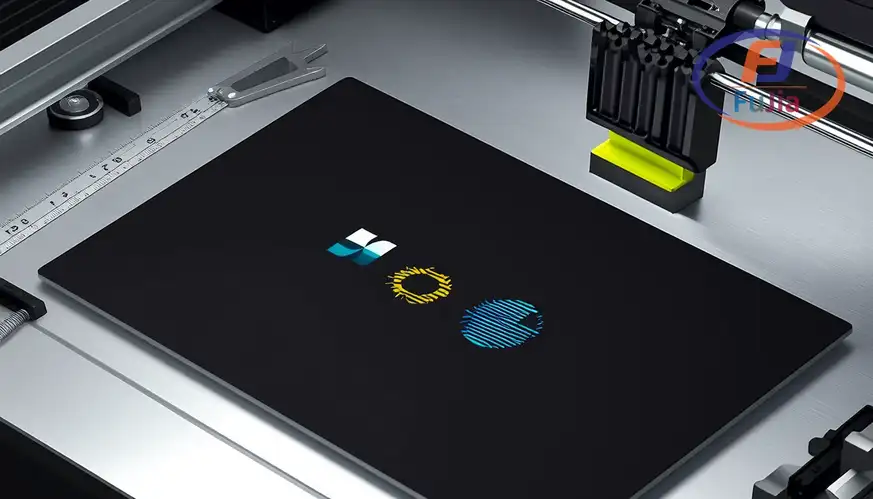
Key Takeaways
- The logo-print class spans $2,000-6,000 desktop units and $6,000-15,000 mid-tier workhorses, with 30×50 cm to 60×90 cm beds.
- Logo work lives or dies on white ink over dark substrates, so the white channel’s circulation engineering is the first spec to verify.
- The badge premium over factory-direct equivalents runs $2,000-4,000, buying dealer support rather than different physics.
- A demo print on your own objects, dark acrylic, coated metal, and a tapered item, is the entire pre-purchase ritual.
- We recommend classing the purchase by order book: desk class under 30 objects daily, mid tier for production jobbing.
What the Logo-Print Class Promises
| Tier | Bed size | Price range | Target buyer |
|---|---|---|---|
| desktop logo class | 30×50 cm | $2,000-6,000 | awards and gifts startups |
| mid-tier logo class | 60×90 cm | $6,000-15,000 | promotional products shops |
| factory-direct equivalent | 30×90 cm | $1,799-8,000 | technical buyers |
The tier table frames the class, and the promise is operational rather than technical: a machine sized for a front counter, an ink set tuned for names and marks on gift stock, and a vendor relationship that answers the phone. Physically, a logo-class UV flatbed is the same LED-cure, white-plus-CMYK architecture the whole category shares, and the branding surrounds it with fixtures, training, and support contracts. That surrounding is real value for buyers who need next-day dealer dispatch, and dead weight for technical shops that swap their own heads in 2 hours, which is the same premium argument our UV printers buying guide applies to every branded tier.
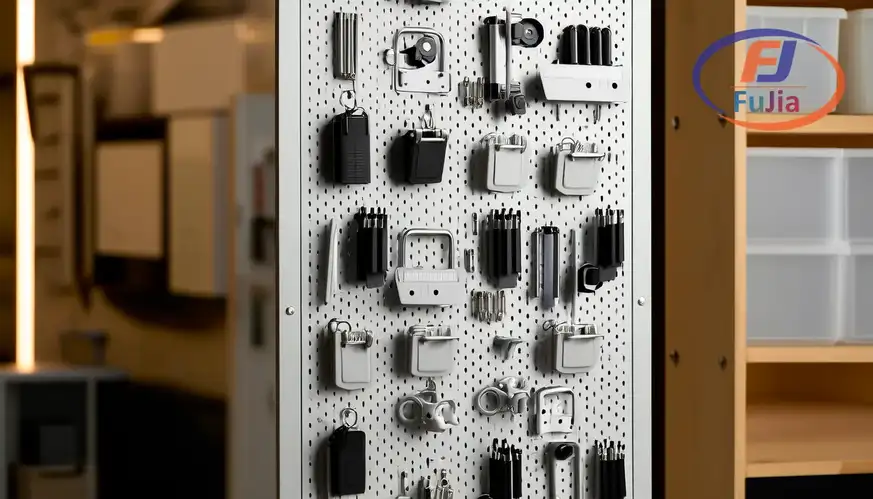
The class’s marketing centers on ease, and the honest version of that claim is workflow rather than physics: logo jobs are small, high-mix, and deadline-driven, so the machine that changes over fastest wins the day regardless of raw dpi. Fixture kits for pens, badges, and small plaques matter more here than bed size, and a vendor’s fixture library is a better buying signal than its resolution chart. We recommend counting the object types in your order book and asking each vendor for their fixture answer to every one, because the machine that already holds your objects is the machine that prints them tomorrow. Fixtures are the spec sheet that actually runs the shop.
Spec-to-Price Honesty in This Class
The logo class prices three things, and only one of them is the machine. The printer itself, heads, motion, LED array, and ink system, costs the same to build regardless of the badge, which is why factory-direct equivalents run $2,000-4,000 under branded pricing at identical bed sizes. The second priced item is support: dealer dispatch, training, and warranty processing have real costs, and a buyer who cannot swap a head or debug a nozzle is buying that support honestly. The third is margin, and it buys nothing, which is why the demo ritual below exists. Three line items, one honest question: which of them do you need.
White ink is the spec that separates serious machines from branded toys in this class. Logo work concentrates on dark and clear substrates, acrylic awards, anodized metal, glass, and every one of them needs the white underlay to carry color, and white pigment settles in about 6 hours of stillness. A class machine without engineered circulation, agitated cartridges, and a documented white maintenance routine will print beautiful demos and failing month-twos, so the circulation question precedes the price question. That maintenance reality is the same white-ink discipline our consumables guides prescribe across the category, and a vendor who cannot explain their routine in two sentences has priced their support thin.
Varnish is the second differentiator worth paying for in logo work, because texture effects and spot gloss turn a name into a premium product at quotes that absorb the machine cost quickly. A raised-varnish badge on a leather patch or a spot-gloss logo on a metal card retails at multiples of flat printing, and the channel that delivers it costs the factory little while carrying real retail weight. Mid-tier machines include it standard, and desktop-class buyers should verify whether varnish is present or an upsell before comparing prices across brands.
The Alternatives That Match Feature for Feature
| Alternative | Price range | What matches | Trade-off |
|---|---|---|---|
| factory-direct desk flatbed | $1,799-2,800 | same heads, LED, white | self-support |
| mid-class twin-head flatbed | $3,500-8,000 | throughput and width | less hand-holding |
| UV DTF wrap workflow | $1,500-3,000 station | logo decals without direct print | application step |
The alternatives table is the honest counterweight to any branded quote, and each row matches real capability at different support levels. The factory-direct desk unit is the physics-identical option at the bottom of the price ladder, and the technical buyer loses nothing but the phone number. The mid-class twin-head serves shops whose logo volume grows past desk throughput, and the UV DTF route sidesteps direct printing entirely for buyers whose products are small, flat, and numerous. None of these alternatives invalidates the branded purchase, and all of them price the support premium visibly, which is the point of comparison rather than of advocacy.
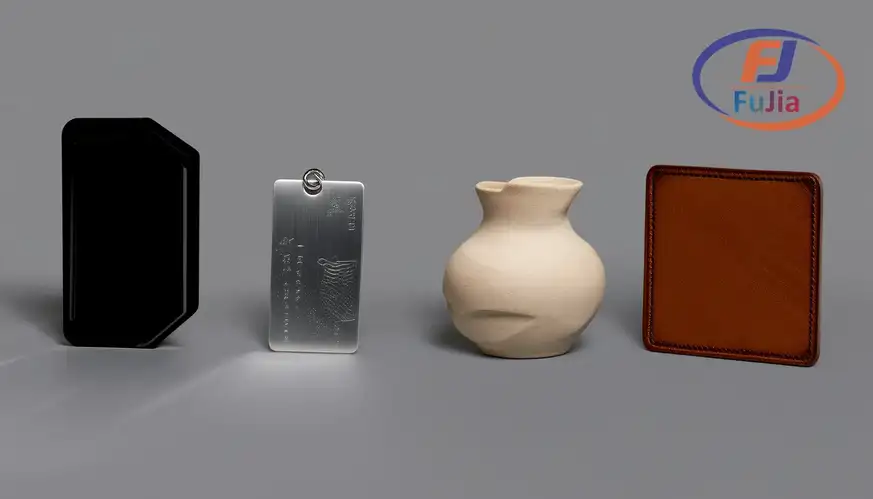
The demo ritual settles every brand argument in an afternoon, because objects cannot be marketed into printing well. Bring the dark acrylic award, the anodized tag, the tapered vessel, and the textured leather patch that your order book actually carries, and ask each vendor, branded and factory alike, to print all four. Judge white opacity, edge registration, cure scratch-resistance, and fixture changeover on your objects, and the spec sheets become secondary the moment the first sample exits. When it comes to demo discipline, vendors show what flatters. Your objects tell the truth, per the same test-first logic our cylindrical printer guide applies to round work.
The fixture library in one view, the class’s real moat:
A promotional-products case we supply anchors the class fit: a gifting shop running 40-80 logo objects daily on a mid-tier machine with a deep fixture library, quoting same-day turnaround on corporate orders that pure craft competitors decline. The owner chose the supported tier deliberately, valuing next-day service over the $3,000 factory saving, and two years of dispatch calls have repaid the choice, per the support-value cases our applications pages document. The right answer in that class is a decision about your own hands, not about the hardware.
How much does a LogoJet UV printer cost?
LogoJet-class UV printers cost $2,000-6,000 at the desktop tier with 30×50 cm beds, and $6,000-15,000 at the mid tier with 60×90 cm beds, with factory-direct equivalents at the same bed sizes running $1,799-8,000. The branded premium of $2,000-4,000 buys dealer dispatch, training, and warranty processing rather than different print physics, so the price comparison is really a support decision. Buyers who self-maintain should price the factory tier first, and buyers who need next-day service are buying it honestly at the branded tier. A demo on your own objects settles which tier your workshop actually needs.
How much does a flatbed UV printer cost?
A flatbed UV printer costs $1,799-2,800 at the desk tier, $3,500-8,000 in the mid class, and $9,000-28,000 for 6090 production gantries, with the logo-print class occupying the desk and mid tiers at branded premiums. Head count, motion system, and support structure set the spread inside every tier, and bed size alone never explains a price difference. The full ladder and its cost drivers sit in our flatbed pricing guide, and the logo buyer’s decision lives entirely in the first two rungs, where fixture ecosystems and support depth differentiate what the spec sheets make identical.
What is the best flatbed UV printer for logo work?
The best flatbed UV printer for logo work is the machine whose fixture library covers your object catalog and whose white-ink circulation survives your dark-substrate volume, at whichever tier your support appetite and budget agree on. Desktop class serves under 30 objects daily, mid-tier twin-heads serve production jobbing, and the branded-versus-factory choice prices support rather than physics. We recommend the four-object demo, dark acrylic, anodized metal, tapered vessel, textured patch, across every shortlisted vendor, because logo quality is visible on your objects and invisible on datasheets. The fixture answer is the buying answer in this class.
Is a UV printer worth it for a logo business?
A UV printer is worth it for a logo business when personalization volume runs steady weekly orders rather than occasional favors, because consumables of $0.10-0.80 per object against $12-60 retail carry margin at any scale, while the machine needs utilization to pay its $1,799-15,000. Break-even lands inside 50-150 logo jobs for desk-class machines, and the same machine serves adjacent lines like signage samples and UV DTF film output between logo runs. The worth-it test is the order book’s consistency, not the unit margin, and shops with steady corporate accounts recover hardware inside a quarter while occasional users should keep outsourcing. The wrap-service route tests the demand without any hardware at all. Consistency, not margin, is the worth-it signal.
Verdict
The logo jet UV flatbed printer class delivers a real workflow promise, counter-sized machines, logo-tuned fixtures, and supported operation at $2,000-15,000, wrapped around the same LED-cure physics that factory-direct units sell for $2,000-4,000 less, and the honest buying decision prices your own hands against the vendor’s phone number. Verify white-ink circulation before price, count fixtures against your order book, and run the four-object demo across every shortlisted brand. Buy the support if you need it, skip it if you do not, and let your own objects cast the deciding vote. To see the factory-tier alternative printed against your own demo objects, contact Fujia Print for a comparison sample run.
Sources
- Wikipedia: UV curing: LED ink chemistry.
- Epson print heads: head specifications.
- AATCC: durability testing standards.
- Fujia Print applications: production cases.
