

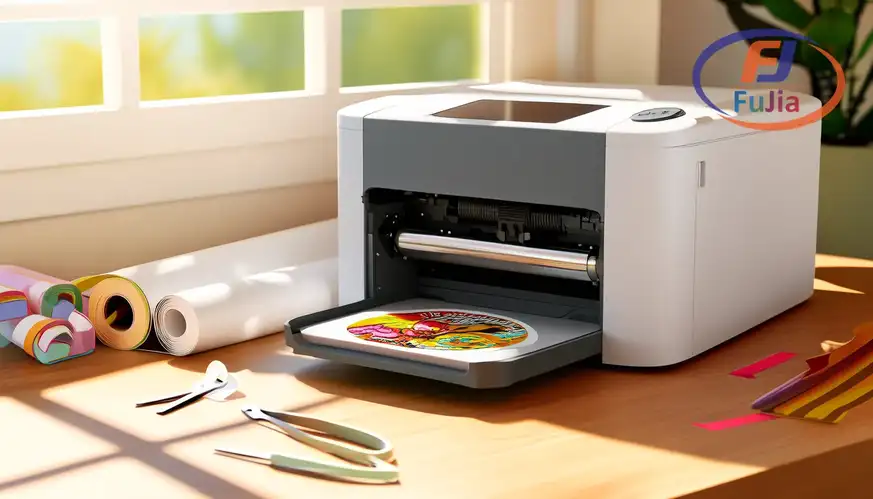
A mini UV DTF printer is a desktop machine at A4 to A3 width that prints LED-cured stickers on AB film for $1,300-2,550, bringing the crystal-label business onto a craft-room desk. The small class trades production width and speed for footprint, price, and a power draw that ordinary outlets handle, and for sticker volumes under a few hundred pieces weekly it covers the whole workflow without compromise. This guide prices the class, explains the laminator pairing, and sorts the buyers the mini class genuinely serves from the buyers the A3 workhorses are waiting for.
Key Takeaways
- The mini class runs $1,300-2,550, spanning A4 entry machines to compact A3 roll units, with desk footprint under about 60 cm width.
- A $200-400 roll laminator completes the station, and some mini models integrate lamination in a 2-in-1 body.
- Sticker consumables price $0.15-0.45 each in film and ink against $2-10 retail, and the machine pays back inside weeks at craft-fair velocity.
- White plus varnish channels come on most minis, which is what separates true UV DTF machines from UV sticker toys.
- We recommend the mini class for desks under 200 stickers weekly, and the standard A3 tier beyond that volume.
What Counts as Mini, and What Each Size Does
| Size class | Bed/roll width | Price | Stickers per hour |
|---|---|---|---|
| A4 desktop | about 21 cm | $1,300-1,800 | 15-30 |
| compact A3 roll | about 30 cm | $1,800-2,550 | 30-60 |
| 2-in-1 print and laminate | 21-30 cm | $1,600-2,550 | 20-40 |
The size table maps the class, and the widths are the honest dividing line: mini machines print sticker stock up to A3, which covers phone-size decals, jar labels, and sticker-sheet work, while full-coverage helmet or furniture wraps belong to wider machines. The 2-in-1 row is the class’s convenience play, integrating the B-film lamination so stickers exit finished without a separate roller pass, and integrated lamination also removes the alignment fumbling that hand-fed laminators introduce at speed. White and varnish channels appear across all three rows, and their presence is the spec that matters most, because white underlay is what makes decals pop on glass and dark objects, per the process requirements our UV printers guides document for the whole category.
The desk-class power story is a real advantage that spec sheets underplay: minis run on standard outlets without dedicated circuits, idle quietly between jobs, and live in homes, studios, and retail back rooms where a production machine cannot. LED curing means no heat-up wait, no fume extraction beyond normal room ventilation, and a sticker that is touch-dry on exit. For a craft business running orders in the evening after a day job, the mini’s operational gentleness is worth more than the throughput it gives up, and the same desk-class economics our tumbler guide documents apply directly here. Quiet machines finish the evening orders that loud schedules never get to.
The Laminator Pairing and the Complete Station
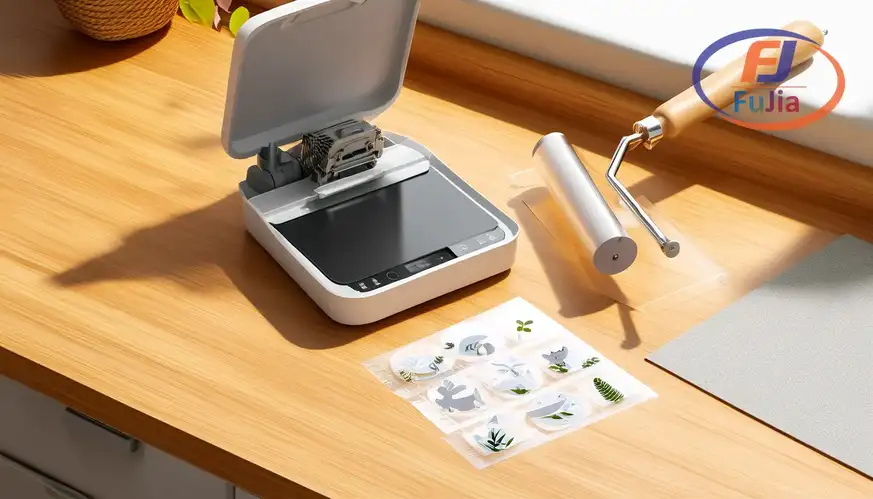
A mini printer alone prints half the process, because UV DTF stickers need the B adhesive layer laminated over the fresh print before cutting and application. The pairing options are a separate roll laminator at $200-400, a hand roller at craft volumes, or the 2-in-1 body that builds lamination into the machine, and the choice tracks volume: hand rollers work below 50 stickers weekly, roll laminators serve the middle, and 2-in-1 machines eliminate the second device where desk space is the constraint. Lamination quality is a visible-fault stage, because trapped bubbles in the B layer are permanent, and a steady roller with even pressure is the fix that hand methods approximate only slowly. Whichever pairing a desk chooses, laminating from the first day is what makes the output sellable.
The complete mini station lands at $1,500-2,950 with laminator, film stock, and first inks, against sticker retail of $2-10 per decal and consumables of $0.15-0.45. A craft-fair weekend that moves 100 stickers covers a meaningful share of the station, and steady online orders at 20-30 stickers weekly repay the hardware inside 6-10 weeks, which is why the class is the standard first purchase for sticker businesses. We recommend budgeting the laminator in the original purchase rather than as an upgrade, because the station that laminates from day one prints sellable product from day one. A station missing its lamination half is a prototype, not a business. Price the whole desk before the first sticker prints.
Wrap Economics and the Seasonality Test
The mini class earns differently across the year, and the seasonal math decides its fit honestly. Holiday and event seasons push sticker demand to 3-5 times baseline, and a mini that cruises at 20-30 stickers weekly will strain at 100-150 during peaks, so buyers should size against their December rather than their July. The overflow answer can be as simple as pre-printing stock designs in September, because UV DTF stickers store 6-12 months on their backing and apply on demand, a warehousing property no direct-print method matches, per the storage economics our product labeling pages document for decal programs. The calendar, not the brochure, is the sizing tool.
When it comes to the mini class’s real competition, it is not the bigger printer, it is the wrap service. UV DTF wrap producers sell any design as ready-to-apply film with no hardware at all. A desk business testing its sticker concept can buy wraps per design before committing $1,500-3,000 to hardware. The crossover logic mirrors the tumbler arithmetic exactly: wraps win the test phase, the mini wins once weekly volume makes per-wrap premiums pinch. The A3 workhorse class waits beyond that. We recommend the wrap-first test for unproven designs. The mini purchase once the design catalog itself is the proven asset.
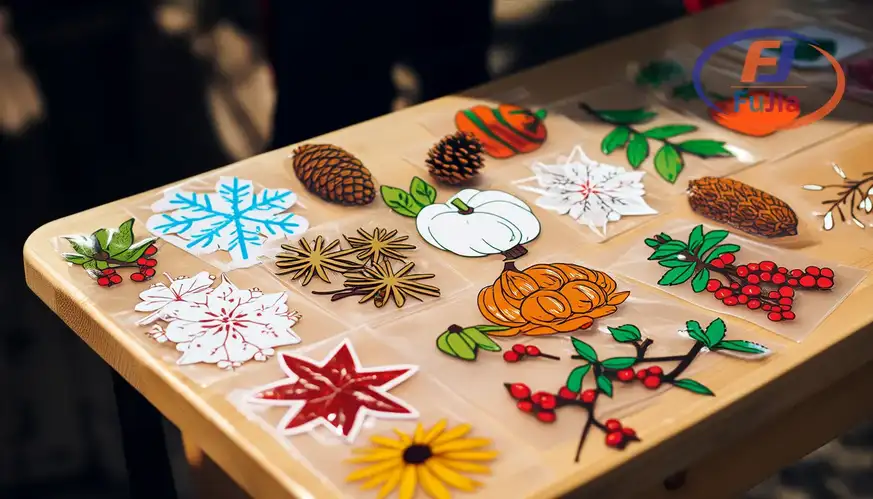
A seller case we supply anchors the class fit: a stationery brand running 30-60 stickers weekly on a compact A3 mini with 2-in-1 lamination, printing seasonal collections in batch and fulfilling custom name stickers same-day, with the machine paying for itself inside two months of launch. That profile is the mini class’s design customer, and the same brand’s growth path leads to the standard A3 tier when wholesale accounts multiply weekly volume past 200, per the growth cases our applications pages document.
Is it worth buying a mini UV DTF printer?
A mini UV DTF printer is worth buying when sticker volume sits between roughly 30 and 200 pieces weekly and the design catalog is already proving itself through wrap or pre-order sales. Below that band, buying UV DTF wraps per design tests the concept with no hardware, and above it, the standard A3 class prints wider and faster per sticker. The mini station at $1,500-2,950 complete repays inside 6-10 weeks at craft-fair velocity, and consumables of $0.15-0.45 per sticker against $2-10 retail carry margin throughout.The purchase succeeds when it follows proven demand, and fails when it precedes it, which makes the wrap test the honest first step.
What printer do I need to print UV DTF?
UV DTF needs a UV printer with LED curing, white ink capability, and A-film handling, which the mini class at $1,300-2,550 covers for sticker work and the standard A3 flatbed tier at $1,799-2,550 covers with more width. The machine prints the design mirrored onto A film at about 1200 dpi, and a laminator applies the B adhesive layer, either integrated in 2-in-1 bodies or as a $200-400 roll unit. Standard garment DTF printers cannot substitute, because the ink chemistry, curing, and film systems differ entirely despite the shared name. The full process breakdown sits in our UV DTF process guide, and any machine shortlisted should demo a sticker on your own object before purchase.
What is the smallest UV printer available?
The smallest UV printers are A4 desktop machines at roughly 21 cm of print width, priced $1,300-1,800 in the UV DTF sticker class, with footprint small enough for a home desk and power draw that standard outlets handle. Below that width, the market thins into hobby conversions and pen-class gadgets that lack white ink and reliable LED cure, which are the two features real sticker work requires. The A4 class prints phone-size decals and jar labels comfortably, while sticker sheets and larger branding wraps step up to the compact A3 roll class at $1,800-2,550. Size the purchase to your sticker stock sizes rather than to the smallest machine on the shelf, because a machine that cannot fit your best-selling sheet is no bargain. Smallest is a spec, not a strategy.
How much does a mini UV DTF printer cost?
A mini UV DTF printer costs $1,300-1,800 at the A4 desktop tier and $1,800-2,550 at the compact A3 roll tier, with 2-in-1 lamination models spanning $1,600-2,550, and a complete station including laminator, film, and inks lands at $1,500-2,950. Consumables price $0.15-0.45 per finished sticker, and the hardware repays inside 6-10 weeks at 20-30 stickers weekly. We recommend budgeting the laminator with the machine rather than after it, because the pairing prints sellable product from day one. The price ladder continues into the standard A3 tier at $1,799-2,550 for buyers whose volume outgrows the desk class within the first year, and that ladder rung is an upgrade rather than a starting point.
Verdict
The mini UV DTF printer is the desk-sized entry into the crystal-label business, priced $1,300-2,550 with a $200-400 laminator completing a station that repays inside two months at honest craft velocity, and its genuine fit is the desk under 200 stickers weekly with a proven design catalog. Wrap services test the demand, minis serve it, and the standard A3 tier inherits the growth. Check for white plus varnish channels, pair the laminator from day one, and size against your December rather than your July. To see your designs printed on a mini-class machine before the hardware decision, contact Fujia Print for a sticker sample pack.
Sources
- Wikipedia: UV curing: LED ink chemistry.
- Wikipedia: Pressure-sensitive adhesive: B layer chemistry.
- AATCC: durability testing standards.
- Fujia Print labeling cases: sticker business examples.
