
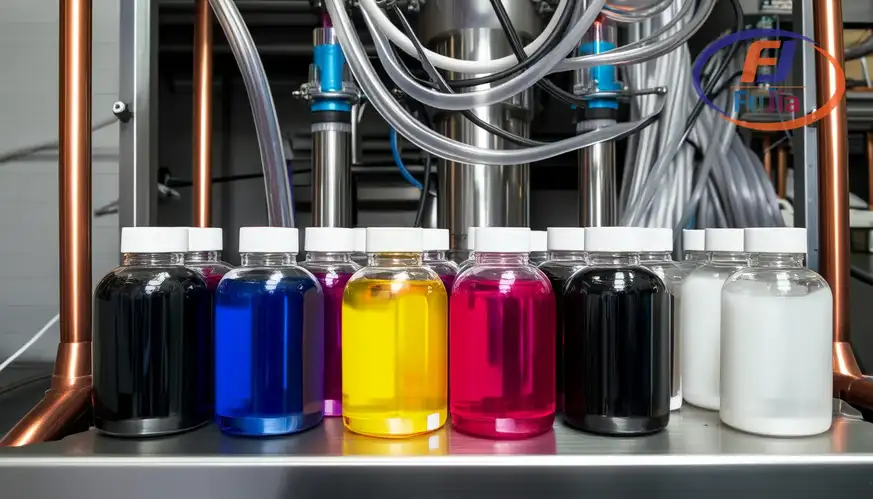
UV flatbed printer ink is a curable chemistry set rather than a dye supply: CMYK colors, a dense white pigment, and a clear varnish, jetted at 2-7 picoliters and cured solid by LED light in under a second, at $80-180 per liter depending on channel and grade. The ink decides adhesion, flexibility, outdoor life, and half the maintenance schedule of any UV machine, which makes it the most consequential consumable in the shop. This guide explains what each channel does, what ink really costs per square meter, and the white-ink routine that separates smooth shops from clogged ones.
Key Takeaways
- The full channel set is CMYK plus white plus varnish, with white running 2-4 times denser in pigment and demanding daily circulation.
- Ink prices run $80-180 per liter, and real coverage costs $0.30-1.20 per square meter depending on laydown thickness.
- Curing is photochemical: photoinitiators react to LED wavelength, so ink, lamp wavelength, and machine must match or cure fails silently.
- Adhesion follows surface energy: glass, metal, and primed plastics bond strongly, while unprimed polyolefins shed ink without corona treatment or primer.
- We recommend factory-matched ink for the machine’s warranty period, and third-party ink only after a 30-day adhesion and nozzle trial.
The Channel Set and What Each One Does
| Channel | Role | Special handling |
|---|---|---|
| CMYK | color layer | standard circulation |
| white | underlay on dark/clear, opaque base | daily circulation, shakes |
| varnish | gloss/matte topcoat, texture effects | separate line, nozzle-prone |
| primer (some machines) | adhesion promoter for hard plastics | applied before printing |
The channel table is the ink system’s org chart, and the white row dominates it in both cost and care. White pigment is titanium dioxide loaded at high density for opacity on glass, dark substrates, and clear films, and that same density makes it settle fast and clog first, which is why the white channel carries circulation loops, agitated cartridges, and a maintenance menu of its own. Varnish earns its channel by adding texture effects and scratch resistance that customers pay premiums for, and primer, where the machine carries it, solves the adhesion cases that ink chemistry alone cannot, per the adhesion rules our UV printers guides apply across substrates.
Curing is the quiet chemistry that makes UV ink different from everything else on the shelf. Photoinitiators in the ink react to a specific LED wavelength, typically 385-395 nm, and polymerize the film solid in under a second, which is why UV prints exit the machine finished, stackable, and ready for work. The matching rule is absolute: ink formulated for one lamp wavelength cures poorly under another, and the failure is silent, showing up weeks later as rub-off rather than as an error message. We recommend buying ink against the machine’s documented wavelength spec rather than against price, because a mismatched bargain is the most expensive ink in the industry.
What Ink Really Costs per Piece
| Cost line | Range | Notes |
|---|---|---|
| ink per liter | $80-180 | white carries 20-40% premium |
| coverage per m2 | $0.30-1.20 | at standard laydown |
| white underlay add | +$0.20-0.50 per m2 | doubles the laydown |
| varnish pass add | +$0.15-0.40 per m2 | thin film |
| per-object examples | $0.10-0.80 | phone case to sign panel |
The cost table converts liter prices into the numbers that matter, and the honest picture is that ink is rarely the decisive cost in UV work: a phone case carries $0.10-0.50 of ink against $12-60 retail, and even a full-coverage white-plus-varnish sign panel stays under a dollar of consumables per square foot. The laydown thickness is the real variable, because heavy white underlays double coverage costs and thin color passes quarter them, so the RIP’s ink-limit settings are a profit control as much as a quality control. Shops that audit ink by weighing cartridges monthly catch both drift and leaks, per the consumable controls our consumables guides document for every ink class.
White ink deserves its premium explained rather than resented: the titanium dioxide loading that makes opacity possible is also what makes the ink heavy, settle-prone, and hard on nozzles, and the price buys pigment rather than margin. A shop that prices white correctly stops skipping it to save cost, and under-laid white on dark substrates is the single fastest route to customer complaints about washed-out color. The white channel is a service you sell, and it belongs in the quote rather than in the loss column.
The White Ink Routine That Prevents Half of All Clogs
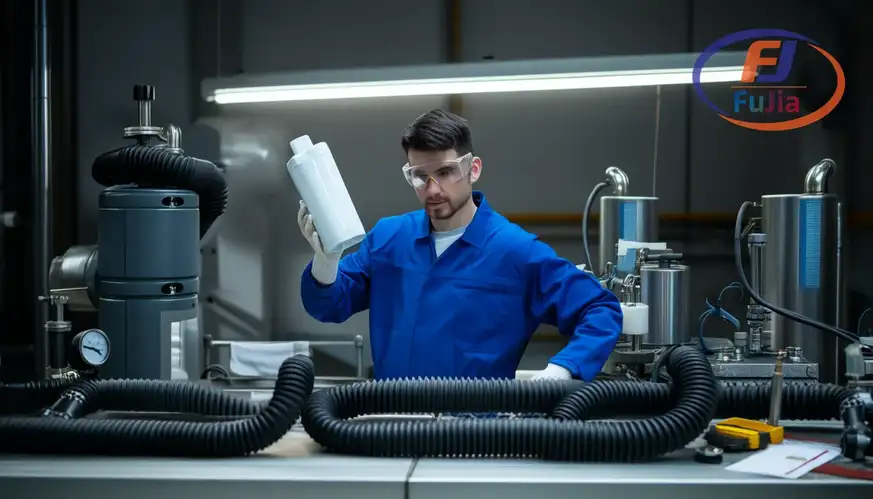
The routine is boring, which is exactly why it works. Circulation runs before the first job daily, whether or not white prints that day, because pigment settles in about 6 idle hours and the circulation loop exists to keep it suspended. Cartridges get their shake on the manufacturer’s rhythm, the capping station gets wiped daily, and a weekly flush pushes cleaning solution through the white line to clear the pigment film that circulation alone leaves.The shops that never miss the routine run white for months between deep cleans, and the shops that improvise it rebuild heads quarterly, which is a $400-1,800 lesson per rebuild.
Humidity writes the second half of the white-ink story, because air under 40% relative humidity dries ink at the nozzle plate between passes and seeds the next clog. A $30 hygrometer next to the printer turns that variable into a logged number, and a humidifier in dry seasons often halves nozzle complaints without touching the machine. The environmental log also diagnoses patterns that otherwise look mysterious: clogs that cluster after three-day weekends trace to skipped Friday routines, and the log turns that pattern into a schedule fix, per the same environmental discipline our maintenance guides prescribe across ink systems.
When it comes to third-party ink, the savings are real, the chemistry risk is real. The trial protocol is what separates a legitimate save from a false economy. Factory ink during the warranty period protects the machine claim. After warranty, any third-party candidate deserves a 30-day trial measuring nozzle health, color density, adhesion on your actual substrates. Cure under your actual lamp before a bulk order. Ink is the cheapest part of the system to test and the most expensive to get wrong. The trial costs one month against a head replacement that costs more than a year of ink savings.
Storage and Shelf Life
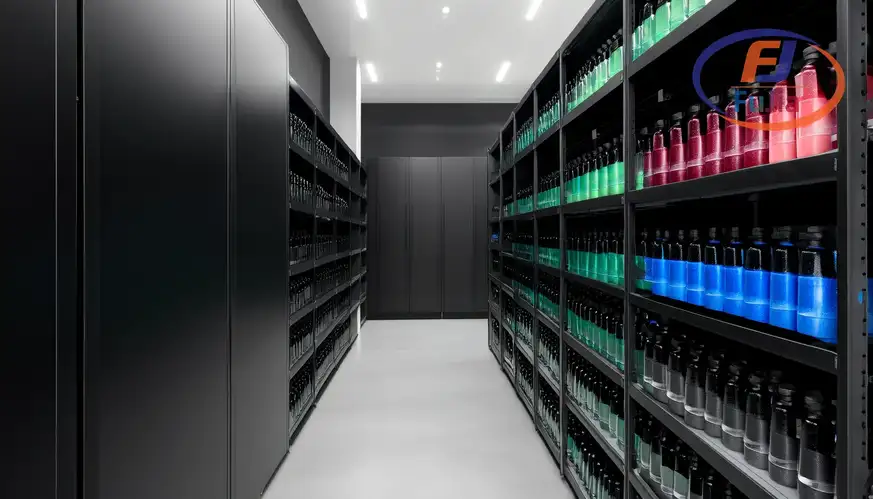
UV ink storage follows light and temperature rules that protect the chemistry’s clock. Bottles live sealed, dark, and at stable room temperature, because UV exposure from shop windows starts the polymerization that the lamp is supposed to control, and heat accelerates the same reaction. Shelf life runs 12-24 months sealed for most formulations, and opened bottles should carry a fill date, since partial bottles breathe and skin over. White ink gets the strictest storage discipline of all, agitated on a schedule even in storage and never parked in a machine over long shutdowns, where a week of stillness converts it into a cleaning job.
Cold is the hidden storage killer in winter shops: ink that drops near freezing can crash its dispersion, and the pigment clumps permanently even after the bottle warms back up. Shops in unheated spaces should store ink where temperature stays between 15-30 °C, and a cold bottle warms to room temperature before it enters the machine, because cold ink jets viscous and loads heads unevenly. A bottle moved from a 5 °C van to a 25 °C shop needs about 12 hours to stabilize, and rushing that transfer loads cold, viscous ink straight into the head filters. The storage rules cost nothing, and they protect the same pigment investment the circulation routine protects in operation.
What are the disadvantages of UV ink?
UV ink’s disadvantages are four: adhesion depends on substrate surface energy, so unprimed plastics like polyethylene shed ink without corona treatment or primer; the cured film is not certified for direct food contact or children’s toys; white pigment demands daily circulation and carries the highest clog risk in the system; and ink prices run $80-180 per liter, above water-based alternatives. The cured layer also sits on the surface rather than soaking in, which is why adhesion promoters exist for hard cases. None of these disadvantages is unmanageable, and each maps to a documented practice: primer routes, product positioning, the daily routine, and honest quoting, per the limits our consumables guides document for the chemistry.
What is UV blocking printer ink?
UV blocking printer ink refers to formulations with ultraviolet absorbers that shield the printed image itself from sun-driven fade, a feature common in outdoor and archival ink lines rather than a separate ink category. The term sometimes also describes inks designed to be blocked from curing, which is a formulation fault rather than a product. For flatbed UV ink, the relevant spec is lightfastness rating: quality UV-curable inks hold outdoor life at 1-3 years and indoor display for years longer, and the varnish channel adds UV shielding on top. Buyers comparing inks should ask for outdoor test data rather than the blocking label, because the rating is the substance.
What are UV cured inks?
UV cured inks are liquid ink formulations that polymerize solid instantly under ultraviolet light, using photoinitiators that react to a specific LED wavelength, and they are the standard ink class for flatbed printing on rigid substrates. The cure is photochemical rather than evaporative, so nothing flashes off, prints exit finished and stackable, and the ink film sits as a durable layer on the surface. The chemistry comes in rigid grades for glass, metal, and signage, and flexible grades for media that bends, with the grade chosen against the substrate rather than the machine. That surface-bonded character is also the class’s defining limit, since adhesion depends on substrate preparation rather than penetration.
What is UV-treated ink?
UV-treated ink usually means ink with added UV stabilizers or absorbers that extend the printed image’s outdoor life, a treatment applied to the formulation rather than a printing process. The term circulates loosely in marketplaces, and buyers should translate it into two verifiable specs: lightfastness rating and expected outdoor months on their substrate class. Genuine UV-curable ink for flatbeds already carries strong lightfastness by chemistry, so treatment claims matter most for water-based and solvent lines used outdoors.The reliable comparison is printed-sample weathering data from the vendor, not the treatment wording on the bottle, and a 30-day window test settles the question for any specific application. The label is marketing until the weathering data says otherwise.
Verdict
UV flatbed printer ink is a three-channel chemistry where white dominates cost and care, pricing at $80-180 per liter but $0.10-0.80 per finished object, with photochemical curing that demands wavelength matching and adhesion that follows surface energy rules. The daily white-ink routine, a logged hygrometer, and wavelength-honest purchasing prevent the failures that fill forums, and third-party ink earns its save only through a 30-day trial on your substrates. Price white as a service, store the chemistry dark and stable, and let the routine rather than the repair carry the maintenance budget. For ink swatches and adhesion tests on your own substrates, contact Fujia Print with your material list.
Sources
- Wikipedia: UV curing: photoinitiator chemistry.
- Wikipedia: Titanium dioxide: white pigment properties.
- AATCC: lightfastness testing standards.
- Fujia Print consumables: ink program cases.
