

A print shop equipment list for 2026 divides into three stages: the startup tier at $3,500-8,000 covering one digital printer, one heat press, and the finishing basics, the growth tier at $15,000-30,000 adding a second technology and automation, and the production tier beyond $40,000 where capacity and redundancy define the buying. This guide prices each stage’s machines from live 2026 data, sequences the buying order so every purchase unlocks revenue before the next, and separates the equipment every shop needs from the equipment sales pages imply it needs. The list is a sequence, not a shopping cart, and the sequence is what the failing shops skipped.
\n\n\n\n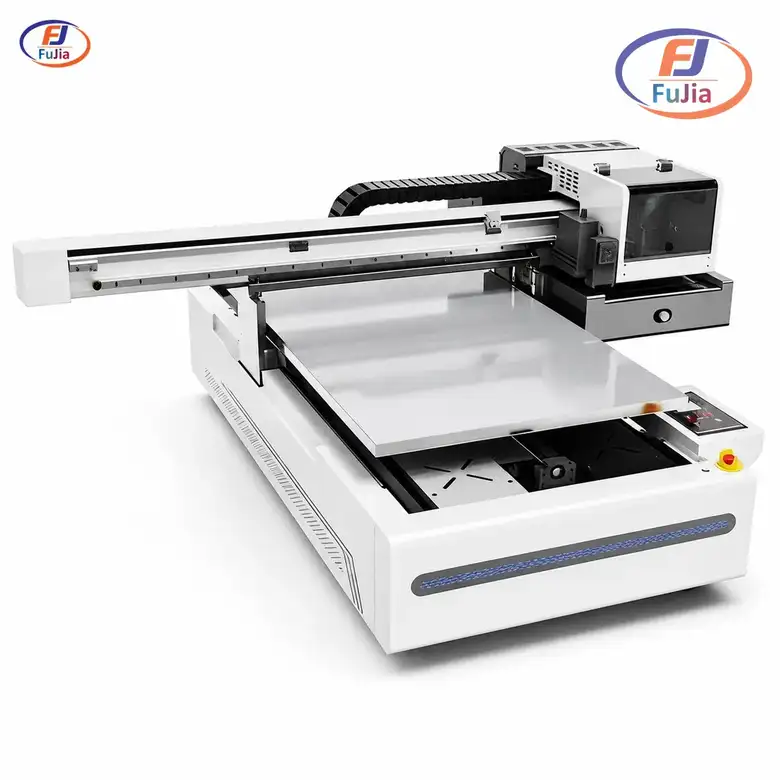
Key Takeaways
\n\n\n\n- \n\n\n
- The startup tier at $3,500-8,000 buys one core printer (DTG $3,699, DTF bundle $1,999, or UV dual-mode $1,799), one heat press, and $500 of consumables. \n\n\n
- The buying order rule: each machine pays for the next, so the first printer’s first month funds the press, and the press funds nothing until orders demand it. \n\n\n
- Growth tier additions at $15,000-30,000: a second technology for fabric coverage, a cutting plotter at $300-800, and automation only when payroll feels the bottleneck. \n\n\n
- The production tier beyond $40,000 buys redundancy, twin machines of the proven winner, because downtime costs more than the duplicate. \n\n\n
- Finishing and workspace items, Rilev-class heat presses, weeding tools, racking, run $600-1,500 at startup and are the most under-budgeted line. \n\n\n
The Startup Tier: $3,500-8,000 That Actually Opens the Doors
\n\n\n\n| Item | \n2026 price | \nRole | \n
|---|---|---|
| core printer | \n$1,799-3,699 | \nthe revenue engine | \n
| heat press | \n$300-800 | \ntransfers and finishing | \n
| consumables | \n$500-800 | \nfirst month stock | \n
| workspace basics | \n$600-1,500 | \nracking, tools, ventilation | \n
| total | \n$3,500-8,000 | \nthe working shop | \n
The startup table is deliberately short, and the shortness is the advice: one core printer from the 2026 ladder, DTG at $3,699 for garments, a DTF bundle at $1,999 for transfers across fabrics, or a UV dual-mode at $1,799 for hard goods, chosen by the customer mix the shop’s market research actually found, plus the $300-800 heat press that finishes everything the printer starts. The consumable stock at $500-800 covers the first month of ink, film or powder, and blanks, and the workspace line at $600-1,500 covers the racking, weeding tools, and ventilation that sales pages never bundle. A Wellington print startup we supply opened with exactly this shape, one A3 DTF bundle and one press in a 20 m2 room, and ran profitably from month two because the overhead matched the list, per the startup cases our apparel printing guides document. We recommend resisting every machine beyond the table until the first one has a paid-off invoice, because the undercapitalized second machine is the classic print shop obituary.
\n\n\n\nThe press choice at this tier deserves specificity, because it finishes everything: a 38 x 38 cm clamshell at $300-500 handles garments and flat transfers, a swing-away at $500-800 adds clearance for thicker items, and the mug press attachment at $150-300 extends into drinkware the day a customer asks. The printer decision anchors the list, but the press multiplies it, and the shops that cheap out on the press discover the shortcut at the worst time, a mid-order failure with orders on the table.The $500 swing-away is the honest startup answer, and the upgrade path from there is capacity rather than features.
\n\n\n\nThe Growth Tier: Adding Technology When Revenue Demands It
\n\n\n\n| Addition | \n2026 price | \nTrigger | \n
|---|---|---|
| second technology | \n$1,799-9,955 | \nfabric mix the first can’t serve | \n
| cutting plotter | \n$300-800 | \nweeding labor passing 5 hours weekly | \n
| second heat press | \n$300-800 | \npress queue over 2 hours daily | \n
| gang-sheet workflow | \n$0 (software) | \ntransfer volume doubling | \n
| total | \n$15,000-30,000 | \nstaged across 12-24 months | \n
The growth table prices the second wave, and the trigger column is the discipline: the second technology enters when the fabric or substrate mix includes what the first machine cannot serve, DTF adding polyester coverage to a DTG shop or UV adding hard goods to a garment shop, and not before, because duplicate capability is the most comfortable way to waste $4,000. The cutting plotter at $300-800 enters when weeding labor crosses five hours weekly, the second press when the queue crosses two hours daily, and both triggers are measurable on a whiteboard rather than felt in a sales pitch. The growth tier’s total of $15,000-30,000 is a 12-24 month program, not a purchase order, and the shops that stage it on revenue keep the overhead curve under the revenue curve. We recommend writing the triggers on the wall next to the whiteboard, because the sales emails will argue otherwise every week, per the scaling discipline our signage and display guides apply to growing shops.
\n\n\n\nThe gang-sheet line deserves its price of zero, because the growth tier’s cheapest addition is the workflow change that doubles transfer output on hardware already owned: nesting orders into full-width DTF sheets turns the same printer into 40% more throughput, and the software to arrange it ships with most bundles or costs under $50 monthly.The shops that scale through workflow before hardware compound their margins, and the shops that scale through hardware alone compound their payments. The printer’s second year should cost less per transfer than its first, and the gang-sheet discipline is how.
\n\n\n\nThe Production Tier and the Redundancy Rule
\n\n\n\n| Item | \n2026 price | \nRule | \n
|---|---|---|
| twin production machines | \n$9,955-19,210 each | \nduplicate the proven winner | \n
| industrial heat press | \n$1,500-4,000 | \npneumatic for volume | \n
| dedicated pre-treatment | \n$1,500-3,000 | \nDTG shops only | \n
| RIP workstation | \n$1,500-2,500 | \ndedicated, not shared | \n
| total | \n$40,000-plus | \nredundancy first | \n
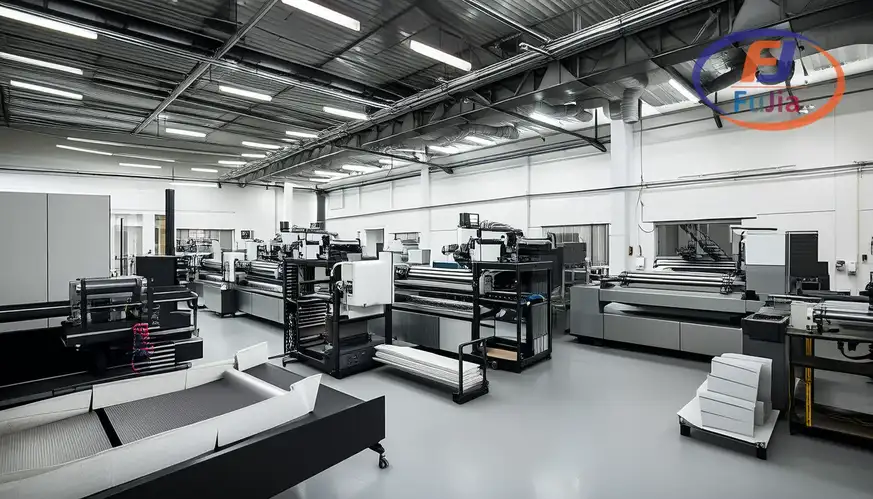
The production table is shorter than most sales catalogs for the same reason the startup table is, and the redundancy rule explains it: beyond $40,000 the buying shifts from capability to uptime, because a production shop’s downtime costs more per day than the duplicate machine’s payment, and the twin of the proven winner is worth more than any new capability. The industrial pneumatic press at $1,500-4,000 and the dedicated RIP workstation at $1,500-2,500 remove the single-person bottlenecks, and the pre-treatment machine at $1,500-3,000 enters only for DTG-heavy shops whose dark-shirt volume justifies automating the messiest step. A Lagos production house we supply runs twin DTF lines through this exact logic, each line covering the other’s maintenance windows, and the shop has never missed a contract deadline in two years, per the production cases our promotional products operations pages document. The production tier buys sleep, and the sleep is billable.
\n\n\n\nThe equipment that never belongs on any list is worth naming honestly: the third technology before the second is profitable, the format upgrade before the format is full, and any machine whose business case begins with a supplier’s promotion rather than the order book. Print history is a graveyard of financed machines bought on upside, and the 2026 equipment market’s low entry prices make the mistake easier, not safer.The successful shops’ equipment lists read like their order books, and the failing shops’ lists read like their suppliers’ catalogs. The catalog temptation never announces itself, and the discipline is the quiet advantage. The FAQ below answers the questions the planning stage raises.
\n\n\n\n
What equipment is needed to start a printing shop?
A printing shop starts with five lines totaling $3,500-8,000 in 2026: one core printer chosen by customer mix (DTG $3,699 for garments, DTF bundle $1,999 for transfers, UV dual-mode $1,799 for hard goods), a heat press at $300-800, first-month consumables at $500-800, and workspace basics of racking, tools, and ventilation at $600-1,500. The computer most buyers already own completes the list, since RIP software runs on standard hardware. Everything beyond these lines should wait for revenue, because the undercapitalized second machine is the leading cause of print shop failure in year one, a pattern this series has documented across a decade of shop post-mortems. The list is short by design, and the shortness is the survival feature.
Is print a declining industry?
Print overall is consolidating while personalization and short-run custom work are growing, and the equipment categories this list covers sit squarely in the growth segment: custom apparel, UV-decorated hard goods, and small-batch packaging all command premiums that offset volume declines in commodity print. The declining segments are long-run commodity work where volume migrated to consolidated producers, and the equipment lists those shops ran are different from this one. The practical reading is market-position specific, and the custom personalization shop’s order book, not the industry headline, is the honest indicator. The trade is bifurcating, and this list plans for the growing half.
What sells best on print on demand?
Print on demand sells best in apparel, t-shirts and hoodies leading the category, followed by mugs and tumblers, tote bags, and wall art, with personalized designs outselling generic templates at every price point. The equipment list maps onto those winners directly: a DTG or DTF setup covers the apparel majority, the mug press attachment at $150-300 covers drinkware, and UV flatbed capability covers the hard-goods remainder. Personalization speed is the differentiator, same-day custom work commanding premiums that template shops cannot match, and the walk-in customer pays for the minutes you save them, which is why the fastest workflow wins the neighborhood.
What are 10 tools that are essential for 3D printing?
The essential 3D printing toolkit covers the 3D printer itself, filament spools, a heated build surface or glue adhesives, flush cutters, a deburring tool or hobby knife, digital calipers, spare nozzles, PTFE tubing, a filament dryer for moisture-sensitive materials, and slicing software, most of which ships with entry machines under $300. That list serves prototyping and craft production, and it is a different industry from the digital print shop equipment this article prices, though 3D-printed jigs and fixtures increasingly support print shop workflows. The overlap is one-directional.
Verdict
\n\n\n\nThe print shop equipment list is a staged sequence, not a catalog: $3,500-8,000 opens the doors with one printer, one press, and honest consumables, $15,000-30,000 adds technology on measured triggers across 12-24 months, and the production tier beyond $40,000 buys redundancy of the proven winner rather than new capability. Write the triggers on the wall, let the order book place every order, and the equipment list reads like a business instead of a wish. The shops that follow the sequence compound. To price the exact machines for your stage against your market, contact Fujia Print for a staged equipment quotation and a trigger list you can post on the wall.
\n\n\n\nSources
\n\n\n\n- \n\n\n
- Wikipedia: Print shop: industry context. \n\n\n
- Wikipedia: Heat press: finishing equipment. \n\n\n
- AATCC: durability standards. \n\n\n
- SBDC business planning: startup budgeting guidance. \n\n\n
