

The best UV flatbed printer 2020 lists crowned machines on criteria that still decide purchases today, print quality at 1200 dpi, white ink reliability, bed flatness, and supplier support, while the prices have moved dramatically, the $20k-class capabilities of 2020 now sitting on $2,550 machines. This guide revisits what made the 2020 winners win, separates the qualities that aged well from the specs that stopped mattering, prices the used-2020 market honestly, and maps the modern ladder a 2020-era buyer would face today. The retro view is useful precisely because the fundamentals survived and the prices did not.
\n\n\n\n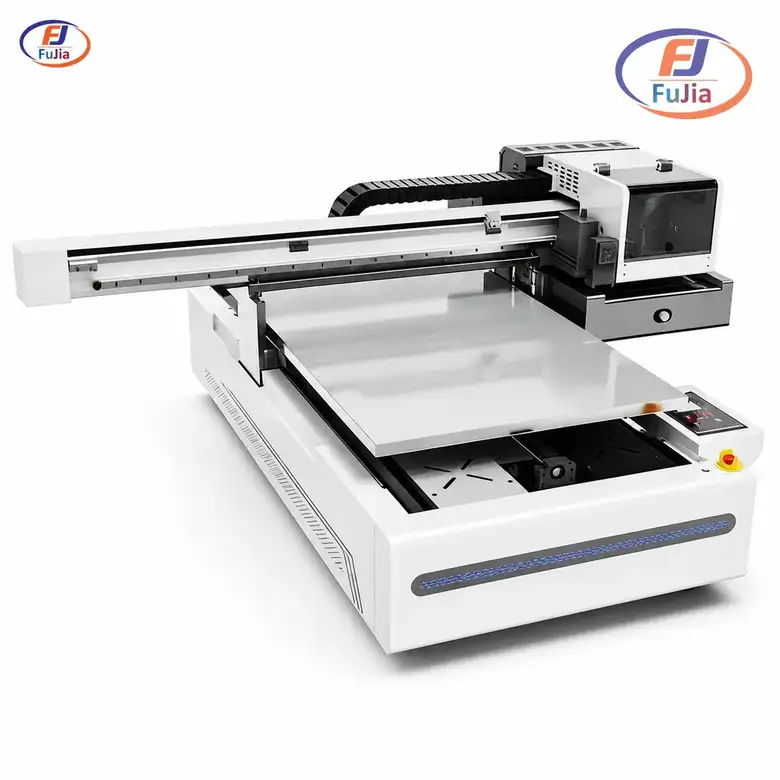
Key Takeaways
\n\n\n\n- \n\n\n
- The 2020 evaluation criteria, print resolution at 1200 dpi, white ink channel health, bed flatness, and support, remain the 2026 criteria unchanged. \n\n\n
- 2020-era mid-class machines cost $8,000-20,000 for capability the 2026 value tier delivers at $2,550-4,999, the six-year price collapse defining the market. \n\n\n
- The specs that stopped mattering: brand badge value, dealer-only servicing assumptions, and connection standards older than gigabit ethernet. \n\n\n
- The used-2020 market prices $1,500-4,000 for working machines, but white ink channels and print heads age by hours, not years, making history less relevant than maintenance records. \n\n\n
- The modern equivalent ladder: A4 dual-mode $1,799-2,398, A3 $2,550-4,999, branded desktop $7,995-9,299, dual-head $9,955. \n\n\n
What the 2020 Winners Won On
\n\n\n\n| 2020 criterion | \nStill matters in 2026 | \nWhy | \n
|---|---|---|
| print resolution 1200 dpi | \nyes | \ndetail is timeless | \n
| white ink reliability | \nyes, more | \nchannel health decides uptime | \n
| bed flatness | \nyes | \nregistration never ages | \n
| supplier support | \nyes | \nmonth-twelve answers | \n
| brand badge | \nless | \nvalue tier proved capability | \n
| dealer-only service | \nless | \nvideo-call support matured | \n
The criteria table explains why the 2020 lists read surprisingly current, and the survival pattern is clear: every criterion rooted in physics or service held, while every criterion rooted in market structure eroded. The 2020 reviewers praised 1200 dpi output, honest white ink channels, granite-flat beds, and suppliers who answered, and those four remain the entire evaluation today because detail, adhesion, registration, and support are the product. The brand badge criterion weakened because the value tier spent six years proving that $2,550 machines print the personalization canon that 2020’s $10k machines served, and the dealer-only service assumption weakened because video-call support matured into a genuine channel, per the tier history our UV printers reviews trace. We recommend reading old lists for the criteria and ignoring the specific model-year prices, because the criteria are the transferable asset and the prices are history.
\n\n\n\nThe resolution criterion deserves its nuance, because 2020’s headline numbers still define the ceiling: 1200 dpi remains the practical mark for gift personalization and signage work, with 2880 dpi claims in listings measuring droplet placement rather than useful detail on porous and coated substrates. The buyer chasing resolution numbers past 1200 is buying spec-sheet comfort, not output improvement, and that was as true in 2020 as now.The shops that matched resolution claims to their products, 1200 dpi for the canon, owned their quality arguments, and the shops that chased numbers bought comfort. Droplet control did improve market-wide, and fine gradients on glass show it.
\n\n\n\nWhat Aged Well, What Died, and the Used-2020 Market
\n\n\n\n| Spec | \n2020 state | \n2026 verdict | \n
|---|---|---|
| LED cure at 395 nm | \npremium feature | \nuniversal standard | \n
| rotary attachments | \nrare add-on | \nincluded at $1,799+ | \n
| dual mode (direct+DTF) | \nnot offered | \nstandard at entry | \n
| connection ports | \nUSB 2.0 era | \ndated but functional | \n
| RIP software | \nlicensed annually | \nbundled or cheap | \n
The verdict table splits the 2020 feature set into survivors and museum pieces, and the survivors dominate: LED curing at 395 nm went from premium differentiator to universal baseline, rotary attachments went from rare add-ons to included at the $1,799 entry, and dual-mode printing, direct plus UV DTF stickers, did not exist in 2020’s consumer classes at all, making even entry machines functionally richer today. The dated-but-functional items, USB-era connections and older RIP licensing, matter only at the margins, and the used buyer should care about none of them before caring about hours. The used-2020 market prices working machines at $1,500-4,000, and the honest evaluation is the maintenance record rather than the model year, because white ink channels age by operating hours and print heads by ink volume, a six-year-old machine with 200 hours being younger than a two-year-old with 2,000. We recommend the used market only for buyers who can service heads themselves, per the ownership realities our consumables guides document. The new value tier at $1,799-2,550 otherwise prices the used risk out of the argument.
\n\n\n\nThe used-machine inspection is its own checklist, and it compresses into three demands: maintenance logs, a live print test including white on dark, and a nozzle test pattern read honestly, because the three together reveal what the listing photos hide. The white ink channel is the deal-breaker question, a clogged or neglected channel converting the bargain into a $400 head replacement plus a week of flushing, and the seller who cannot produce logs is telling you the channel’s history through silence.The used market’s real price is the first service bill, and the buyers who budget it buy happily while the buyers who do not resell quickly. That lesson predates 2020 and will outlive us all.
\n\n\n\nThe Modern Ladder a 2020 Buyer Faces Today
\n\n\n\n| Class | \n2026 price | \n2020 equivalent | \n
|---|---|---|
| A4 dual-mode + rotary | \n$1,799-2,398 | \n$6,000-9,000 | \n
| A3 flatbed + rotary | \n$2,550-4,999 | \n$10,000-15,000 | \n
| branded desktop | \n$7,995-9,299 | \n$15,000-25,000 | \n
| dual-head 40×30 cm | \n$9,955 | \n$20,000-plus | \n
The modern table prices what six years changed, and the collapse is the headline: the A4 dual-mode with rotary at $1,799-2,398 delivers more capability than 2020’s $6,000-9,000 class, and the $2,550 A3 value anchor this series cites sits where mid-class dealer machines lived at three times the price. The branded tier survives at $7,995-9,299 for buyers purchasing support structure rather than capability, and the dual-head 40×30 cm at $9,955 reaches production throughput that defined 2020’s industrial bracket. The buyer arriving from a 2020-era list should therefore re-rank entirely, because badge-adjusted thinking overpays in 2026, and the capability checklist from the 2020 winners maps onto today’s value tier one-to-one. A Penang studio we supply modernized from a 2020-era mid-class machine to the $2,550 A3 tier, kept its settings discipline, and doubled output on half the footprint, per the modernization cases our product labeling pages document.The 2020 buyer’s instincts survive, and only the price map needs redrawing.
\n\n\n\nThe FAQ below answers the questions the retro search journey raises, and the honest answers price the whole six-year arc.
\n\n\n\n
What are some good small UV flatbed printers?
Good small UV flatbed printers in 2026 start at the A4 dual-mode class, $1,799-2,398 with rotary included, delivering 1200 dpi direct printing plus UV DTF sticker capability in a desktop footprint, while the A3 tier at $2,550-4,999 adds the bed width batch work needs. Small no longer means compromised, because the 2026 entry class carries capabilities 2020 reserved for mid-class machines at triple the price. The evaluation criteria remain resolution, white ink health, bed flatness, and supplier support, unchanged since the 2020 lists, and that stability is the retro lesson itself. Match bed size to product size, and the small class covers the personalization canon honestly.
How much does a flatbed UV printer cost?
A flatbed UV printer costs $1,799-2,398 for A4 dual-mode desktops, $2,550-4,999 for A3 flatbeds, $7,995-9,299 for branded desktop units, and $9,955 for dual-head 40×30 cm production beds in 2026, versus the $6,000-20,000 the same capabilities carried in 2020. The used-2020 market offers working machines at $1,500-4,000, with the honest evaluation being maintenance hours rather than model year, since white ink channels and print heads age by use. The six-year price collapse is the market’s defining event, and buyers still pricing from 2020-era lists overpay badly. Price from the current ladder.
Is an UV printer worth it?
An UV printer is worth it when hard-goods personalization or sticker production matches your market, because the $1,799-2,550 entry machines now carry the full capability set, direct printing, UV DTF stickers, and rotary cylindrical work, that justified 2020’s five-figure machines. The worth-it math runs on the product canon, ink at cents per object against retail premiums, and the payback the value tier delivers in weeks of steady orders. The worth-it math fails for fabric-only shops, where garment DTF is the correct technology, a boundary the 2020 lists drew identically and the modern lists confirm.
What are the downsides of UV printing?
The downsides of UV printing are stable across generations: white ink channels demand recirculation discipline regardless of machine age, cured ink sits on the surface so flexible substrates can crack at folds, adhesion on low-energy plastics needs promoter, and the used market hides channel damage that model years never show. The 2020-era downsides that died are price per capability and the dealer-service dependency, both eroded by the value tier and video-call support. The honest statement is that the chemistry discipline survived and the economics improved dramatically, a trade every generation of buyer accepts more cheaply than the last, which is the entire story of this market.
Verdict
\n\n\n\nThe best UV flatbed printer 2020 lists got the criteria right and the prices obsolete: resolution, white ink health, bed flatness, and supplier support remain the entire evaluation, while the $8,000-20,000 capability of 2020 now costs $2,550-4,999 and includes rotary and sticker modes 2020 never offered. Read old lists for the checklist, price from the current ladder, and inspect used machines by hours rather than years. The fundamentals survived six years. To see what the 2026 ladder prints on your own stock, contact Fujia Print for samples that answer the 2020 criteria directly and price the six-year arc honestly.
\n\n\n\nSources
\n\n\n\n- \n\n\n
- Wikipedia: UV curing: LED chemistry. \n\n\n
- Wikipedia: Inkjet printing: resolution context. \n\n\n
- AATCC: durability standards. \n\n\n
- Epson SureColor archive: 2020-era branded reference. \n\n\n
