

A UV flatbed printer supplier choice matters more than the machine choice, because the $1,799-9,955 hardware is broadly similar across the value tier while the supplier relationship decides whether year two is a production run or a parts desert, and the channel landscape spans factory-direct, regional dealers, and marketplace intermediaries. This guide walks the three channels and their honest trade-offs, the seven-point vetting checklist this series applies to every source, the shipping and warranty realities of cross-border machine purchases, and the red flags that predict the refund fights. The supplier is the machine’s future, and the vetting is the cheapest insurance in this market.
\n\n\n\n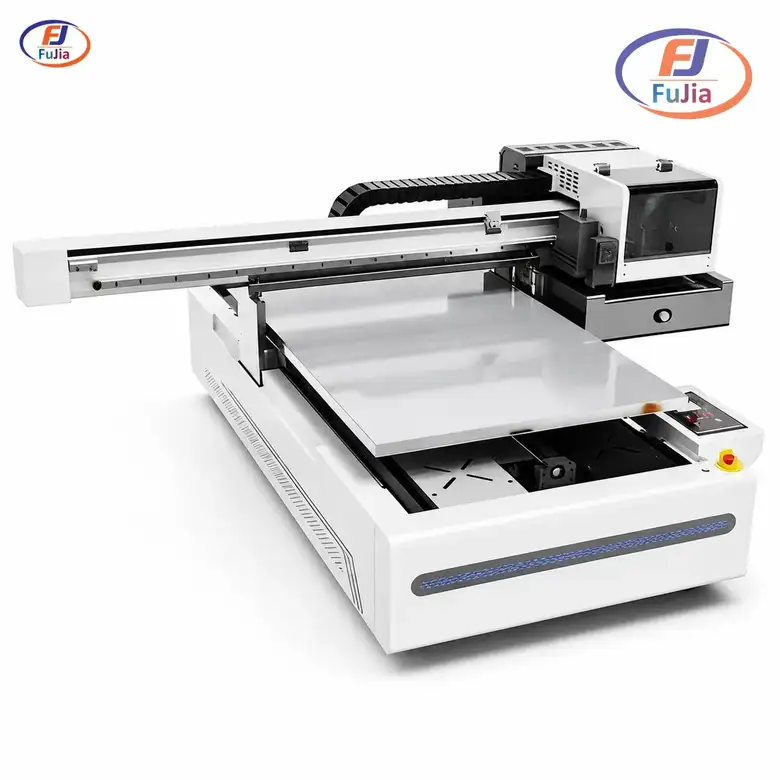
Key Takeaways
\n\n\n\n- \n\n\n
- Three channels exist: factory-direct at value pricing with supplier-channel support, regional dealers at a premium for dispatch service, and marketplace intermediaries where accountability is thinnest. \n\n\n
- The 2026 value-tier ladder spans $1,799-2,398 A4 dual-mode, $2,550-4,999 A3, $7,995-9,299 branded desktop, and $9,955 dual-head across every channel. \n\n\n
- The seven vetting points: print samples on your stock, parts inventory commitment, video call walkthrough, real customer references, warranty terms in writing, consumable supply chain, and response-time test before deposit. \n\n\n
- Cross-border shipping adds $150-400 for desktops and customs exposure, and the warranty that matters covers parts supply, not on-site labor. \n\n\n
- The red flag hierarchy: no sample prints, deposit-only payment, no video call, and warranty terms that vanish after delivery. \n\n\n
The Three Channels and Their Honest Trade-offs
\n\n\n\n| Channel | \nPrice level | \nSupport model | \nBest for | \n
|---|---|---|---|
| factory direct | \n$1,799-4,999 value tier | \nsupplier channel, remote | \ntechnical self-supporters | \n
| regional dealer | \npremium 30-80% | \ndispatch, on-site | \ndealer-dependent shops | \n
| marketplace | \nmixed | \nthin accountability | \nonly with escrow | \n
The channel table frames the whole sourcing decision, and the honest trade is always price against support: factory-direct suppliers sell the $1,799-2,550 A4 and A3 dual-mode machines at the prices this series tracks, with support delivered through video calls and shipped parts rather than a technician’s visit, while regional dealers attach 30-80% premiums to the same hardware in exchange for on-site dispatch and a local phone number. Marketplace listings sit across both worlds with the accountability of neither, the platform refund window replacing the relationship after day thirty, and the machines themselves often being the same factories’ output with an intermediary’s margin. The branded tier, SureColor V1070-class at $7,995-9,299, runs through dealer networks by design and buys that support premium legitimately, per the channel economics our UV printers guides map at every tier. We recommend matching channel to support appetite honestly, because the buyer who needs a technician on site knows it and should pay the dealer premium rather than discovering the need in year two.
\n\n\n\nThe factory-direct channel deserves its fair hearing, because the premium-vs-support framing hides what factory support actually delivers: a video call with the assembly engineer beats a dealer ticket queue for most technical faults, and parts shipped from the factory in days often outrun regional stock, the support reality this series documents across the value tier. The channel’s genuine weakness is assembly and first-setup, where the factory ships a crate and a manual while the dealer ships a running machine, and the buyers who fail factory-direct failed at the crate stage, not the engineering stage.The decision is temperament as much as arithmetic, and the technical self-supporter who enjoys the video call owns the value tier’s best pricing. Temperament lies to its owner. The vetting checklist below tests it before the deposit does.
\n\n\n\nThe Seven-Point Vetting Checklist
\n\n\n\n| # | \nCheck | \nPass signal | \n
|---|---|---|
| 1 | \nsample print on your stock | \nfiles sent, video of printing | \n
| 2 | \nparts inventory commitment | \nnamed parts, prices, lead times | \n
| 3 | \nvideo call walkthrough | \nlive machine demo, not edited video | \n
| 4 | \ncustomer references | \ntwo reachable owners, 6+ months | \n
| 5 | \nwarranty in writing | \nparts coverage, duration, exclusions | \n
| 6 | \nconsumable supply chain | \nink and film pricing for year one | \n
| 7 | \nresponse-time test | \npre-deposit question answered in hours | \n
The checklist table is the entire vetting discipline, and the two most skipped points are the ones that save the most: the sample print on your actual substrate stock, because a supplier who prints your material on video has proven the claim every product listing makes, and the response-time test before deposit, because the pre-sale response speed is the ceiling of the post-sale speed and the ceiling only falls. The parts commitment deserves its own conversation during vetting, named consumable prices for a year of operation and named wear-part lead times, because the machine’s true cost is the year-one ink and the first print-head, not the invoice. The customer references complete the picture, two owners reachable by video who have run the machine past month six, and the supplier who produces them readily is signaling confidence, per the sourcing discipline our consumables guides apply to the whole supply chain. We recommend running all seven checks on any source above $1,000, because the checks cost nothing but a week of messages and the skip costs the whole purchase.
\n\n\n\nThe response-time test is worth its own paragraph because it is the highest-signal, lowest-cost check in the set: send a pre-deposit technical question, something specific about your substrate or workflow, and measure the hours until a substantive answer arrives, because the sales layer of any organization answers fastest exactly when it wants your money. A supplier answering in two hours before deposit and twelve after it is telling you the real service equation, and the pattern holds across every channel from Shenzhen factory to domestic dealer.The buyers who skip this test are the buyers who write the angry month-two emails, and the test’s entire cost is one honest message.
\n\n\n\nShipping, Warranty, and the Red Flag Hierarchy
\n\n\n\n| Reality | \nWhat to expect | \nPlanning number | \n
|---|---|---|
| shipping | \n150-400 USD desktops, crate freight | \n7-21 days | \n
| customs | \nimport duty + handling | \n5-15% of value | \n
| warranty | \nparts only, cross-border | \n12 months typical | \n
| consumables | \nongoing supplier dependency | \nyear-one ink budget | \n
The reality table prices what the machine quote leaves out, and the planning numbers prevent the surprise arithmetic that poisons otherwise good purchases: cross-border freight on a desktop machine runs $150-400 in a crate, customs adds 5-15% of declared value depending on destination, and the 12-month warranty that accompanies most value-tier machines covers parts by shipment rather than labor by visit, a structure that works for the self-supporter and never for the buyer who expected a technician. The consumable dependency is the longest-lived reality, because the supplier relationship that began with a machine continues with ink and film for the machine’s life, and the year-one consumable budget deserves a line in the comparison spreadsheet beside the hardware price. We recommend budgeting the landed cost, machine plus freight plus duty plus first-year consumables, against the dealer’s turnkey quote, because that comparison is the true channel decision and the one the invoice prices hide. The arithmetic surprises less often than it should.
\n\n\n\nThe red flag hierarchy compresses everything above into a triage list, and the flags stack in severity: a supplier who will not print your sample stock is hiding the machine’s real capability, a deposit-only payment structure with no escrow or trade assurance is asking you to fund the risk entirely, a refusal of live video call demos means the machine in the listing may not be the machine in the crate, and warranty terms that exist only as chat-message promises will evaporate exactly when needed. A Guangdong-class sourcing operation we supply vets every hardware line through this exact hierarchy before its studios commit, and the discipline has kept its 14-machine fleet running across three countries, per the sourcing cases our promotional products operations pages document. Two or more flags together end the conversation, and one flag demands a written explanation before any deposit moves, the triage rule that keeps vetting proportionate.
\n\n\n\n
How much does a flatbed UV printer cost?
A flatbed UV printer costs $1,799-2,398 in the A4 dual-mode class, $2,550-4,999 in the A3 tier, $7,995-9,299 for branded desktop machines, and $9,955 for 40×30 cm dual-head production beds in 2026, with large-format 4×8 industrial beds reaching $74,995-class. The landed cost adds freight of $150-400 for desktops, customs of 5-15% of value, and a first-year consumable budget that deserves its own line in the comparison. Dealer channels attach 30-80% premiums to the same value-tier hardware in exchange for on-site support, the standing channel trade this article prices throughout. Compare landed cost against turnkey quotes, because that comparison is the honest price of the machine and the channel together.
Where can I buy UV printer blanks wholesale?
UV printer blanks, the phone cases, boxes, and sign substrates the machines decorate, are available wholesale from the same factory ecosystems that build the printers, from specialized blanks distributors, and from marketplace wholesale listings, with case pricing typically running $0.50-2 per unit at case quantities. The vetting checklist applies to blanks sourcing as fully as to machines, because coating quality varies wildly in the blanks market and the sub-par coating ruins prints a perfect machine produced. Order sample blanks before bulk, test-print them at your settings, and only then commit to case quantities.
What is the best flatbed UV printer?
The best flatbed UV printer is the one backed by the supplier who passes all seven vetting checks at the tier your volume needs: the A3 value tier at $2,550-4,999 serves most small shops, the branded $7,995-9,299 tier serves dealer-dependent buyers, and the $9,955 dual-head serves sticker and sign volume. The machine question is inseparable from the supplier question, because identical hardware with different support structures produces different ownership outcomes within a year. We recommend shortlisting machines by bed size and then eliminating them by supplier vetting, in that order, because the order respects which variable actually fails owners first. The best machine is the one whose supplier answers in hours at month twelve rather than month zero.
How much does a UV print machine cost?
A UV print machine spans $1,799-2,398 for A4 dual-mode desktops, $2,550-4,999 for A3 flatbeds, $7,995-9,299 for branded desktop units, $9,955 for 40×30 cm dual-head beds, and $74,995-class for large industrial flatbeds in 2026. The complete entry includes $150-400 freight, 5-15% customs, and consumables that run cents per object in ink with AB film at $0.50-1.50 per sticker sheet where the dual mode applies. The supplier channel shifts the same hardware’s price by 30-80% in exchange for support structure. Price the machine, the channel premium, and the year-one consumables as one number.
Verdict
\n\n\n\nThe UV flatbed printer supplier is the decision behind the decision: factory-direct at $1,799-4,999 value pricing for technical self-supporters, dealers at a 30-80% premium for dispatch dependence, and the seven-point vetting checklist separating the sources that answer in month twelve from the ones that vanish at month two. Run the sample print, test the response time before the deposit, price the landed cost honestly, and walk from the red flags no matter how good the price reads. To work with a supplier who passes all seven checks and prints your stock before you pay, contact Fujia Print for samples and a landed-cost quotation with parts pricing in writing.
\n\n\n\nSources
\n\n\n\n- \n\n\n
- Wikipedia: UV curing: technology context. \n\n\n
- Wikipedia: Third-party logistics: freight structure. \n\n\n
- AATCC: print durability standards. \n\n\n
- Mimaki JFX series: industrial tier reference. \n\n\n
