
The Epson EcoTank ET-2800 converts into a sublimation printer for roughly $255 all-in, $199.99 for the printer plus $54.99 for a 490 ml four-color sublimation ink set, and the ink choice that follows is between established third-party brands, Printers Jack, Hiipoo, A-SUB-class, all pricing near $40-60 per set, because Epson makes no sublimation ink for the EcoTank line. This guide prices the 2026 ink options, walks the conversion sequence tank by tank, and runs the cost-per-print math that makes the converted ET-2800 the cheapest entry into sublimation. The ink is the conversion, and the conversion is permanent.
\n\n\n\n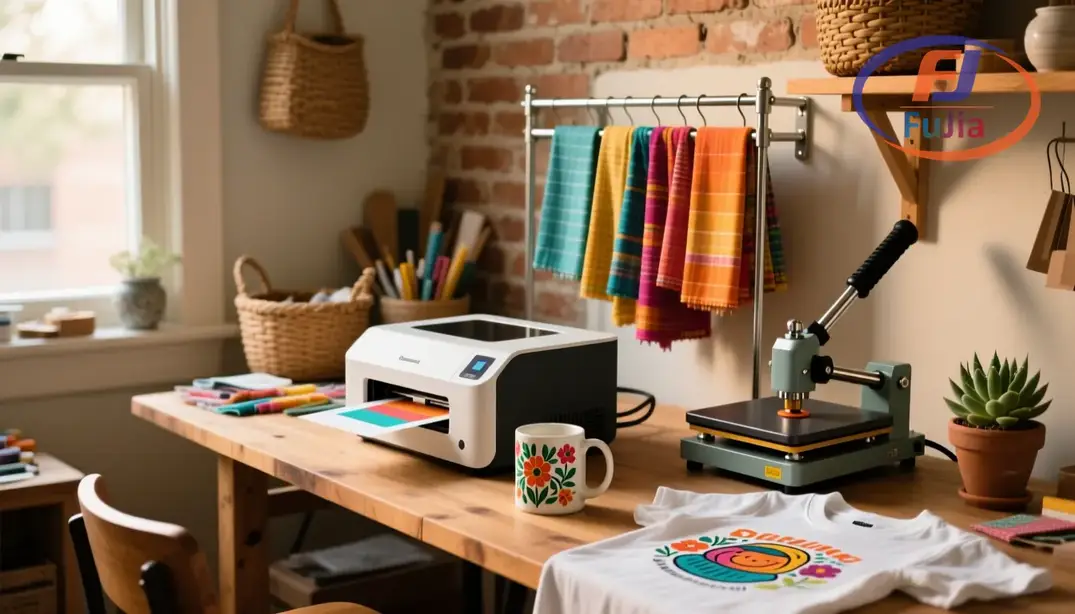
Key Takeaways
\n\n\n\n- \n\n\n
- Real 2026 ink pricing for the ET-2800: 490 ml four-color sets at $54.99, 400 ml sets in the $40-50 range, and Supersubink-class options covering ET-2800/2803/2850 families, all third-party because Epson offers no EcoTank sublimation chemistry. \n\n\n
- The full conversion bill: $199.99 printer plus $54.99 ink plus $19.99 paper equals a $275 sublimation station before the heat press. \n\n\n
- Cost per print lands near $0.02-0.04 per letter-size transfer at tank-system efficiency, the cheapest ink economics in desktop sublimation. \n\n\n
- The conversion is one-way: tanks that have held sublimation ink never return to document duty, and the warranty voids at first fill. \n\n\n
- Ink selection criteria at this price tier are lot consistency and nozzle behavior, not color marketing, because the ET-2800’s 4-color system caps the gamut regardless of ink brand. \n\n\n
The 2026 Ink Options for the ET-2800
\n\n\n\n| Ink option | \nVolume | \n2026 price | \nCoverage | \nNotes | \n
|---|---|---|---|---|
| Printers Jack / Hiipoo class | \n400 ml set | \n$40-50 | \nET-2720/2760/2800/2803/4700 | \ncommunity-validated staple | \n
| 490 ml multi-bottle set | \n490 ml set | \n$54.99 | \nfull ET-2xxx/4xxx family | \nbest per-ml value | \n
| Supersubink class | \n~400 ml | \n$45-55 | \nET-2800/2850 and siblings | \nheat-transfer tuned | \n
| A-SUB / premium third-party | \n100 ml x4 | \n$54.99 | \ndedicated sublimation brands | \nlot consistency focus | \n
The table prices a market that has consolidated around a simple truth: EcoTank sublimation ink is a commodity with a consistency floor, and the established brands all clear it. The 400-490 ml sets at $40-55 price ink at $0.08-0.13 per milliliter, and the ET-2800’s tanks hold roughly 70 ml per color, so one set fills the system with months of surplus. Coverage lists matter more than brand badges because the ink must match the ET-2800’s piezo head chemistry, and every option in the table states that compatibility explicitly.
\n\n\n\nColor expectations deserve honesty before purchase. The ET-2800 runs four colors, CMYK with no dedicated light variants, which caps the achievable gamut against six-color photo systems, and ink brand does not change that ceiling. What ink brand does change is lot-to-lot consistency and nozzle behavior in a head engineered for pigment office ink.The established names earn their repeat purchases on those two factors alone, and the swap between brands mid-tank is the one experiment worth avoiding, because mixed chemistry is the classic self-inflicted clog.
\n\n\n\nThe Conversion, Tank by Tank
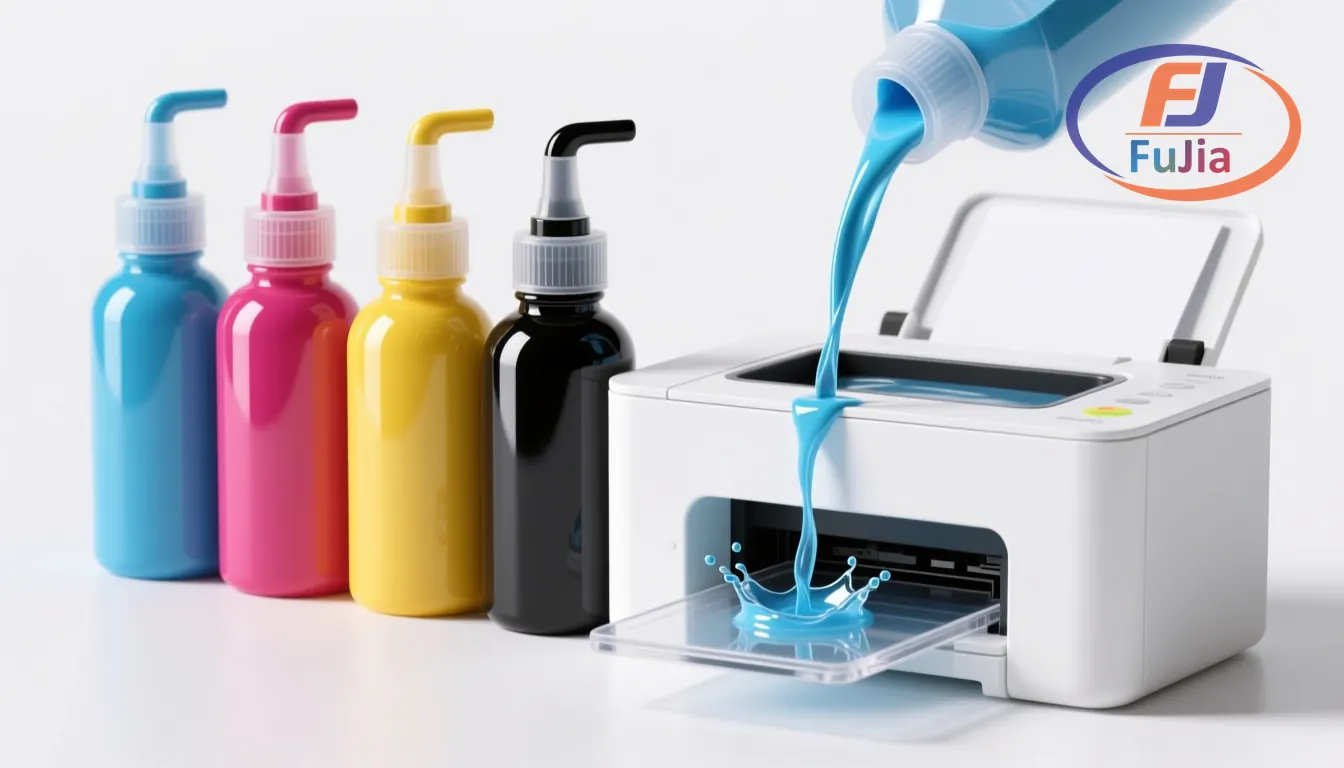
\n\n\n\nThe conversion sequence is short and irreversible. Unbox the ET-2800 and complete its standard setup without installing any Epson ink, because the first fill defines the machine’s chemistry for life. Fill each tank with sublimation ink to the marked line, run the printer’s initial charge cycle, print purge pages until colors run clean, and the machine is a sublimation printer. The entire sequence takes an hour. The two failure points are both patience failures: filling tanks that still hold factory residue, and skipping purge pages that leave the lines half-dye.
\n\n\n\nWe recommend documenting the purge and first-fill date on the machine’s lid, because that record is the only warranty a converted printer has. The paper side completes the system: 120 gsm sublimation sheets at $19.99 per 110 feed the converted machine exactly as they feed purpose-built sublimation printers, and the workflow from there is universal, print on the coated side, press at 385 °F (196 °C) for 45-60 seconds on polyester blanks. A tote bag brand we supply began on exactly this class of converted desktop before scaling to a 60 cm dual-head production line, and the conversion-period discipline, purge logs, press-recipe cards, lot-testing paper, is what made the scale-up smooth. The ET-2800 teaches sublimation for the price of a nice dinner, and the ink you choose for it teaches the consumables discipline that follows.
\n\n\n\nCost-per-Print Math and the Honest Ceiling
\n\n\n\n| Cost item | \nConversion economics | \nNotes | \n
|---|---|---|
| Printer (one-time) | \n$199.99 | \nbecomes sublimation-only | \n
| Ink set (490 ml) | \n$54.99 | \nfills tanks plus surplus | \n
| Ink per letter transfer | \n$0.02-0.04 | \ntank efficiency, 4-color | \n
| Paper per sheet | \n$0.18 | \n$19.99 per 110 | \n
| Total per finished transfer | \n$0.20-0.22 | \nbefore blank and press | \n
The per-print column is the converted ET-2800’s argument: $0.20-0.22 in ink and paper per transfer against $0.50-1.50 on cartridge-based sublimation systems, savings that fund the heat press within months of moderate production. The honest ceiling sits at throughput and width, roughly 20-30 letter-size prints per hour and 8.5 inches maximum, which serves Etsy-scale volume beautifully and stalls at production ambitions. Shops outgrowing the machine graduate along the documented ladder, ET-15000 for 13-inch width, F570 for 24-inch roll feeding, and production platforms beyond, a path our sublimation printers lineup maps end to end.
\n\n\n\nWhen it comes to ink shopping for this machine, the differences that matter are invisible on the listing page. Two $50 sets can differ by a full grade in lot consistency and an order of magnitude in clog frequency. The only reliable signal is how a brand behaves across months of tanks. Buy the established names, buy one brand. Let the machine’s cheapness teach the workflow rather than the ink’s cheapness teach troubleshooting.
\n\n\n\n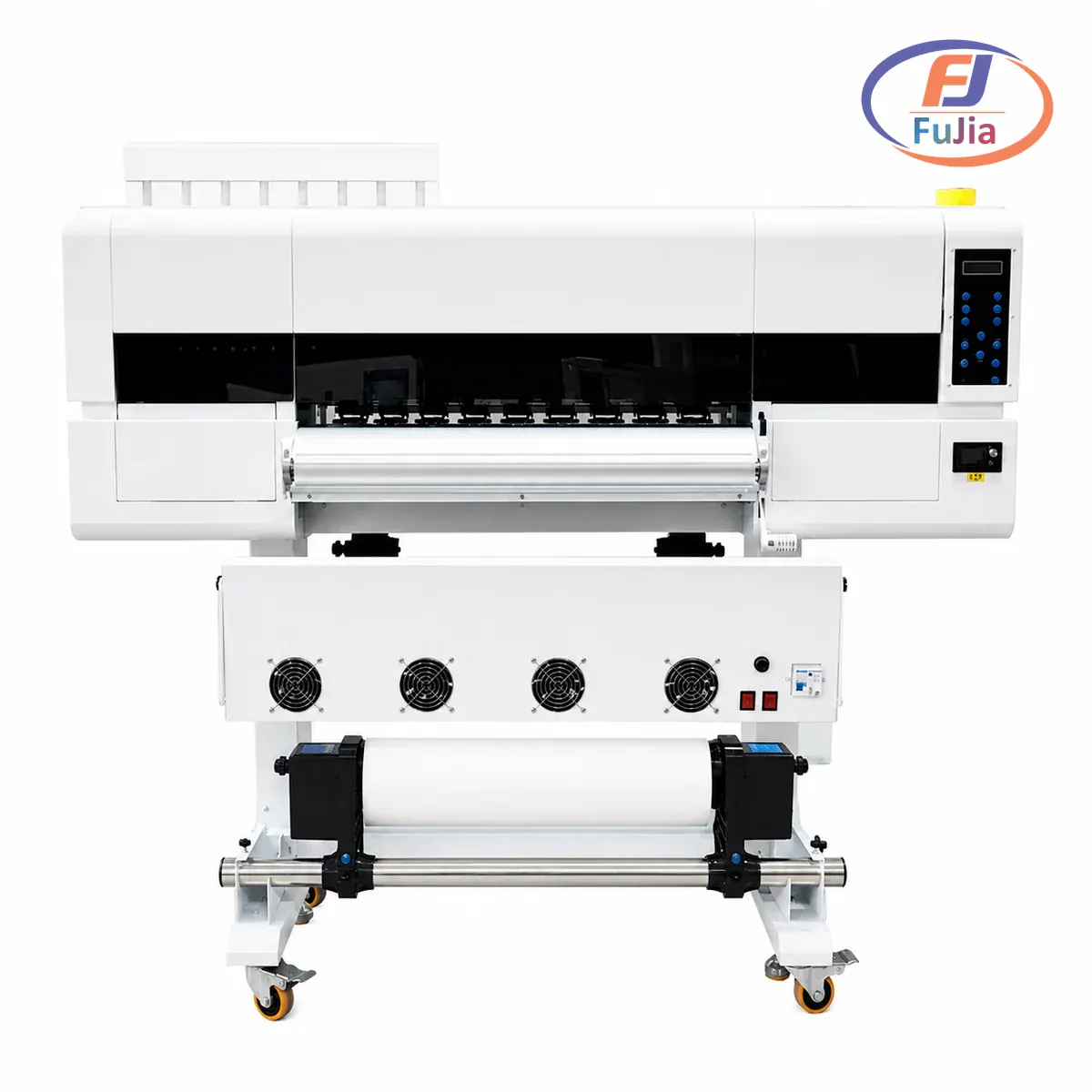
What is the best sublimation ink for an Epson 2800 printer?
\u003cp\u003eThe best sublimation ink for the ET-2800 is an established third-party set, Printers Jack, Hiipoo, or A-SUB class at $40-60 per 400-490 ml, because Epson makes no sublimation chemistry for EcoTank and the conversion community has validated these brands across thousands of machines. Choose on lot consistency and nozzle behavior rather than color claims, dedicate the machine permanently at first fill, and standardize on one brand rather than mixing chemistries mid-tank. The 490 ml set at $54.99 is the per-milliliter value pick.\u003c/p\u003e
Can Epson EcoTank 2800 be used for sublimation?
\u003cp\u003eYes, and it is the community’s standard budget conversion: the ET-2800’s piezo inkjet head and refillable tank system take third-party sublimation ink directly, producing transfers at 720 dpi-class quality identical to purpose-built sublimation printers. The conversion is one-way, tanks that hold sublimation ink never return to document printing, and the warranty voids at first fill. Paired with sublimation paper and a heat press, the $199.99 machine becomes a complete sublimation station, which is exactly why the community keeps recommending it.\u003c/p\u003e
Can I use sublimation ink in my Epson EcoTank?
\u003cp\u003eYou can, if the machine is being dedicated permanently: any EcoTank, ET-2800 included, converts by filling its tanks with sublimation ink and never looking back, because dye and sublimation chemistries contaminate lines and heads beyond recovery. Printers already running Epson document ink cannot convert for the same reason. The decision is really about dedication, the machine becomes sublimation-only at first fill, worth it for a $199.99 starter and a different calculation for an $800 office workhorse. That dedication threshold is why the ET-2800, cheap enough to sacrifice, is the conversion community’s default rather than the flagship EcoTanks.\u003c/p\u003e
Which sublimation ink is best for an Epson printer?
\u003cp\u003eFor EcoTank conversions, the best sublimation inks are the established third-party families, Printers Jack, Hiipoo, Supersubink, and A-SUB, at $40-60 per 400-490 ml set, all engineered for piezo heads and validated by the conversion community. For purpose-built Epson sublimation machines like the F170, Epson’s own dye-sub chemistry is the designed match, and our \u003ca href=\u0022https://fujiaprinter.com/sublimation-epson-ink/\u0022\u003esublimation ink for Epson printers\u003c/a\u003e guide covers that side of the family in depth. Judge any ink by cost per finished print, lot consistency, and single-brand dedication, and the EcoTank tank system delivers the best per-print economics in desktop sublimation.\u003c/p\u003e
Verdict
\n\n\n\nSublimation ink for the Epson EcoTank ET-2800 is a $54.99 decision that defines a $275 sublimation station: established third-party sets at $40-60 per 400-490 ml deliver $0.02-0.04 per-transfer ink economics, the conversion is a one-hour one-way sequence, and the honest ceiling is throughput rather than quality. Pick one brand and stay with it, purge properly at first fill, and graduate along the width ladder when orders outgrow the machine. To see the production platforms this path leads to, contact Fujia Print for an upgrade roadmap.
\n\n\n\nSources
\n\n\n\n- \n\n\n
- Epson EcoTank ET-2800: printer specifications. \n\n\n
- Hiipoo sublimation ink: conversion-market ink reference. \n\n\n
- Wikipedia: Dye-sublimation printing: transfer chemistry. \n\n\n
- Wikipedia: Piezoelectricity: piezo head technology. \n\n\n
