

A heat press t shirt printing machine is the finishing half of every digital decoration workflow, DTF, sublimation, and HTV all end at the press, and the 2026 market sells the capability from $145.90 manual clamshells through $360 auto-release machines to $2,455-plus dual-platen pneumatic units, with press quality deciding transfer consistency more than printer brand ever does. This guide prices the press ladder, pairs each tier with its printer workflow, and gives the press recipes that make shirts pass wash tests. The press is where prints are made or ruined, and it costs less than the printer it serves.
\n\n\n\n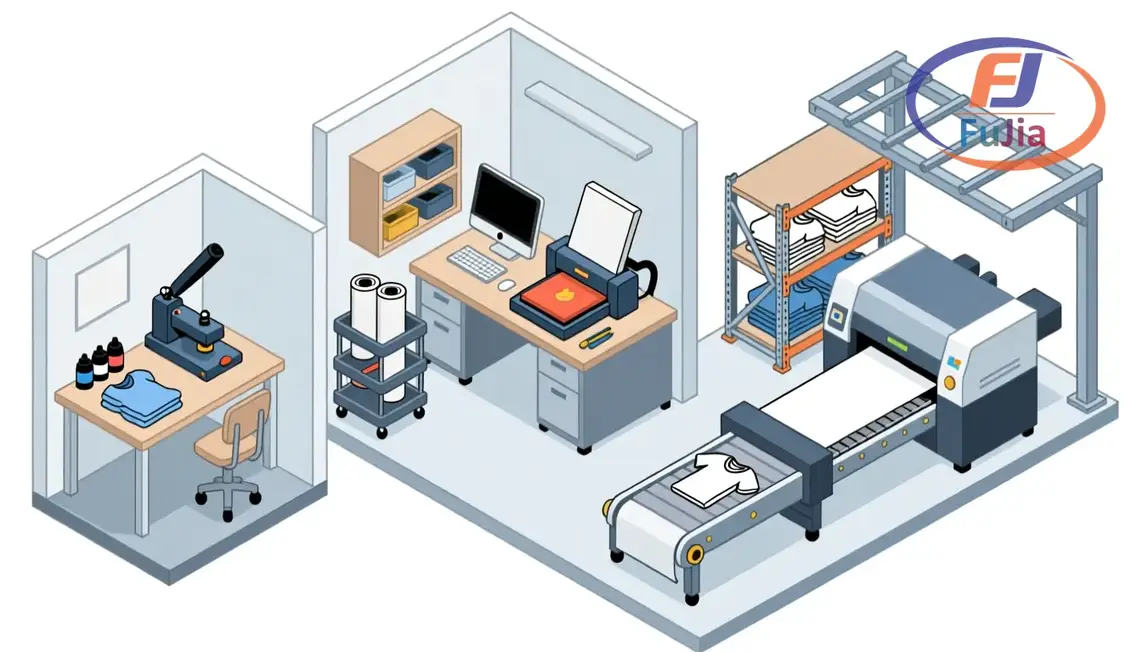
Key Takeaways
\n\n\n\n- \n\n\n
- The 2026 press ladder: VEVOR-class 12×15 and 15×15 clamshells run $145.90-149.90, HTVRONT-class auto-release runs $236-360, and pneumatic dual-platen production units start at $2,455. \n\n\n
- Press recipes by process: DTF at 160 °C for 15 seconds cold peel, sublimation at 385 °F (196 °C) for 45-60 seconds, HTV vinyl at 305 °F for 10-15 seconds, all with firm even pressure. \n\n\n
- The press-buying sequence is size first, 15×15 inches covers standard fronts, then release automation, then platen count by volume. \n\n\n
- Complete working setups pair the press with its printer: $450 with a converted sublimation desktop, $2,500-4,000 with a DTF desktop cell, $15,200 with a 60 cm production station. \n\n\n
- Evenness beats wattage: a $149 press with a true casting outperforms a $250 press with cold spots, and the test is a full-sheet thermal paper check before first production. \n\n\n
The Press Ladder and What Each Tier Buys
\n\n\n\n| Tier | \n2026 price | \nExamples | \nDuty | \n
|---|---|---|---|
| Manual clamshell | \n$145.90-199 | \nVEVOR 12×15, 15×15 | \n50-100 shirts/day | \n
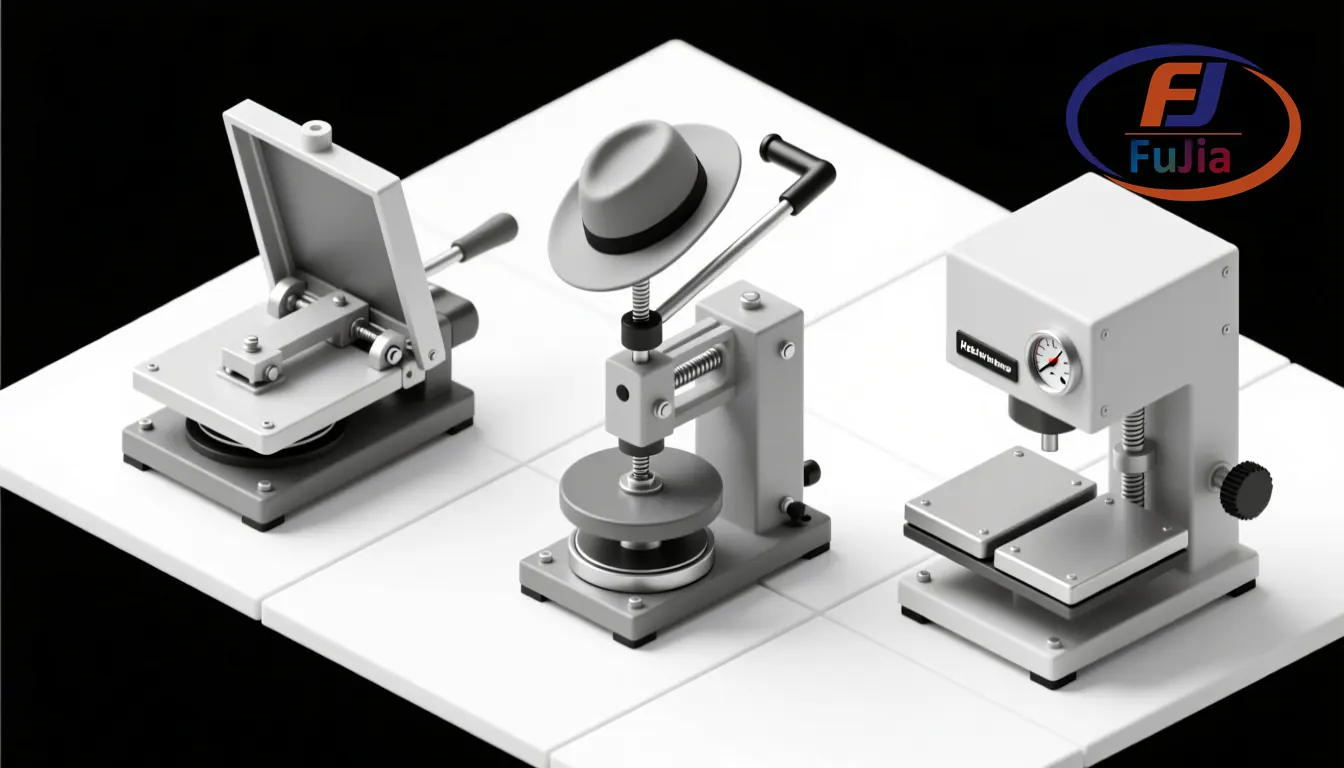
| 5-in-1 multipurpose | \n$149.90-200 | \nVEVOR, Adnoom swing combos | \nmixed products, hats, mugs | \n
| Auto-release | \n$236-360 | \nLOKLiK, HTVRONT Auto | \n100-200 shirts/day | \n
| Pneumatic production | \n$2,455+ | \ndual-platen industrial | \n300+ shirts/day | \n
The entry clamshell is the industry’s most honest machine: $145.90-199 buys a heated upper platen, an adjustable pressure screw, a timer, and the entire physics of heat transfer, and every tier above it adds labor relief rather than print quality. The 5-in-1 swing combos add interchangeable lower platens for hats, mugs, and plates, which suits craft sellers whose catalog spans product families. Auto-release machines at $236-360 remove the most common beginner failure, the mistimed peel, by popping open on the timer, and the pneumatic tier industrializes pressure consistency for multi-shift floors where two presses run per operator.
\n\n\n\nEvenness is the spec that separates keepers from returns at every tier. A cast-aluminum platen with embedded heating rods spreads temperature within a few degrees edge to edge; cheap coil-pattern plates run cold lanes that leave powder unbonded in stripes across a DTF transfer. The verification costs one sheet of thermal paper or, simpler, a full-coverage black test transfer whose gloss tells the temperature story instantly.The sub-$200 tier contains both excellent and terrible castings, which is why the thermal test before first production is a ritual rather than a suggestion.
\n\n\n\nPairing the Press with Each Printing Workflow
\n\n\n\n| Workflow | \nPress recipe | \nPress tier that fits | \nComplete setup cost | \n
|---|---|---|---|
| Sublimation (poly shirts) | \n385 °F, 45-60 s | \nany clamshell | \n$450-700 with converted desktop | \n
| DTF (any fabric) | \n160 °C, 15 s, cold peel | \nauto-release preferred | \n$2,500-4,000 with desktop DTF | \n
| HTV vinyl | \n305 °F, 10-15 s | \nany clamshell | \n$300-500 with cutter | \n
| DTF production | \n160 °C, 15 s | \npneumatic, dual platen | \n$11,500-15,200 complete | \n
The pairing logic is volume and process count, not brand matching, and the apparel printing solutions page documents the printer side of each pairing. Sublimation presses run long cycles at moderate temperature and any honest clamshell serves; DTF presses run short hot cycles all day, where auto-release timing compounds into serious throughput and cold-peel discipline gets easier when the machine opens itself. A custom sportswear brand we supply runs the production end of the table: a 60 cm dual-head DTF platform feeding 3,000-plus pieces monthly at 60% margins, pressing at 160 °C for 15 seconds with cold peel across cotton, polyester, blends, and denim, and the press bench grew auto-release units before the printer grew heads, because finishing throughput gates shipping, not printing throughput.
\n\n\n\nThe workflow recipes deserve their own precision, because press errors are recipe errors in disguise. DTF’s 160 °C for 15 seconds with a full cool-down before cold peel produces the wash-proof bond; peel it warm and the adhesive half-cures into edge lift. Sublimation’s 385 °F for 45-60 seconds drives dye fully into polyester, and under-pressing shows as fade after the first wash. HTV at 305 °F for 10-15 seconds is the gentlest cycle, and its vinyl layers survive because the recipe respects their adhesive windows. One press runs all three workflows; only the recipe card changes.
\n\n\n\nComplete Setups by Budget
\n\n\n\nThe complete-setup arithmetic is where press shoppers land after press research. The $450-700 sublimation kit pairs any clamshell with a converted EcoTank and serves polyester shirts and hard blanks. The $2,500-4,000 DTF cell pairs an auto-release press with a desktop DTF printer from the DTF printers lineup and prints any fabric dark or light. The $11,500-15,200 production station pairs a pneumatic press line with a 60 cm dual-head platform and clears 200-400 shirts daily. Between those anchors, the 5-in-1 combos at $149.90-200 let mixed-product craft sellers press hats and mugs on the same machine that presses shirts.
\n\n\n\nWhen it comes to press budgets, the press is always the cheapest major component. It is the component buyers most often underspend on, because a $99 press with cold spots makes a $2,000 printer look broken. We recommend allocating at least 15-20% of a complete setup budget to the press and testing evenness before blaming anything downstream, a discipline our customer data shows separating smooth launches from support tickets more cleanly than any other single habit.
\n\n\n\n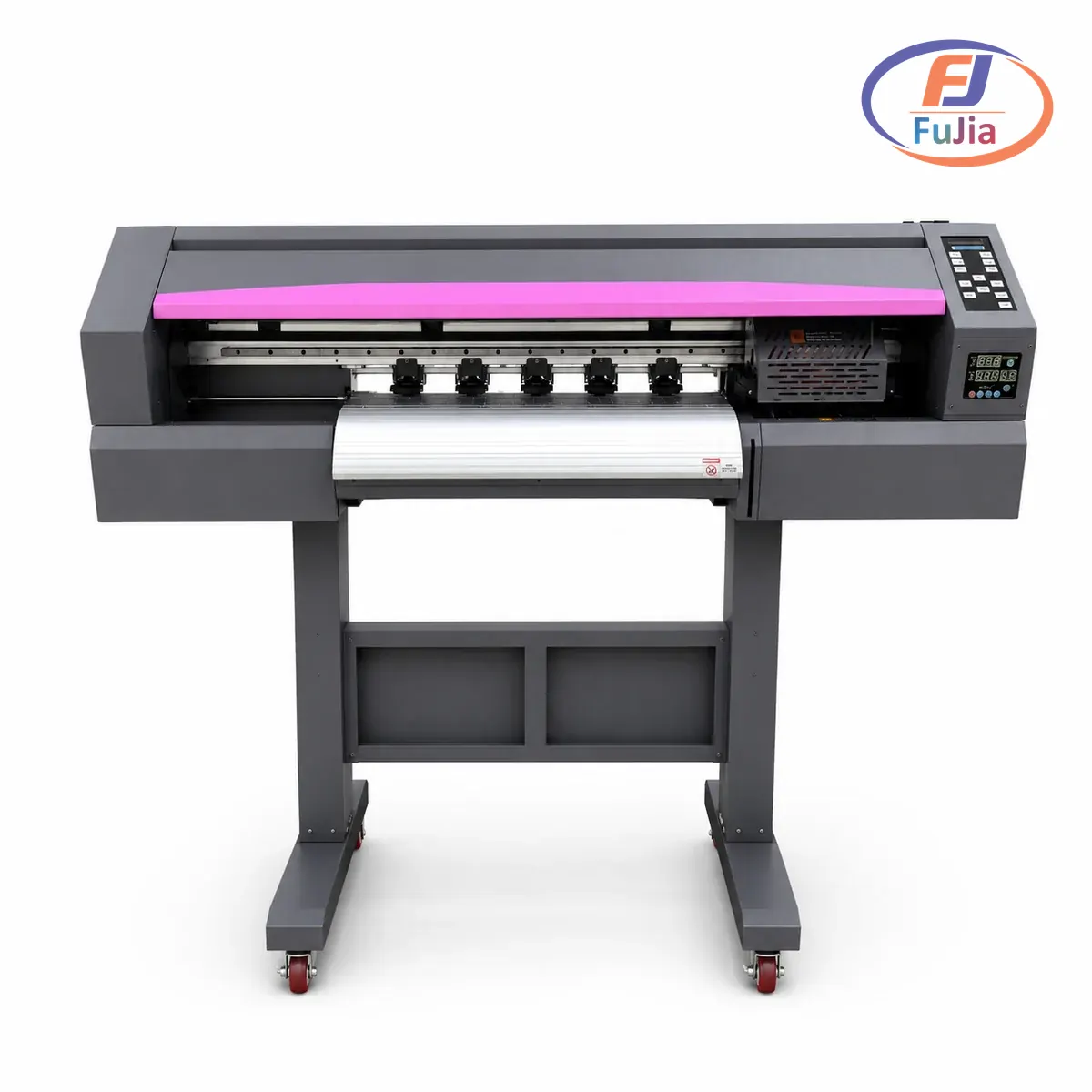
What is the best heat press machine for making T-shirts?
\u003cp\u003eFor most shirt businesses, the best heat press is a 15×15 auto-release clamshell at $236-360: full-front size, timer-driven opening that removes peel-timing errors, and enough evenness for DTF and sublimation at 100-200 shirts daily. Budget entries at $145.90-149.90 press identically when their castings are true, which the thermal-paper test verifies. Above 200 shirts daily, pneumatic dual-platen units at $2,455-plus buy cycle consistency and two-press-per-operator throughput.\u003c/p\u003e
How much does a heat press machine for t-shirts cost?
\u003cp\u003eReal 2026 pricing: manual 12×15 and 15×15 clamshells run $145.90-149.90, 5-in-1 swing combos run $149.90-200, auto-release machines run $236-360, and pneumatic production units start at $2,455 with dual platens. The press is typically 5-15% of a complete decoration setup, $450-700 for sublimation entries and $2,500-4,000 for DTF desktop cells. Factor platens and covers at $20-50 as recurring small costs, and budget the second press before the second printer when volume grows.\u003c/p\u003e
Is a heat press good for making shirts?
\u003cp\u003eYes, the heat press is the making machine for every digital shirt workflow: DTF transfers bond at 160 °C for 15 seconds, sublimation dyes polyester at 385 °F for 45-60 seconds, and HTV vinyl adheres at 305 °F for 10-15 seconds, all on the same machine with a recipe change. Prints survive 50-plus washes when recipes and pressure are honest, per AATCC testing standards. The press cannot print. No digital shirt printing happens without it.\u003c/p\u003e
What kind of Cricut machine do I need to make T-shirts?
\u003cp\u003eFor Cricut-based shirt making, a Cricut cutting machine plus a heat press produces HTV vinyl shirts: the cutter cuts designs from vinyl sheets and the press bonds them at 305 °F for 10-15 seconds, a solid path for names, numbers, and solid-color graphics. Cricut presses at the craft scale work. A $145.90-149.90 full-size clamshell outproduces them immediately, and it costs less than the Cricut ecosystem’s accessory stack. For full-color photographic shirts, pair the press with a sublimation or DTF printer instead, because a cutter alone cannot produce photographic output.\u003c/p\u003e
Verdict
\n\n\n\nA heat press t shirt printing machine is the universal finisher: $145.90-360 buys the tiers that serve hobby through serious daily volume, 15×15 auto-release is the sweet spot for most businesses, and the recipes, 160 °C for DTF, 385 °F for sublimation, 305 °F for HTV, are the real operating manual. Size for your largest transfer, automate release when volume justifies it, and thermal-test any press before production. To configure a press line matched to a printer cell, contact Fujia Print for a workflow review.
\n\n\n\nSources
\n\n\n\n- \n\n\n
- VEVOR heat presses: entry clamshell pricing reference. \n\n\n
- HTVRONT auto heat press: auto-release tier reference. \n\n\n
- Wikipedia: Heat press: press mechanics. \n\n\n
- AATCC: wash durability test standards. \n\n\n
